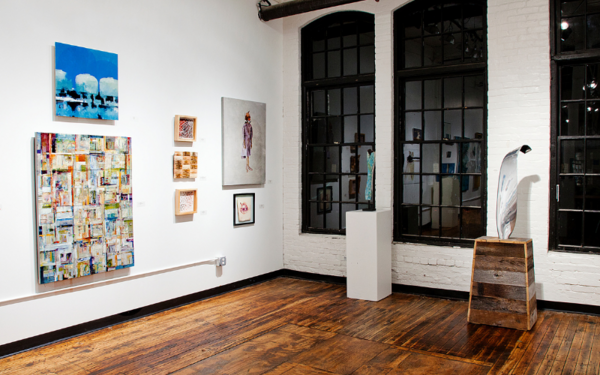
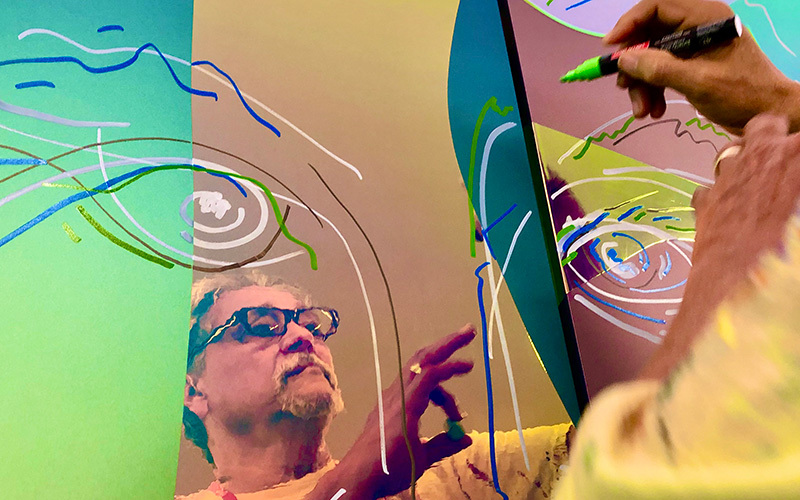
 Jimmy Longoria understands that every "failed" experiment takes him one step closer to achieving his vision.
“You may create a hundred works in a single vein, but only ten will be truly first-rate. The decisive discipline lies in knowing which ten they are—and in having the courage to discard the others.”
Featured Artist Jimmy Longoria has built his practice around a constraint that other artists shy away from: he welcomes outside influence, embraces patron requests, and allows commissioned work to actively shape his materials, themes, and content.
Rather than diluting his vision, this openness has expended his artistic mastery across paintings, murals, and public installations that now span a decades-long career.
A pioneer of the Chicano Aesthetic in the Midwest, Jimmy is always experimenting: he paints, he uses colored films and vinyls, and he works closely with patrons and collaborators to bring his unique aesthetic to life. He has spent his career forging an aesthetic that responds and speaks to the remarkably diverse Hispanic communities in the region.
Though he’s now based in Minnesota, he grew up on a farm in South Texas, where, amidst an environment of scarce resources and ever-present discrimination against Chicano families like his own, he learned that every action can either generate value or leave you poorer than you started. He’s used that resourceful insight to fuel his diverse use of materials and artistic practices.
Read on to learn how an insight from the business world transformed Jimmy Longoria’s artistic practice, how he uses commissions to fuel his own personal creativity, and how he uses digital tools to manage a vast inventory spanning mediums and decades.
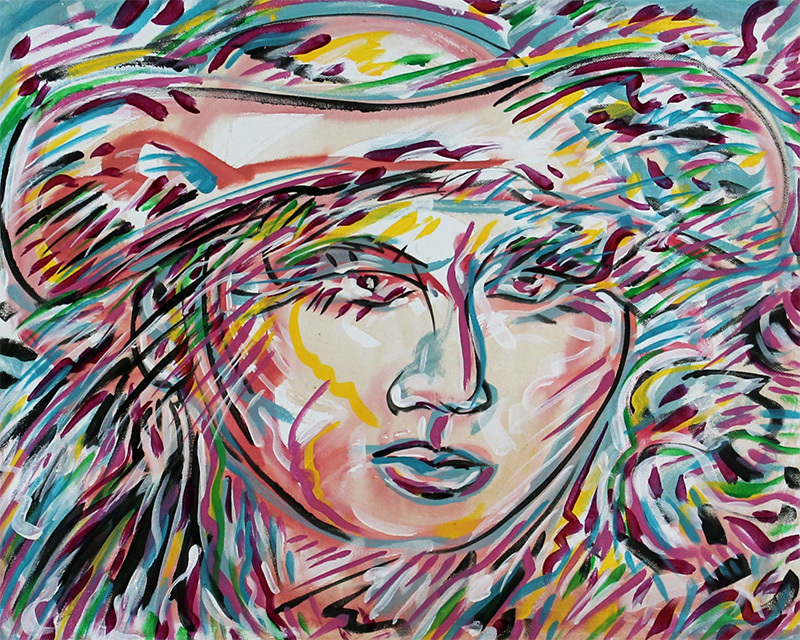 Jimmy Longoria, Cara Series: Vera, Acrylic on Canvas, 16 x 20 x 1 in
Forging a Chicano Artistic Aesthetic in the Midwest
Jimmy identifies himself as “the Chicano Artist de Minnesota,” a designation that he has earned over a career of exploring how his identity fuels his art.
“The Chicano Aesthetic in the Midwest is, at its core, a forward-looking proposition,” he explains, “a futuristic aesthetic crafted for a remarkably diverse population of Hispanic and Indigenous communities.”
Though he may look to aesthetic precursors for his practice, he’s acutely aware that there is no such thing as “a single Latino, Hispanic, or Chicano canon.” These communities are not monolithic, and he views his art as an evolving contribution to these communities, rather than an attempt to fully capture them into something static.
He's given back to his community through his organization Mentoring Peace Through Art. With this group, he and the participants in its Mural Worker program "confront Latino gang graffiti head-on" by cleaning and beautifying public space in their neighborhoods.
"These young people were not being ushered into the lifestyle of an artist," Jimmy explains, of Mentoring Peace Through Art participants. "They were stepping into the discipline of work."
The impact this had on the community, and the young people who participated, was profound.
"The community didn’t see artists decorating walls with narcissistic self-expression," he recounts, "they saw young people laboring to clean, repair, and transform blighted spaces. And it transformed the volunteers as well, replacing any sense of entitlement with a commitment to service and stewardship."
Jimmy has also frequently worked with corporations in the Midwest that are bringing in a steady influx of professionals from around the Latin American world. He gets excited about creating art for their headquarters and office buildings, but even then he has to remind his patrons that there is no single “Latino” aesthetic.
When corporations commission him to create pieces that will inspire the Hispanic executives they are bringing to the Midwest, he has to be clear with them that “the region’s aesthetic impulses aren’t born from a single cultural lineage.”
Instead, they "emerge from an ongoing hybridization—an exchange, a negotiation—among the many Hispanic and Indigenous traditions that gather here,” he offers.
“That hybrid space is where my aesthetic lives.”
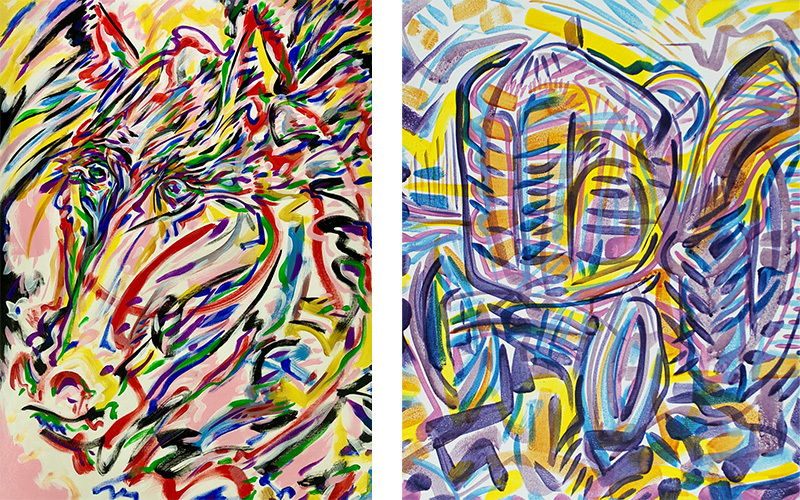 Jimmy Longoria, Caballo Series: Ever Alert, Acrylic on Canvas, 48 x 36 x 2 in, and Tractor Series 6, Acrylic on Canvas, 20 x 16 x 2 in
How Commissions Fuel Jimmy’s Art Practice
Jimmy’s creative process operates on parallel tracks, each feeding the other in unexpected ways.
“There are two powerful points of origin in my creative process: the spark of a commission and the ignition of my own independent investigations,” he tells Artwork Archive.
When taking on commissioned work, he begins with “rigorous research and a clear, in-depth dialogue with the recipient to understand exactly what the work must achieve.”
Once that direction is fully fleshed out, he commits fully by finalizing his proposal, refining the vision, experimenting with materials, and driving the creation forward until it reaches its final form.
That’s all fun in its own right, but he says that the real magic happens when he is working on the artwork itself. “The moment I value most in the commission process is when I recognize the possibility of veering away from the agreed-upon path,” he says withe excitement. “That discovery—when an unexpected direction reveals itself—is thrilling.”
Seeing how he can make the commission his own allows him to pursue the work’s deeper potential. Plus, the experience can teach him new ways of approaching his own work back in his studio, on his own terms.
His paid commissions, then, become the seeds that can blossom during his own independent explorations. “My self-commissioned pieces often begin as extensions or variants of the patron-commissioned idea,” he recalls.
This ebb and flow of commissions and personal work keeps his practice growing organically, restlessly, with an energy that pushes him on to his next discoveries.
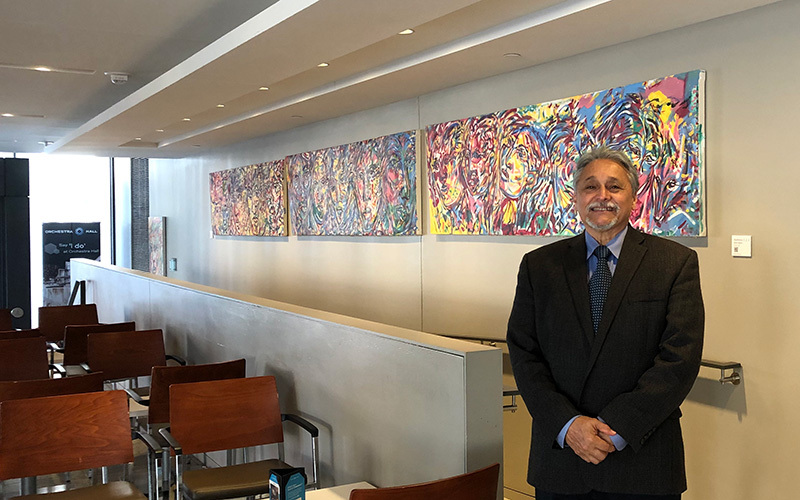 Jimmy stands in front of his artworks installed at the Minnesota Orchestra.
How Lunchtime Sessions from Unexpected Mentors Changed Everything
During his undergrad days at the Claremont Colleges, Jimmy had an experience that would fundamentally alter his understanding of both art and work.
One day, he was walking past an empty lecture hall and heard four men deep in conversation, “challenging each other, pushing ideas in society, management, and science to their limits. They invited me to sit in the audience.”
At the time, he thought they were just good professors enjoying an academic conversation. “Only later did I learn who they actually were,” he remembers: “W. Edwards Deming, the architect of modern quality theory; Peter Drucker, the force behind contemporary management; Isaac Asimov, the visionary author of I, Robot; and Gene Roddenberry, the creator of the Star Trek universe.”
He became a regular at these lunchtime sessions, and they changed his life. Deming had a mandate he lived by: “drive out the fear.” This hit Jimmy with the force of revelation.
“At first, I interpreted it as a call to stay true to my process while being willing to halt, rethink, and correct course when necessary,” he says. But over time, "it revealed something even more powerful: that every twist, failure, accident, or unexpected turn is not an obstacle but an invitation. An artist must navigate uncertainty without fear, because that is where the real breakthroughs live.”
He learned something equally valuable from Drucker, who once said, “Only ten percent of what I have written is good—the other ninety percent is not as good.”
The fact that this titan of corporate America could be so blunt about his failure rate taught Jimmy a valuable lesson about his own creative journey: “The artist’s life is a commitment to repetition, variation, and relentless iteration. You may create a hundred works in a single vein, but only ten will be truly first-rate.”
So the artist’s task becomes simple: “The decisive discipline lies in knowing which ten they are—and in having the courage to discard the others.”
To this day, he isn’t afraid of failure, and he isn’t afraid to destroy work that doesn’t meet his standards. That’s just the experimental process in action. Other artists are astonished, he says, “but I know exactly what I’m doing: I am clearing the field for excellence.”
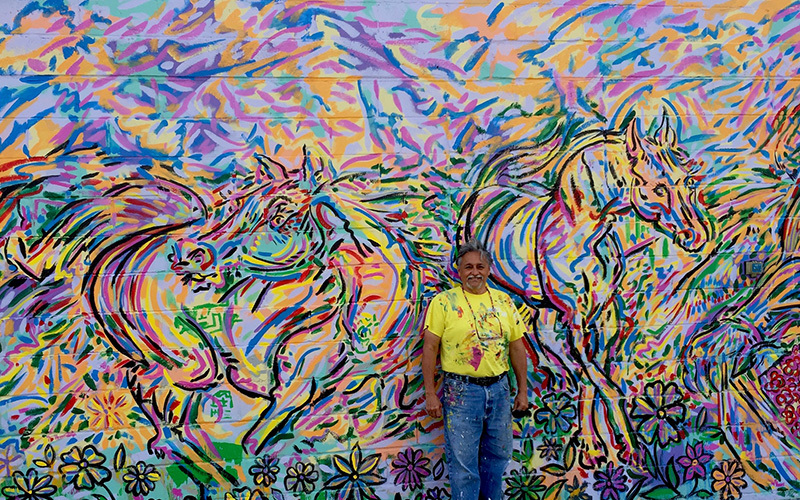 Jimmy's public art murals enliven neighborhoods.
How Jimmy Got His Art Business Organized
The moment Jimmy realized he needed a comprehensive inventory management system came during a major life transition. “I had to move my entire inventory from one home to another. It was the perfect opportunity to finally do what I had known all along was necessary: organize my work comprehensively by size, medium, theme, and availability.”
But seeing the opportunity this move presented also forced a tougher realization: “At that point, I recognized that I didn’t have a functional inventory at all.”
In looking for an art business system that could keep his career on track, his requirements were clear: “Intuitive and easy to use, searchable across multiple criteria—size, medium, theme, price, availability—cloud-based so I could access it from any city without lugging around physical files, affordable, and fully expandable to grow with my practice.”
After trying out several different options, he found that Artwork Archive actually met all of his requirements. “It transformed the way I manage my art production,” he reflects, “giving me control, clarity, and the ability to present my work seamlessly to collectors and collaborators anywhere in the world.”
“It is the backbone of my professional practice.”
These days, he couldn’t imagine working without Artwork Archive.
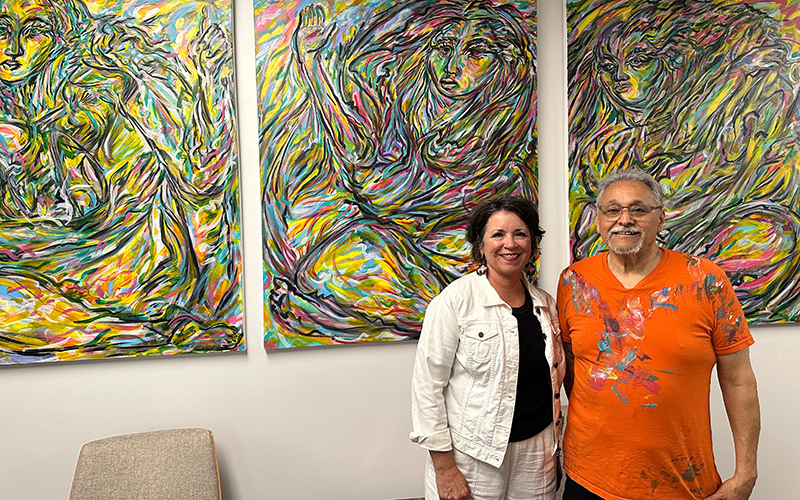 Jimmy in front of some of the pieces he recently lent to the offices of the Minnesota State Senators, their Legislative Assistants, and Congressional Aides.
How Jimmy Uses Private Rooms to Create Curated Presentations of His Artwork
Jimmy has had a long career at this point, and he has worked across media and styles.
“With hundreds of pieces in my inventory, a full view can be overwhelming,” he admits.
So when he needs to curate a collection of his work that cuts through a vast, stylistically diverse inventory, he knows he can rely on one tool: Artwork Archive’s Private Rooms.
“This feature allows me to create focused, curated presentations for prospective patrons,” he shares, “which is essential given the vastness of my stylistic and medium-spanning practice.”
Private Rooms allow him to distill that inventory in a way that collectors can actually engage with.
For example, when one collector was looking to acquire a painting for their home, Jimmy created “a thematic ‘room’ centered on equestrian imagery, allowing them to explore a selection tailored to their interests.” The collector was impressed: “The curated presentation made the decision process effortless.”
For a large gallery exhibition that surveyed multiple different bodies of work, he organized a Private Room by medium, chronology, and content. “This allowed the curator to preview the thematic organization in advance, making installation seamless,” he tells Artwork Archive. “The scale of the exhibition was enormous, but thanks to the Private Room, individual pieces could move directly from storage to the delivery van without unnecessary handling, reducing risk of damage.”
Let Private Rooms Do The Heavy Lifting For You
Your collectors shouldn't have to sort through page after page of artworks to find the one they want. You can easily curate custom Private Rooms tailored to any collector's needs—give them a try today!
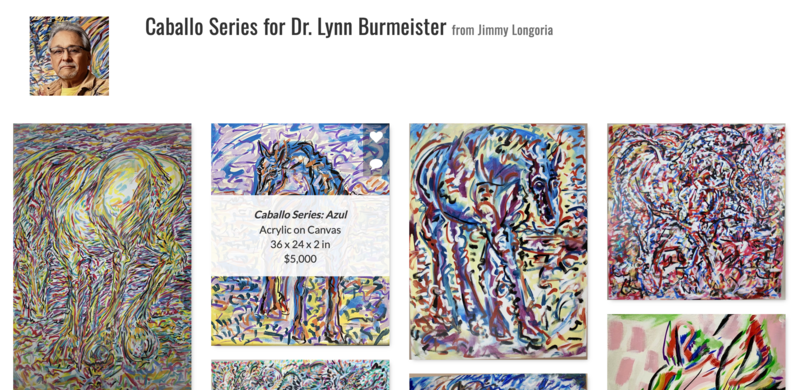 A Private Room that Jimmy created for a collector.
Advice for Early-Career Artists Based on Decades of Artistic Experience
Jimmy has built an enviable career that he enjoys reflecting back on. But he was once just starting out himself, and he has some advice for artists who are making their first steps into building their career.
“Get a foundation in small business education,” he explains, just like he did with his lunchtime meetings with business luminaries in college. “Understanding the business side of art is not optional—it is essential.”
Doing so will allow you to differentiate yourself in the sometimes overwhelming art world. “You need to define your self-identity clearly: Are you a professional artist, an educator, a fine artist, or seeking employment within the artistic support field?” he prompts aspiring artists to ask themselves. “Each path comes with distinct strategic demands and daily management priorities.”
Once you have that clarity, you can start planning for the future. That means breaking the long timeline that is an art career into manageable chunks: “a three-year plan nested within a five-year plan, nested within a twenty-year plan.”
“Every decision you make today should be informed by where you want to be in twenty years,” he advises. “As a painter, I focus the next brush stroke in light of its impact in twenty years.”
And his last word of advice has to do with the seriousness with which you should approach your artistic calling. “Treat your art and your career with purpose, strategy, and professionalism,” he urges. “Ultimately, the most important mindset is to take your discipline seriously.”
 Jimmy Longoria, La Familia, Charcoal and acrylic on canvas, 36 x 54 x 1.5 in
No matter where you are in your art journey, getting your business side in order doesn't have to feel overwhelming. A bit of structure now can mean more time and headspace for the work you actually want to be doing.
Artwork Archive helps artists build an online portfolio, stay on top of their inventory, and create things like tear sheets and invoices in just a few clicks. Start a free trial and see how it fits into your own process.