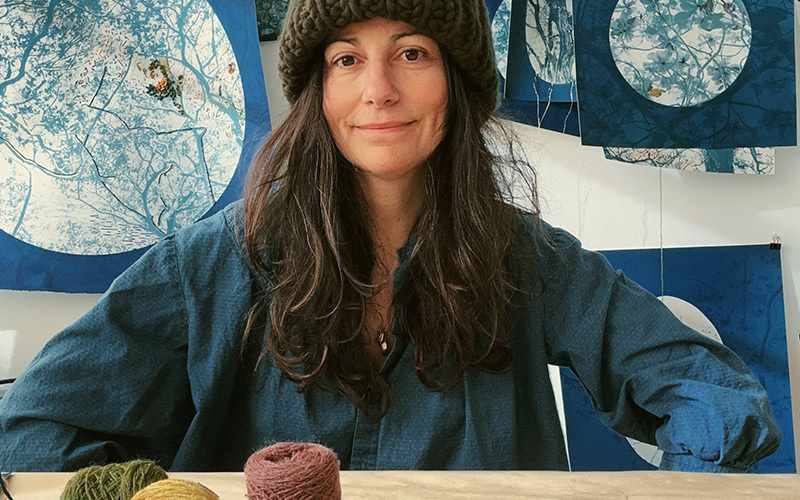
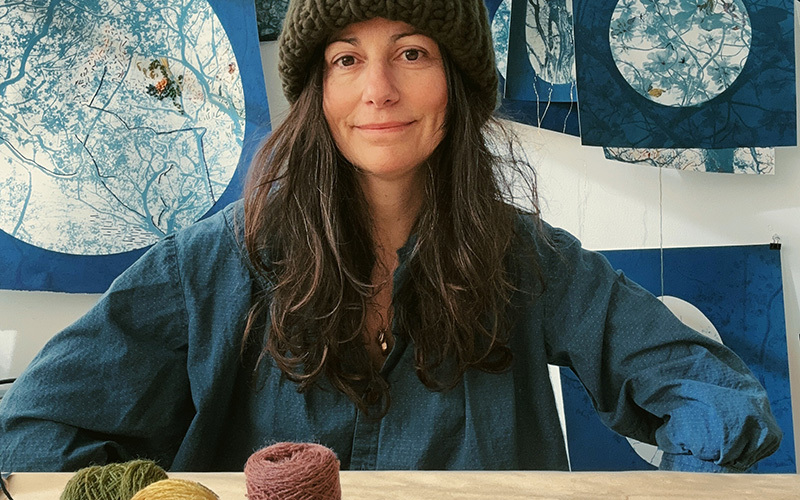
 Featured Artist Dora Somosi has turned the inherent imperfections of the cyanotype process into deeper meditations on the natural world.
In Featured Artist Dora Somosi's cyanotype photographs, trees reach skyward in the medium's deep blues while the moon's luminous shape emerges through careful double exposures. Beginning with hand-printed images, Dora embraces their inevitable imperfections, transforming them through delicate embroidery stitched with threads she dyes herself using plants gathered from the very landscapes she photographs.
Born from healing hikes, Dora's practice became a lifeline. Each piece is both celebration and urgent plea, focusing our attention on a natural world that is shifting before our eyes and may one day be lost.
"When I am outside hiking, walking, moving my body, I step beyond the weight of the world, the ticking of the clock… I am transported by the wonder of nature, grateful for its healing salve."
Read on to learn why Dora Somosi refuses to throw away imperfect cyanotypes, and how getting organized finally freed her from the chaos of tracking work across notebooks, spreadsheets, and scattered email threads.
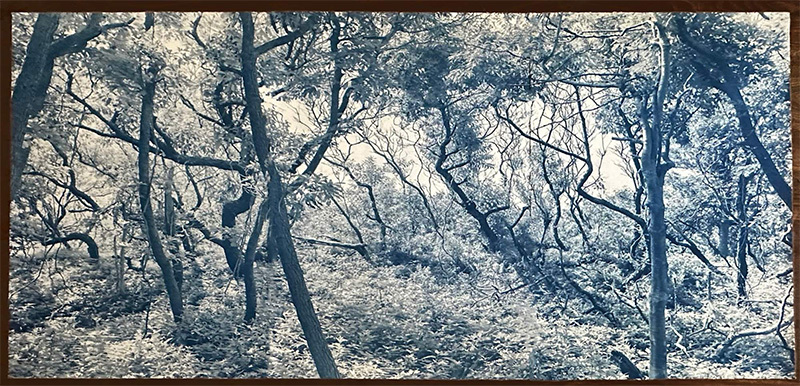 Dora Somosi, Sunken Forest (2), 3 panels 20 x 30 x 3 (full size is 30 x 60) Edition 3 of 5, Arches watercolor paper cynaotype, 30 x 60 in.
How the Natural World Inspires Dora’s Art
Dora’s artistic process begins with a pair of walking boots. She’s always been attracted to wild spaces, but during a period of health difficulties, she found that the walks she started taking with her youngest daughter allowed her to feel reconnected to the world around her.
“When I am outside hiking, walking, moving my body, I step beyond the weight of the world, the ticking of the clock,” she recounts. “I am transported by the wonder of nature, grateful for its healing salve.”
From that seed of inspiration, she found a new way of working. “I photograph a lot while in motion,” she tells Artwork Archive. “But I also turn to the landscape during turbulent times as a way to quiet my mind and let the setting take over the noise.”
The revelation came when she realized that she could use photography as a way to deepen her experiences of these landscapes.
“The camera becomes a tool, or honestly an excuse, for slowing down, noticing, and spending real time in nature,” she explains. “That sense of being in conversation with the landscape, and not fully controlling the frame, invites chance into the work.”
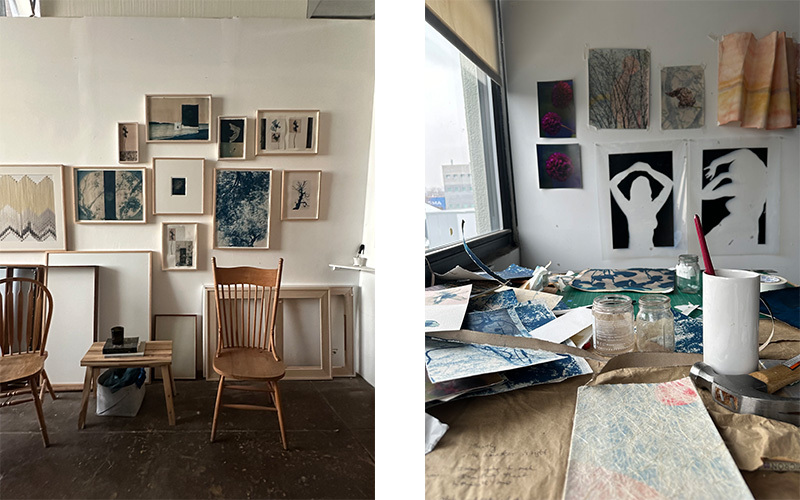 Scenes from Dora's studio.
‘Perfection’ Is Not the Goal of Dora’s Art
Dora’s willingness to relinquish control and let the landscape collaborate with the final work has opened up space for some unexpected discoveries. It’s turned into something that she tries to carry through her entire practice.
She has made many types of images in her career, from richly colored dye sublimation prints of skyscapes, to tender black and white portrayals of moments in nature, to superimposed collages of color-shifted meadows. But her current work all centers around the cyanotype, one of the oldest photographic technologies identifiable by the subtle blue-and-white images it creates.
It’s very difficult to make a cyanotype “perfect”—it’s an analog process that can be influenced by how the paper is coated with the chemicals, how long the light is allowed to hit the paper, how the print is washed and dried, and so many other variables. And even once the print is “finished,” it can fade with light, the paper can curl, or any number of other ways that time and nature have the final word on material things.
But Dora once had a transformative experience that changed her approach to these “imperfections.”
“I took a dyeing class from a wonderful artist who said, ‘Keep working on it until it works,’” she recalls. “That sentence sparked something for me.”
Instead of discarding less-than-perfect cyanotypes, she says, “I began responding to those irregularities with needle and thread. It became my own version of dodging and burning from my darkroom days, working with the process rather than fighting it.”
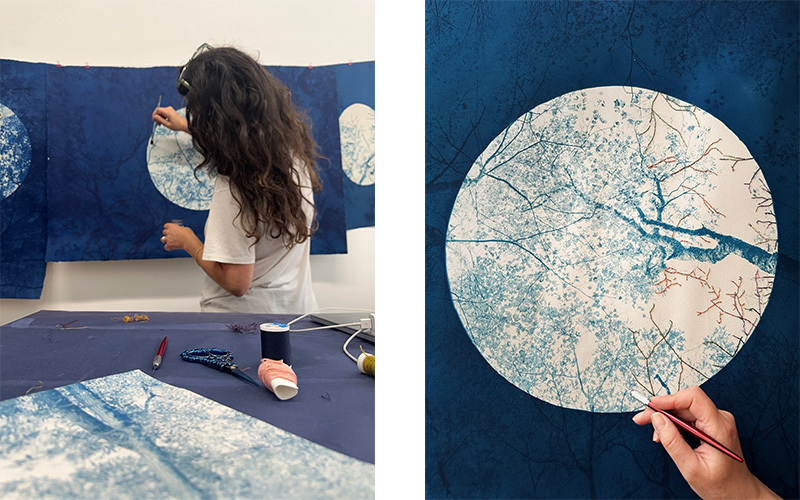 Dora has found a tactile and hands-on approach to photography.
Foraging Art From the Land Itself
As Dora began working in this more open way, she began taking hints from the landscape around her.
“The more time I spend learning about and photographing landscapes,” she shares, “the more I understand how resilient they are and how much we have to learn from them.”
She tries to do her small part to support the continued existence of these healing spaces. She uses low toxic processes, she works with small businesses who make their own papers, waxes, and dyes, and she avoids generating unnecessary waste whenever she can.
She began mending her cyanotypes with embroidery thread as a way to work with their imperfections. Now she’s even started dyeing that thread with plants she carefully forages from the landscapes she’s making images of. Walnut hulls, marigold, acorn, and goldenrod lend their tints to her threads, woven through her images.
“When the work calls for stitching or dyeing with toners, the piece becomes something I could not have predicted,” she offers. “I love that slow time, especially in winter when the world outside can feel bleak and the daylight is short.”
It all adds up to a peaceful process that grants her solace in a hectic world. “Those quiet hours in the studio, listening to a book and moving between a few pieces at once, are some of my favorites.”
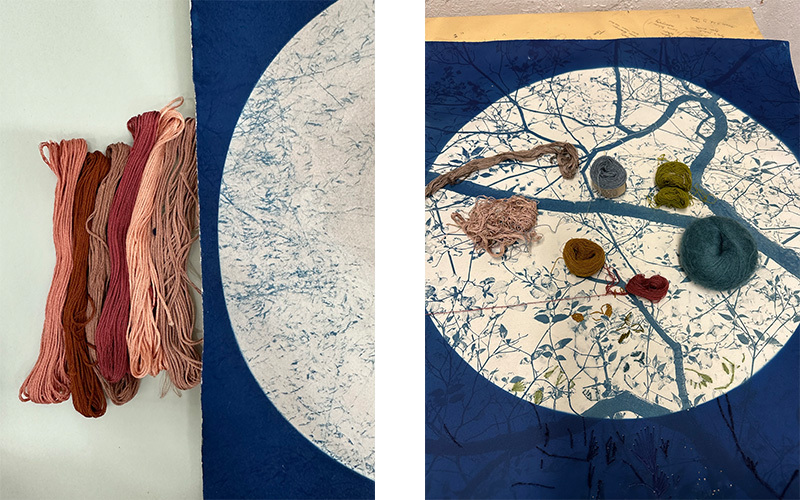 Dora dyes her threads using plants she forages on her hikes.
How Dora Found the Right Words For Her Art Practice
The art business skill Dora had to learn the hard way involved something many artists struggle with: expressing their practice in words.
“I used to really bristle at having to talk about the artwork, hoping people would simply get it or let the piece speak for itself,” she admits.
But as she’s gotten more comfortable with writing about her work, she’s discovered how it can deepen her own understanding of what she’s making.
“Now I see that artist statements, applications, and all the writing we are asked to do are actually what help shape the intention and trajectory of the practice,” she says. “They push me to articulate what I care about, and that clarity ultimately makes the work itself stronger.”
In reading writers like Rebecca Solnit, Elizabeth Gilbert, and Jerry Saltz, she’s learned that writing and art-making may not be the same thing, but they can support each other. In fact, even when you don’t think you’re making art, you might be incubating your next move in the studio.
“The advice I repeat to myself most often is to show up even when I think I have very little to give,” she reflects. “To remember that quiet time not making is still important, and to resist sharing work too early for feedback.”
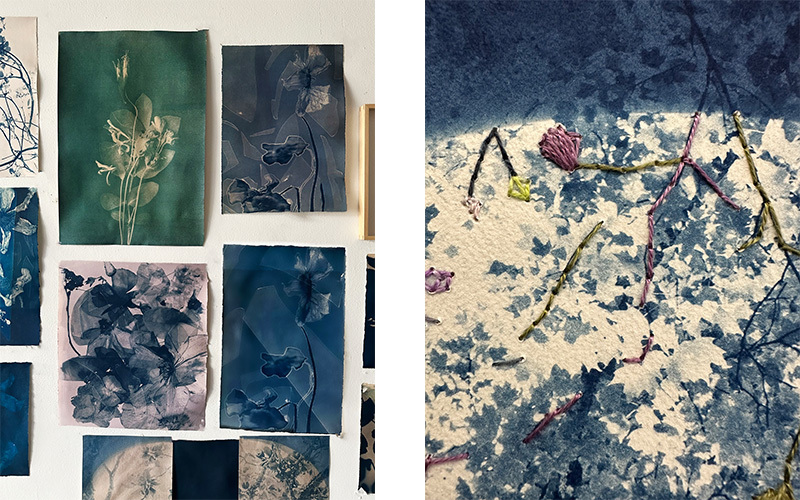 The healing that Dora gets from the natural world has influenced how she approaches her art making.
How Dora Built a Sustainable Art Business System
As Dora was building her practice over the years, she got offered more shows, more opportunities, and made more sales. These are great problems for any artist to have, but what she quickly realized was that her administrative system was “unsustainable.”
“I had notebooks, spreadsheets, text threads, emails, and nothing was synced,” she recalls. “I was juggling editions, consignments, deadlines, framing specs, and shipping information all at once.”
The bottom line: “I was spending too much time tracking my work.”
The constant worry about missing a notification, or forgetting a deadline, or losing the location of a piece, was not helping her art career. Then she discovered Artwork Archive, and it gave her the peace of mind she needed: “One easy to use, intuitive place to put everything: images, edition numbers, sizes, prices, invoicing, and catalogs.”
The Artwork Archive feature she uses the most is tracking her Inventory, and she loves how easy it is to search for any piece she’s created over the years.
“I keep every piece logged with dimensions, medium, edition, framing details, where it has been shown, and where it is now,” she shares. “When I am preparing for a show or sending work to an advisor, I can generate a clean PDF inventory in seconds. It keeps everything organized and clear.”
For an artist like Dora who is working with editions, managing consignments across multiple venues, and looking to continue creating art over a long career, this centralized system has transformed her administrative burden into a manageable routine.
Why Dora Chose Artwork Archive:
Dora needed a tool that was as intuitive as her studio process, and she found it in Artwork Archive.- The Inventory Backbone: Dora logs every piece with its medium, dimensions, and specific framing details. This ensures that when a gallery asks for a piece from three years ago, she has all the information about that work at her fingertips.
- Show-Ready Reporting: She can generate a PDF of her current inventory in seconds, making it simple to send to galleries and curators. This eliminates the hours spent manually formatting images and text into a document.
- Location Tracking: With work moving between exhibitions and fairs, Dora uses the platform to see a real-time map of her inventory.
See how Artwork Archive can streamline your art business admin with a free 14-day trial today.
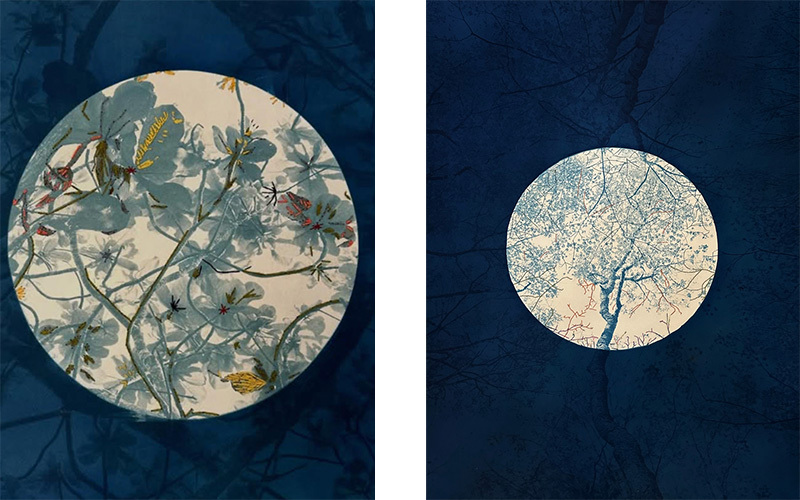 Dora Somosi, Mending Madder, double coated cyanotype and embroidery, 16 x 16 in, and Mending Sugar, Unique, Arches watercolor paper cynaotype, 39.5 x 28 in.
Dora’s Advice for Professional Artists
Even with the success she’s been able to achieve through her art practice, Dora still describes herself as a “learning addict.” Because she didn't follow the traditional art school path, she is constantly seeking out new processes and new ways of thinking about art-making.
When asked what mindset shift is most important for an artist, her advice is grounded in resilience: “Say yes to opportunities even when they are imperfect.”
Think of any opportunity as a way to build up your community of support. “Find your champions, not just collectors but the friends who will listen and offer solid advice,” she suggests.
For Dora, repair is not about fixing mistakes. It’s about tending to the journey of art making. Whether she’s mending cyanotypes with hand-dyed thread, or organizing her inventory so that she can spend more time in the landscapes that heal and inspire her, she approaches each aspect of her practice with the same patience and attention.
Because ultimately, there’s enough opportunity and satisfaction to go around, if you know where to look for it: “The art world is much kinder when you try to live in an abundance mindset.”
Is your art business in need of a "repair"? Like Dora Somosi, with Artwork Archive you can spend less time on spreadsheets and more time making your art.
Artwork Archive helps artists build an online portfolio, stay on top of their inventory, and create things like tear sheets and invoices in just a few clicks. Start a free trial and see how it fits into your own process.