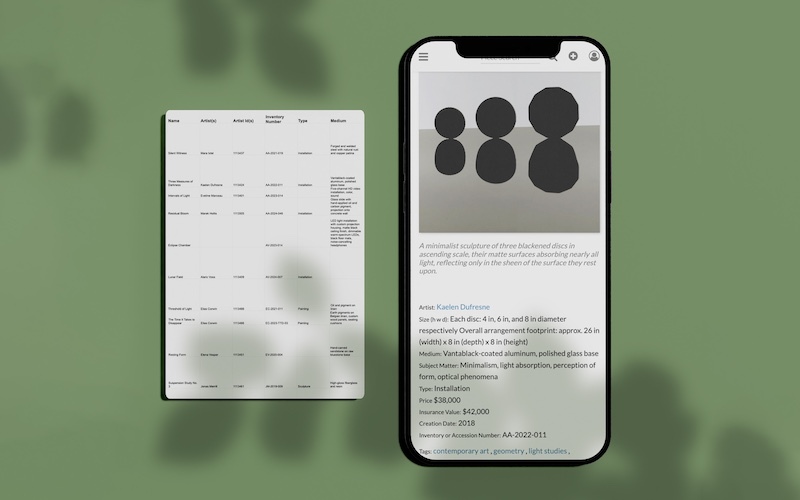
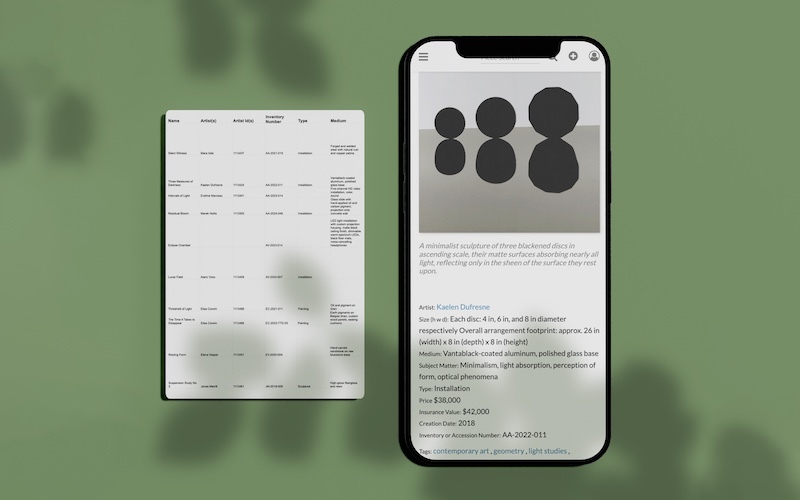
 Artwork Archive helps collecting organizations stay ready for the next request by centralizing object records, images, documents, and reports in one place—making collection information easier to find, manage, and share.
Most collecting organizations regularly assess the physical condition of the artworks and objects in their care. But how often do you assess the health of the systems and workflows you use to manage them?
A mid-year check-in is an opportunity to identify gaps before they become problems. Whether you're managing a museum, public art collection, university gallery, healthcare collection, or historic site, asking a few simple questions can reveal where your workflows are working and where they may need attention.
Here are seven questions to ask your team.
1. Could someone else find what they need?
Imagine you're out of the office and a colleague receives an urgent request from a researcher or lender.
Could they quickly locate the object record, related images, artist information, condition reports, and supporting documentation? Or would they need to ask where everything is stored?
Collections should never depend on one person's memory. Information should be organized so that anyone with appropriate permissions can find what they need.
Artwork Archive in practice: Organizations use centralized object records to store images, documents, conservation history, and correspondence in one place, making information easy to locate even during staff transitions.
2. Are your locations current?
One of the simplest questions can also be one of the hardest to answer:
Where is this artwork today?
Whether your collection includes loans, rotating exhibitions, storage, or public installations, accurate location tracking saves countless hours and prevents unnecessary searching.
Take a few minutes to spot-check your records. Are recent moves reflected? Are temporary locations documented? Can everyone trust the information they're seeing?
Artwork Archive in practice: Many organizations use location histories and movement tracking to maintain an accurate record of where each object has been over time.
3. Could you find every contract in five minutes?
Artist agreements. Loan documents. Deeds of gift. Copyright permissions. Fabrication drawings.
These documents are often just as important as the object record itself.
If they're scattered across email inboxes, shared drives, and filing cabinets, routine requests become much more time-consuming.
Ask yourself:
- Are contracts attached to the object they relate to?
- Could another staff member find them without asking?
- Are important emails preserved alongside the record?
Artwork Archive in practice: Organizations attach contracts, correspondence, installation instructions, and other supporting documents directly to collection records so they remain accessible over time.
4. Are conservation and maintenance needs documented?
Preventive conservation relies on good documentation.
Do your records capture condition history, treatment reports, inspections, and maintenance schedules?
This is especially important for outdoor sculpture and public art, where multiple departments or contractors may be involved over many years.
Artwork Archive in practice: Public art programs use recurring reminders and maintenance documentation to support long-term stewardship.
5. Could you produce a leadership report this afternoon?
Your executive director or board chair asks:
"Can you tell me how many works were acquired this year?"
"What's currently on loan?"
"Which artworks are due for conservation?"
Would generating those reports take minutes, or days?
Good collections management isn't only about preserving information. It's about making that information usable for decision-making.
Artwork Archive in practice: Many organizations create reports for leadership, boards, insurers, donors, and auditors directly from their collections database instead of assembling information manually.
6. Would you be ready for an insurance claim?
No one wants to think about emergencies, but being prepared can significantly reduce stress if something happens.
Ask yourself:
- Are photographs up to date?
- Are valuations documented?
- Can you quickly identify affected objects?
- Do you have condition reports and supporting documentation readily available?
Preparing before an emergency occurs is always easier than reconstructing information afterward.
Artwork Archive in practice: Organizations maintain complete records including images, documents, valuations, and condition reports to support insurance claims and emergency response.
7. Could you answer a researcher tomorrow?
Researchers rarely ask for just one piece of information.
They often need provenance, exhibition history, artist biographies, publications, images, or related works.
The easier it is to retrieve that information, the more time your team can spend supporting scholarship instead of searching for files.
Artwork Archive in practice: Institutions use reports, Private Rooms, and public collection pages to securely share tailored information with researchers, scholars, and collaborators.
A healthy collection is more than organized records
Collections management isn't just about documenting objects. It's about ensuring your organization can respond confidently to the everyday requests that come from leadership, researchers, insurers, lenders, conservators, and the public.
If several of these questions gave you pause, you're not alone. Every organization has opportunities to improve its workflows. The important thing is to identify those opportunities before they become urgent.
A mid-year check-in doesn't require a complete overhaul. Sometimes, small improvements like centralizing documents, standardizing locations, or recording conservation history more consistently can save hours of staff time throughout the year.
The healthier your collection records are today, the easier it will be to care for your collection tomorrow.


