 |
Jessie Mahon is a visual artist and co-founder of Milroy Projects, a fine art giclée printing and archival scanning studio based in Brooklyn, NY. Milroy Projects specializes in museum-quality printing, high-resolution scanning, and artist-friendly
|
The first art print I ever made was, to put it charitably, not great.
This was over a decade ago, and I knew next to nothing about documenting my work. I set the piece in some overcast natural light, shot it on my iPhone 6, and sent the file off to the printer hoping it would turn out okay.
That experience sent me down a long road: real investment in professional scanning, a lot of trial and error learning to digitize my work properly, and a realization that great prints don't start at the printer: they start with the file.
The difference, once I got it right, was enormous. Now, prints are a substantial part of my practice, representative of the quality of my work while broadening who can become a collector. I even started Milroy Projects, a fine art printing studio in Brooklyn, New York, to help other artists create prints of their works.
Most artists arrive at printmaking the same way I did. A collector asks if you offer prints. A friend mentions they'd love to own your work but can't afford an original. You do a fair and walk away knowing you've left easy revenue on the table. Suddenly, you're Googling "what does giclée mean" at midnight and wondering where to start.
This is the guide I wish I'd had when I was just getting started. It covers the decisions you'll face—file preparation, paper selection, pricing, tracking sales—from start to finish. Follow these steps, and you’ll save yourself lots of time and money navigating this learning curve and your collectors will thank you.
What Is a Limited Edition Art Print? What Is a Giclée Print?
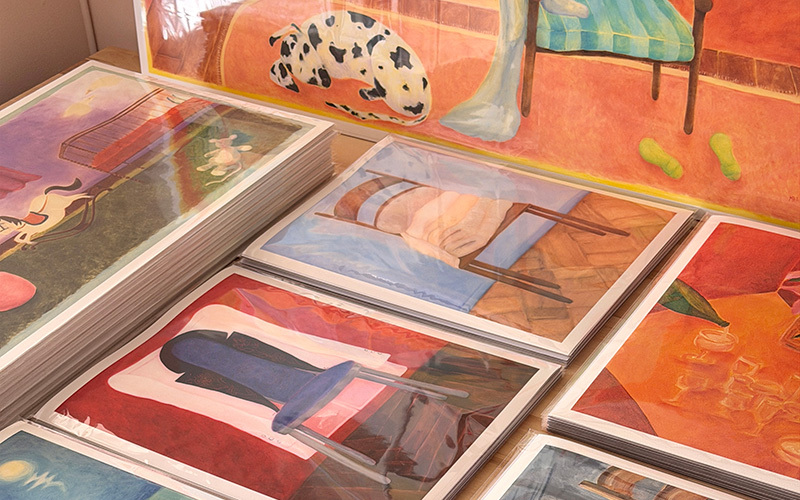 Creating prints of your artwork is a simple way to expand your audience. Artwork by Marissa Apstein.
A limited edition art print is a reproduction of your artwork in print form, typically created using a digital inkjet printer. Sometimes these prints are also called giclée prints or archival pigment prints, but they’re all synonymous.
Since these are reproductions, they’re treated differently from original artworks created using traditional printmaking techniques. Here’s a simple way to think about it: if you create a woodcut print, that’s the work itself; if you then create a digital inkjet print using a high-quality scan of that woodcut print, that’s the type of limited edition art print we’re talking about in this article.
A limited edition is a fine art print produced in a fixed, predetermined number. Once that number is reached, no more are made at that size. Each print is numbered ("3/25" means the third print in an edition of 25, for example) and authenticated by the artist.
This differs from an open edition, where prints are produced on demand with no cap on quantity. Limited editions command higher prices and create genuine collector value; open editions are more accessible and better suited to lower price points. Neither is right or wrong: they're just different strategies, and understanding the difference is your first real decision.
For a first edition, most artists choose a run of somewhere between 10 and 20 prints. A smaller edition supports higher pricing and builds demand faster; a larger run works well for work you expect to sell broadly over time.
Whatever number you choose, stick to it. Changing your edition size after the fact undermines the trust your collectors place in you.
Ready to expand your art's reach and streamline your art edition management?
Whether you're already creating multiples or curious about exploring Editions, this hands-on webinar session will transform how you manage your editioned work.
1. Start Your Limited Edition Art Print With the Best Image File You Can Get
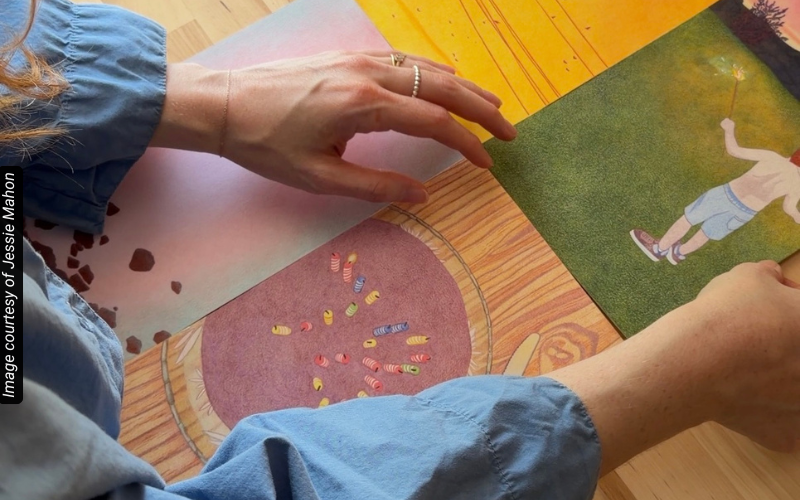
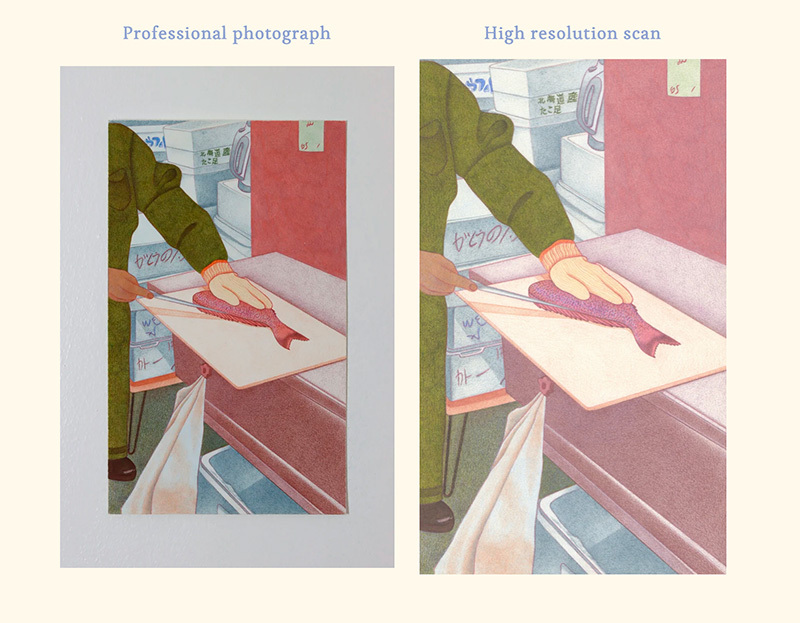 Even the best photo can leave out details—scan your work for best results. Image courtesy of the author.
Every great print requires a great file. If you take one thing from this article, please let it be this.
If you're printing from a digital work, check your resolution before you do anything else. For giclée printing, you want at least 300 DPI at the intended print size. If you're printing at 18 × 24” and your file is only 72 DPI at 9 × 12”, you're going to get an ugly, pixelated print. Dimensions and resolution go hand in hand.
If you're making a reproduction of an original painting, drawing, or mixed-media piece, you'll need a professional scan or photograph before you print. This is where most artists either invest wisely or cut corners. A professional scan captures color, texture, and detail that a phone photo—or even a good DSLR—simply can't match. At Milroy Projects, we scan originals up to 40 × 60” inches at three resolution tiers:
- 300 DPI: for printing at original size or up to 2× the original
- 600 DPI: for printing 2-4× the original
- 1200 DPI: for printing more than 4× the original
Even if you're not ready to print yet, getting your originals professionally scanned is one of the best investments you can make in your practice. A high-resolution scan is a permanent digital archive of your work—it protects you if anything happens to the original, and it's ready when the right opportunity comes by.
Before starting Milroy Projects, I made a habit of taking my drawings to a local film lab for scanning—TIFF files at 300 DPI in Adobe RGB (1998)—then labeling and backing them up on an external hard drive.
Beyond print reproduction, those scans became the foundation of everything: my website, social media, exhibition tear sheets, collector emails, open call submissions. Getting on top of my archiving has saved me from countless hours of scrambling and has made me so much more confident in how my work is viewed on a screen.
2. Choose the Right Paper For Your Artwork Style
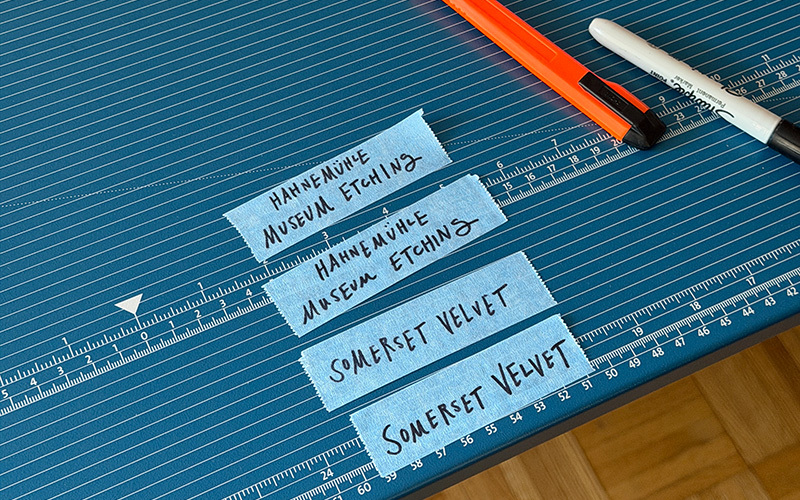 The paper you choose to print your edition sends a message about the kind of art you're making. Photo courtesy of the author.
There's no single “best” paper. The right choice depends on your medium, your aesthetic, and how you want the print to feel in a collector's hands. The same image on two different papers can feel like two completely different works.
- Painters (oil, acrylic, watercolor, gouache): Look for a textured cotton paper that mimics canvas or hot-press. Somerset Velvet 255gsm and Hahnemühle Museum Etching 350gsm hold brushwork beautifully and give prints a tactile, handmade quality.
- Drawings and mixed media (ink, graphite, colored pencil, pastel): Moab Entrada Rag Natural 290gsm is a warm-toned, 100% cotton matte paper that enhances subtle tonal shifts and holds fine line detail with exceptional clarity.
- Photographers and digital artists: Premium Pro Luster 260gsm delivers sharp detail, deep blacks, and vibrant color with a semi-gloss sheen. For a fine art photography aesthetic closer to darkroom prints, Hahnemühle Photo Rag Baryta 315gsm is the gold standard.
- Illustrators and price-conscious editions: Red River Polar Matte 230gsm is smooth, bright white, and affordable without sacrificing print quality.
Before committing to your paper, ask your printer for test prints on two or three options. If you're new to printing, working with a new printer, or trying a new material, test prints are never a waste of money.
3. Lock In Your Limited Edition Art Print Details Before You Print Anything
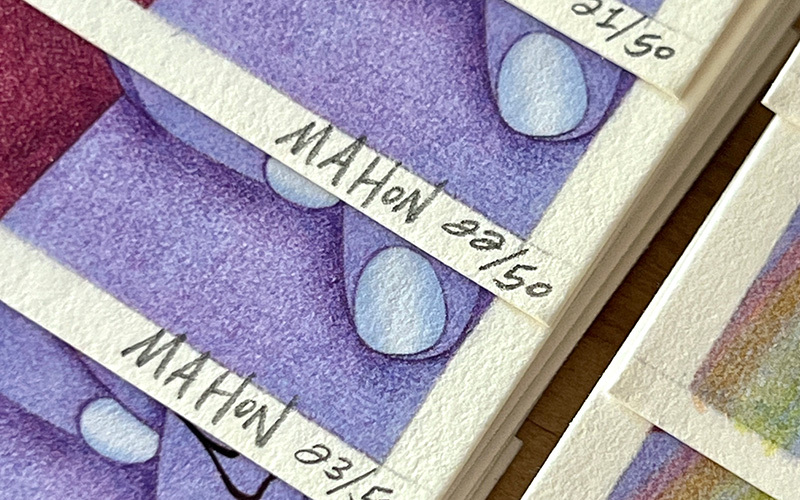 Set your edition size up front to save yourself headaches down the road. Image courtesy of the author.
Many first-time edition makers make decisions mid-run that cause problems later. Before you begin, commit to:
- Edition size: Pick a number and stick to it.
- Print size(s): If you offer multiple sizes, treat each as a separate edition—a 12 × 16” edition of 25 and an 18 × 24” edition of 15 are two distinct editions of the same image.
- Signing and numbering: This comes down to personal preference, but most artists sign (or emboss) and number prints on the lower margin or border of their prints.
4. Create Certificates of Authenticity For Your Limited Edition Art Prints
A Certificate of Authenticity (COA) travels with each print and confirms it is what you say it is. A complete COA includes your name and signature, the title and year of the work, medium and substrate, edition number, and print dimensions. If you're tracking your edition in Artwork Archive, you can generate a COA directly from your artwork record—no reformatting required.
Generate Certificates of Authenticity For Your Editions With a Click:
A Certificate of Authenticity should accompany every artwork you create, regardless of its sale status. It serves as the primary tool for establishing an artwork's provenance and officially declares that you are the creator of the piece.
5. Track the Size and Sales of Your Limited Edition Art Print
This is the single step that causes artists the most headaches. If you're selling through your website, at fairs, and through a gallery simultaneously, you need a system that tells you exactly how many prints remain at any given moment. Selling print #18 from an edition of 15 is not a mistake you can walk back!
Artwork Archive has built-in edition tracking that lets you record edition size, track individual sales, and see your remaining inventory at a glance, with COAs attached directly to each artwork record.
6. Price Your Limited Edition Art Print With Intention
A few principles worth keeping in mind:
- The price you charge for a limited edition print should be meaningfully lower than what you’re asking for the original artwork. A common benchmark: edition prints typically sell for 10-30% of the price of a comparable original.
- Edition size affects price. An edition of 10 supports a higher price point than an edition of 100.
- Factor in your costs—paper, printing, packaging, COAs, and your time—before you set a price.
7. Think About Shipping Fulfillment For Your Limited Edition Art Print Before You Need It
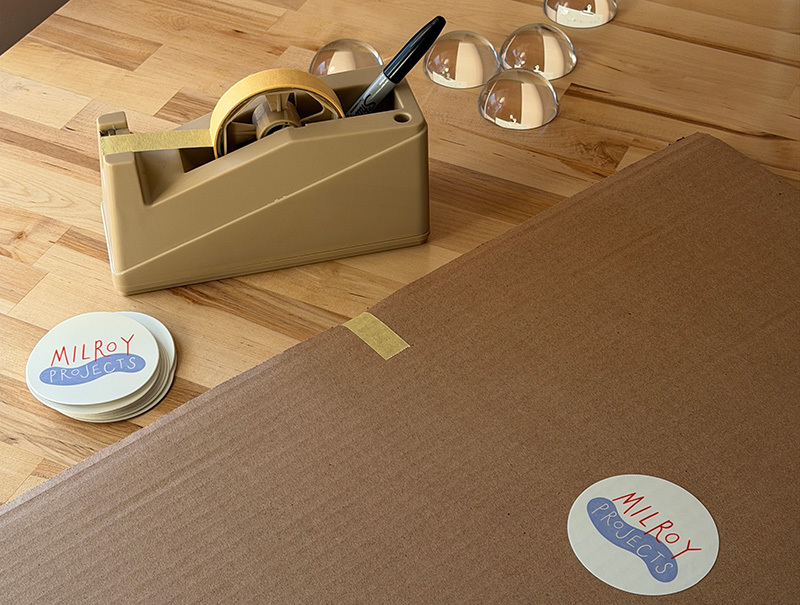 If you want your beautiful art to arrive in one piece—pack like it! Image courtesy of the author.
"I'll figure it out when someone buys one" tends to end with a damaged print and an unhappy collector. A few things to sort out in advance: large prints are typically shipped rolled in tubes; smaller prints can be flat-packed in rigid mailers between archival boards. Whatever your method, use glassine or acid-free sleeves, backing boards, and "Do Not Bend" stickers. Good packaging both protects your work and leads to a reassuring experience for the collector.
At Milroy Projects, we offer end-to-end fulfillment, from custom packing to direct delivery to collectors and galleries, so artists can focus on their work rather than making a dozen trips to the post office.
Before Your First Limited Edition Art Print Goes Live—A Checklist!
Before you post that new print sale to your instagram or list your limited edition on your website, follow this checklist to make sure you're ready to send your pieces out into the world:
- High-resolution file confirmed (300 DPI minimum at print size)
- Professional scan or photograph completed (if printing from an original) and uploaded to the Artwork Archive piece record
- Test prints reviewed on your chosen paper
- Edition size decided and documented
- Print size(s) decided
- Signing and numbering established
- COA template ready
- Edition created and tracked in Artwork Archive
- Pricing set for the full run
- Fulfillment method decided
The Limited Edition Art Print You Don’t Make Is Revenue You Don’t Earn
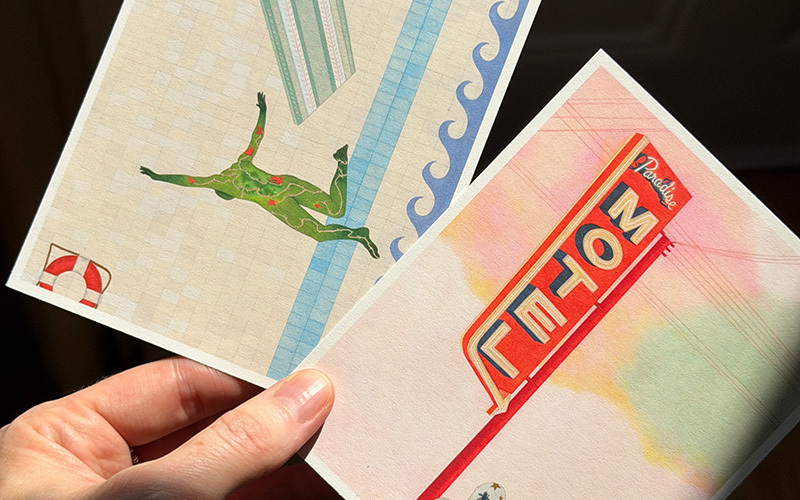 Creating editions of your work is an easy way to build sustainable, long-term income streams for your art practice. Image courtesy of the author.
The value that work by living artists adds to a collector's life is real and lasting—and that includes limited edition prints.
Sometimes artists worry about diluting the value of their originals by making prints. I'd argue the opposite happens: done with intention, care, and a solid understanding of the process, limited editions can bring your work to an entirely new audience without taking anything away from the original work. So don't be afraid to expand your audience and share your work with the world with limited edition prints.
Want to Create a Limited Edition Art Print of Your Own Artwork?
Create an Edition in Artwork Archive to track your high resolution scans, edition size, sales, income, purchasers' contact information, and more. Explore our in-depth guide on creating your own Edition, watch our full webinar on building sustainable income with Editions, and give Artwork Archive a try for yourself with a risk-free 14 day trial.