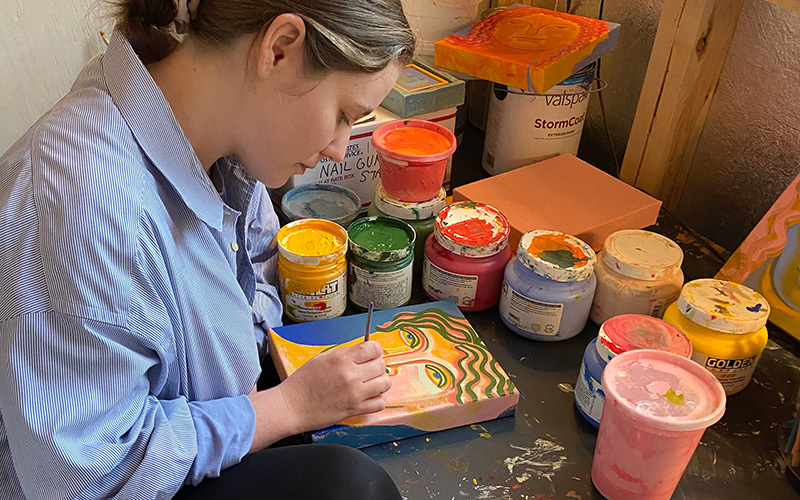
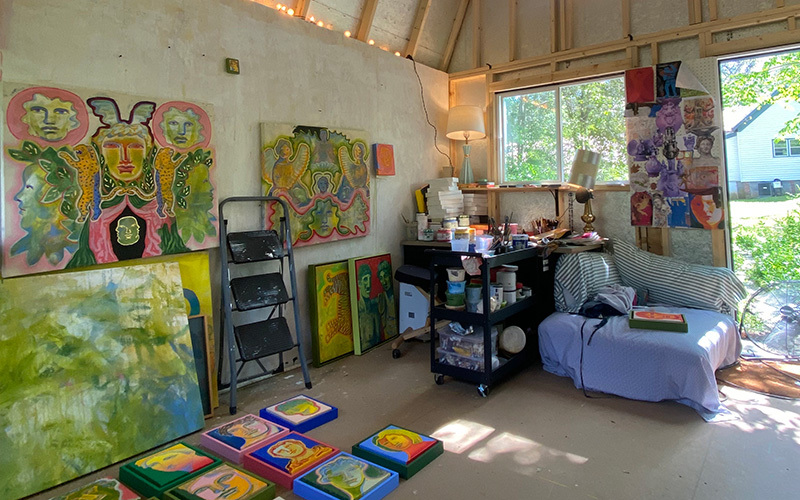
 Learn from the dozens of professional artists that Artwork Archive had the privilege of speaking with this year. Image courtesy of Shelby Little.
Every January, the art world loves to talk about fresh starts and new beginnings. Set better goals! Try new techniques! This will be your breakthrough year!
But here's one thing that 2025 actually taught us: the artists who thrived this year weren't the ones constantly reinventing themselves or chasing the next big thing. They're the ones who've learned to trust their instincts, protect their energy, and stop measuring success by other people's standards.
Through dozens of conversations with working artists this year, a pattern emerged. The practical, everyday decisions they make in their practice—documenting their work consistently, building their community intentionally, sharing their imperfect work bravely—mattered far more than any single exhibition or sale or other moment of recognition.
Below we’ve collected 10 of the most important lessons we learned over a year of talking to working artists. Read on to learn valuable insights from artists who've figured out how to sustain creative practices over years and decades, through market shifts and personal challenges, and all the noise telling them what they "should" be doing.
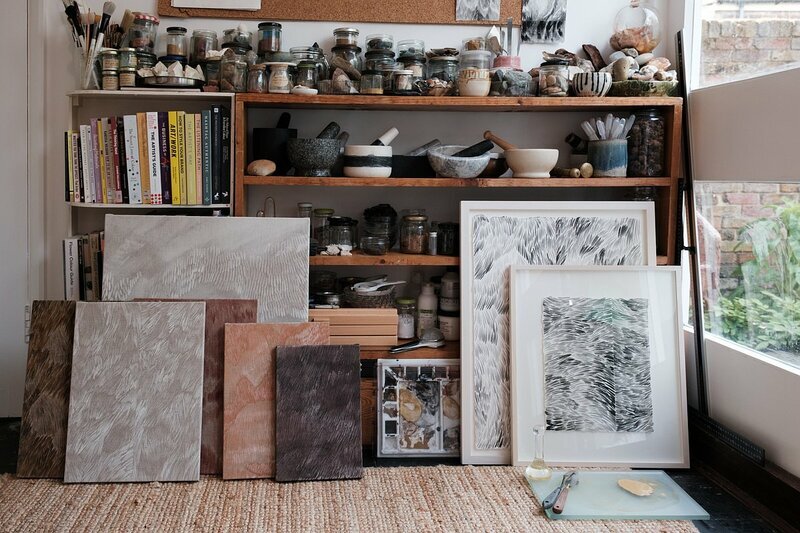 A view of Lisa-Marie Price's light-filled studio. Image courtesy of the artist.
1. Trust Your Own Artistic Voice, Not Everyone Else’s Opinion
“You don’t have to say yes to everything if it doesn’t sit right with your morals and ambitions. Don’t listen to everyone’s opinions about what is best for your art practice. You know best. Even well-meaning people can give the wrong advice for you.”
—Lisa-Marie Price
There are so many voices that crowd around you as an artist. Gallery owners with their preferences. Collectors with their expectations. Fellow artists with their suggestions. Even your art school mentors had a vision for what your work “should” be.
But to continue making work over years, you need to learn how to cut through the noise.
It’s not that other people’s advice isn’t helpful, Lisa-Marie Price told Artwork Archive; it’s that you’re the only one who truly understands what you’re trying to build, and why.
So learn to heed your internal compass to help distinguish between opportunities that align with your practice and the shiny distractions that pull you off course. Your intuition about your work is powerful. Trust it.
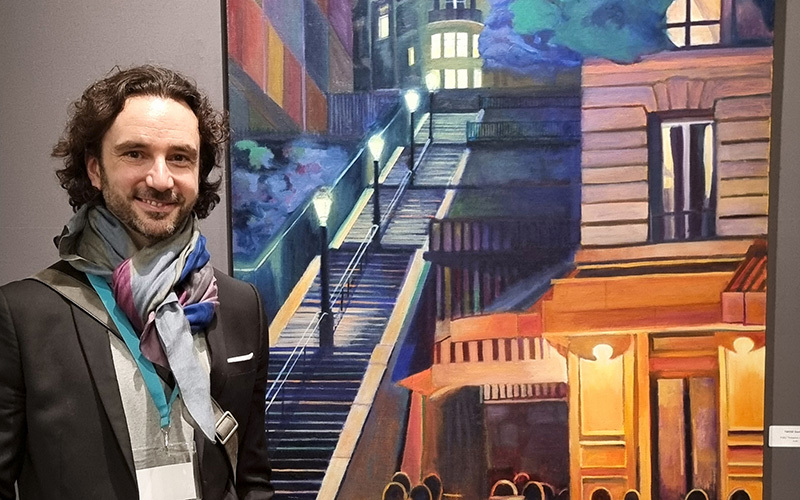 Artist David Twose next one of his paintings. Image courtesy of the artist.
2. There’s No Substitute For a Real-Life Art Community
“Keep attending exhibitions, going out, and meeting new people… Get out of the studio to connect with other artists.”
—David Twose
We spend so much energy carving out and protecting our studio time that sometimes we forget: art doesn’t exist in isolation, and neither should you.
Painter David Twose makes it a priority to balance studio time with real-world connection. Social media and the internet in general have opened up unprecedented new ways for artists to share their work, but there’s nothing quite as energizing and as supportive as building up your in-person artist community.
This coming year, make it a priority to attend openings, schedule that studio visit, grab coffee with your fellow artists. You’ll see work that challenges your assumptions, you’ll have conversations that shift your perspective, and hopefully, you’ll remember why you make art in the first place.
So yes, protect your studio time. But don’t neglect your community. Your next breakthrough might not come from another hour in your studio. It might come from a conversation at the opening across town that you made the effort to get to.
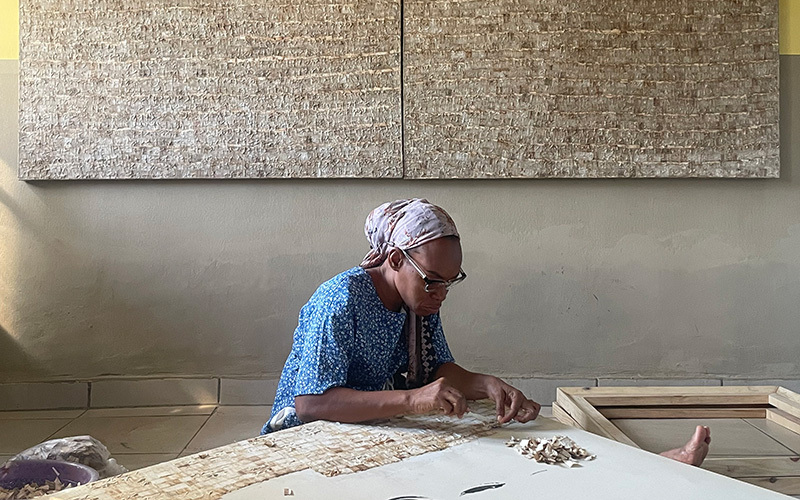 Artist Amarachi Okafor in her studio. Image courtesy of the artist.
3. Document Your Art! Yes, You!
“Documentation is very necessary, and I say that with much emphasis… There are thousands of other details about life and practice that are needed for preserving legacies in a way that makes an impact and benefits society.”
—Amarachi Okafor
Every time you skip photographing a piece properly, every time you forget to note the inspiration behind a series, every time you don’t record the details of a commission or exhibition, you’re letting part of your story slip away.
Artist and curator Amarachi Okafor is an advocate for archiving the works of established African artists, and she wants all artists to understand that documentation work is legacy work. It’s how your art outlives you. It’s how future generations understand not just what you made, but why and how you made it.
Think about the artists you admire from previous generations. What do you wish you knew about their process? What questions do you have about their work that will never be answered because they didn’t write it down? That’s what at stake when you treat documentation as optional.
But documentation isn’t just about posterity, it’s also about allowing you to live the artistic life you want. When a curator asks about the 2017 body of work that they are eager to show in their next exhibition, you want to be able to easily pull up images, dimensions, materials, and know where all the pieces live. When tax season arrives, you want organized records. The bottom line: when opportunity knocks, you can’t afford to scramble.
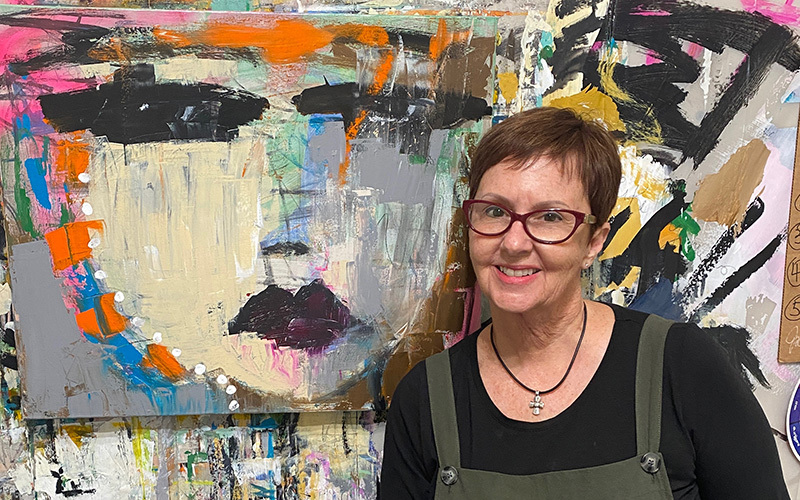 Janet Little found connection through art that she'd never experienced before. Image courtesy of the artist.
4. Art Saves Lives
“I know the discovery of making art has saved me. Now, I can’t imagine not painting. I have made so many wonderful connections with the women who have resonated with and purchased my art.”
—Janet Little
With the constant demands of a busy artist’s life, it’s easy to get so caught up in the business side that we forget why we make art in the first place.
Painter Janet Little never loses sight of her “why” as an artist. According to her, art saved her life—literally. She has painted her way through her recovery from a Stage 4 ovarian cancer diagnosis and two cancer recurrences in 12 years, and she has no doubt that making art has given her a powerful reason to keep going.
Most importantly, art can reconnect us to other people when the isolation of illness, or depression, or other hurdles can feel crushing. This is art at its most essential, a lifeline and bridge between human experiences.
Even if you haven’t experienced what Janet faced down, your work matters more than you think. The piece that feels too personal, too vulnerable, too raw to share? Don’t underestimate the healing power of what you’re creating. That might be exactly what someone else needs to feel less alone.
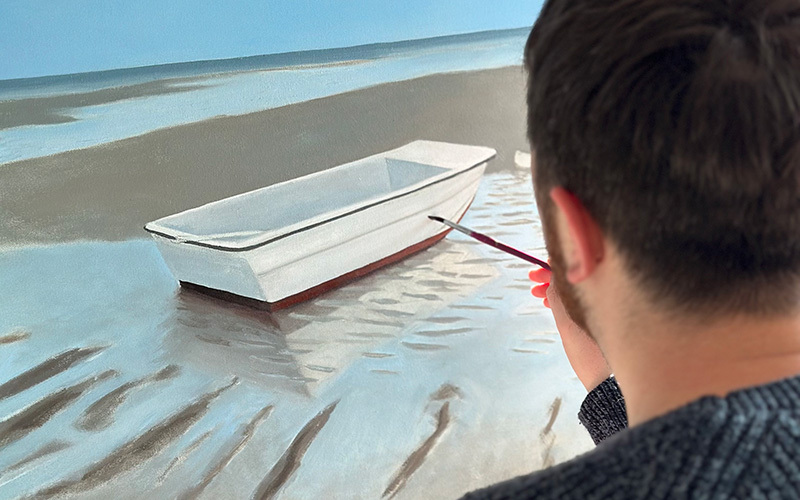 Matthew Jay Russell has found a sustainable pace for his art practice. Image courtesy of the artist.
5. Slow Growth Might Be The Best Thing For Your Art Career
“You don’t need to sprint to grow… You just need to keep going, stay open, and take yourself and your work seriously."
—Matthew Jay Russell
In an age of viral art fair booths and overnight Instagram success stories, painter Matthew Jay Russell’s career trajectory offers a radically different model.
The oil painter has been steadily developing his voice over years, refining what is vital to him about his practice, and what trends he can let pass by. When you work patiently and thoughtfully, you’re building your practice on solid foundations rather than unstable aspirations.
The art world will always celebrate the meteoric rise, but the artists who will still be working twenty years from now are the ones who are learning to pace themselves today. What if you gave yourself permission to grow slowly?
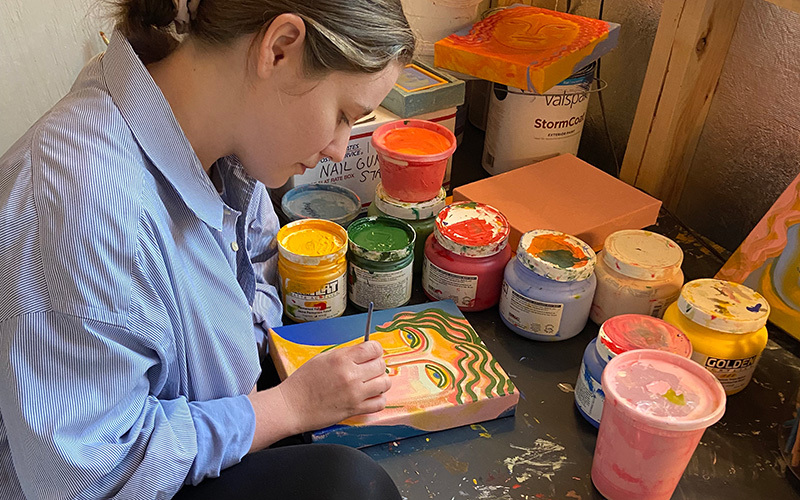 Shelby Little learned to not wait for perfection. Image courtesy of the artist.
6. Share Your Art, Especially When It’s Not Perfect
“[Be] brave enough to share your work in the first place... Put whatever you have out there. Don’t wait to make something perfect.”
—Shelby Little
Perfection is the artist’s favorite hiding place. As long as your work isn’t “ready,” you don’t have to deal with potential rejection or criticism. So you stay safe in your studio, endlessly refining and perpetually preparing.
But what if you had the courage to face your fears and just share that work with the world?
Painter Shelby Little understands that when you focus on perfection, you don’t build an audience, or get feedback, or build any momentum. Every successful artist you admire has shared work they later cringed at. Follow their example: make something, put it out there, and learn from the response.
The work doesn’t have to be perfect, it just has to be honest. Post that painting. Submit to that Call for Entry. Share what you have today, so that you can figure out your next steps for tomorrow.
Get the 2026 Art Opportunities Guide
 Our 2026 Art Opportunities Guide is chock full of 100+ residencies, grants, and awards for artists at any stage of their careers. Get the full guide here →
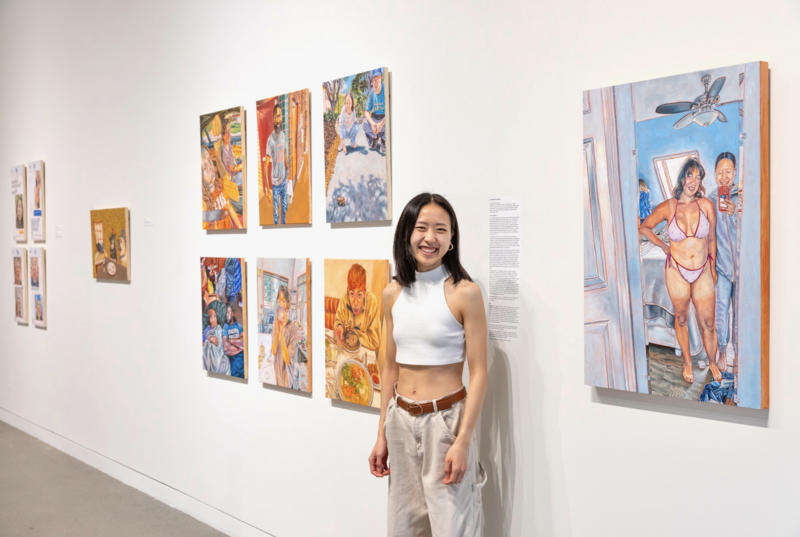 Jackie Liu is counting on joy. Image courtesy of the artist.
7. The Joy of Art Can Be a Form of Resistance
“Joy is what emerges from having lost and having something to lose. Joy is what empowers us to resist the injustices of the present and open our imaginations to new possibilities. Joy is what galvanizes us to fight and go on. Joy is what binds us together.”
—Jackie Liu
Your art doesn’t have to be heavy to be meaningful. Sometimes the most powerful thing you can do is create something that makes people feel connected in a moment of happiness.
In a world that often feels overwhelming, Jackie Liu made the radical decision to paint joy as a daily act of resistance. Liu understands that joy emerges precisely because we’ve experienced loss, and we know what’s at stake. Joy builds community, it sustains us through difficult times, it reminds us why we’re making work in the first place.
What would happen in 2026 if you gave yourself permission to make work that celebrates beauty, connection, and delight?
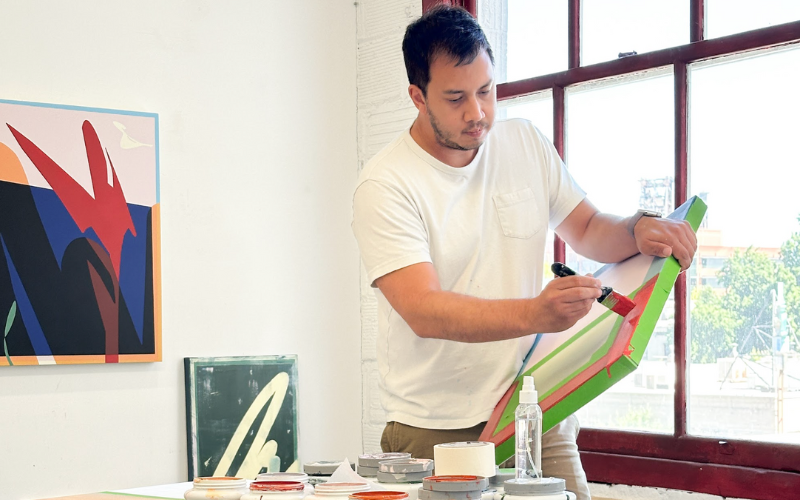 Adrien Saporiti isn't chasing "success" anymore. Image courtesy of the artist.
8. Don’t Make “Success” Your Artistic Goal
“Success is arbitrary and ill-defined, and ultimately not up to us, so it shouldn’t be the target. Just make what you want to make. Anything else is a bonus.”
—Adrien Saporiti
Artist Adrien Saporiti offered one of the more liberating perspectives on success we heard all year. He reminds himself that one particular famous artist only sold two paintings while he was alive… to his brother.
“If you’re still alive, making art, and can sell three paintings in your career, congratulations, you’re already more successful than Van Gogh was when he was alive,” he told Artwork Archive.
The truth is that “success” is largely outside of your control. You can’t control who discovers your work or whether it fits with current trends. The only thing you can control is creating with integrity and staying true to your vision.
If you do manage to sell some work, or win an award, or secure the residency you applied for, take a moment to celebrate. But remind yourself that these markers of external validation are not why you make art. The point of making art is to make art. And that’s entirely within your control.
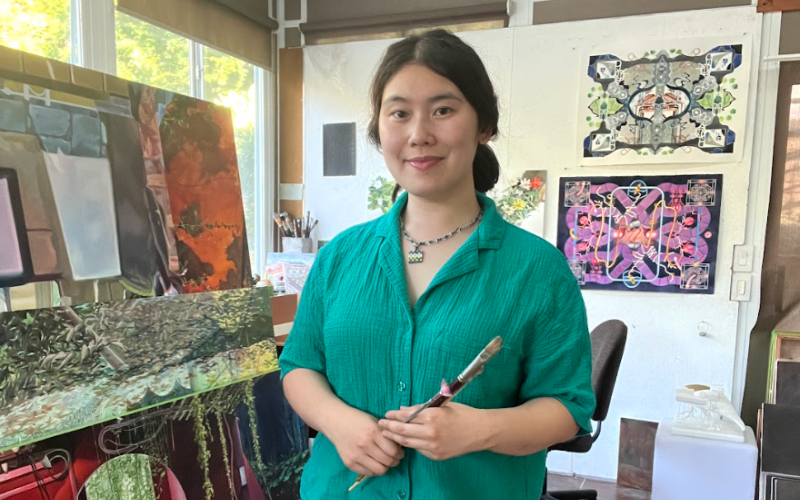 Karen Kuo now understands the importance of a clear narrative when sharing her work. Image courtesy of the artist.
9. Find the Right Language to Tell Your Artistic Story
“Finding clearer language has helped me share the work with more care and intention.”
—Karen Kuo
A lot of artists have a hard time writing about their work. It’s a challenge that Karen Kuo sympathizes with: how do you translate the vivid, complex world inside your head into words that help others understand what they’re seeing?
When you can articulate what drives your practice and what questions you’re exploring through your work, you’ll find that conversations with galleries get easier, grant applications feel less painful, and collectors are able to connect more deeply with the work because they can understand it more fully.
Take the time to brainstorm what’s driving your current body of work, and how it connects with your practice overall. Think of updating your artist statement, bio, and project statements as a way for you to understand your own work more deeply. The clearer you become about your work, the more powerfully you can share it.
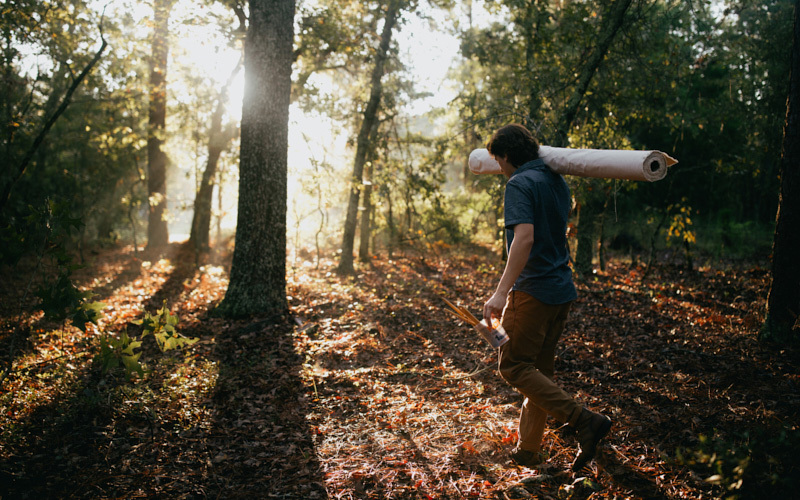 Thomas Flynn II created his own residency. Image courtesy of the artist.
10. Don’t Wait for Anyone Else’s Approval
“Things started going better for me when I stopped waiting for someone to ‘pick me’… Pick me for their show, for their gallery, for their residency.”
—Thomas Flynn II
Painter Thomas Flynn II spent years worrying about external validation. He sought out all the ways the art world says “you’re legitimate now.” But eventually, he decided he didn’t need anyone else to tell him he was a real artist, he just started being one.
For Thomas, this took the form of creating his own self-directed residency out of five days in the back woods of Georgia. He made a thrilling artistic breakthrough during that residency, a realization that has fueled his art practice ever since—and he didn’t even need anyone else’s approval to make it happen.
So take a cue out of Thomas’s playbook, and pick yourself for that project you’ve been waiting to get approval for. Pick yourself to organize the group show with your friends. Pick yourself for the residency you put together at a rented house during a long weekend. Because isn’t it more fun to create your own opportunities than wait for someone else to give you theirs?
Ultimately, the artists who tend to thrive aren’t anxious about getting the most prestigious gallery representation or institutional recognition. They’re the ones who can decide, time after time, to move their art practice forward regardless of what other people think, building their careers one self-initiated step at a time.
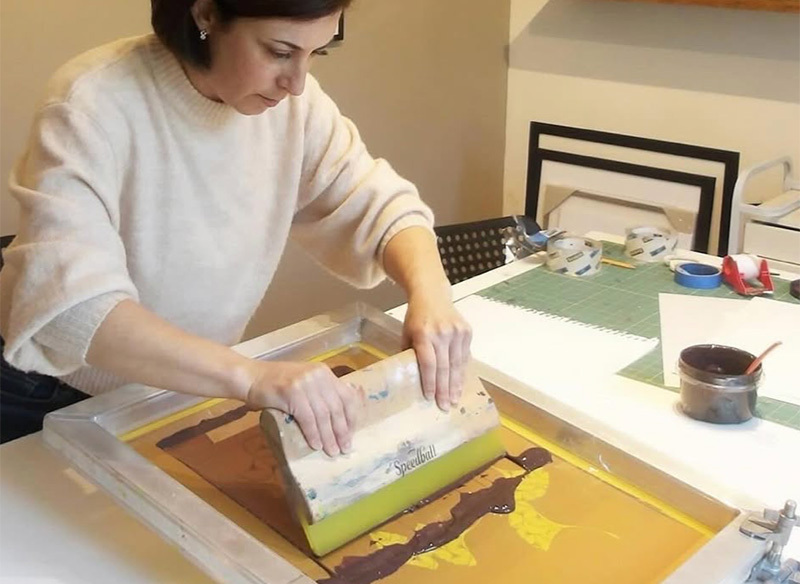 Ilana Dashe learned to invest in the tools she needs to continue growing her career. Image courtesy of the artist.
Bonus Advice: Build Systems to Support Your Art Practice Long-Term
“I learned the hard way that if I didn't get smart and organized on the administrative side, I'd never have time to make my actual art.”
—Ilana Dashe
When printmaker Ilana Dashe was starting out as an artist, she was keeping track of her inventory across spreadsheets, her website, and her studio. But as her practice gained momentum, she realized this wasn’t working.
“I actually lost a sale because it was marked available on my website, but when I went to find it, I realized it had already been sold,” she told us.
Too many artists are reinventing the wheel when it comes to art business management. They’re using messy spreadsheets for their inventory, they’re creating labor-intensive PDFs for every portfolio or invoice request, they’re logging sales in a bookkeeping app, and adding complications to their art business admin in the process.
But just as artists buy the brushes they need to paint, or the camera they need to make their photographs, they also need to invest in the art business tools that can support their practice. Artwork Archive is a complete art business solution that can do so much more than keep track of your inventory. See how you can run your entire art practice from one platform.
No matter where you are in your art journey, getting your business side in order doesn't have to feel overwhelming. A bit of structure now can mean more time and headspace for the work you actually want to be doing.
Artwork Archive helps artists build an online portfolio, stay on top of their inventory, and create things like tear sheets and invoices in just a few clicks. Start a free trial and see how it fits into your own process.