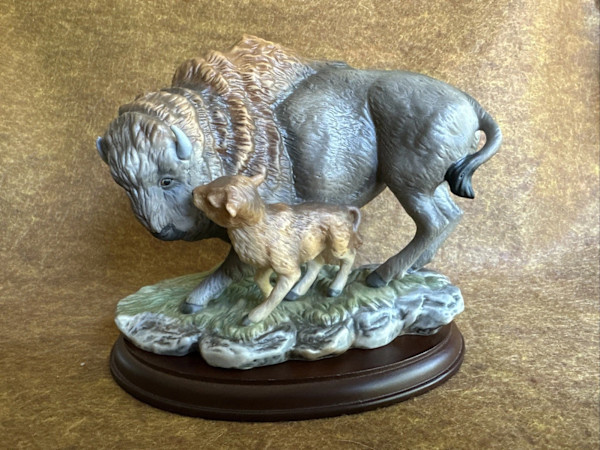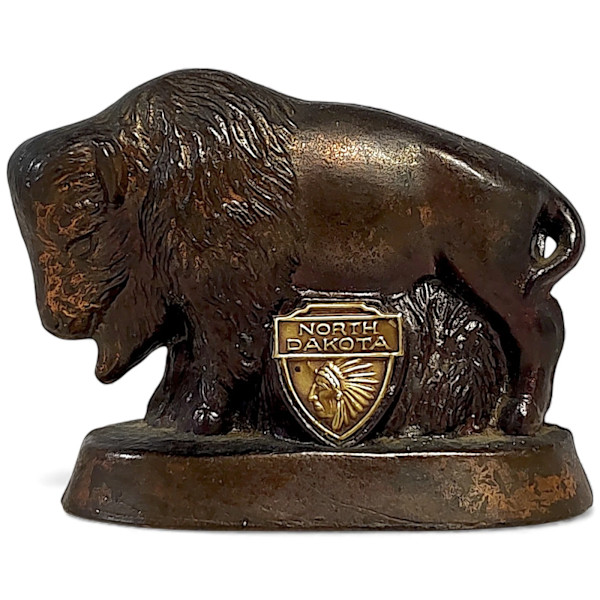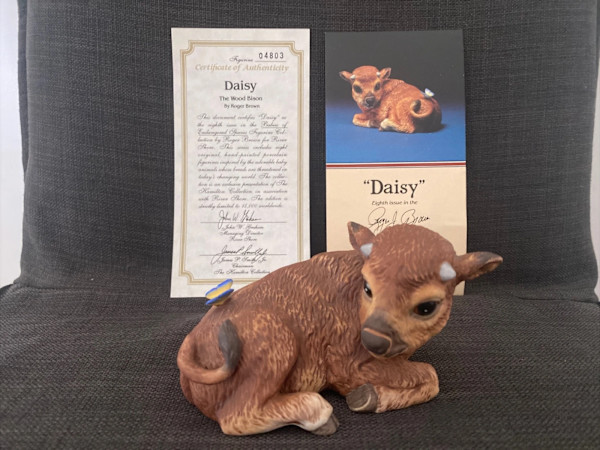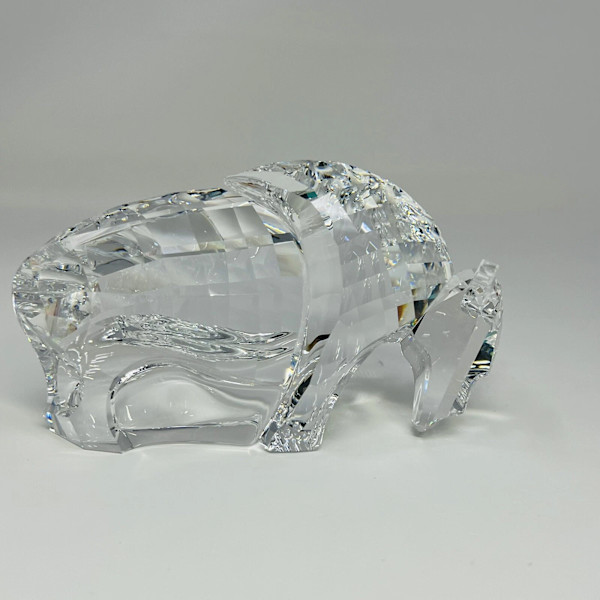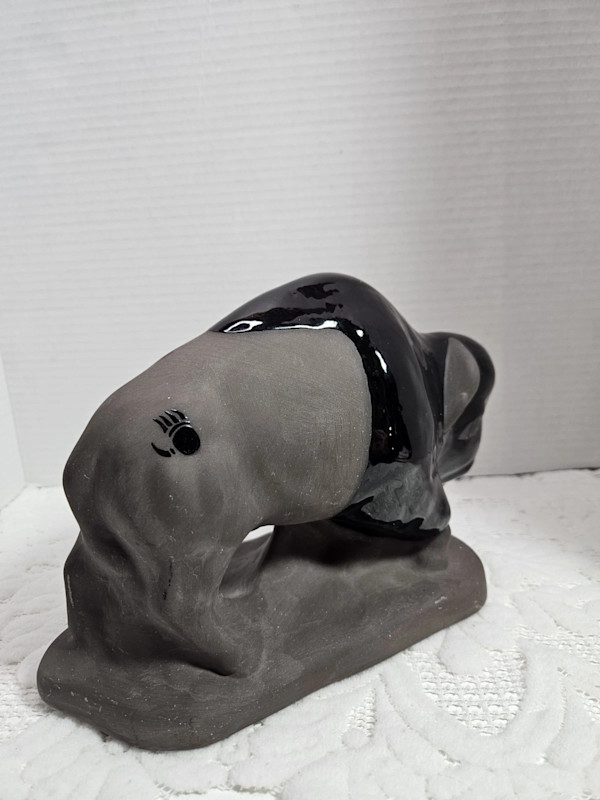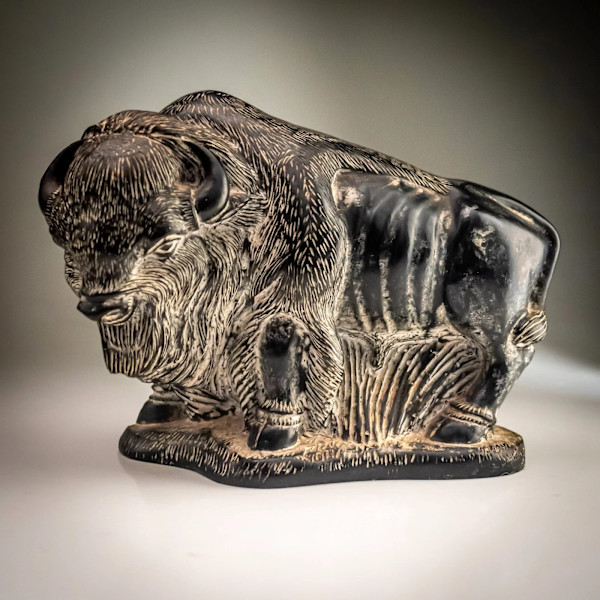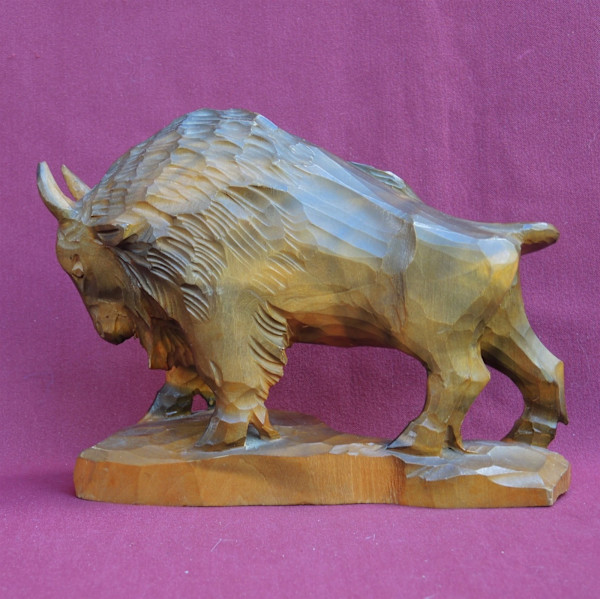

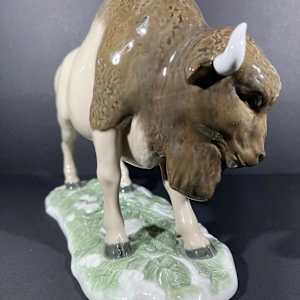
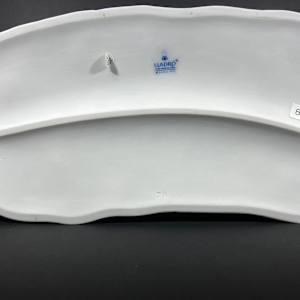
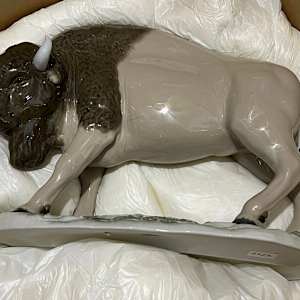
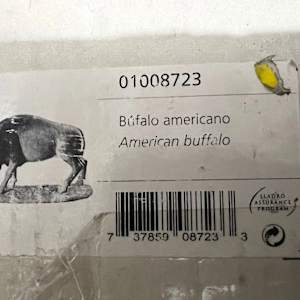
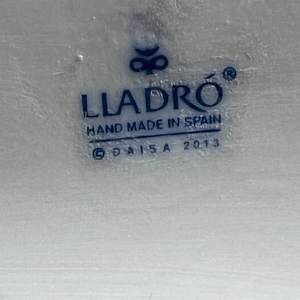
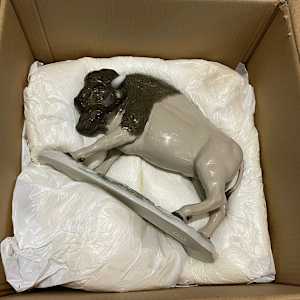
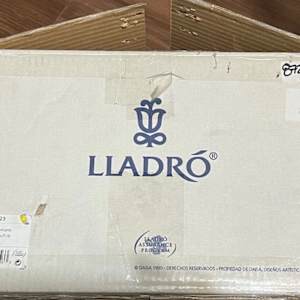
This extraordinary piece represents one of the rarest categories in Lladró collecting—a fully realized prototype that never entered production. Marked "LLADRÓ / HAND MADE IN SPAIN / © DAISA 2013" with model number 8723, this American bison demonstrates the exceptional artistic and technical quality that made Lladró the world's most prestigious porcelain manufacturer, yet it remains unknown in collector circles because it was never released to the market.
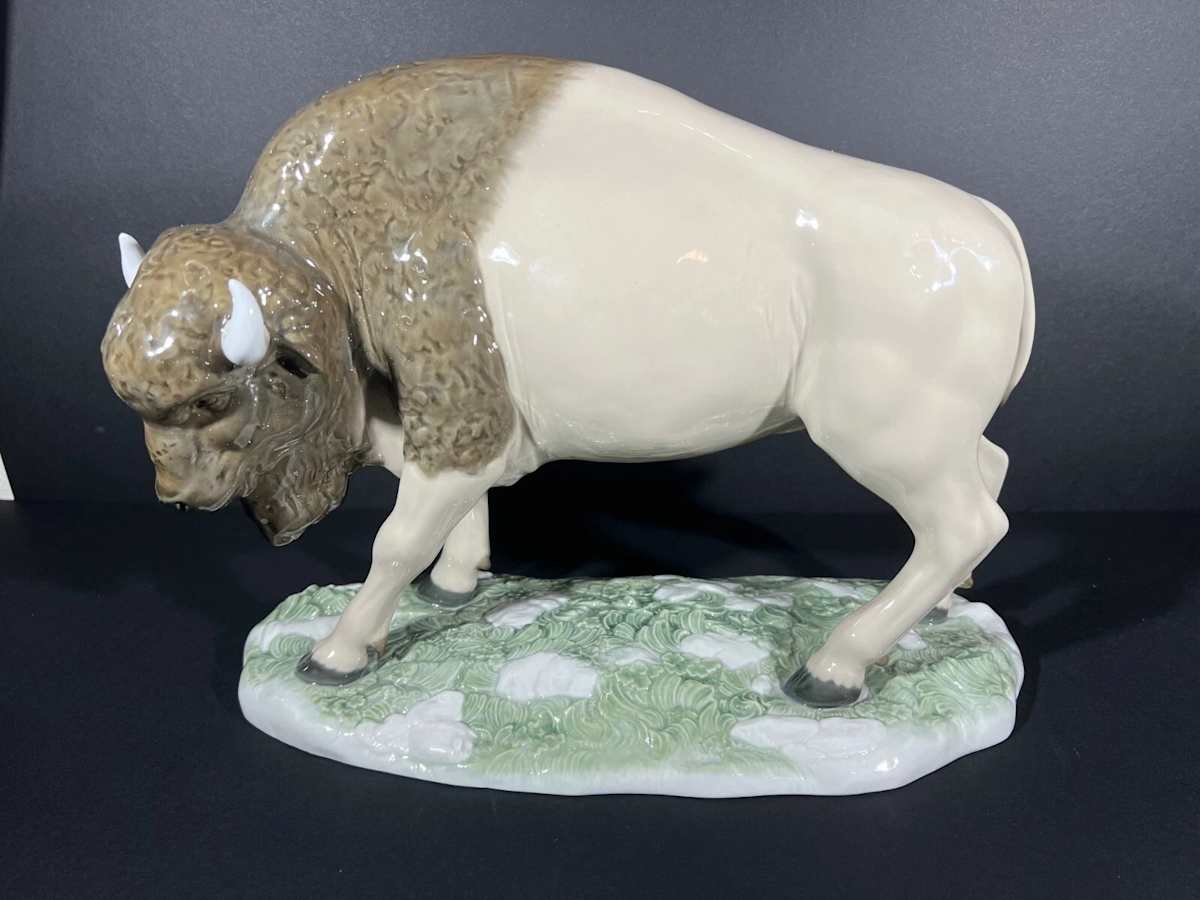
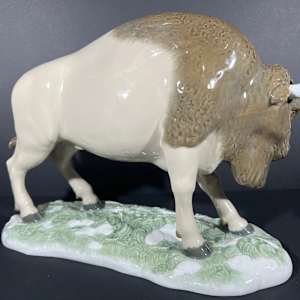
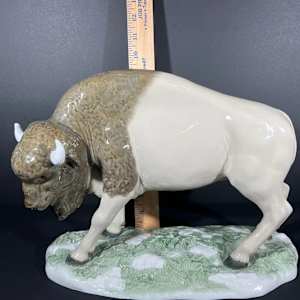
The bison is rendered in Lladró's Gres technique—a specialized stoneware porcelain using natural clays that produces matte, earth-toned surfaces markedly different from their signature glossy pastel porcelain. The color strategy perfectly captures bison anatomy: a rich, textured golden-brown on the head, massive shoulder hump, and front quarters representing the shaggy mane, transitioning to smooth cream-white porcelain on the sleek hindquarters, legs, and tail. White porcelain horns and black hooves provide crisp detail. The prairie base features molded and painted grass in soft greens with white highlighting, suggesting windswept vegetation.
The modeling demonstrates Lladró's characteristic attention to anatomical accuracy and naturalistic pose. The bison stands with weight distributed naturally across all four legs, head lowered slightly in an alert but calm stance. The textured surface of the mane area shows individual fur detail achieved through careful slip trailing and surface manipulation before firing, creating dimensional realism that catches light naturally. The piece retains its original Lladró box and product label identifying it as "Bífalo americano / American buffalo" with model number 01008723.
Lladró and the Gres Technique:
Lladró Comercial S.A. was founded in 1953 by three brothers—Juan, José, and Vicente Lladró—in Almàssera, near Valencia, Spain. Beginning with small decorative pieces produced in a backyard kiln, the company grew into the world's leading manufacturer of luxury porcelain figurines, known for their ethereal pastel glazes, elongated elegant forms, and meticulous hand-finishing.
In 1970, Lladró introduced the Gres line as a dramatic departure from their signature style. Instead of the delicate, glossy pastels that defined their reputation, Gres utilized stoneware clays that fired at higher temperatures, producing matte, earthy surfaces in browns, ochres, grays, and natural clay tones. The aesthetic was intentionally rustic, weighty, and grounded—ideal for depicting subjects where texture, substance, and earthiness mattered more than ethereal beauty.
Gres pieces typically featured cultural subjects, indigenous peoples, workers, animals in natural settings, and sculptural forms where the inherent qualities of the clay enhanced rather than competed with the subject matter. The technique required different skills from Lladró's artisans—understanding how natural clays behaved, achieving proper surface textures, controlling matte finishes, and working with a palette dictated by earth oxides rather than bright enamels.
The Prototype Story:
The provenance of this piece provides crucial context. It was purchased directly from the Lladró store in New York City around 2013 by a prominent attorney and avid Western art collector. Store staff informed him it was a prototype displayed to gauge customer interest and gather pre-orders before committing to full production. He was able to purchase the display piece itself.
Lladró's product development process typically involved sculptors creating original clay models, which were then evaluated by company leadership. Promising designs would be refined, molds created, and small numbers of prototypes produced for market testing. These might be displayed in flagship stores, shown to major dealers, or presented at trade shows. Based on response, production decisions would be made.
This American bison, despite being fully realized with its own model number (8723) and professional presentation, never entered production. No examples appear in Lladró's published catalogs, official website archives, or comprehensive collector databases. The piece exists in a liminal space—finished enough to have official model numbers and packaging, yet never mass-produced or officially released.
Several factors might explain why this bison didn't proceed to production. The subject matter—an American bison—had limited appeal in Lladró's primary European and Asian markets where the animal carried little cultural resonance. The large size and substantial weight would have required premium pricing. The 2008 financial crisis and subsequent economic uncertainty made luxury goods manufacturers cautious about launching new products, especially in niche categories. Additionally, Gres pieces, while artistically respected, never achieved the commercial success of Lladró's classic porcelain, and by 2013 the company was focusing resources on their core lines.
Rarity and Significance:
Lladró prototypes that escaped the factory are exceptionally rare. Most prototypes remained company property, used for internal review, archived in company collections, or destroyed. That this piece was sold directly from a flagship store makes it unusual—typically only after a design was definitively rejected would prototypes occasionally be released.
For collectors, prototypes represent the pinnacle of rarity. Unlike limited editions (produced in controlled quantities of 500-5,000), prototypes may exist as single examples or in extremely small numbers. They document the creative process, showing designs that company leadership deemed worthy of development even if market realities prevented release. They're also often of exceptional quality, as prototypes destined for store display or dealer presentation received extra finishing attention.
This bison's status as an unreleased Lladró prototype in pristine condition with original packaging makes it effectively unique. While it's theoretically possible other prototypes from the same mold exist—perhaps retained by the sculptor, archived at company headquarters, or sold through other channels—no others have surfaced in the collector market or online databases.
In The Collection:
For the collection, this Lladró prototype represents museum-quality Spanish porcelain craftsmanship, the specialized Gres technique, corporate product development history, and the unique story of a design that almost was.
- Subject Matter: Bison
- Current Location: BLD 20 by R101
- Collections: Thomas Hill Bison Figurine Collection