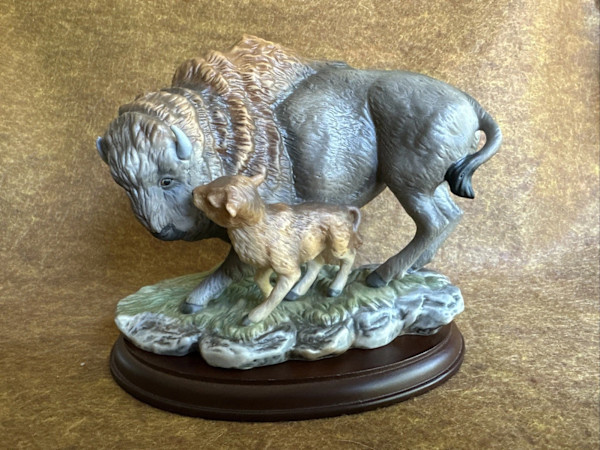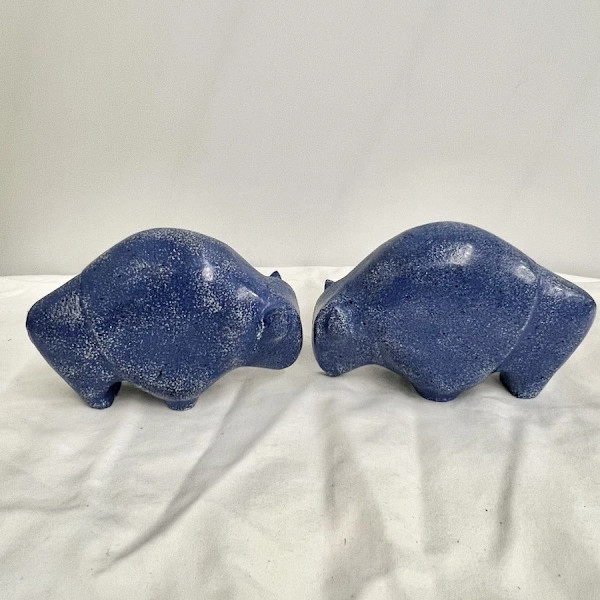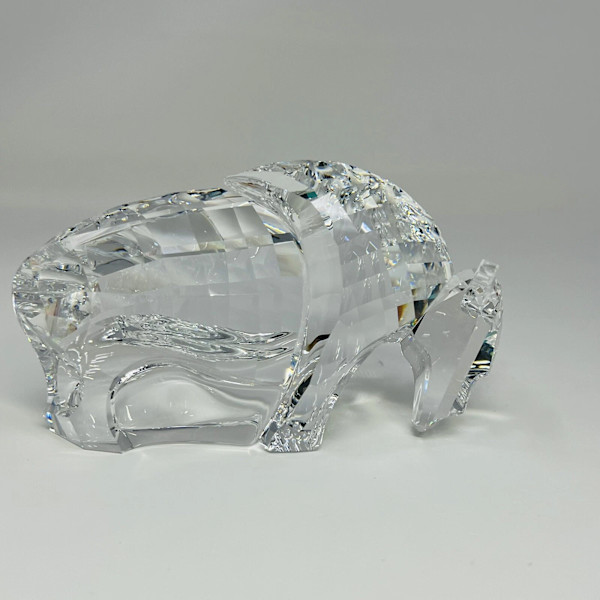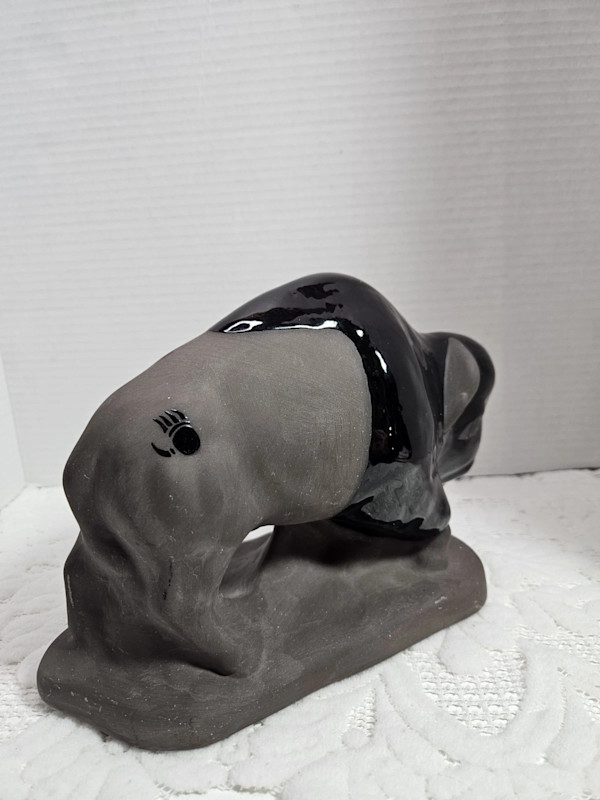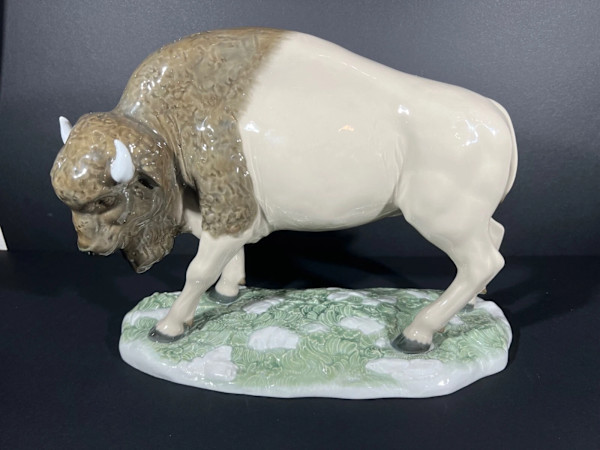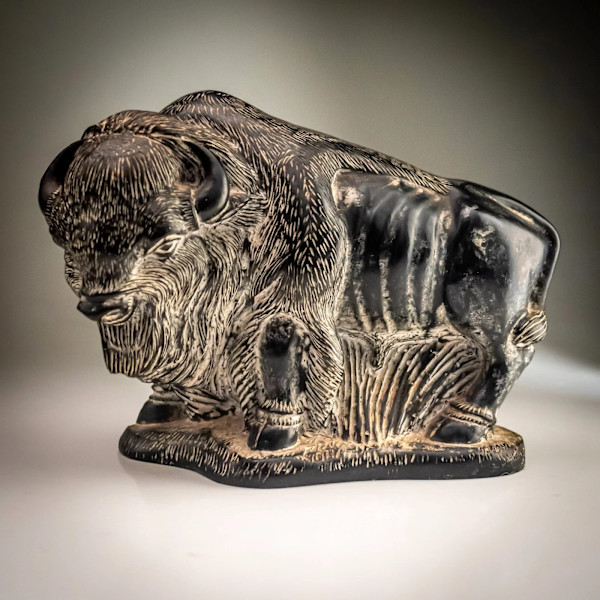

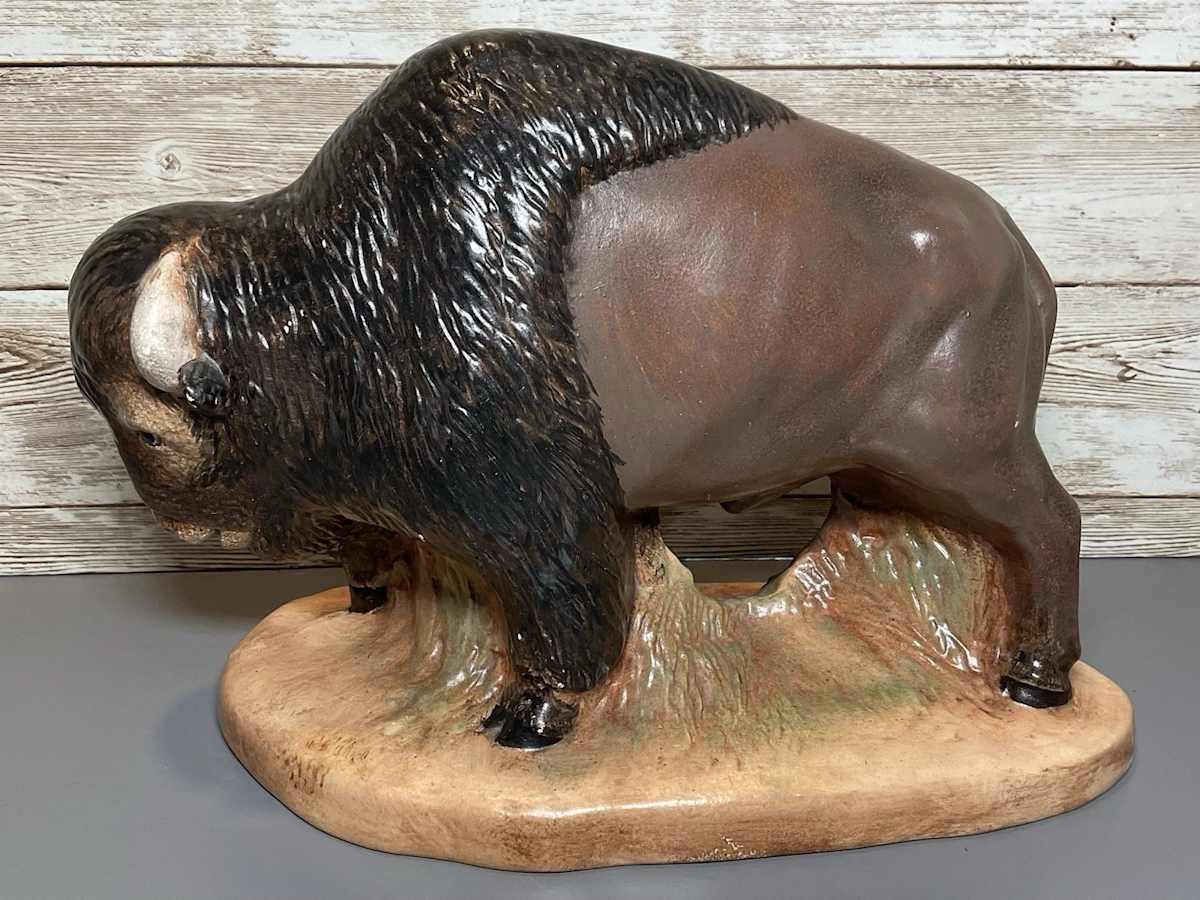
This substantial ceramic bison captures the essence of American wildlife art from the late 1970s and early 1980s, when studio pottery and small-batch ceramic figurines enjoyed significant popularity. The piece represents a middle ground between mass-produced souvenir ceramics and fine art sculpture—clearly hand-finished with attention to anatomical detail, yet produced with efficiency in mind.
The "MB 80" mark on the base presents an intriguing attribution puzzle. The initials could represent either a studio potter working independently or a small ceramic workshop. The "80" definitively dates the piece to 1980, a period when American craft pottery was thriving and wildlife subjects were experiencing renewed interest alongside the broader environmental movement and Western nostalgia of the era.
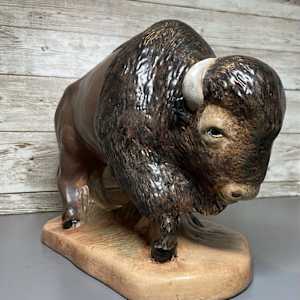
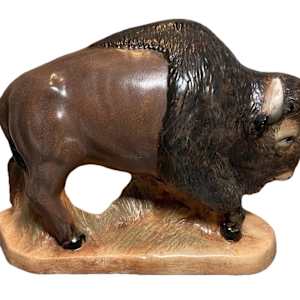
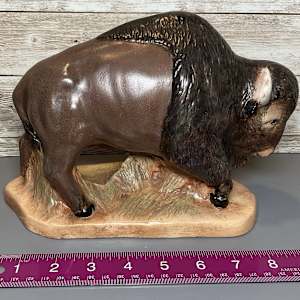
What sets this piece apart from typical tourist-shop bison is the quality of the modeling and the sophisticated glazing. The sculptor understood bison anatomy—the massive shoulder hump crowned with that distinctive ridge along the spine, the way the head hangs low and forward, the powerful hindquarters tapering to surprisingly delicate legs. The proportions are accurate rather than cute or stylized, suggesting someone who either worked from life or studied the animal carefully.
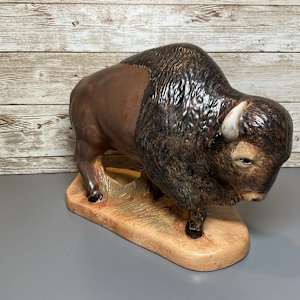
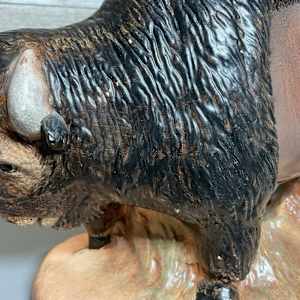
The glaze work shows real artistry. Rather than settling for a single uniform brown, the potter used a multi-tone approach that mimics the bison's natural coloring. The shaggy mane and head are rendered in a dark brown-black with deeply carved texture that catches shadows, creating the illusion of thick, matted fur. This contrasts beautifully with the smoother, lighter brown hindquarters, which are glazed with a subtle sheen suggesting the shorter summer coat. The base is finished in a tan that reads as prairie earth, with touches of green suggesting grass—a nice naturalistic touch that grounds the animal in its environment.
The horns deserve special mention. Cast in a cream or light gray glaze, they curve upward and inward in the characteristic bison shape. Horns are always a vulnerable point on ceramic figurines, making their survival here notable even with some damage. The sculptor also paid attention to smaller details: the beard hanging from the chin, the visible musculature in the legs, the careful rendering of the hooves.
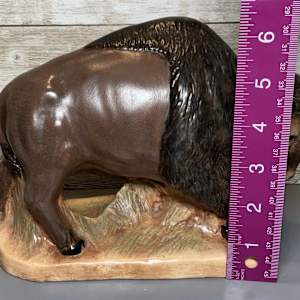
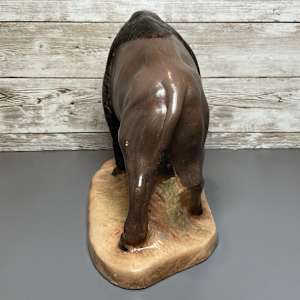
At approximately 6 inches tall and 8 inches long, this is a substantial piece with considerable heft. The weight suggests solid casting rather than hollow construction, contributing to its stability and quality feel. The piece is finished as a freestanding sculpture meant to be viewed from all angles, with equal attention paid to modeling the rear quarters as the more dramatic front view.
The 1980 production date places this squarely in an interesting moment for American ceramics and wildlife art. The back-to-the-land movement of the 1970s had sparked renewed interest in both traditional crafts and nature themes. At the same time, growing environmental awareness made the bison—recently rescued from near-extinction—a powerful symbol of conservation success. Wildlife art was transitioning from purely hunting-lodge decoration to broader appreciation as legitimate art form, with artists like Robert Bateman and Carl Brenders elevating animal subjects to fine art status.
Studio potters of this era often worked regionally, selling through craft fairs, local galleries, and western-themed shops. Many produced wildlife subjects for the tourist trade in places like Wyoming, Montana, and South Dakota, where bison imagery had steady demand. Others worked from more urban studios but drew inspiration from American West themes. Without additional documentation, we can't determine where this MB workshop operated, but the piece's quality suggests a skilled ceramicist rather than a hobbyist.
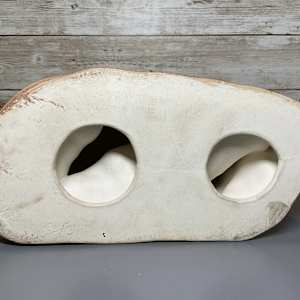
The hollow base with its clean white interior and careful finishing around the edges indicates professional-level work. The piece was made to last, not as a throwaway souvenir. Someone put real thought into weight distribution, glaze application, and firing schedules to achieve these results.
For collectors, pieces like this occupy an underappreciated niche. They're not rare enough to command high prices, nor are they by documented "name" artists. But they represent authentic American craft tradition—skilled artisans working outside the gallery system, producing quality handwork for everyday buyers who wanted something special. As the generation that created these pieces ages and studios close, documentation becomes increasingly difficult, making well-preserved examples like this important records of a particular moment in American decorative arts.
The piece shows honest age and use, including chips—one more significant than others—that tell the story of 45 years as a cherished object rather than a museum piece. These imperfections don't diminish the craftsmanship or the visual impact of the sculpture; they simply confirm this bison has lived a life on someone's shelf, admired and handled over the decades. The glazes retain their depth of color, and the fine modeling details remain crisp.
This bison would have sold originally through craft fairs, western gift shops, or perhaps directly from the potter's studio. It represents a buyer who appreciated quality craftsmanship and was willing to pay a bit more than souvenir-shop prices for a piece with genuine artistic merit. That same appreciation should guide collectors today—look past the absence of a famous name and the wear of years, and see the skill, care, and artistic vision that went into creating a dignified portrait of America's iconic animal.
- Subject Matter: Bison
- Current Location: BLD 20 by R101
- Collections: Thomas Hill Bison Figurine Collection