


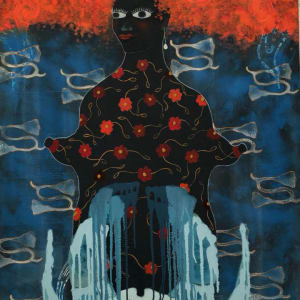
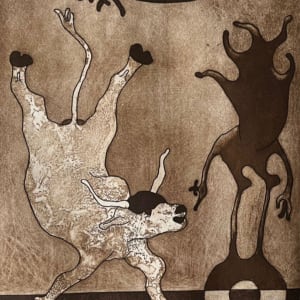
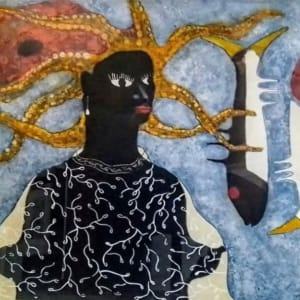


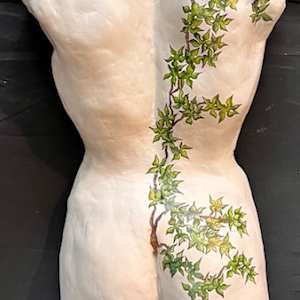



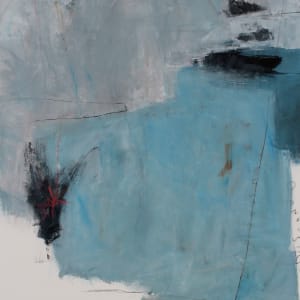
Terry Hagiwara
Let my pieces speak to you.
Finds beauty in anything almost symmetric (or organized) but with its symmetry slightly broken (or with a hint of chaos). Appreciates controlled behavior of free and spontaneous fluidity.
A native of Japan, a resident of Houston, TX, USA.
Began taking ceramic classes from Bill Dennard at Glassel School of Art, MFAH, in '89. Had never played with mud-water-and-fire before, even while growing up in Kyushu, Japan. Kyushu is famous for many ceramic sites such as Arita, Imari, Nabeshima, Karatsu, Takatori, Agano, etc.
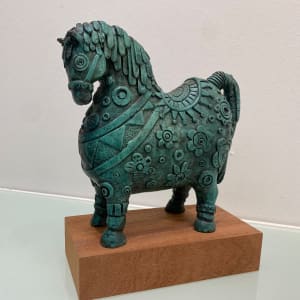
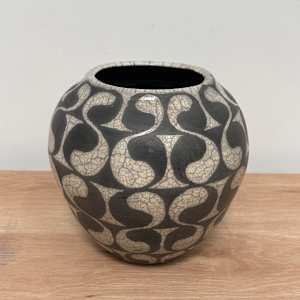
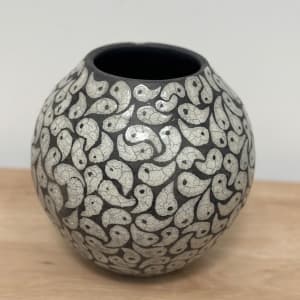
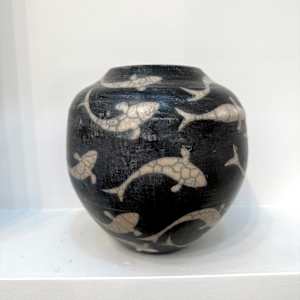
Works with high-fire stonewares, sometimes with wood-fire, but more often with raku firing. With raku firing, uses glazes, whether metallic copper or crackle white, in simple geometric surface designs. Enjoys the challenge of creating diapers in a closed form.

Tomas Ramirez
Tomás Ramírez
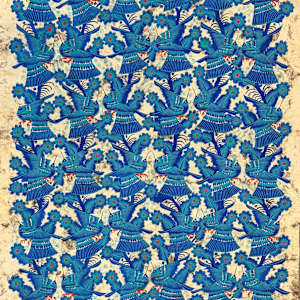
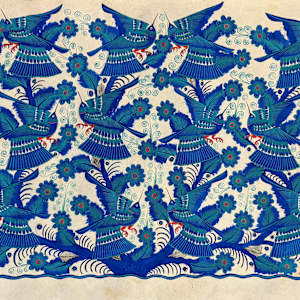
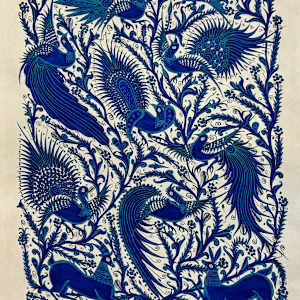
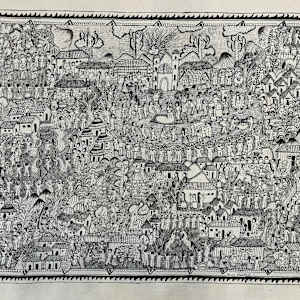
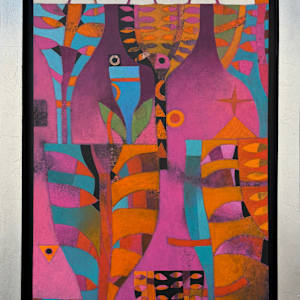
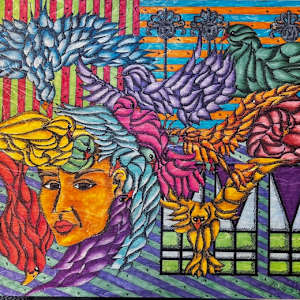
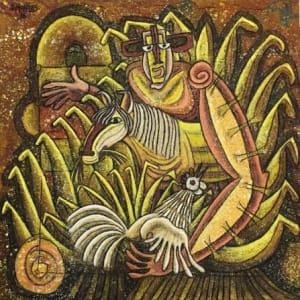
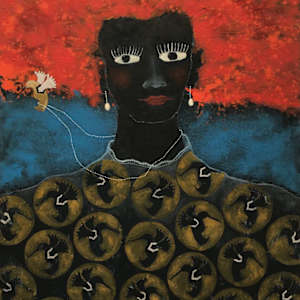
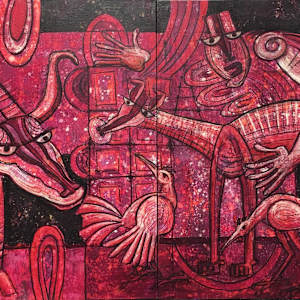
Tomás Ramírez is a Mexican artist celebrated for his mastery in painting on amate paper, an ancient and symbolic medium rooted in Mesoamerican tradition. Born into a family of artisans, Tomás grew up surrounded by the textures, colors, and legends of his region. His artistic journey began at a young age, inspired by the traditions of the Sierra Norte of Puebla and the natural beauty of his surroundings.
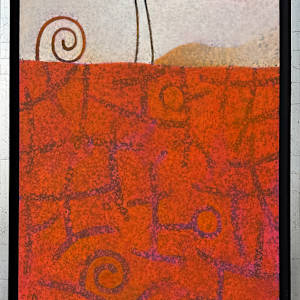
Amate paper, crafted from the inner bark of trees such as wild fig, nettle, or mulberry, has been used for centuries by indigenous peoples for codices, ceremonial uses, and later for artistic expression. Each sheet of amate is handmade through a meticulous process that involves boiling, rinsing, and pounding the bark fibers to form a fibrous, organic surface. This texture becomes the soul of Tomás’s art, a living surface that connects the ancient with the contemporary.
Tomás Ramírez is distinguished not only for his technical excellence but also for his ability to work in large-scale formats, something rarely achieved in amate due to the fragility and complexity of its production. His compositions reflect scenes of daily life, flora, and fauna, often infused with symbolic and spiritual undertones. Through his work, he celebrates the rhythms of rural life, markets, harvests, and festivals, transforming them into poetic visual narratives.
What sets Tomás apart is his freehand technique. He paints without preliminary sketches, allowing instinct and memory to guide his brush. This spontaneity brings a natural flow and authenticity to his work, echoing the oral and visual storytelling traditions of his ancestors. He combines natural pigments derived from minerals and plants with occasional synthetic tones, achieving luminous chromatic balance and depth. Each piece is the result of months of dedication, where layers of meaning, texture, and emotion intertwine.
Over the years, Tomás Ramírez has contributed to the preservation and evolution of amate painting, ensuring that this traditional craft continues to speak to new generations. His work stands as a bridge between the ancestral heritage of the Nahua and Otomi peoples and the creative vitality of contemporary Mexican art.
Collectors and admirers value his paintings not only for their technical and cultural significance but also for their warmth, humanity, and connection to the land.
Note: Amate paintings are sensitive to humidity. To preserve the integrity of the natural fibers and pigments, it is recommended to keep the artwork in a dry environment, ideally framed or protected with glass.