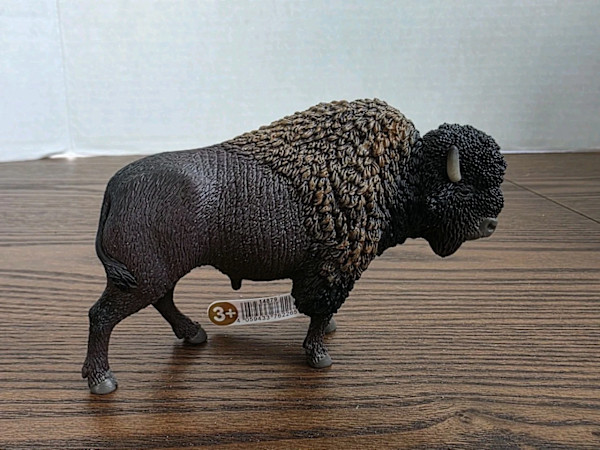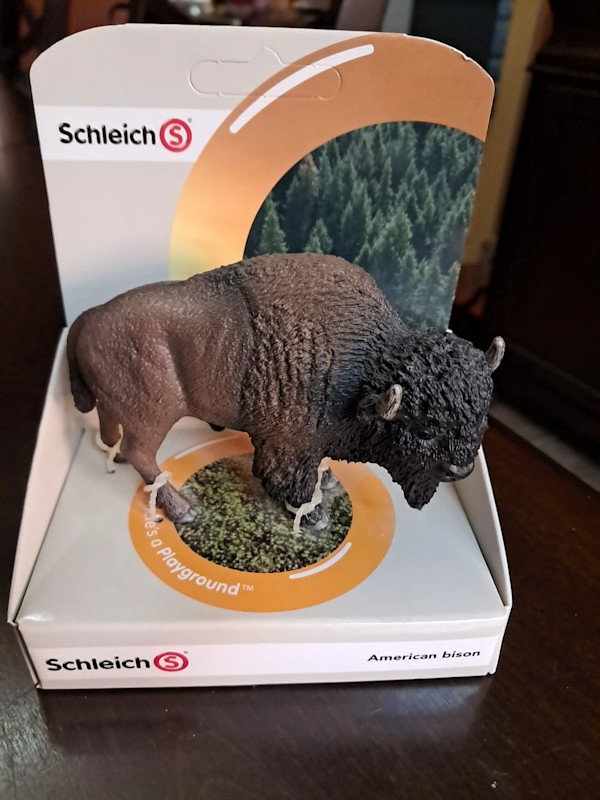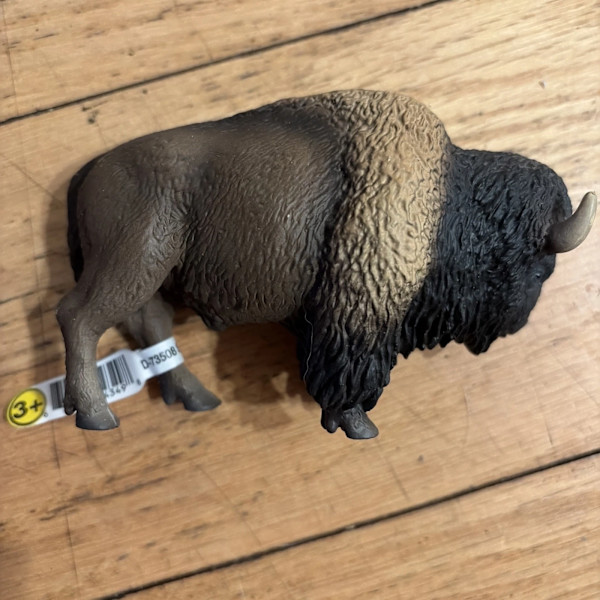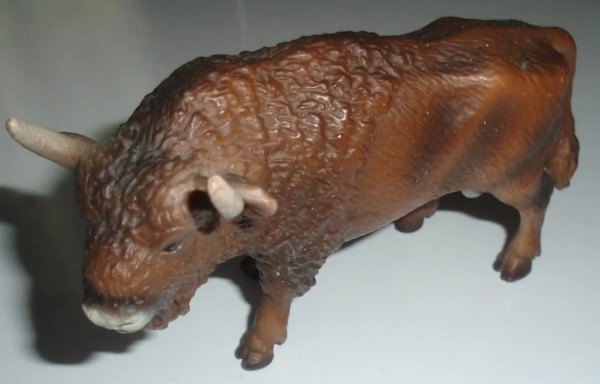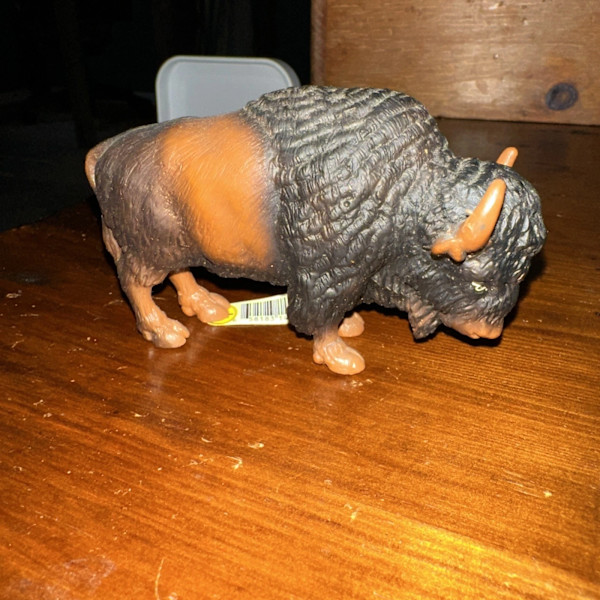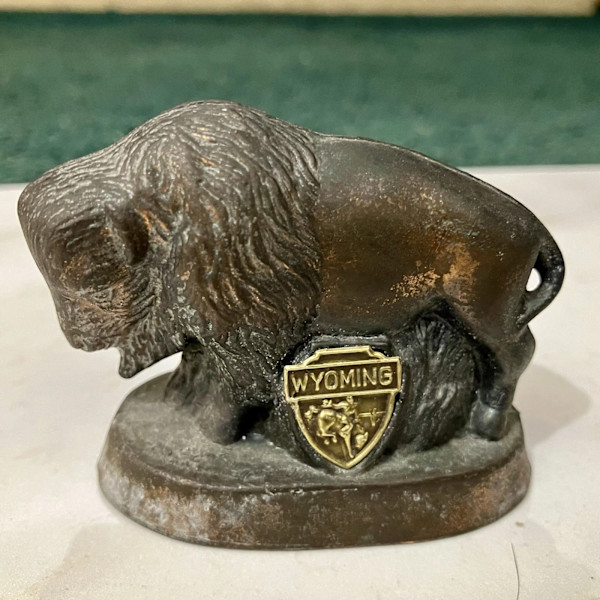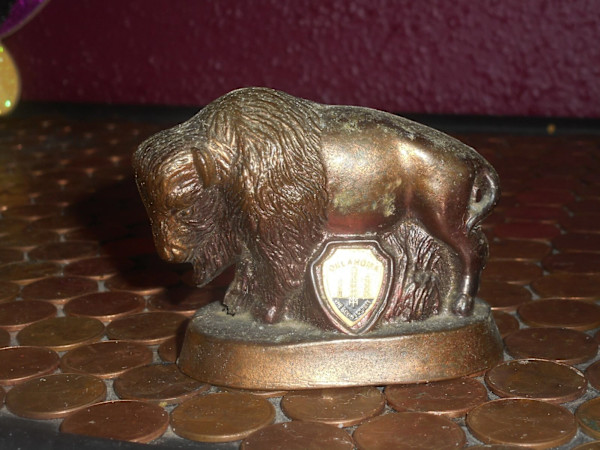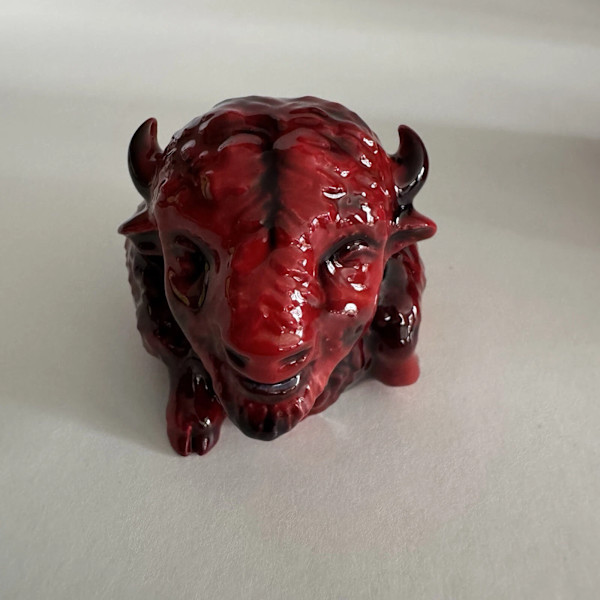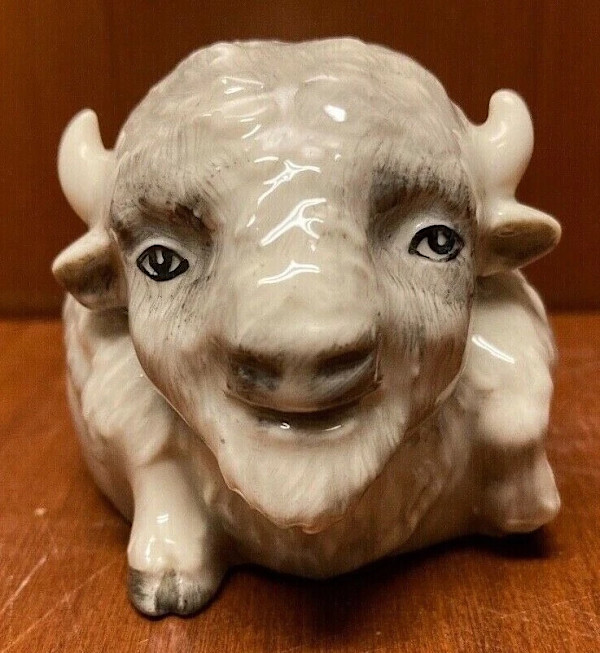

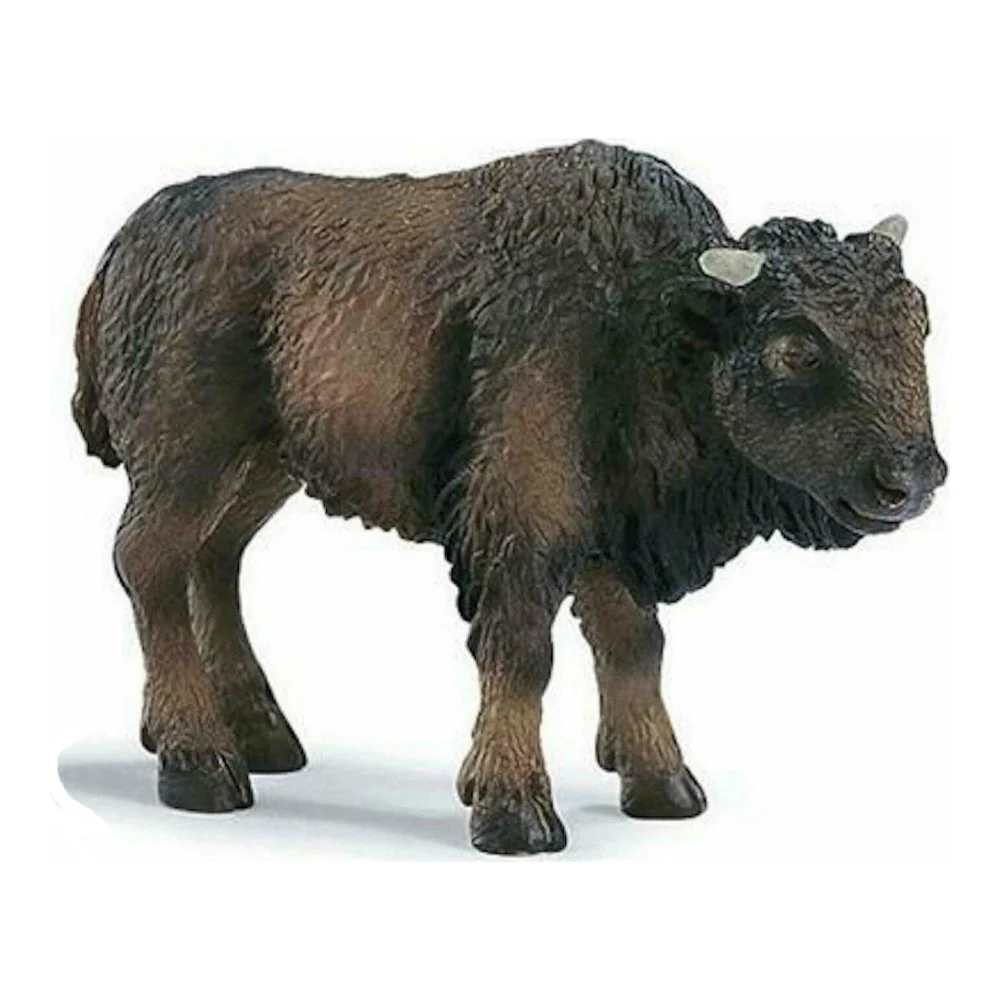
- Schleich 14350, Circa 2005-2010
- Plastic
Schleich Bison Collection: Twenty-Five Years of German Precision in American Wildlife
When Friedrich Schleich founded his Schwäbisch Gmünd company in 1935, he could hardly have imagined that his plastic parts supplier would become one of Germany's premier toy manufacturers, selling 40 million hand-painted figurines annually across 60 countries. Yet by the turn of the millennium, Schleich had transformed itself from a producer of bendable Smurfs and comic characters into a leader in scientifically accurate wildlife replicas, consulting with zoologists and biologists to ensure anatomical precision. The company's bison figurines—spanning from 2000 to the present—document this evolution beautifully, tracing improvements in sculpting technology, paint application, and manufacturing philosophy while also revealing fascinating insights about how German manufacturers navigate the global market for distinctly American iconography. Each model represents a snapshot of Schleich's capabilities at that moment: from early PVC injection molding marked with the Schwäbisch Gmünd factory address to current production leveraging digital prototyping and internationally distributed hand-painting facilities. Together, these pieces form a remarkable archive of how one of Europe's most respected toy companies has approached, refined, and continuously reimagined North America's largest land mammal over a quarter-century of production.
Model 14350: The Family Story (2005-2010)
The introduction of model 14350 in 2005 represented a significant shift in Schleich's approach to wildlife figurines—this American Bison Calf was the company's first juvenile bison, designed specifically as a companion piece to the 14349 bull. Measuring approximately 8 x 3 x 6 cm (roughly 3 inches long), the calf displays proportions accurate to young bison: relatively longer legs, a less pronounced shoulder hump, lighter build, and a coat color that skews toward the reddish-brown tones characteristic of calves before they develop the darker adult coloration. The sculpting captures the youthful awkwardness of juvenile ungulates—the legs seem slightly too long for the body, the head slightly too large, creating an appealing vulnerability that makes this piece particularly popular with younger collectors. By pairing adult and juvenile, Schleich moved beyond individual animal representation toward family groupings and herd scenarios, fundamentally changing the play pattern possibilities. Children could now enact protection behaviors, migration stories, and multi-generational narratives rather than just arranging static animals. This strategic expansion reflects broader trends in the toy industry during the mid-2000s: moving from individual collectibles toward interconnected playsets and story-driven product lines. The five-year production run (2005-2010) ended before the adult 14349 retired, creating a brief period when Schleich offered the bull without a matching calf—a gap that wouldn't be filled, as subsequent bison models (14714, 14879) launched without juvenile companions. Today, collectors prize 14349/14350 pairs, recognizing them as Schleich's only complete bison family grouping and a snapshot of the company's mid-2000s philosophy that wildlife toys should encourage narrative play rather than simple display.
The Collection as Archive
Together, these six Schleich bison models (with the European Wisent providing crucial comparative context) document far more than incremental improvements in toy manufacturing. They trace the trajectory of a German company navigating globalization, the evolution of play patterns from static display to narrative-driven storytelling to individualized imaginative scenarios, the increasing importance of conservation messaging in children's products, and the technological transformation of the toy industry from hand-sculpted wax to digital prototyping. They reveal how commercial pressures shape which animals get made and which get discontinued—the American bison thrives across four successive adult models spanning 25 years while the European Wisent disappears after two years, not because of inferior quality but because global markets care more about Yellowstone than Białowieża. The brief appearance of the 14350 calf (2005-2010) illuminates a particular moment when Schleich experimented with family groupings before returning to their core strength: exceptional individual animal sculptures. Most intriguingly, this collection captures the complete product lifecycle philosophy of a manufacturer committed to continuous improvement: rather than producing a single bison and leaving it unchanged for decades, Schleich revisited the species repeatedly, each time incorporating new capabilities, responding to evolving consumer preferences, and pushing toward ever-greater realism. From the foundational 14034 through the current 14879, these pieces show Schleich transforming from a regional German toy maker into an international powerhouse while never abandoning the hand-painted craftsmanship and zoological accuracy that defined their brand identity. For collectors of bison imagery, they represent German precision applied to American iconography—a cross-cultural conversation conducted in PVC and paint, documented across a quarter-century of manufacturing excellence.
- Subject Matter: Bison
- Current Location: BLD 20 by R101
- Collections: Thomas Hill Bison Figurine Collection