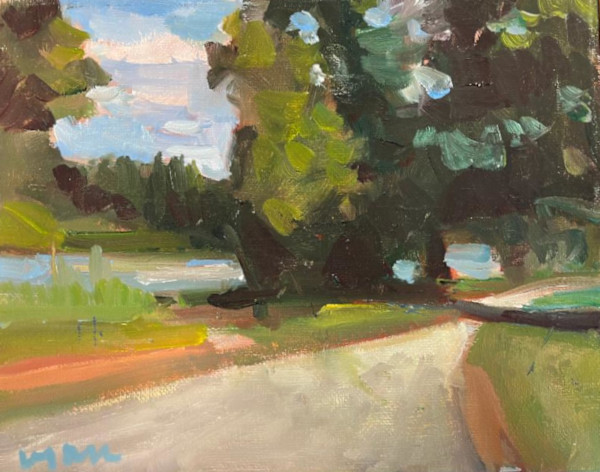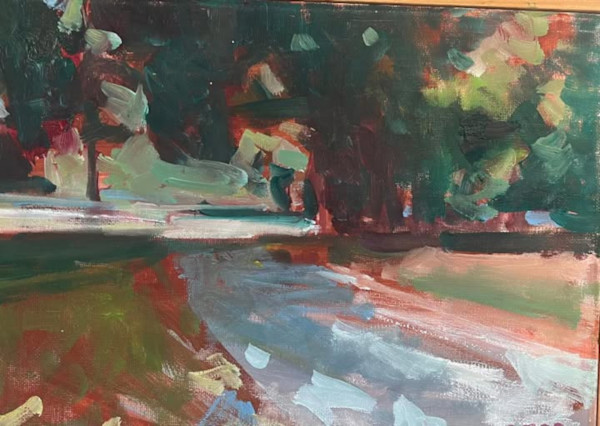

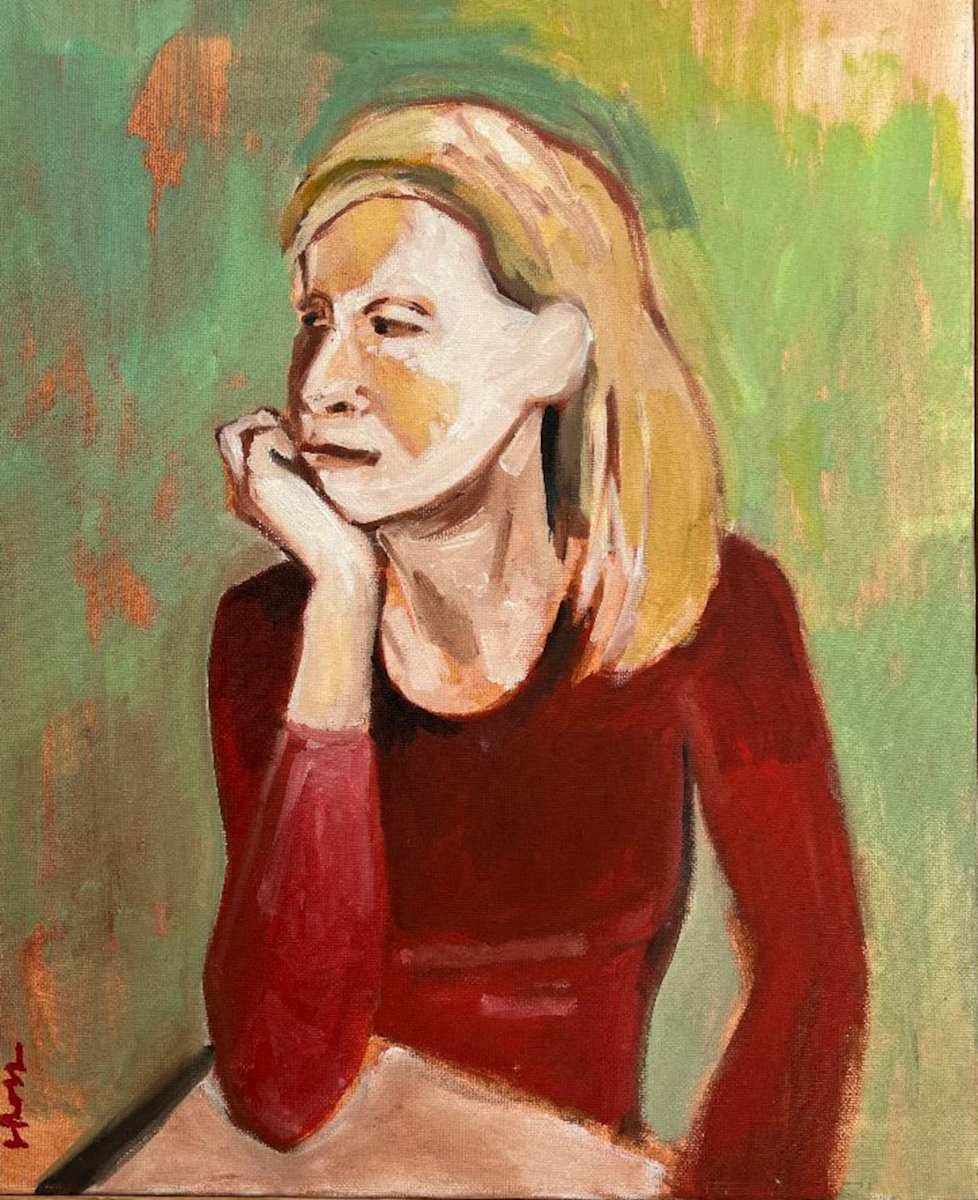
“Polly Piva” is less a portrait of a single woman than a meditation on the emotional landscape of Emilia-Romagna itself — a land where laughter, politics, labor, wine, resistance, and sorrow coexist within the same breath. Painted during the years near Livergnano, in the shadow of the old Gothic Line battlefields where aging American GIs returned searching for fragments of memory and lost youth, the work carries within it the psychological residue of history itself. The hills outside Bologna, once scarred by artillery and partisan struggle, seem to echo silently behind her contemplative gaze.
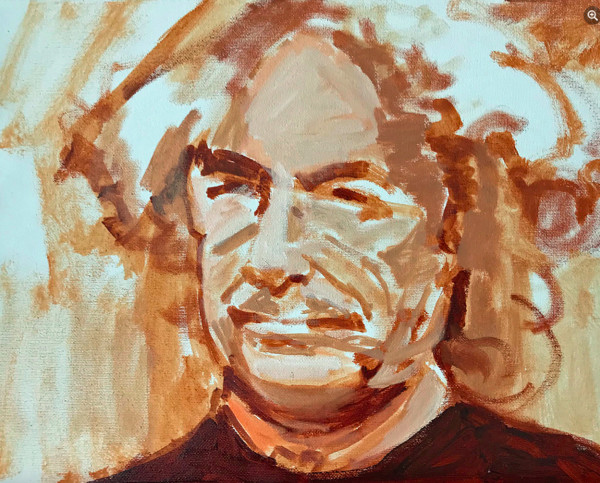
Polly sits suspended between endurance and fatigue. The hand pressed against her cheek is not theatrical melancholy but the ordinary weight of lived experience — the burden carried by so many strong Italian women whose lives oscillate between tenderness and conflict. The brush refuses polished illusion. Instead, the face emerges through broad masses and exposed passages of paint, as though personality itself is surfacing through layers of atmosphere and memory. Her expression drifts somewhere between reflection and resignation, suggesting private disappointments that words perhaps never fully resolved.
The painting gains deeper resonance knowing the later fractures in her marriage to Andrea Guerra, the mountain tree doctor whose labor among the forests above Bologna possessed its own rough poetry. Together they embodied the contradictions of that world: fiercely political yet deeply human, communist yet celebratory, argumentative yet warm, tragic yet hilarious. Like many in Emilia-Romagna, they carried the spirit of anti-fascist Italy almost instinctively — not as ideology alone, but as a lived culture of camaraderie, storytelling, meals, labor, and survival.
In verismo terms, this portrait succeeds precisely because it avoids sentimentality. Polly is neither idealized nor condemned. She is presented as a living macchia of emotion — a fleeting convergence of light, fatigue, intelligence, sensuality, and sorrow. The loose handling of the background allows the figure to hover almost psychologically rather than physically, while the deep reds of the garment suggest both warmth and latent emotional tension beneath the quiet pose.
What remains finally is affection. The painting understands her. It recognizes the comedy and heartbreak embedded within ordinary lives. In this sense, “Polly Piva” belongs to the same humanist tradition that animated the I Macchiaioli: the belief that truth in painting emerges not from perfection, but from the honest observation of people carrying history inside themselves.
- Subject Matter: portrait
- Collections: Jack Sprat