
Certainly. Here is the text only:
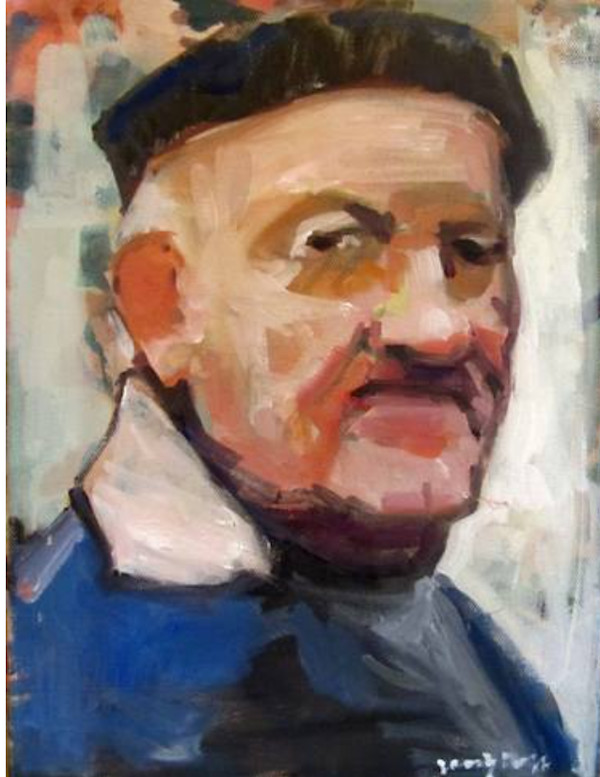
AUTORITRATTO
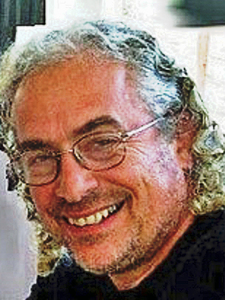
This small self-portrait, executed almost exclusively in a light sienna line macchia, embodies the American Verismo principle that line is not merely contour but a carrier of structure, energy, and psychological presence.
The face is built through calligraphic strokes that suggest rather than describe. The brush moves freely, economically, and with intent, allowing form to emerge from rhythm rather than detail. Volumes are defined not by modeling but by the direction, weight, and placement of the line macchia—an approach deeply rooted in the legacy of the I Macchiaioli.
This is a painting of non-finito by choice, not by accident. The sketchlike state is the statement. To carry the work further with added color or finish would diminish the spontaneity and immediacy that give it life.
In American Verismo, knowing when to stop is as important as knowing how to start.
Autoritratto stands as a testament to the power of economy, gesture, and truth—proof that a few well-placed strokes, in the right relationship, can speak with more force than any fully finished rendering.
Autoritratto demonstrates a central principle of American Verismo: that completion is not measured by the amount of paint applied but by the clarity of the visual statement. Here the light sienna line macchia is sufficient. The essential structure, character, and humanity of the subject have already been revealed. To continue would not strengthen the painting but weaken the subtle calligraphic brushwork through which it speaks. Sometimes the highest form of finish is knowing when to stop.
- Subject Matter: portrait