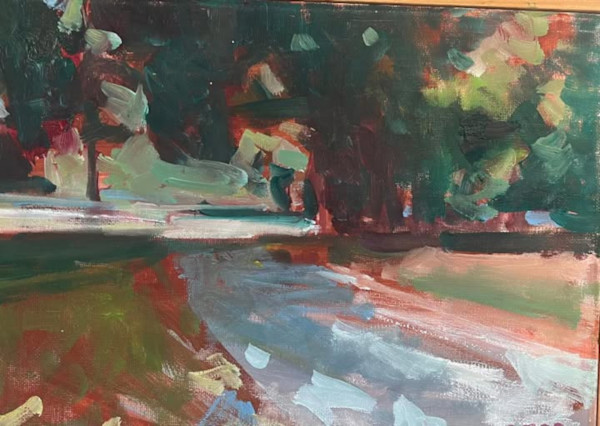

Loiano Veduta
Oil on canvas
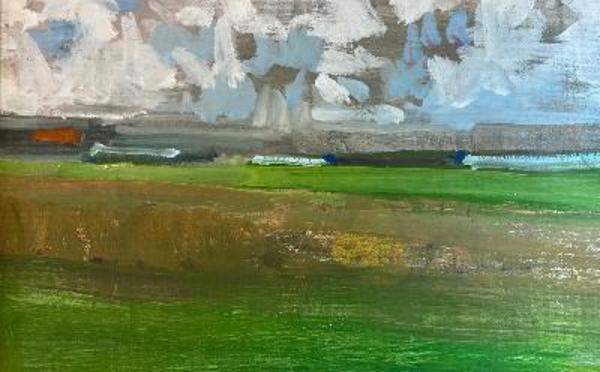
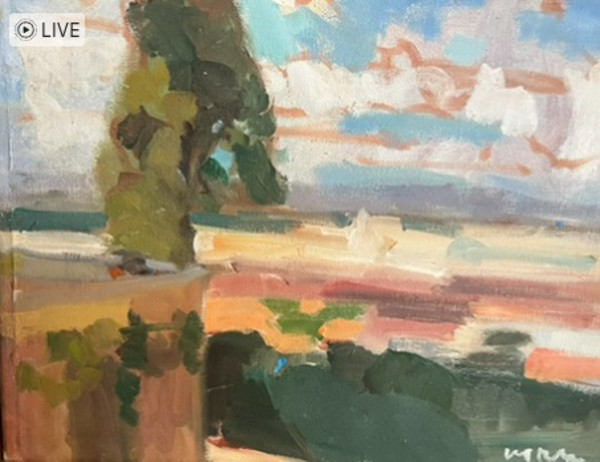
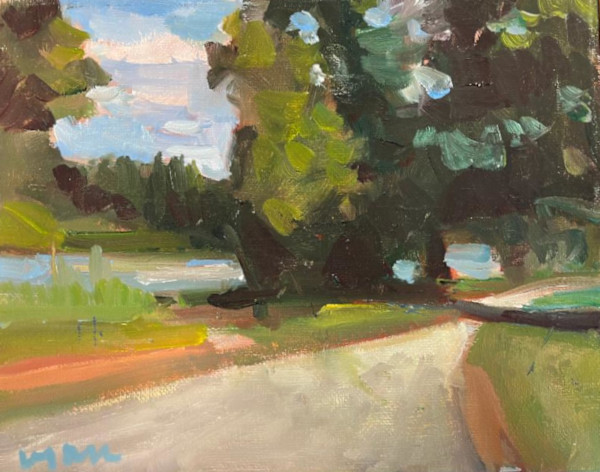
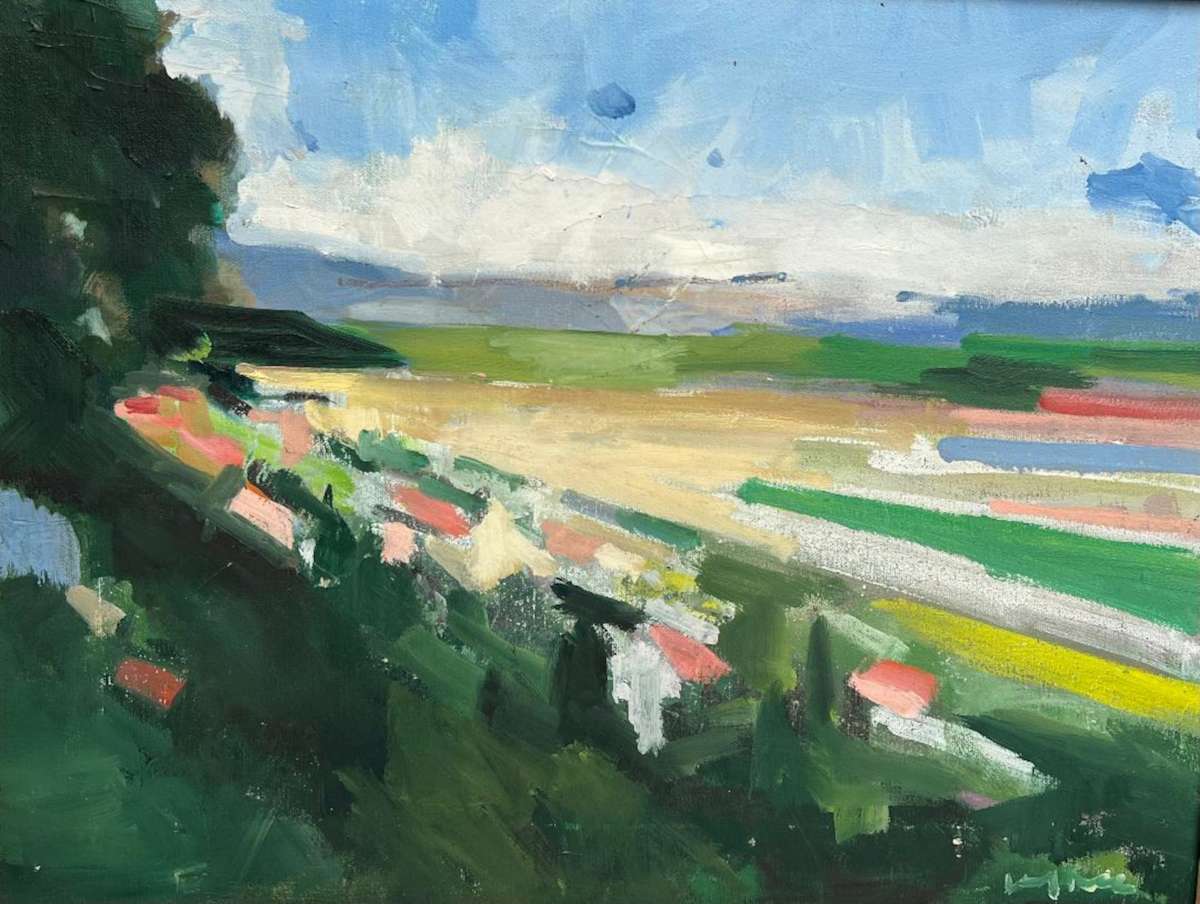
This panoramic veduta of Loiano attempts to capture not only the physical landscape of the Emilia-Romagna hills, but also the historical and emotional atmosphere embedded within that terrain. Painted after a summer spent living among the townspeople, walking the mountain roads, hearing stories, and absorbing the rhythms of daily life, the work becomes less a postcard view than a meditation upon memory, struggle, and place.
Loiano occupies a significant position within the history of the Italian Resistance. These hills formed part of the infamous Gothic Line during the Second World War, where ordinary farmers, workers, communists, and partisans resisted the Nazi occupation under brutal conditions. The landscape itself still seems to carry that tension — vast open fields interrupted by dark masses of forest and shadow, beauty existing beside historical gravity.
In verismo terms, the painting is built through broad atmospheric mass macchia. The hills, roads, rooftops, and agricultural divisions dissolve into sweeping tonal relationships rather than rigid topographical detail. The eye moves across bands of green, ochre, blue, and white almost musically, allowing the sensation of distance and open air to dominate. The town itself appears partially submerged within the landscape, inseparable from the earth and labor that produced it.
The dark foreground trees act almost theatrically, framing the luminous valley beyond. Such devices recall both the panoramic traditions of Italian veduta painting and the simplified structural masses of the Macchiaioli painters whose influence remains central to American Verismo. Here the brushstroke is intentionally abbreviated and immediate, preserving the freshness of plein air observation rather than polished academic finish.
There is also an echo of Goethe’s passage through Loiano during his Italian wanderings — the sense of a traveler pausing before a landscape charged with culture, history, and revelation. One feels that same spirit of discovery here. The painting does not attempt photographic description but rather the emotional truth of standing upon those hills under shifting mountain light while hearing church bells, distant conversations, and stories of resistance carried across generations.
The resulting image becomes both landscape and historical remembrance: a view from afar, yes, but also a view inward toward the enduring humanity of the Italian countryside.
- Subject Matter: landscape
- Collections: Jack Sprat