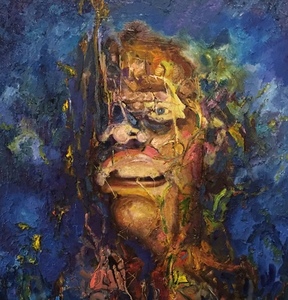
Andrew Brown
Oakland, CA
Only once in this strange world - Of all things, an easel painter in Oakland!”
Message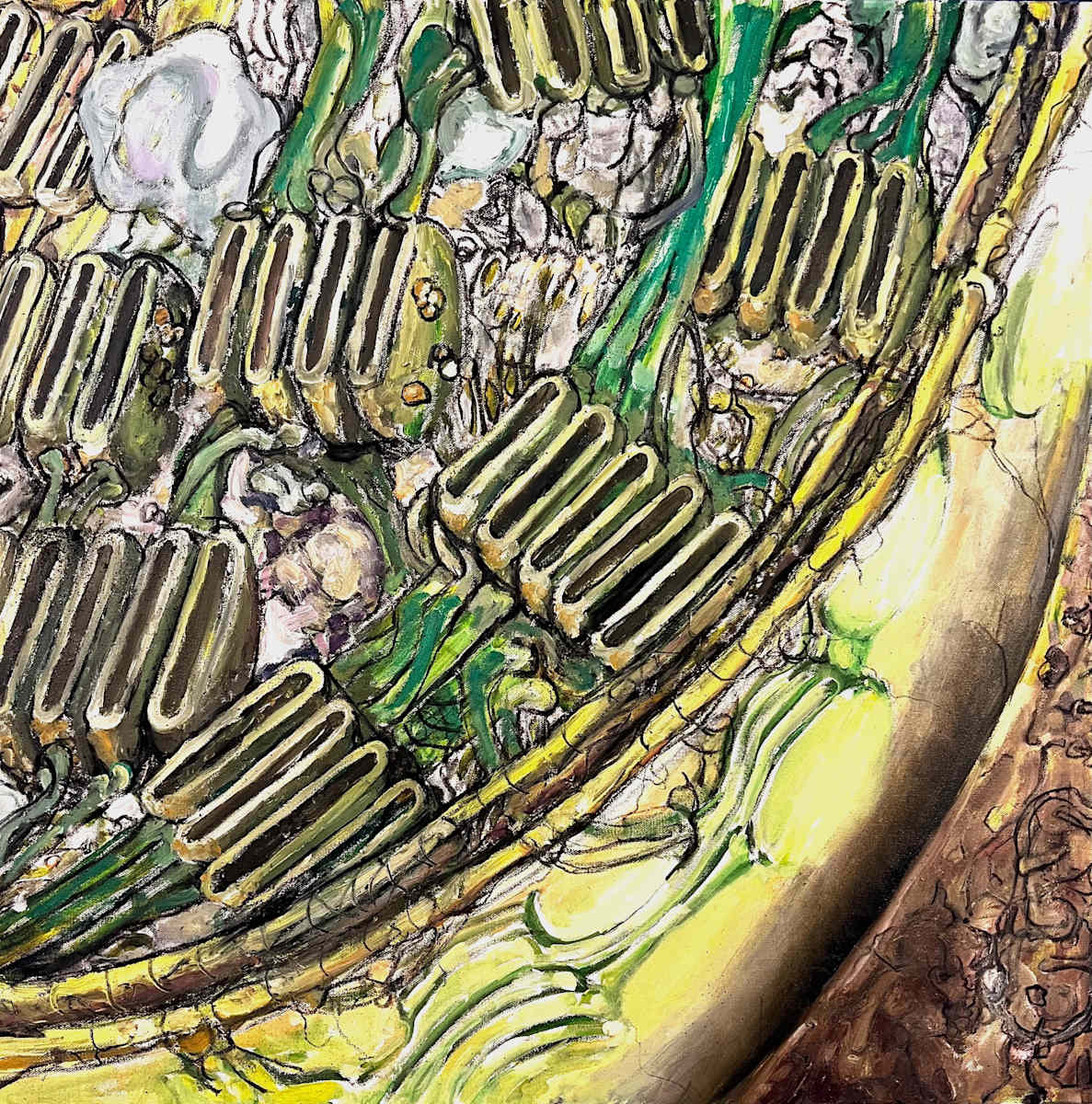
In green plants photosynthesis happens in organelles called chloroplasts. Chloroplasts look just like cyanobacteria. Millions of years ago plant ancestors engulfed them and they became endosymbionts.
Chloroplasts are packed with stacks of membranous discs called thylakoids. Embedded in these membranes—at a scale invisible to even our most powerful scanning electron microscopes—are chlorophyll and the other biochemical complexes that absorb photons from the sun and get photosynthesis done.
The stacks maintain their meticulous arrangement, but can shift around the chloroplast and orient their flat surfaces in unison to maximize solar absorption.