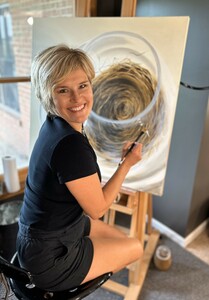
Lindsey Kiser
Union, KY
Lindsey Kiser is an American artist, whose studio is located in her home in Union, Kentucky, which is within the Greater Cincinnati Metropolitan Area.
MessageArt of New Beginnings: Solo Exhibition of Lindsey Kiser
In our electrified, pulsating world, full of endless options and others’ opinions, we are increasingly tuning out the beauty and opportunity that is quite literally right underfoot. A return to sensitivity to the smaller, “less important” objects of Nature is good medicine.
Intentionally rejuvenating our innate sense of wonder stimulates our minds to consider new thoughts about tired beliefs. As an added bonus, wonder feels incredible—like excited amazement. And it’s accessible. If we can’t get there on our own, Nature gives us ample opportunity to wonder. The wilderness is not required. A simple backyard will do.
Consider the common bird’s nest. Is it not fascinating that a bird knows how to build a nest? We usually consider the use of found objects as materials and tools as within the exclusive realm of man, and yet our common, but no less extraordinary, backyard songbirds know this. But, is it not even more fascinating that a bird knows it needs to build a nest? The bird knows its purpose. Interestingly, the purpose requires the bird to work until the task is accomplished no matter the quantity or severity of obstacles that are presented.
Consider the butterfly. For a caterpillar to become a butterfly, everything, except the caterpillar’s brain, liquifies inside the chrysalis. Are we willing to sacrifice what is good to build something great? Does it take one decision or a million? Is discomfort required? If so, is it worth it? If a caterpillar can change, surely, we can. After all, each of us is equipped with the world’s fastest supercomputer, the human brain.
Consider the great oak. Each mature oak produces thousands of acorns each year without any consideration regarding the success of any of them. The oak produces a staple at the base of the food chain. Yet, the only intention, if the oak could have one, would be to reproduce itself. As a byproduct of this purpose, the oak subsidizes the community. Likewise, when we actively seek great goals, the abundance-oriented mindset required for achievement produces abundance, economic and otherwise, that trickles down to the community at large.
Using simple backyard nature motifs as inspiration, I make art to instigate wonder and contemplation of long-held beliefs from new perspectives.
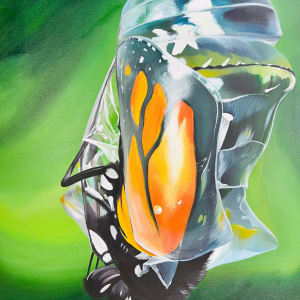
Garden of Wonders
Garden of Wonders is a collection of native pollinators.
Consider the great migrations of the hummingbird and Monarch butterflies. Think about the remarkable transformation of the caterpillar to the butterfly–everything but the brain liquefies during metamorphosis! Study the incredible organization and communication of a colony of wild bees.
These small, but mighty organisms:
have incredibly intricate and purposeful physical structure;
experience miraculous annual rites of passage;
impact their respective environments by providing fertilization of flowers, each yielding fruit in time; and
reproduce the next generation.
It’s no wonder that butterflies, hummingbirds, and bees bring pure delight.
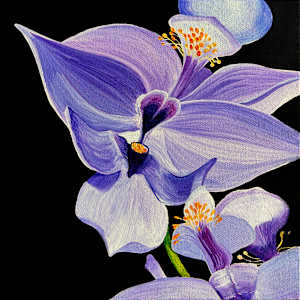
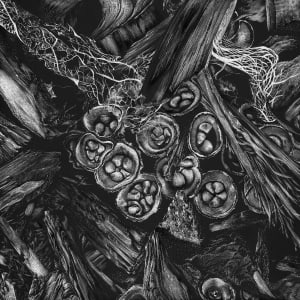
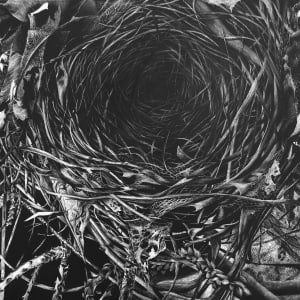
Greater Than These: A Collection of Scratchboards by Lindsey Kiser
The "Greater Than These" scratchboards were exhibited along with a curated collection of pieces from the Reflecting Nature and New Beginnings bodies of work in a solo exhibition at Thomas More University in January 2020. The "Greater Than These" scratchboards show some of the smallest elements of our Kentucky hardwood forest ecosystem to highlight that every species matters to create a whole that is even greater than the sum of its parts.
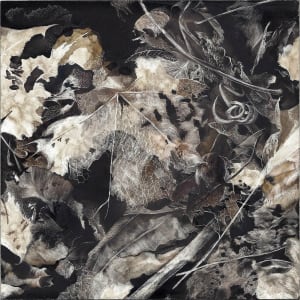
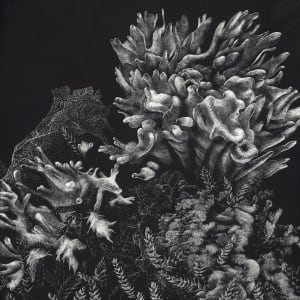
Reflecting Nature: Solo Exhibition of Lindsey Kiser
Living just down the road from Big Bone Lick Historic Site, the source of the fossils that inspired President Thomas Jefferson to send Lewis and Clark on their great expedition that opened the west, has had a profound impact on Lindsey Kiser’s worldview. At an early age Lindsey began to study the life of Thomas Jefferson, who was a classicist and a Renaissance Man. She heralded him a hero of thought, culture, and history. His example showed her that one does not have to choose one path in life. Instead, curiosity can lead the way to build a beautiful, inspired life.
As a result, Lindsey majored in art and double minored in biology and chemistry, and later went on to become a patent lawyer helping Fortune 1000 Companies secure patents on portfolios of innovations, primarily in the field of medicine. While these disciplines of science, law, and art do not make sense to some, she finds at the center of it all is her fascination with the land, basic science, and applied science. Hence, Lindsey creates art for the purpose of enlivening our innate sense of wonder and to restore our lost connection to the land.
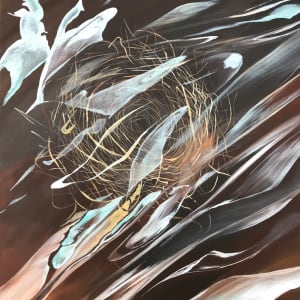
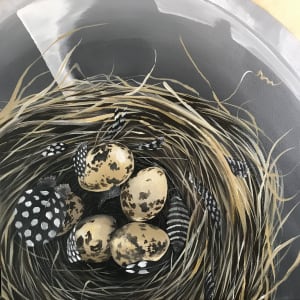
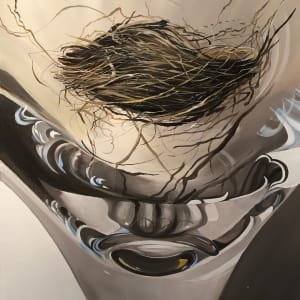
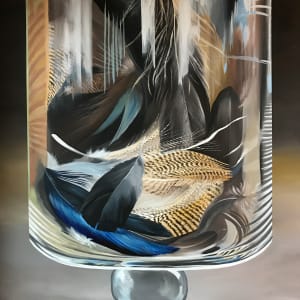
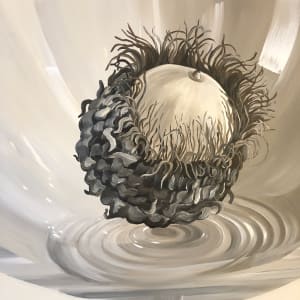
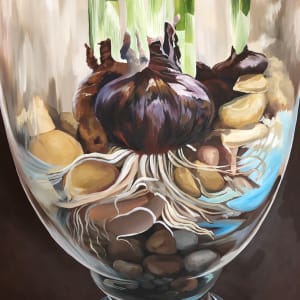
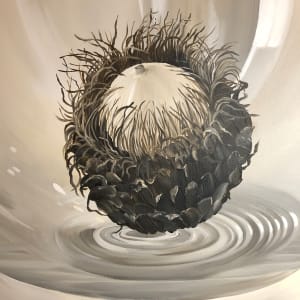
Like Jefferson, Lindsey draws inspiration from found natural objects (nature’s “readymades”), such as fossils, birds’ nests, and acorns. Instead of sending out scientists and adventurers on a quest across the continental divide to bring back evidence of mastodons, Lindsey cradles her found natural objects in man-made, highly reflective goblets and vases, photographs her compositions hundreds of times, paints from the photographs, and then exhibits each new series of artwork for you to acquire and treasure. The beautiful man-made vessel is there to elevate the common, everyday “readymade” natural object and to visually contrast the geometric, man-made object with the organic forms of the found natural object. The reflections shown on the exterior of the vessel prove that we cannot view and connect with any readymade found natural object as it really is once we have placed it within the context of our human condition, because the reflection of ourselves in our current place and time obscures our field of view.