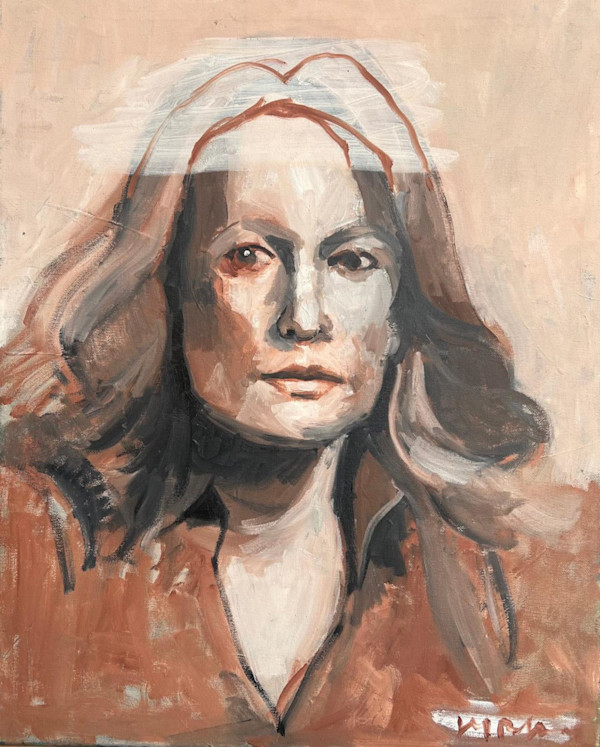


### **Angela in Rome**
In *Angela in Rome*, the artist embraces the language of *non-finito*, allowing the portrait to hover between drawing and painting, between appearance and memory. Much of the image remains unresolved, yet the essential presence of the sitter emerges with remarkable clarity. A few decisive lines, subtle shifts of color, and carefully placed accents around the eyes and mouth are enough to bring the figure to life.
The portrait captures Angela during the couple's many journeys to Italy, a country that has profoundly shaped their shared life. The light hat, delicate necklace, and relaxed pose evoke the atmosphere of a Roman afternoon, but the painting is less about place than about character. Angela's expression possesses a quiet radiance—open, intelligent, and gently amused, as though responding to something just beyond the frame.
What distinguishes this portrait from many others is its sense of immediacy. The unfinished passages are not omissions but active participants in the work. Areas of exposed ground and lightly indicated forms create an airy openness that mirrors the sitter's own temperament. The painting breathes. Nothing feels forced or overworked. The artist trusts the viewer to complete what has merely been suggested.
Within the framework of American Verismo, *Angela in Rome* demonstrates how truth often resides in the first, freshest perceptions. Rather than constructing a polished illusion, the painting records a fleeting encounter—a moment of affection, observation, and recognition. The long, elegant neck, luminous face, and upward glance convey both grace and resilience, qualities that have appeared throughout the artist's many portraits of Angela.
Ultimately, this work is significant because it reveals how little is required when genuine understanding exists between artist and subject. After decades together, the painter no longer needs elaborate detail to describe the woman before him. A few strokes, a few notes of color, and a lifetime of shared experience are enough. The portrait becomes not merely an image of Angela in Rome, but a testament to familiarity, companionship, and the enduring beauty found in seeing another person deeply.
- Subject Matter: portrait of artist's wife