

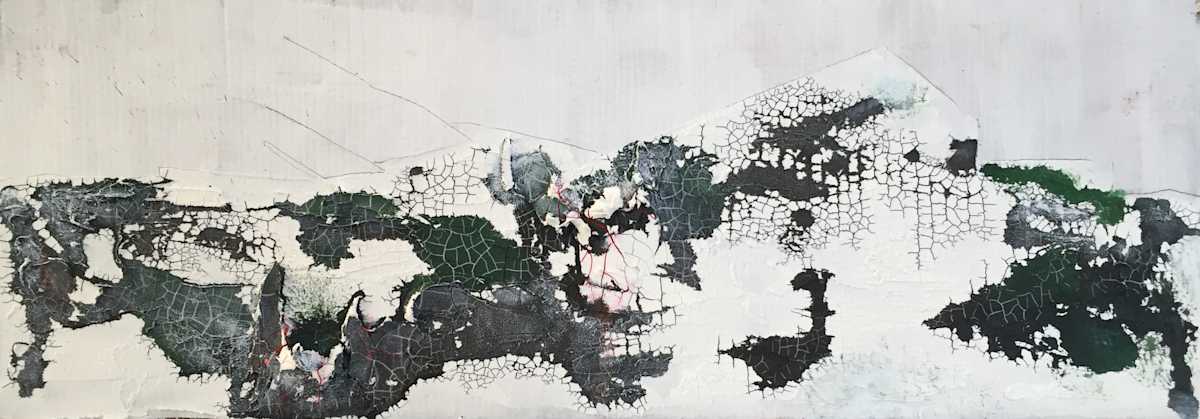
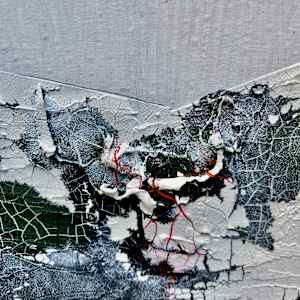
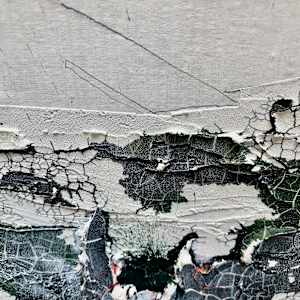
This work reflects on the ecological role of fire in landscapes such as Santa Barbara County, where the Thomas Fire burned through ecosystems shaped over time by periodic wildfire. While the scale and intensity of recent fires have been exacerbated by climate and land-use pressures, fire itself remains a natural and necessary process in many Californian environments.
Certain plant communities—particularly chaparral—are adapted to fire cycles. Heat and smoke can trigger seed germination, while the clearing of dense vegetation allows light to reach the ground and reduces competition for new growth. The ash left behind returns minerals such as calcium, potassium, and phosphorus to the soil, temporarily increasing nutrient availability and supporting early-stage regeneration.
In this work, the cracked and fragmented surface evokes both damage and the conditions for renewal. Rather than presenting fire solely as destruction, it acknowledges its dual role: a force that disrupts, but also one that enables cycles of regrowth already embedded within the landscape.
- Collections: California Burning