
Vanitas
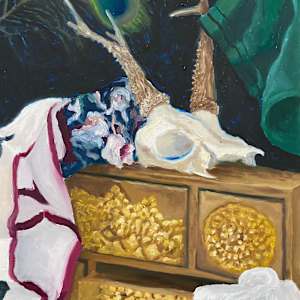
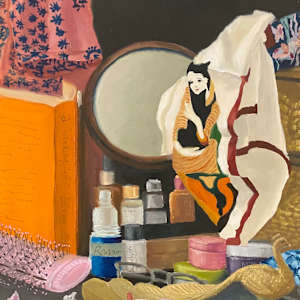
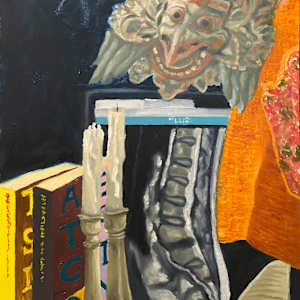
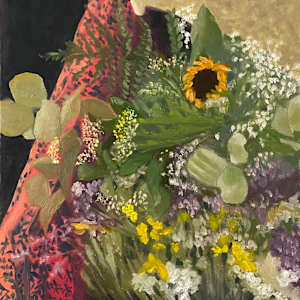
This series of paintings explores the quiet, inevitable passage of time through the intimate artifacts that surround us. Objects—mirrors, fabrics, heirlooms, and organic materials—serve as witnesses to personal history, their textures and wear reflecting the marks of use, care, and change. Through these still lifes, I examine the relationship between memory, identity, and ageing, considering how the things we collect evolve alongside us. Ageing is woven into these compositions not just through subject matter, but through materiality and process. The soft fraying of fabric, the slow wilting of flowers, the patina of objects handled over time—all speak to the beauty and vulnerability of life in flux. The presence of mirrors further reinforces this dialogue, reflecting faces that shift and transform, challenging the viewer to consider their own changing self-perception. By capturing these moments, I aim to honor the beauty in impermanence—the way objects and bodies alike bear the evidence of experience. This work is a meditation on the physical and emotional traces left by time, a reminder that to age is to carry the weight of memory, to be shaped by what we hold close, and to leave behind artifacts of our own.
Mum’s House
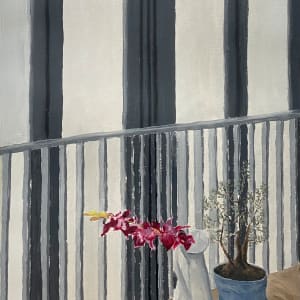
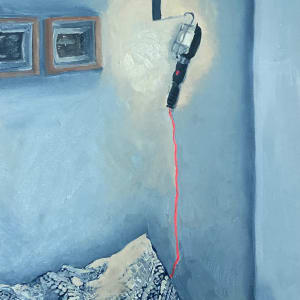
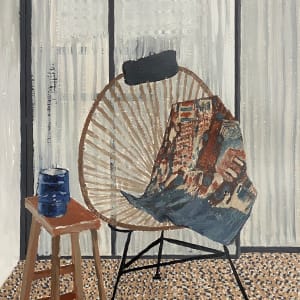
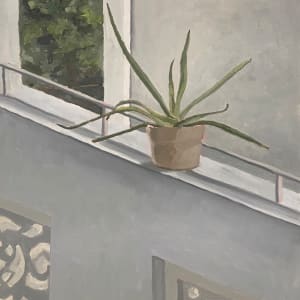
Mum’s House is a deeply personal exploration of memory, belonging, and the quiet poetry of everyday life. Each painting in this series captures a fragment of a home shaped by history, emotion, and intimate connection. Through these works, I sought to document the objects, spaces, and moments that create the atmosphere of my mother’s house, with a sense of both attention and reverence.
I refer to it as Mum’s House not to suggest ownership, nor to overlook the presence and influence of my stepfather, but because the house feels to me like the fullest expression of my mother’s creativity. From painting imagined walls and doors, to renovating interiors, to designing this house, her creative life taught me to understand space as more than functional: as something bound up with safety, independence, and the possibility of being fully oneself. Any importance that home, shelter, or emotional atmosphere holds in my own work can be traced back, in part, to that inheritance.
The paintings are composed through close attention to light, shadow, and the small details that often go unnoticed: a chair in morning light, a book left on a shelf, a staircase framed by greenery. These seemingly ordinary moments are what give a home its soul. By painting these intimate corners, I am preserving not only a place, but a way of seeing and understanding space that has been passed down to me.
Almost Home
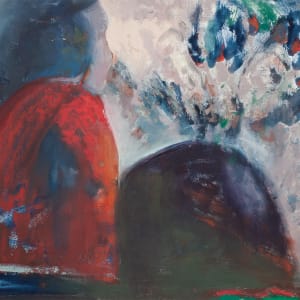
Home is not just a place—it is a feeling, a memory, and a shifting landscape of belonging. In my series Almost Home, I explore the fluidity of identity and the evolving concept of home through the language of landscape painting. These works blend direct documentation of real places with the ephemeral nature of recollection, incorporating fragments of fading memories, sensory impressions, and imaginative reinterpretations. In an increasingly mobile and interconnected world, the notion of home is more transient than ever. The landscapes in Almost Home reflect this duality—both familiar and ambiguous, tangible yet dreamlike. By layering textures, colors, and expressive brushwork, I seek to capture the essence of a place that is both deeply personal and universally resonant. These paintings invite viewers to reflect on their own experiences of belonging, displacement, and nostalgia. Through this series, I aim to create visual spaces that exist between reality and memory—landscapes that feel lived in but remain elusive, reminding us that home is not always a fixed point on a map, but rather a state of being shaped by time, experience, and emotion.
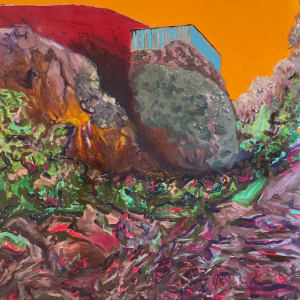
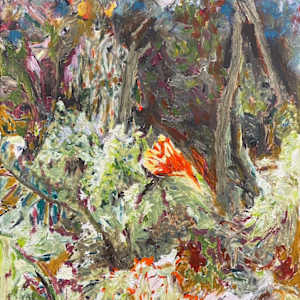
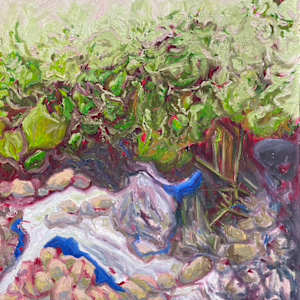
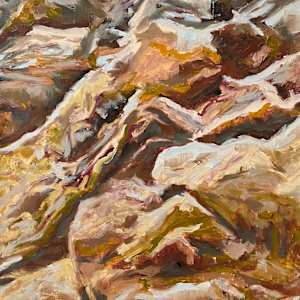
The Paphiopedilum (WIP)
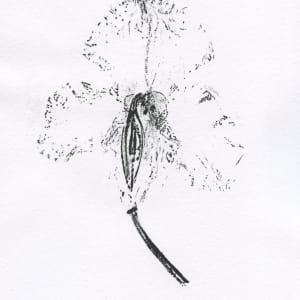
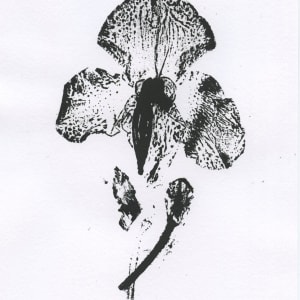
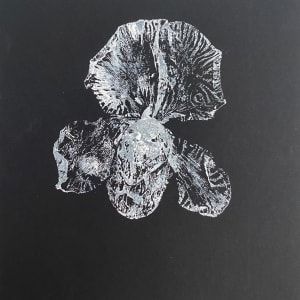
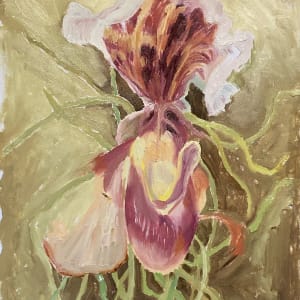
Nature’s cycles of decay and renewal have long fascinated me, and in this series I explore the transient beauty of a single Paphiopedilum orchid as it moves through the final stages of its bloom. Each work captures a moment of transformation—whether through direct botanical prints, drawings, or paintings—offering a meditation on impermanence, resilience, and the quiet persistence of life.
Using a direct printing technique, I preserve the intricate details of each petal and stem at the very end of their life, giving these delicate forms a presence beyond their natural span. The plant itself, however, continues to grow, reinforcing the idea of renewal. Alongside these prints, sketches and paintings further interpret the orchid’s form and character, layering close observation with personal response.
This series also holds a particular ambiguity: while the act of printing happens in a single, immediate moment, arriving at that moment is slow and contingent on the plant’s own rhythm, yielding only a limited number of prints, since it produces a single bloom at a time. Through this intimate engagement with a single plant, I invite the viewer to reflect on the cycles that shape both nature and our own lives—the fleeting, the enduring, and the beauty in both.
The Things They Carried
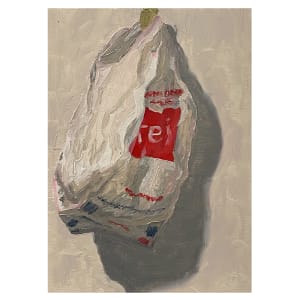
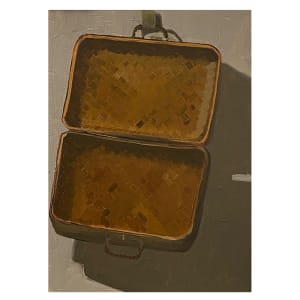
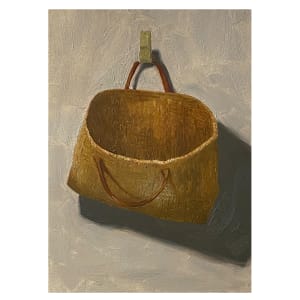
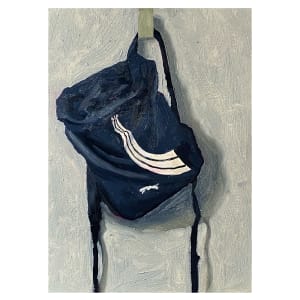
This series of paintings explores the intimate relationship between identity and the objects we carry. The title, borrowed from The Things They Carried by Tim O’Brien, became for me a powerful metaphor for the unseen psychological weight we move through the world with, and for what Jung might describe as the shadow side: the hidden, unspoken, or less visible parts of the self.
The series was made through a simple structure: I painted one bag every day for a month. That repeated act of looking turned these familiar objects into a form of daily self-portraiture. Backpacks, totes, purses, and suitcases became more than functional accessories; they emerged as extensions of the self, carrying memory, purpose, necessity, and desire. Each one belongs to me, and each is tied to a different period, role, or way of moving through the world.
By isolating them against muted backgrounds, I invite attention to the weight they hold, both literal and symbolic. Their wear, colour, structure, and design suggest different forms of endurance, routine, ambition, and change. Through repetition, the series began to reflect not only what these objects contain, but what they quietly reveal.
At the heart of the work is an exploration of independence, particularly in relation to women’s lives. A bag is often a deeply personal object: practical, intimate, and constantly in motion with its owner. It accompanies us through public and private spaces alike, holding not only essentials but also a sense of autonomy. Across the series, these bags become quiet markers of self-sufficiency, choice, and movement through different phases of life.
Painting them in oil allows these everyday objects to shift from the ordinary into something more enduring and psychologically charged. Through texture, scale, and attention, they become repositories of experience rather than simple possessions.
This collection is a reflection on what we carry, not only in our hands, but within ourselves. It is a meditation on movement, self-reliance, and the visible and invisible histories that accompany us.
Portugal, aos poucos
Portugal, aos poucos is an ongoing series of drawings and paintings made in direct response to the Portuguese landscape. Created en plein air, the works reflect a gradual process of looking, returning, and becoming familiar with a place through sustained attention.
The series is rooted in my experience of Portugal as my current home. Through painting outdoors, I engage closely with its shifting light, atmosphere, and terrain—its ocean edges, riverbanks, cliffs, and urban spaces. Some works remain closely observed, while others move toward abstraction, distilling what is seen into colour, structure, and rhythm. In the O Tejo paintings, for example, the Tagus River becomes a geometric language shaped by water, movement, and the architecture of Lisbon.
At the heart of the series is a simple act: pausing long enough to notice. These works attend to how light changes across a day, how built and natural environments meet, and how history lingers within the land. Each painting holds the trace of a particular encounter, while also contributing to a broader reflection on place, belonging, and the slow formation of attachment. As the series continues, it grows through repeated visits, new locations, and changing ways of seeing. Taken together, the works form a personal and evolving portrait of Portugal—arrived at gradually, attentively, and piece by piece.
Abstract Fantasy Landscapes
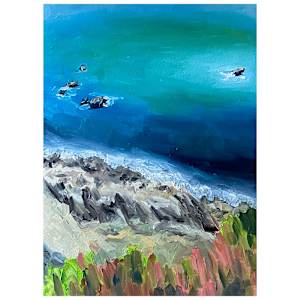
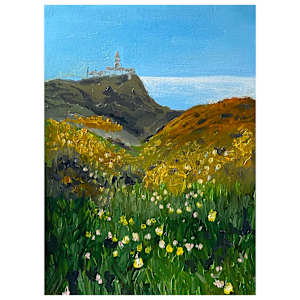
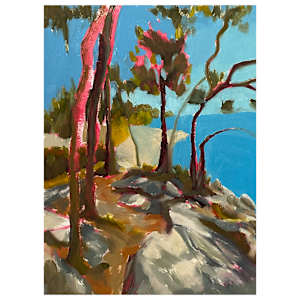
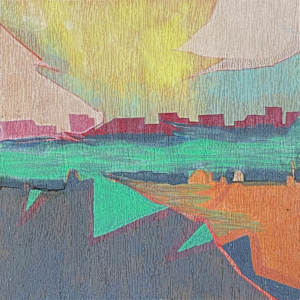
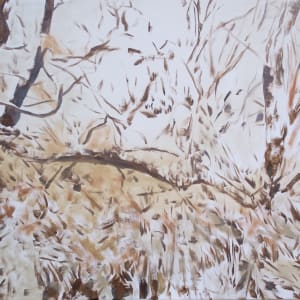
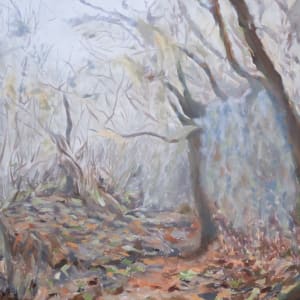
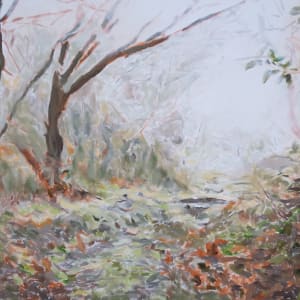
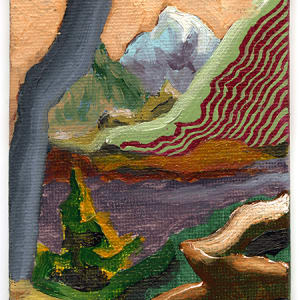
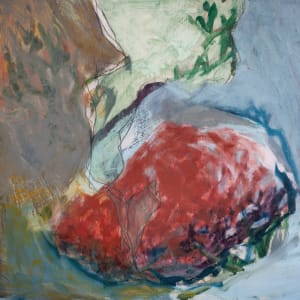
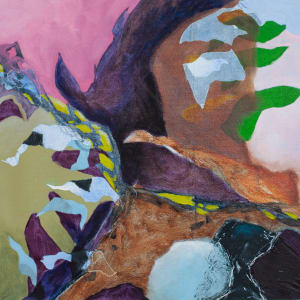
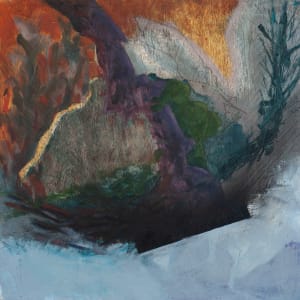
Abstract Fantasy Landscape explores landscape as a space where observation and invention meet. Drawn from natural forms such as rock, vegetation, water, and mountain terrain, these paintings begin in the language of landscape but move away from direct description. Familiar elements are compressed, rearranged, and reimagined, allowing each work to occupy a space between recognition and abstraction.
Across the series, I use colour, line, and shifting spatial structure to test how a landscape can be felt rather than simply depicted. Some paintings remain close to the material presence of the natural world, with loose, tactile brushwork and earthy tonal variation. Others introduce flatter planes, sharper contours, and more graphic interventions that interrupt any stable reading of space. This movement between the organic and the constructed gives the series its tension.
Rather than presenting landscape as a fixed view, these works treat it as something unstable, assembled, and open to projection. They reflect an interest in how external environments are filtered through sensation, memory, and formal invention, becoming at once specific and unfamiliar. At its core, the series is about landscape as a mutable image: part remembered, part observed, part imagined. Through this slippage between place and abstraction, the paintings invite a more fluid encounter with the natural world.
Sketches & Studies
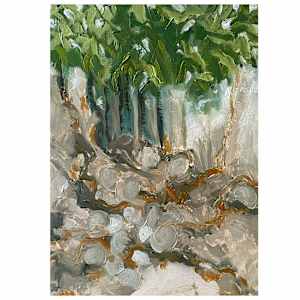
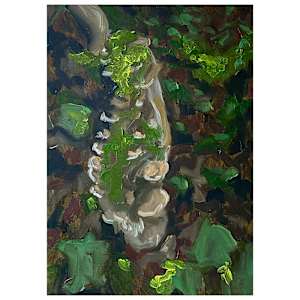
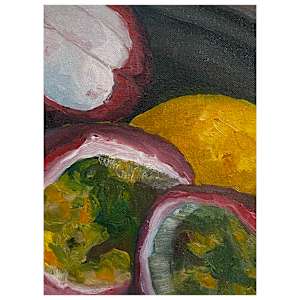
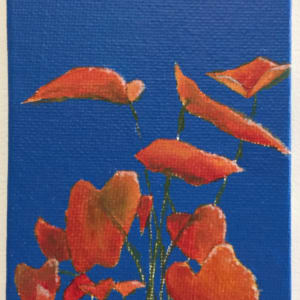
Painting from observation is where my practice begins—both as a way of researching and of coming to know my subjects more fully. Whether working from a portrait, a still life, or a landscape en plein air, I return to what is directly in front of me as a primary point of engagement.
These studies are not simply preparatory exercises, but part of the deeper structure of my practice. Through sustained looking, repetition, and continued effort, they allow me to develop a more rigorous understanding of form, light, atmosphere, and presence. Each work records a specific encounter, while also reflecting something larger: a commitment to discipline as an essential part of making art.
Underlying this body of work is the belief that art is shaped through labour as much as inspiration. The repeated return to painting from observation grounds the practice in time, attention, and effort, moving it beyond pleasure alone into something more deliberate and enduring. This collection reflects that foundation: a way of working shaped by close attention, persistence, and the ongoing effort to see more clearly.
From Nothing
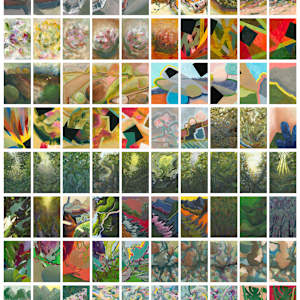
From Nothing was developed in January 2021, shortly after I moved to Lisbon and at a formative moment in my life as an artist. Working from a space that was entirely my own for the first time, and under the restrictions of lockdown, I began the series as a way of establishing rhythm and continuity within a newly defined environment. The project was structured around a clear intention: to make 100 A4 paintings on paper. At a time marked by newness—of place, of working environment, and of artistic commitment—that fixed aim provided a sense of direction, allowing repetition itself to become a way of building rhythm, continuity, and presence. What might initially appear as constraint became a means of generating momentum. Amid the restrictions of Covid, the fixed framework of the series offered a way to keep moving, with each painting functioning as a point of departure rather than resolution.
Without relying on external reference, the works emerged through an exploratory process aimed at developing a visual language. Across the series, forms shift between abstraction and suggestion, coherence and disruption. Certain motifs recur, while others dissolve or reconfigure, creating a field in which ideas are tested, abandoned, and revisited. The movement between works reflects an ongoing negotiation between instinct and control, structure and improvisation. Although presented chronologically, the series resists a fixed narrative. The sequence can be reconfigured, allowing new relationships to emerge and altering how the work is read. In this way, meaning is not established in advance, but remains open—formed through the act of viewing and the connections drawn between images.
From Nothing captures a moment of beginning: a period in which painting became a daily practice shaped by repetition, routine, and the need to generate something from within constraint. It marks an early stage in the development of a visual language, where the act of making itself became a way of working through uncertainty and establishing direction.

Neighbours
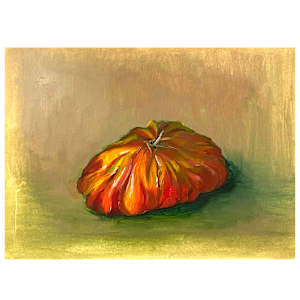
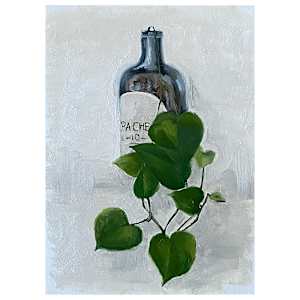
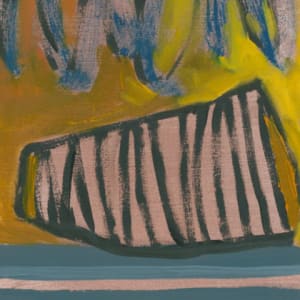
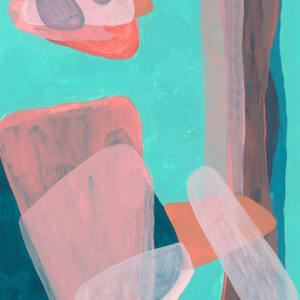
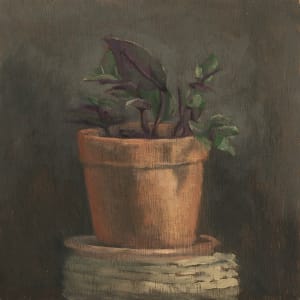
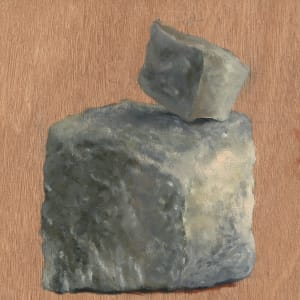
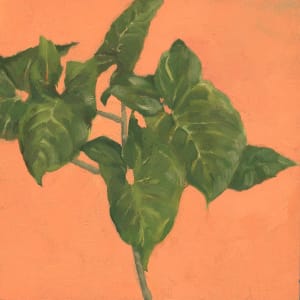
The Neighbours series reflects on the forms of connection that emerge through proximity, care, and everyday exchange. Developed around my move from London to Lisbon during the pandemic, these paintings are rooted in the quiet relationships that accompanied that transition and gradually transformed unfamiliar surroundings into something more intimate. Through depictions of objects, plants, and fragments associated with particular neighbours, the works consider how companionship and belonging are built through gestures of reciprocity and attention. A gifted plant, an exchanged cutting, or another modest offering can become the trace of a relationship, allowing ordinary things to carry emotional weight. Each painting holds a specific encounter, while together the series speaks to the mutual care and shared presence through which a sense of home begins to take shape.
The Conversations (WIP)
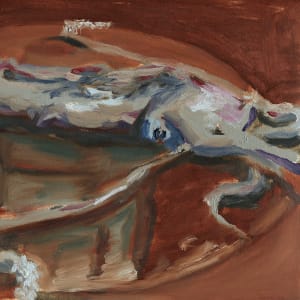
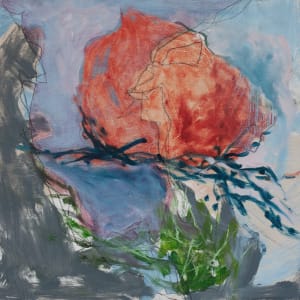
The Conversations explores communication as both a necessary and unstable part of human experience. Language is central to how we relate to one another, yet meaning is rarely fixed: it is shaped by context, perception, emotion, power, and the limits of what can be said, heard, or agreed upon. This body of work considers the space between minds—the places where understanding is formed, strained, misdirected, or left incomplete.
The series began with an interest in forms of communication that operate at cross purposes: debate without listening, rhetoric without mutual recognition, and the increasing difficulty of sustaining shared understanding across political, social, and interpersonal divides. These concerns were sharpened by the atmosphere surrounding Brexit, environmental and scientific debate, #MeToo, Black Lives Matter, and the conflicts around so-called cancel culture, but they extend beyond any single moment. They continue to open onto broader questions about who determines acceptable language, how those boundaries shift, and what happens when speech becomes both a social battleground and a tool of alignment, control, or exclusion.
Formally, the work remains open. In some pieces, abstraction allows communication to be approached through tension, rhythm, interruption, and silence. In others, language itself may enter the work more directly. One developing strand uses rings of “cancelled words,” drawn from terms briefly established or institutionally sanctioned through style guides, equity language frameworks, and organisational codes of acceptable speech. In this context, words are not treated as stable carriers of meaning, but as charged cultural objects—revised, contested, and repositioned over time.
At its core, The Conversations is concerned with the unstable territory around expression: what is said, what is withheld, what is regulated, what is misread, and what remains unresolved. The work invites viewers to reflect on their own experience of language and to consider how meaning is negotiated not only through speech, but through omission, framing, permission, and silence.
Time
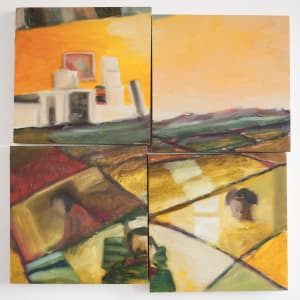
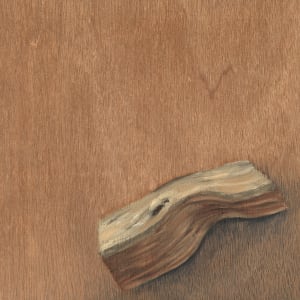
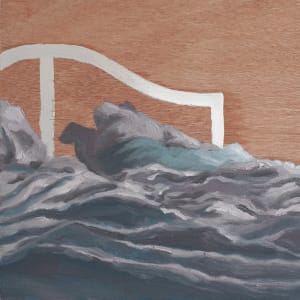
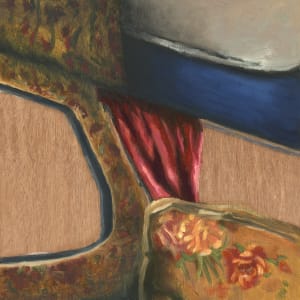
The Time Series emerged from the dislocation of the early Covid-19 lockdown, when separation from my paintings and usual workspace forced a sudden shift in both daily life and artistic process. Working from a makeshift studio at home, I began to reflect more closely on time, memory, and the altered experience of space under conditions of isolation. It was also a period marked by transition: a future that had previously felt distant began to move unexpectedly closer, bringing with it an awareness of time not only as something remembered, but also anticipated.
During this period, I was reading Carlo Rovelli’s reflections on time, and his writing opened up questions that stayed with me: how we experience the present, how memory shapes what feels real, and how time can seem to stretch, collapse, or fragment under pressure. These paintings grew out of that atmosphere of uncertainty, where familiar spaces became newly charged and interior life took on a different texture.
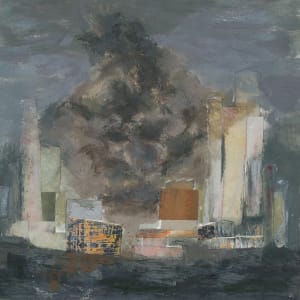
Across the series, domestic interiors, fragments of architecture, and glimpsed urban spaces become sites through which these questions are explored. Some works attend to solitude and enclosure, while others reflect the strange atmosphere of streets and structures emptied by restriction, where familiar places could feel suspended, distant, or newly unreal. Made across and around a moment of relocation, the works move between interior and exterior spaces, holding a subtle tension between inhabiting and anticipating, memory and projection.
Together, the paintings reflect on the ways space can carry memory, and how moments of disruption can alter our sense of time itself—holding us between what has been, what is unfolding, and what is still coming into view. What began as a response to a specific moment has become part of a broader ongoing enquiry in my practice: how painting can give form to experiences that are felt more easily than they are explained.
The Black Square
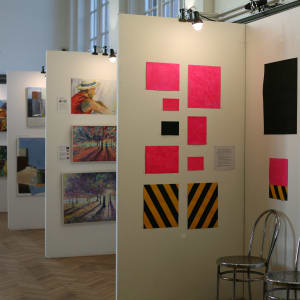
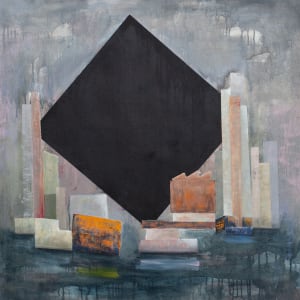
The Black Square Series examines how a single form can accumulate meaning across time, context, and shifting conditions. Taking Kazimir Malevich’s Black Square (1915) as a point of departure, the series repositions this radical gesture within contemporary contexts, where questions of control, stability, authorship, and belonging remain unsettled. What began as Malevich’s refusal of representation becomes, here, an active insertion: a geometric presence placed into landscapes, cities, and imagined terrains.
Developed in response to a broader climate of political instability in the three countries (the US, the UK, and Hong Kong) I consider partially as home, the series draws from a period in which existing structures of governance, identity, and authority appeared increasingly strained. Across the works, the black square operates less as an image than as a condition — interrupting, obscuring, or asserting itself within environments that otherwise suggest continuity. It is at once a void and a force.
Developed in response to a broader climate of political instability in the three countries (the US, the UK, and Hong Kong) I consider partially as home, the series draws from a period in which existing structures of governance, identity, and authority appeared increasingly strained. Across the works, the black square operates less as an image than as a condition — interrupting, obscuring, or asserting itself within environments that otherwise suggest continuity. It is at once a void and a force.
The visual language of the 2019–2020 Hong Kong pro-democracy protests is particularly present, where black functioned as a collective signal of anonymity, solidarity, and resistance. Within this context, the black square becomes both a marker of presence and a site of tension—holding together questions of visibility, control, and erasure.
Material choices further extend this framework. The use of Stuart Semple’s Black 2.0 (2017)—developed in response to Anish Kapoor’s exclusive artistic rights to Vantablack (2016)—introduces a parallel discourse around access, ownership, and artistic control. The politics of colour itself becomes inseparable from the work, reinforcing the idea that control can operate at both symbolic and material levels.
Across the series, the black square is set against different contexts: urban density, remote landscapes, organic systems, and constructed environments. In some works, it destabilises; in others, it imposes. At times it reads as absence, at others as pressure. What unites the series is an ongoing negotiation between control and freedom—between forces that seek to define, contain, or dominate, and those that resist fixation. Rather than resolving these tensions, The Black Square Series holds them in place. The works ask what it means to situate oneself within systems that are in flux, and whether it is possible to inhabit them without being fully determined by them.
California Burning
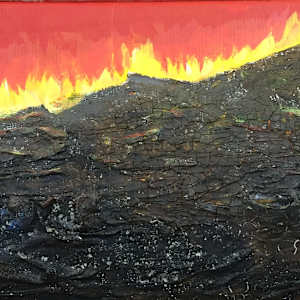
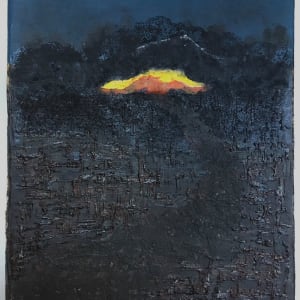
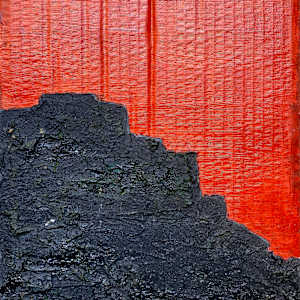
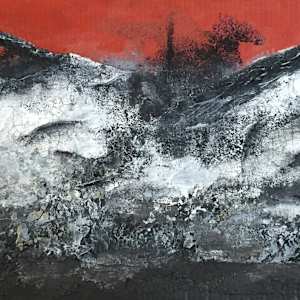
The California Burning Series emerges from a return to a landscape that had once shaped both my life and my sense of self. In 2018, I travelled alone through California, revisiting places I had lived in for over a decade. This return was prompted not by nostalgia, but by the aftermath of the 2017 wildfires. News of the Thomas Fire reactivated a connection to Santa Barbara and Los Angeles—sites that had long receded into the background of my life, but remained formative in quieter ways.
The paintings developed in response to this encounter with a landscape visibly altered by fire. Scorched terrain, suspended light, and moments of unexpected stillness became points of attention. Rather than documenting specific events, the works move between observation and memory, holding together the physical reality of the land and a more internal, reflective register.
This series occupies an important place within my wider practice. Made at a moment of return—both to California and to painting itself—it marks the point at which painting reasserted itself as a central mode of inquiry. The altered landscape became both subject and catalyst: a site through which questions of memory, identity, and continuity began to re-emerge and take form.
The Unknown
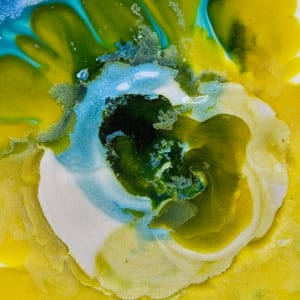
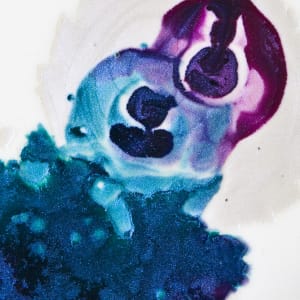
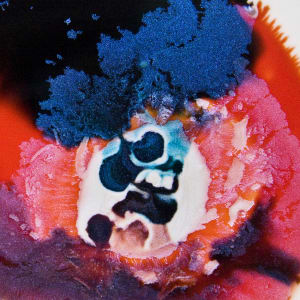
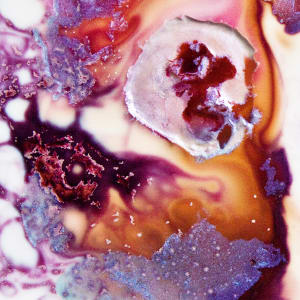
The Unknown series was developed as my art practice deepened alongside my studies and professional work in art psychotherapy. Influenced by Jungian thought, the works engage with image-making as a way of approaching what is not yet fully conscious—those inner states that resist direct language but surface through symbol, atmosphere, distortion, and association.
Rather than beginning with a fixed image or predetermined outcome, I work through a process of surrender, allowing materials to behave in ways that exceed control. Fluidity, instability, and chance become active collaborators in the making, opening space for forms to emerge that feel discovered rather than designed. In this sense, the unknown is both subject and method: a means of accessing psychological terrain that is shifting, layered, and only partially knowable. The resulting compositions occupy a threshold between abstraction and suggestion. They do not describe a singular narrative, but instead evoke the logic of the unconscious—fragmented, intuitive, and rich with projection. Like dreams or active imaginings, they invite meanings to arise indirectly, through feeling as much as recognition.
Photography is central to the series. Each final work captures a fleeting state within the process, preserving moments when wet materials remain in motion and the image has not yet settled. The camera allows these transient transformations to be held at the precise point where they are most alive, before they disappear. What remains is both document and image: a record of material change and a visual trace of an inner landscape in formation. Across the series, ambiguity is not treated as absence, but as potential. The works invite viewers into a space of contemplation in which personal associations, memories, and projections may unfold—opening a quiet dialogue between what is seen, what is felt, and what remains unknown.