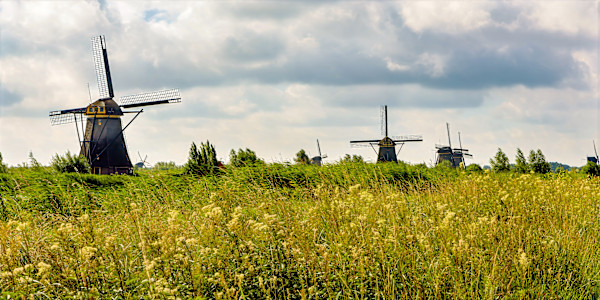

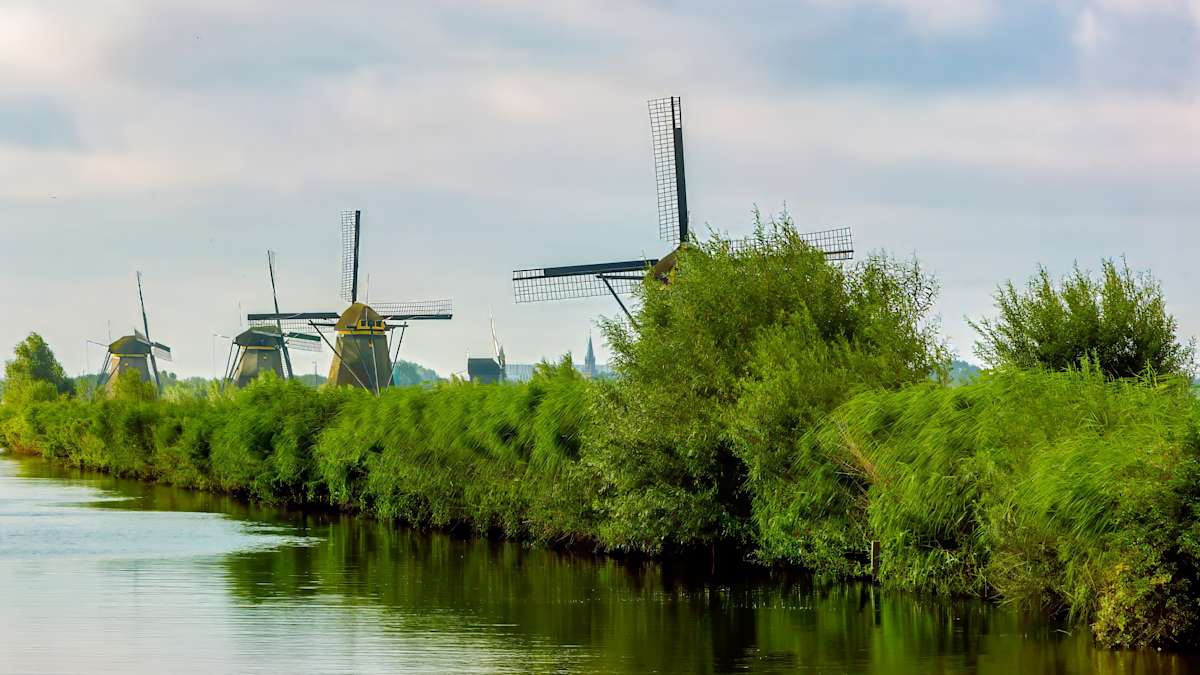
The Kinderdijk windmills are without question one of the most iconic, breathtaking, and symbolically powerful landscapes in all of the Netherlands and indeed in the entire world, a UNESCO World Heritage Site since 1997 that stands as the ultimate expression of the Dutch people's centuries-long, extraordinary struggle to reclaim, manage, and inhabit a land that lies largely below sea level, representing a feat of collective human ingenuity, perseverance, and engineering genius that is almost without parallel in history. Located in the Alblasserwaard polder region of South Holland, approximately 15 kilometers east of Rotterdam, Kinderdijk is home to the largest concentration of historic windmills in the Netherlands, with 19 magnificent stone and brick mills standing in two parallel rows along the banks of the Kinderdijk canal and the surrounding waterways, their great sweeping sails turning against the vast, cloud-filled Dutch sky in a scene of such timeless, painterly beauty that it seems to have stepped directly from the canvases of the Dutch golden age masters. These windmills were constructed between 1722 and 1761 as part of an integrated water management system designed to drain the Alblasserwaard polder, pumping excess water from the low-lying land into higher canals and ultimately into the rivers beyond, protecting the surrounding communities and farmland from the constant threat of flooding in a region where the land sits as much as two meters below sea level. The windmills at Kinderdijk are of two main types — the round stone mills and the octagonal smock mills — and several of them were inhabited by millkeeper families well into the 20th century, with one mill preserved and open to visitors as a museum interior that offers a fascinating and intimate glimpse into the remarkably compact and ingeniously organized domestic life lived within the working machinery of these extraordinary structures. The landscape surrounding the mills is quintessentially and gloriously Dutch — flat, open polders stretching to every horizon under immense skies, bisected by canals and drainage ditches that shimmer with reflected light, fringed by reeds and willows, and populated by grazing cattle and waterbirds — a landscape that changes its mood and beauty with every season, from the frozen, frost-silvered stillness of winter mornings to the riot of color when tulip fields bloom in spring, to the long, golden summer evenings when the sails of the mills cast slowly rotating shadows across the glittering water, creating a scene of such serene and magnificent beauty that it remains one of the most unforgettable and deeply moving landscape experiences that Europe has to offer.
- Subject Matter: landscape
- Collections: Architecture of Medieval Europe, Digital photography , Landscapes, Netherlands