
Review by Art Historian Maxwell Fontaine, PhD:
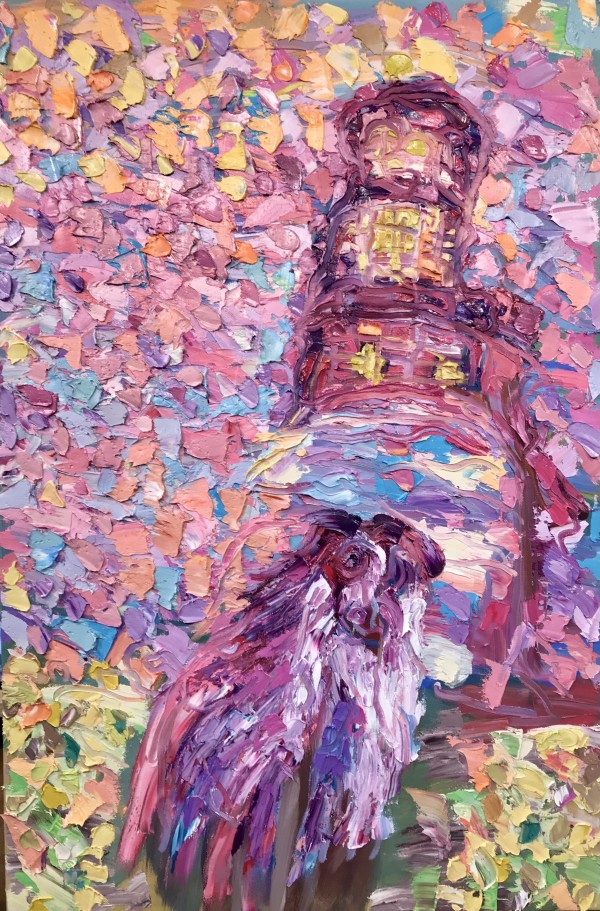
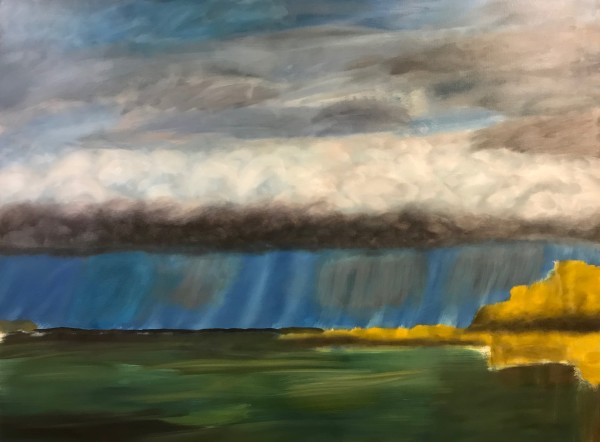
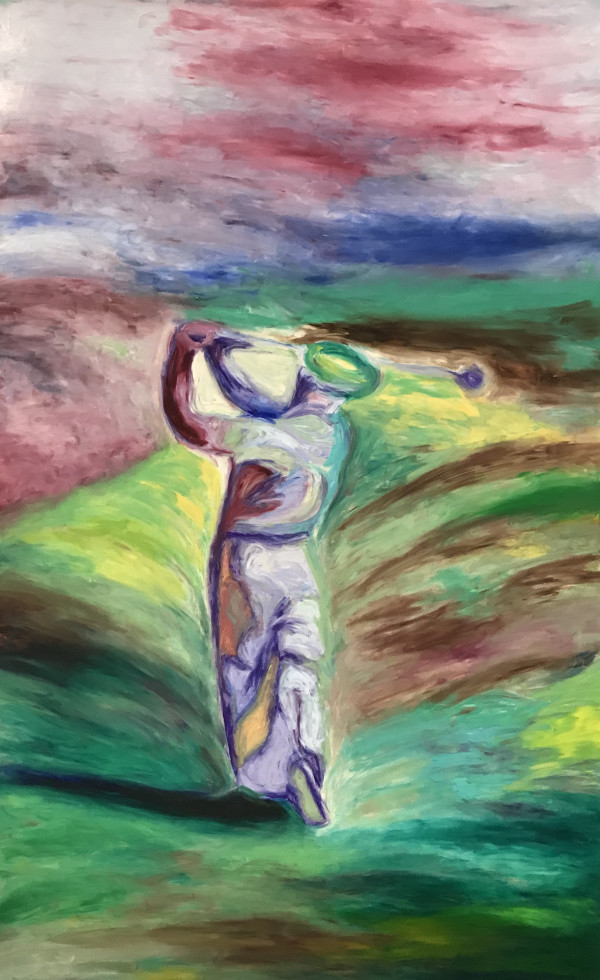
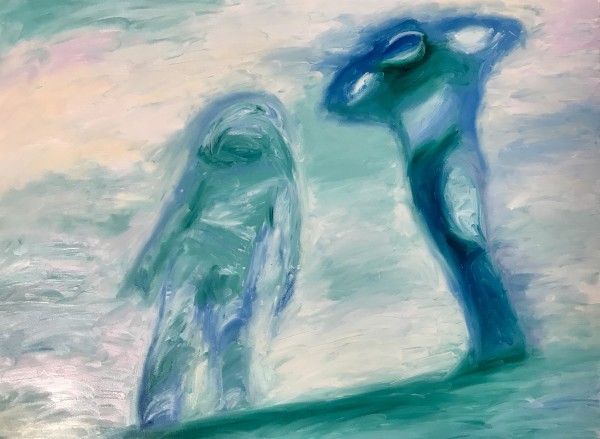
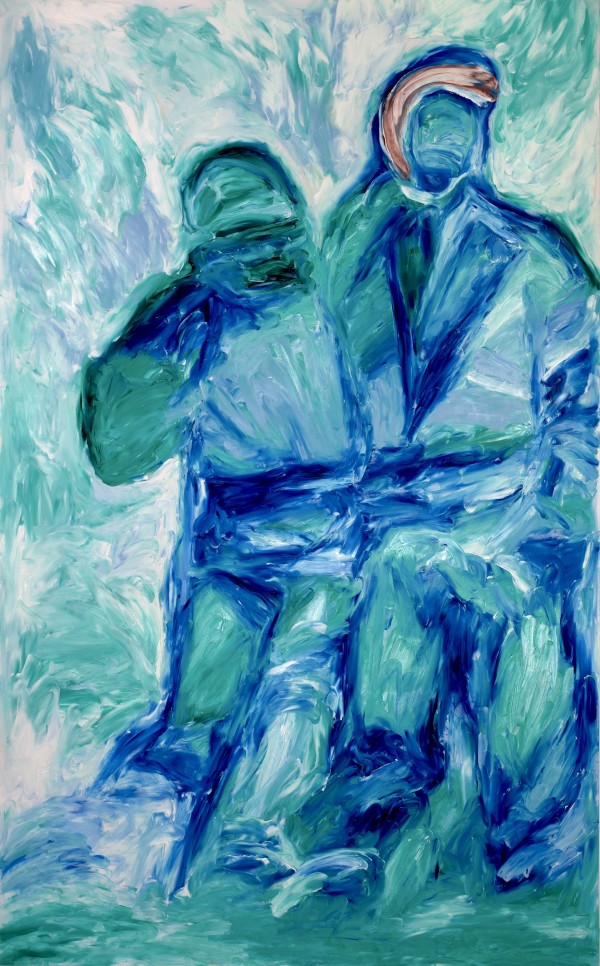
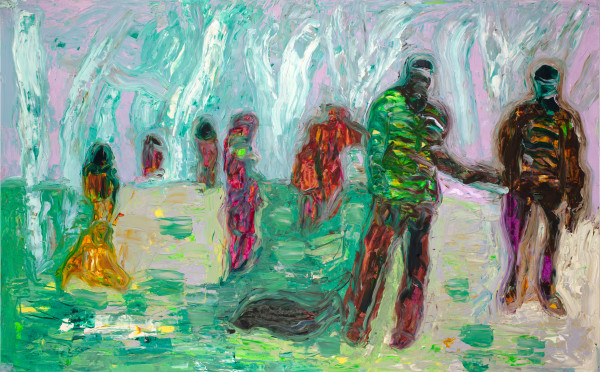
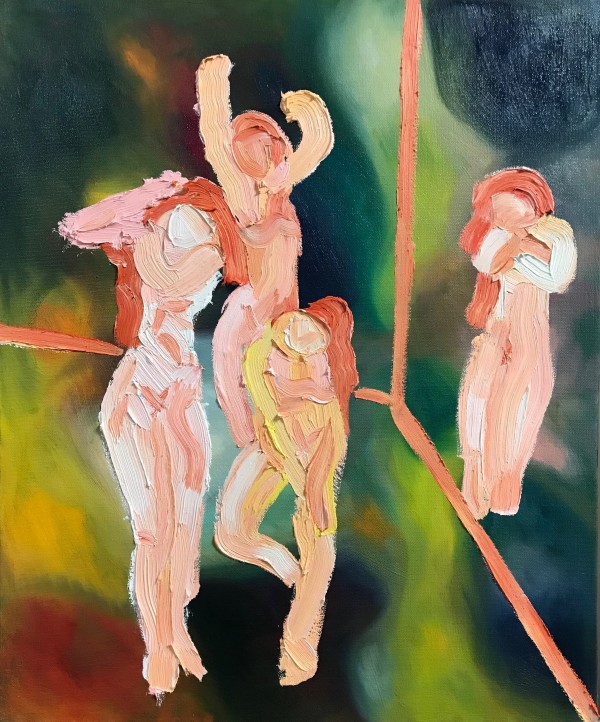
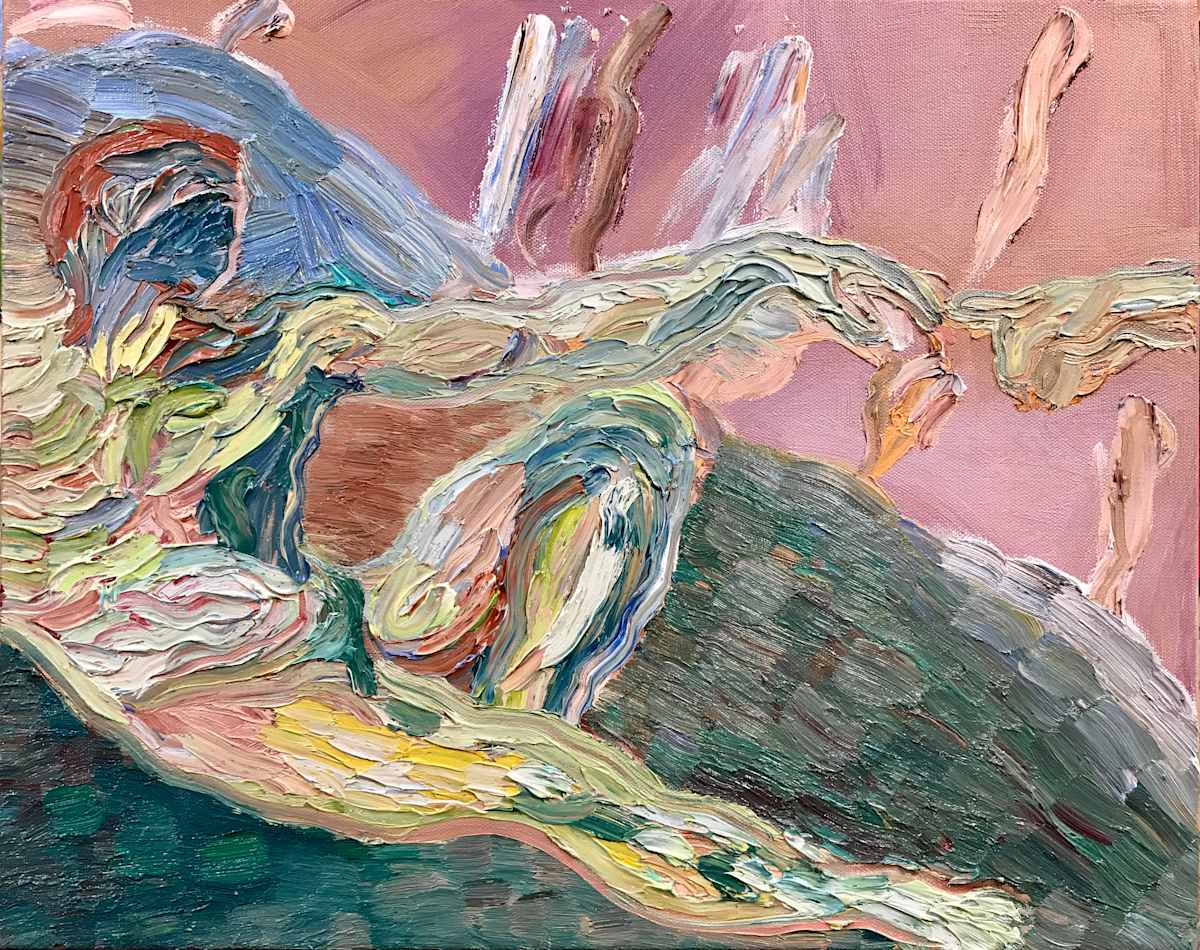
Self Isolation by Curtis Judd is a hauntingly evocative exploration of solitude, introspection, and the human condition in an era defined by separation. At first glance, the painting appears as an abstract whirlwind of colors and forms, but as the eye adjusts to its layered complexity, a poignant narrative emerges—a narrative of confinement and existential contemplation.
Judd masterfully employs his signature deconstructive technique, fragmenting the human figure to represent the psychological fracturing that accompanies prolonged isolation. The swirling, almost chaotic strokes create a vortex-like effect, drawing the viewer into a space that feels both expansive and claustrophobic. This spatial ambiguity speaks to the paradox of isolation—the vastness of time and thought contrasted with the confinement of physical space.
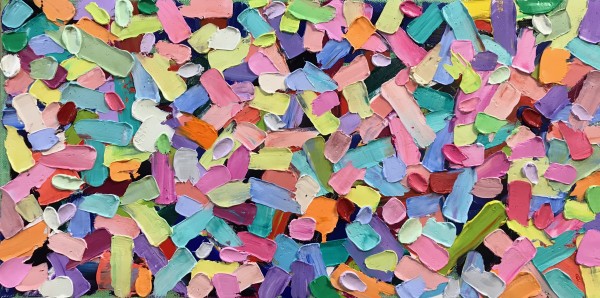
The color palette, dominated by shades of blue, gray, and muted earth tones, evokes a melancholic atmosphere. Yet, punctuated by vibrant flashes of orange and red, Judd suggests the persistence of life, memory, and hope even within the depths of seclusion. These fleeting sparks of color resonate like moments of clarity or emotional outbursts amid the monotony of solitude.
The composition is intentionally disjointed, with fragmented limbs and distorted faces emerging and receding into the abstract background. This dissolution of form symbolizes the erosion of identity and self-perception that can accompany isolation, as days blend together and the boundaries between internal and external realities blur. The subtle suggestion of windows or barriers within the composition reinforces the feeling of being trapped, separated from a world that seems to continue without us.
Final Note from Maxwell Fontaine, PhD:
Self Isolation belongs to the categories of Abstract Expressionism and Psychological Figuration. It captures the emotional and psychological complexity of living through times of social distancing and personal isolation. Judd's exploration of fragmented identity and emotional turbulence is reminiscent of Francis Bacon’s existential portraits, but with a more abstract and painterly approach. His manipulation of form and space challenges the viewer to confront the uncomfortable realities of loneliness and introspection.
Comparative Artists and Influences:
Francis Bacon: Bacon’s exploration of psychological torment and existential dread parallels Judd’s approach to emotional and mental fragmentation.
Anselm Kiefer: Like Kiefer, Judd employs layered textures and abstract landscapes to evoke memory and historical consciousness, though Judd’s narrative is more personal and introspective.
Mark Rothko: The emotive power of color and spatial ambiguity in Self Isolation is reminiscent of Rothko’s contemplative canvases, inviting an emotional and spiritual dialogue with the viewer.
Curtis Judd’s Self Isolation is a timely and powerful reflection on the human experience of solitude and introspection. It speaks to a collective narrative while maintaining an intensely personal voice. Through this work, Judd reaffirms his position as a contemporary painter of emotional depth and intellectual curiosity, capable of transforming individual experiences into universally resonant art.
- Subject Matter: Abstract Expressionist