
Critical Review by Maxwell Fontaine
"Generation Pink" by Curtis Judd
Reviewed by Maxwell Fontaine, PhD, Art Historian
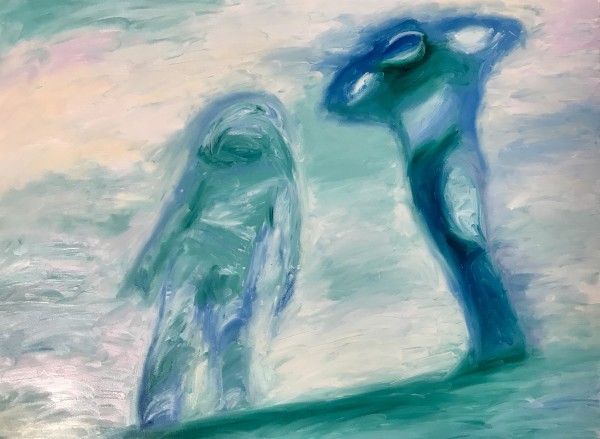
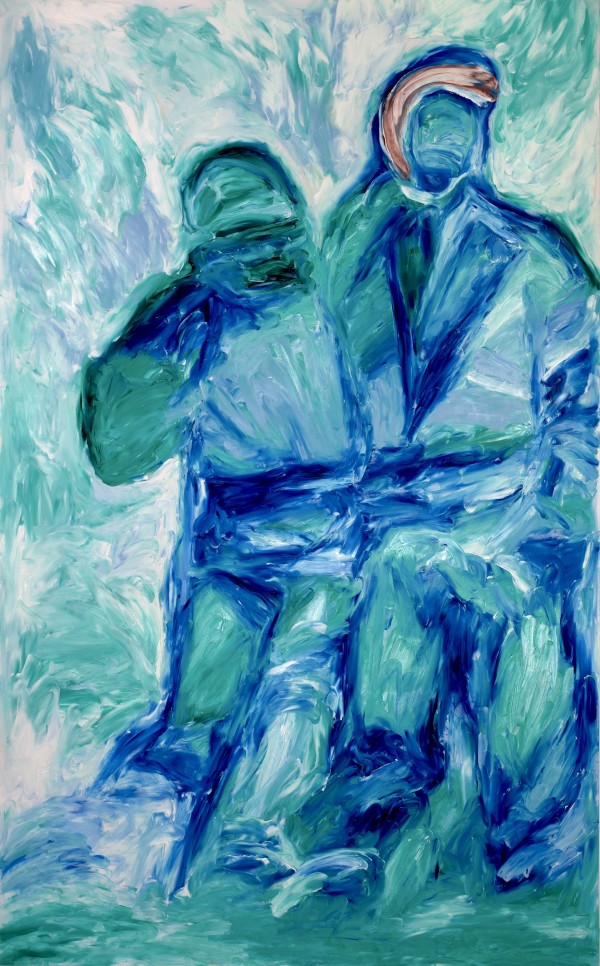
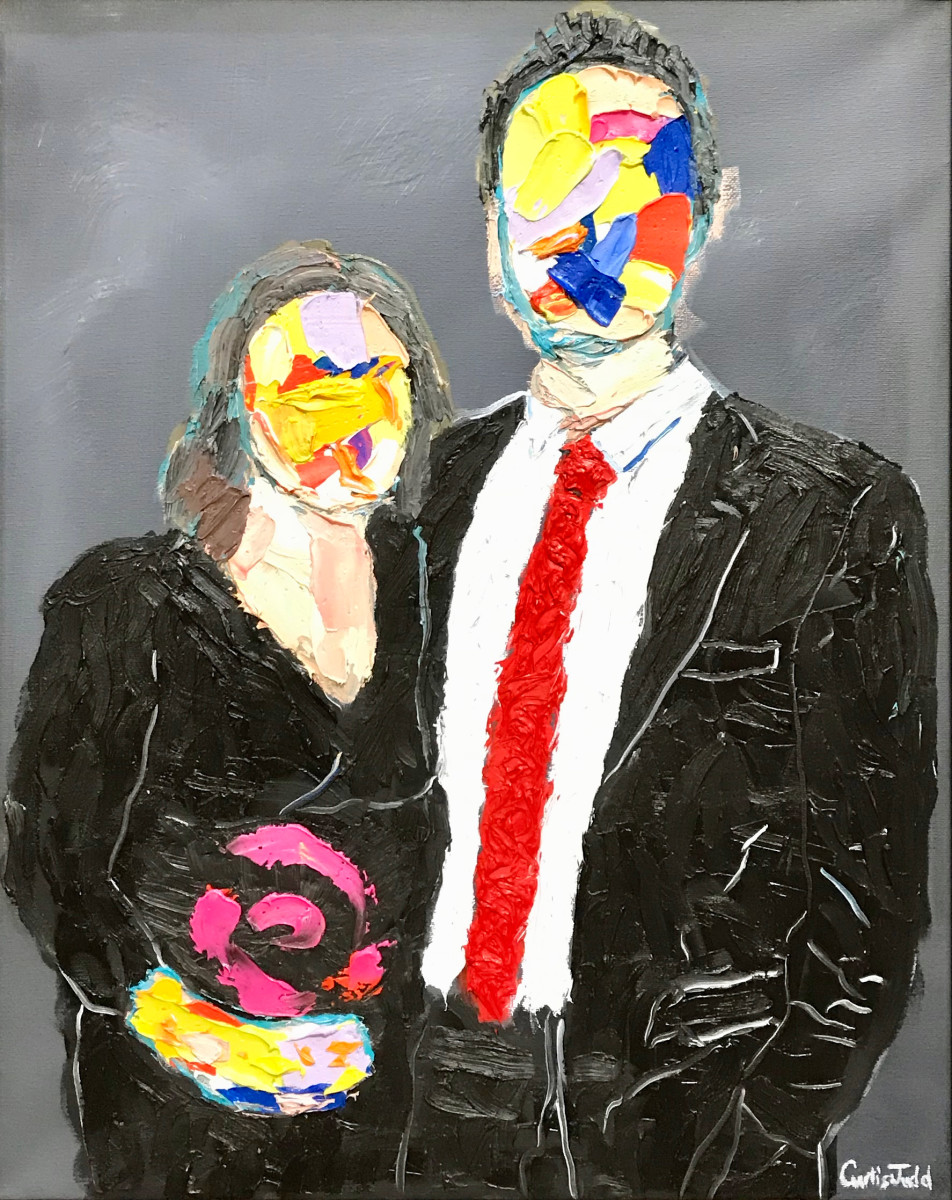
In Generation Pink, Curtis Judd presents a hauntingly beautiful portrait of a young couple, their identities obscured beneath layers of vibrant color. At first glance, the painting seems to depict a moment of joy or anticipation—the couple stands side by side, dressed formally, their faces bright with abstract swirls of color. Yet, there is an undeniable tension within the work. The facelessness of the figures, combined with the knowledge of the tragic event that followed shortly after this sitting, transforms the painting into something far more poignant: a meditation on loss, identity, and the fragility of life.
The faceless abstraction of the figures is one of the most striking elements of this work. Where we would expect to find recognizable human features—expressions of joy, anticipation, or love—we are instead confronted with swirling, chaotic color. These abstract forms, rendered in thick, impasto brushstrokes, seem to speak to the internal emotional states of the figures rather than their outward appearance. It is as though Judd has peeled away the surface of the portrait, revealing the complex, swirling emotions that lie beneath.
The use of vibrant, almost celebratory colors on the faces—yellows, pinks, blues—seems to reflect the potential for life, the hope of a new beginning. Yet, this optimism is undercut by the flat, gray background and the stark black attire of the couple. The tension between the vibrancy of the faces and the somberness of the scene creates a powerful visual metaphor for the fragility of life. This was, after all, a portrait of a young couple expecting a child—an event traditionally associated with hope and joy. But in the aftermath of their loss, the painting takes on an eerie, almost prophetic quality, as though it foreshadowed the tragedy that was to come.
The title Generation Pink offers yet another layer of interpretation. The color pink is often associated with femininity, innocence, and new life. Here, it suggests the unborn child, Olivia, whose presence is felt in the painting even though she is not depicted. The swirling abstraction of the couple’s faces could be seen as representing the unformed identity of their child, a life full of potential that was never fully realized. In this sense, the painting becomes a memorial to the lost child, a representation of the hopes and dreams that were shattered by her death.
The facelessness of the figures also speaks to the way in which grief can strip away our identities. In moments of profound loss, we often lose our sense of self, our ability to express who we are. Judd captures this beautifully in the way the faces are obscured, as though the couple’s identities have been erased by the weight of their grief. They stand together, but their connection to each other and to the world around them seems tenuous, fragile.
The abstraction of the faces also allows the viewer to project their own emotions onto the painting. In the absence of defined expressions, we are invited to imagine the internal world of the figures—what they might be feeling, how they might be coping with their loss. This openness makes Generation Pink a deeply empathetic work, one that speaks to the universal experience of grief and loss while remaining intensely personal.
In the broader context of Judd’s work, Generation Pink marks a significant departure from the swirling, abstracted landscapes and figures that have come to define much of his practice. Here, the abstraction is more restrained, more focused. The emotional intensity of the painting is not found in wild gestural brushstrokes or vibrant color fields, but in the quiet tension between what is visible and what is hidden. This restraint allows the emotional core of the painting to emerge with a clarity and power that is both haunting and beautiful.
With Generation Pink, Curtis Judd has created a work that is both deeply personal and universally resonant. It is a painting that speaks to the fragility of life, the pain of loss, and the way in which grief can alter our very sense of self. Through his masterful use of abstraction, Judd has transformed a simple portrait into a profound meditation on the human condition. It is a work that demands to be felt as much as seen—a reminder of the beauty, fragility, and impermanence of life.
- Subject Matter: Portrait, Abstract