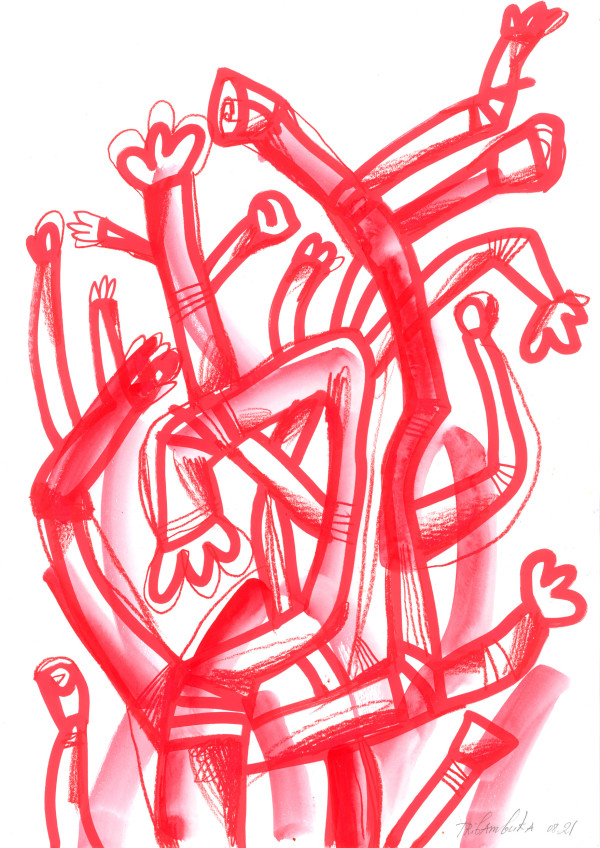
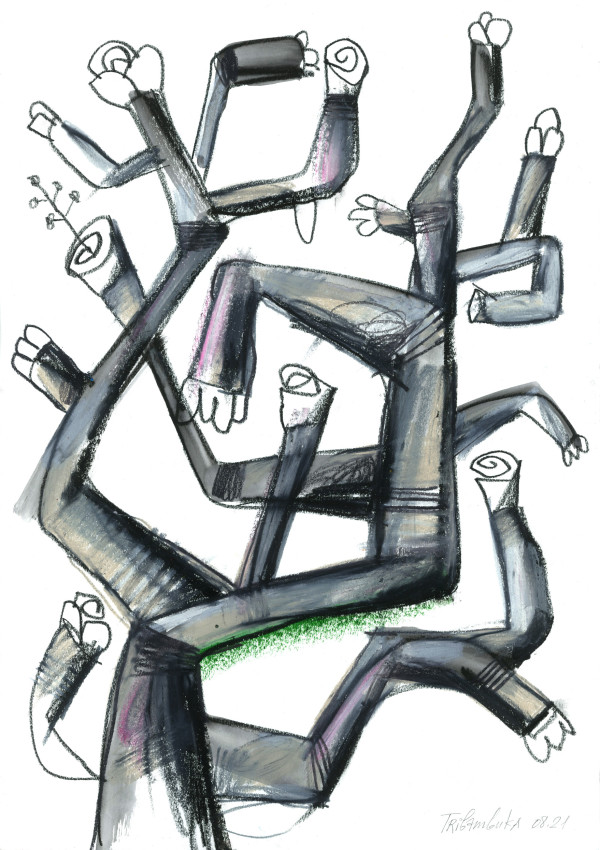
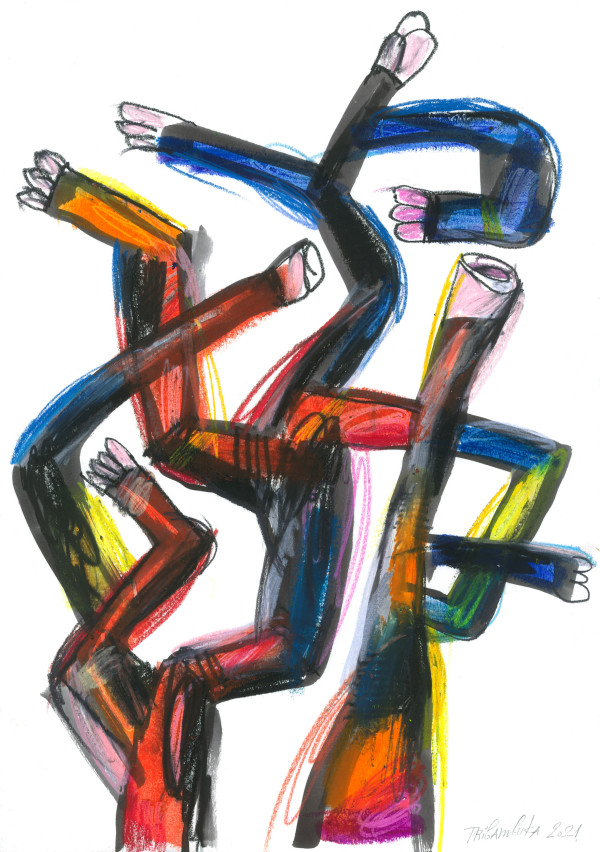
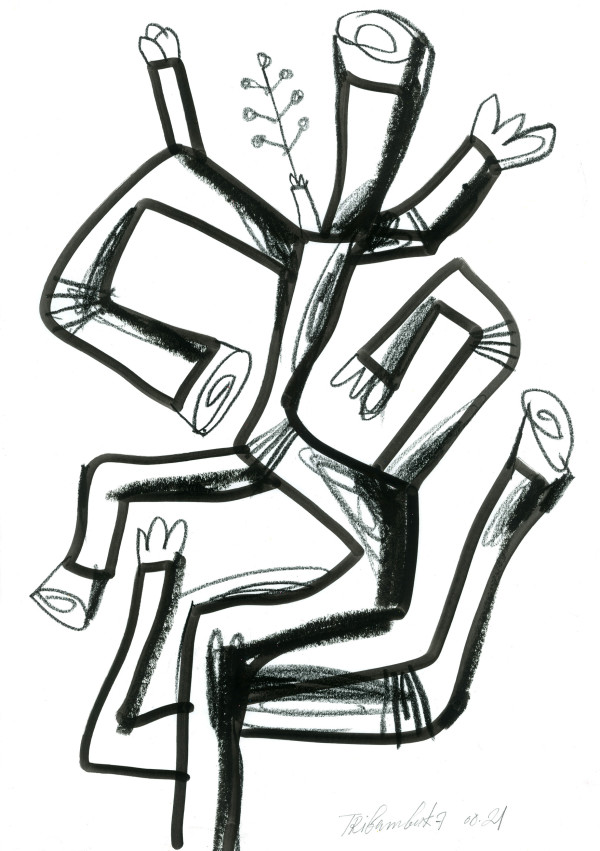
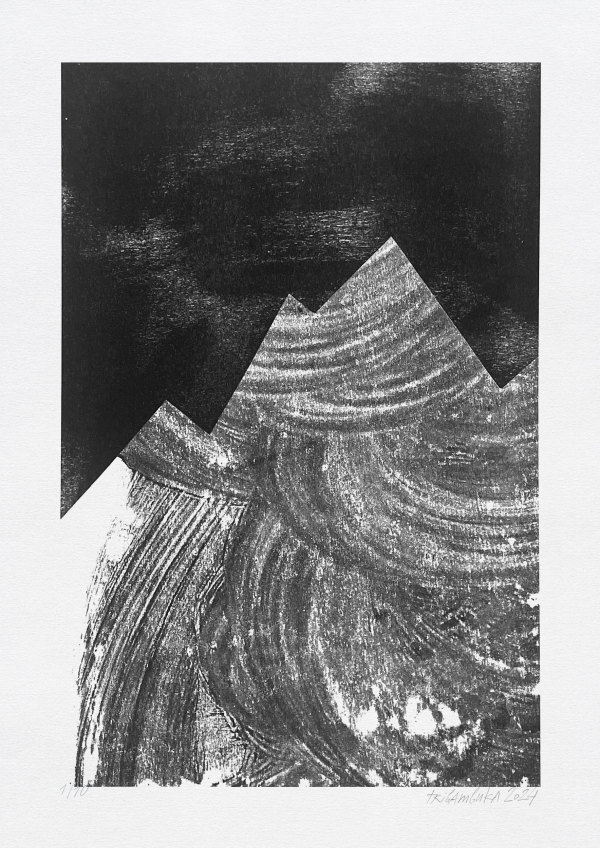
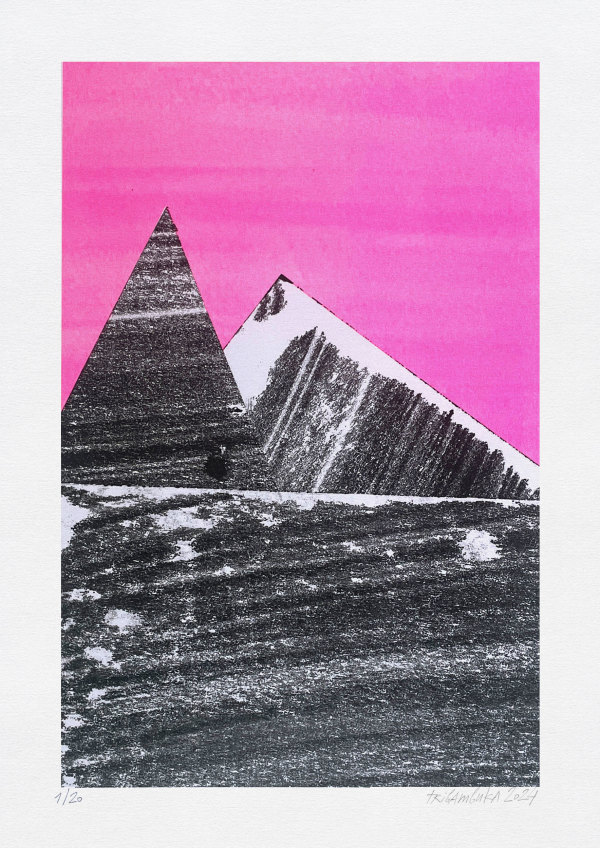
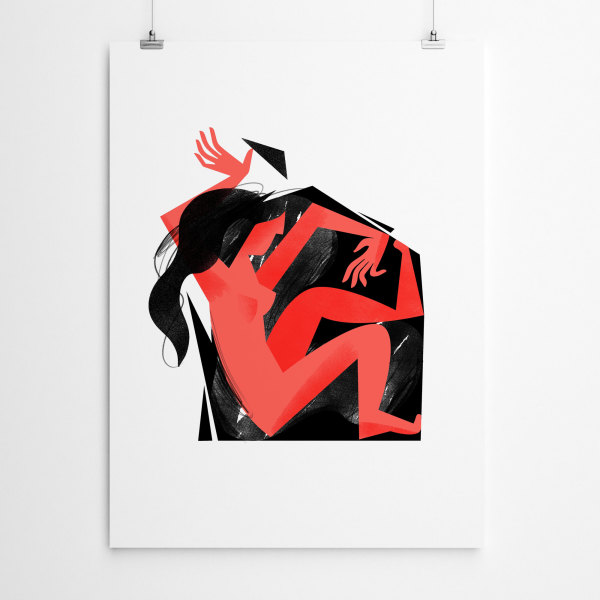
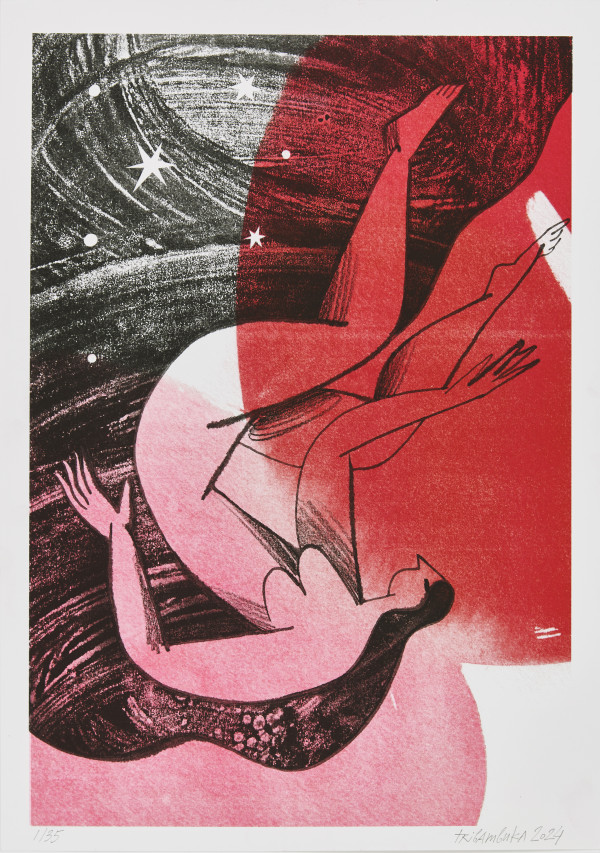
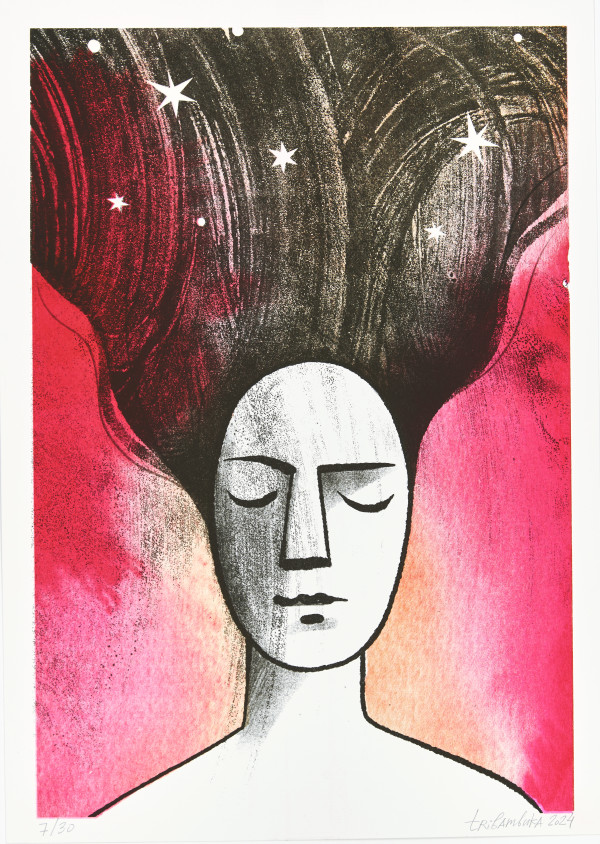
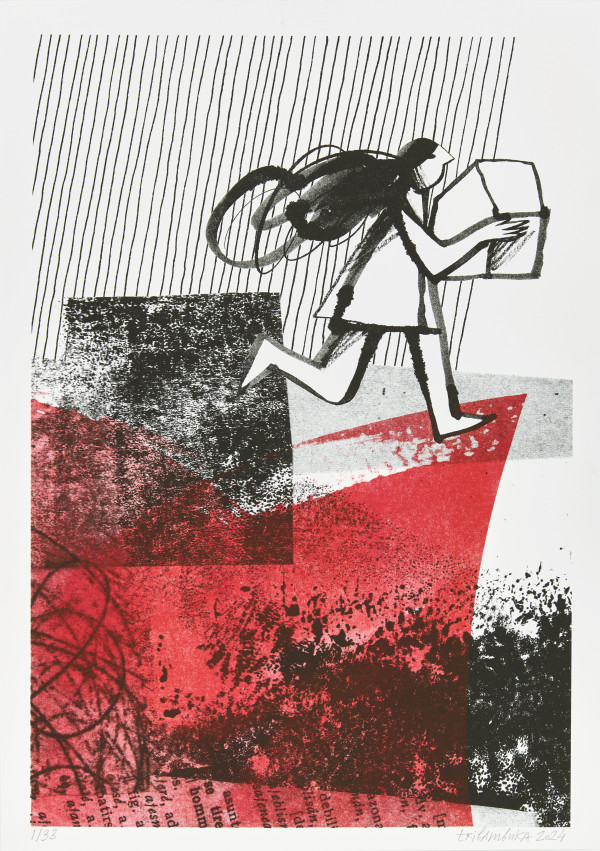
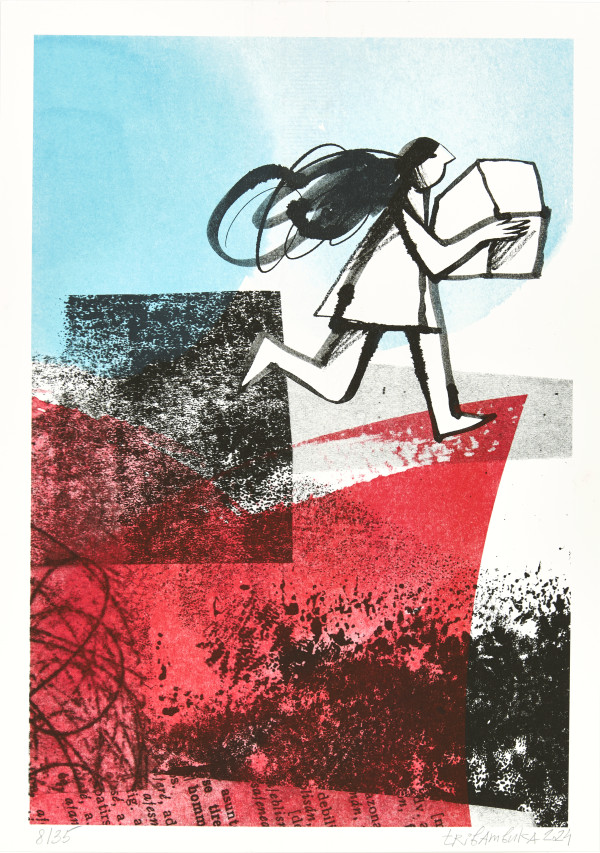
In her latest print series, Echoes of Gomera, Tribambuka channels the untamed spirit of La Gomera into a collection of experimental risograph prints. Created during her art residency on the volcanic island, these prints reflect its rugged, natural beauty through a bold, semi-abstract collage style. Each piece captures the essence of the island’s dramatic landscapes—from the sweeping winds to the craggy contours of ancient lava flows. Employing a monotype process, Tribambuka accentuates the angularity and rich textures of her subjects. The primary use of black, interspersed with striking flashes of fluorescent colours, lends a moody, almost mystical quality to the series, evoking the deep shadows and unexpected bursts of life on the island. Echoes of Gomera invites viewers to experience the profound and stirring wildness that is La Gomera, preserved on paper through the artist's innovative vision.
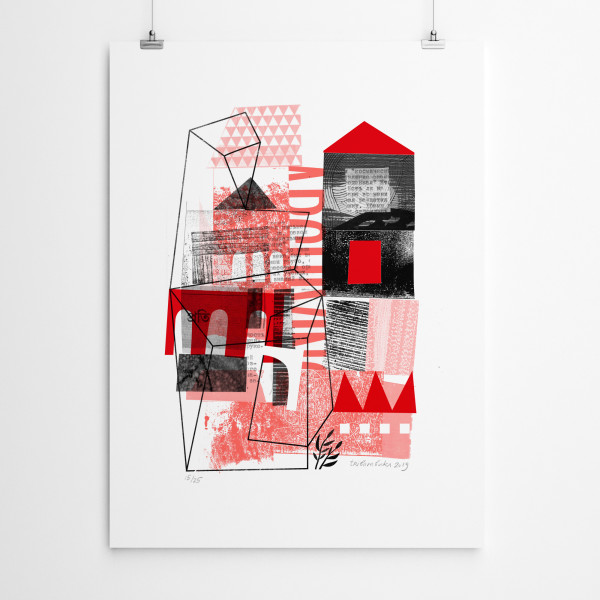
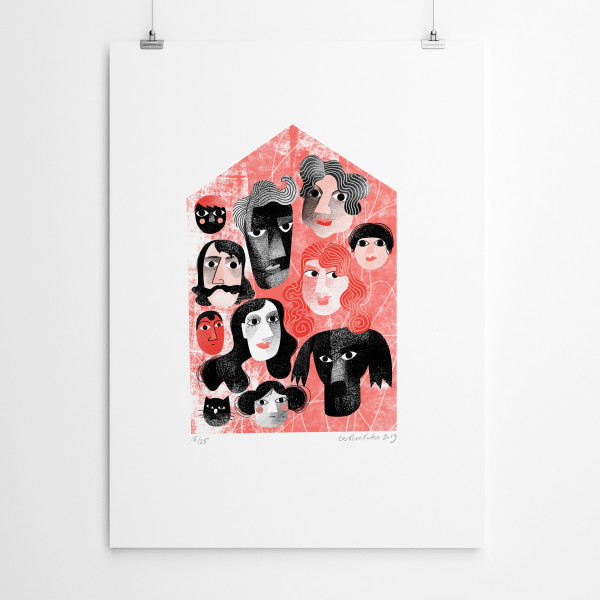
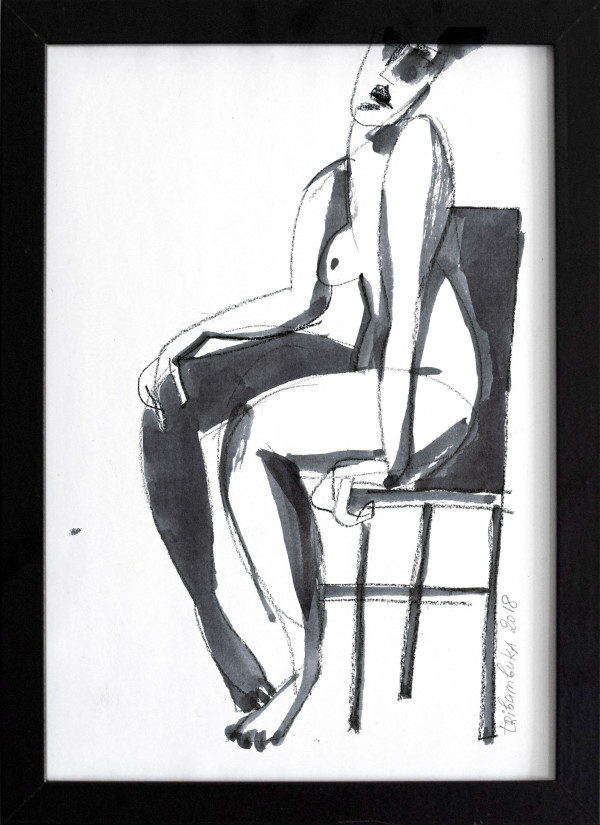
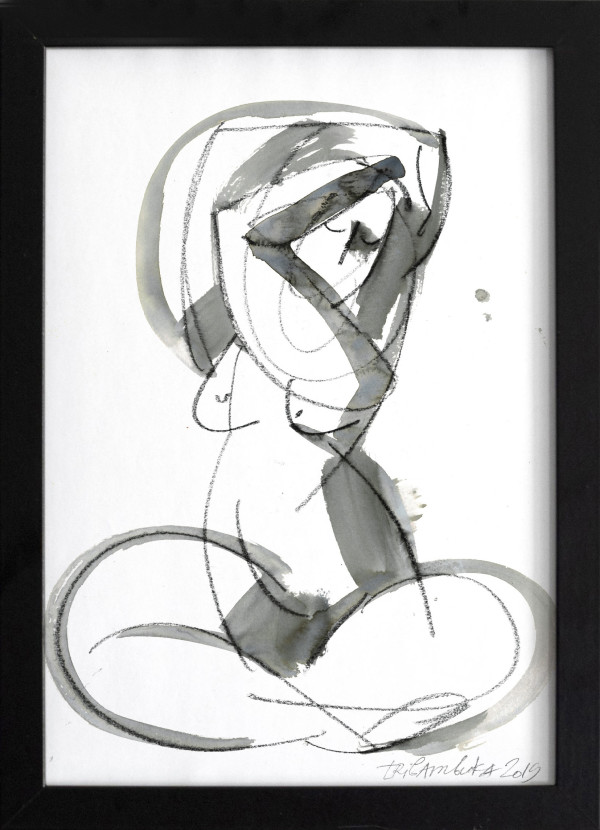
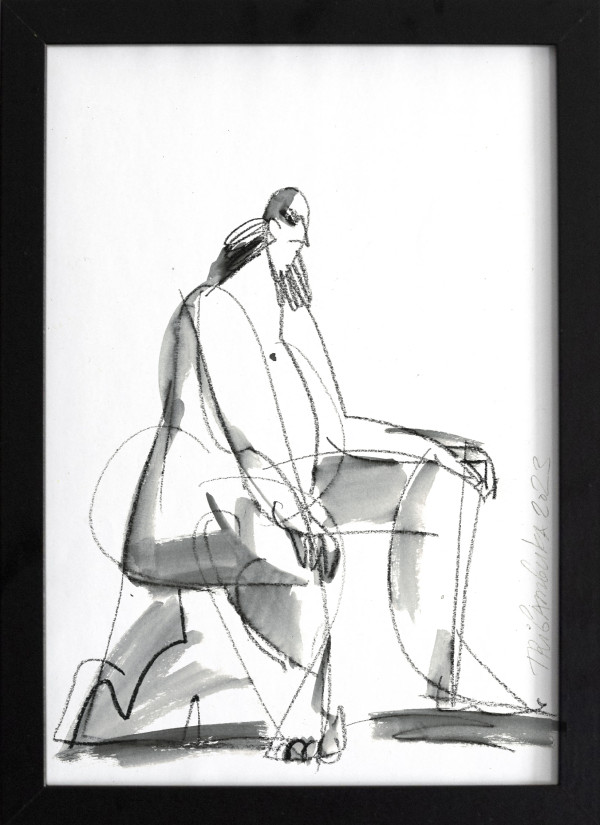
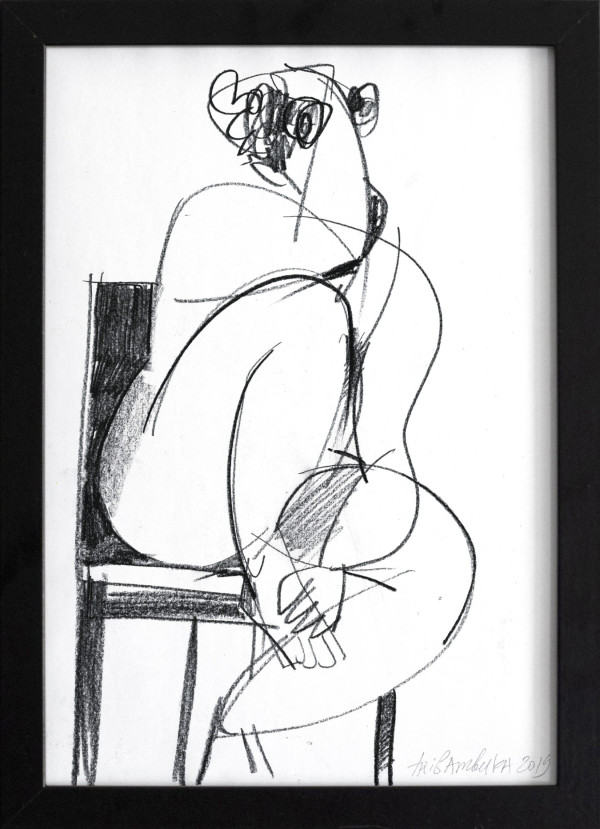
‘I Am Home’ is an exhibition that presents a selection of drawings, limited edition prints and mixed media sketchbooks that were created by invitation of a Portuguese gallery Atelier 3 I 3. These works are based on the themes of ‘Home’ and ‘Identity’ as well as the intersection and crossover between them. The project also includes a zine ‘Home’ and a mini zine ‘I Am’ created in collaboration with (and by invitation of) Atelier 3 I 3, Porto, Portugal. The exhibition took place in July-August 2019.
Tribambuka invites audiences to delve into the intricate layers of 'home' ,through an ambitious interactive exhibition at the Migration Museum in London. Curated by Aditi Anand, "Nowhere to go but anywhere" presents an immersive journey through the artist’s sketchbooks, encompassing drawings, collages, writing, found materials, printmaking experiments, animations, film, and photography.
"Home," a universal yet deeply personal concept, serves as the exhibition's thematic compass. Originating in 2019, the theme underwent a profound evolution, spurred by the forced limbo of the pandemic in 2020 and the tumultuous years that followed, with violent conflicts erupting across the globe that led to a collective feeling of the world, and all previous concepts of ‘home’, falling apart. This evolution scrutinises 'home' as both a sanctuary and a politicised, confining space, capturing the feeling of being a stranger everywhere and having to build one’s own ground anew, time and time again.
The exhibition contains several elements that unfold as an introspective journey. Its spectacular centrepiece takes the form of a suspended fabric house with an experimental video projection. The video work involves a variety of different techniques and sources, such as sketches, drawings, characters adapted from Tribambuka’s paintings and archival materials like old notes and newspaper fragments related to the artist’s personal history, thus providing an immersive insight into her internal world while also presenting the viewers with a universally relatable narrative around ‘home’.
The soundscape created by J.C. Wright within the suspended house installation weaves together multilingual voices from diverse London communities, exploring their interpretations of 'home.' Drawing inspiration from childhood games and protective rituals found in folklore, the exhibition house becomes a transformative space—inviting viewers to walk through it and experience a spectrum of emotions, from comfort to unease.
Flanking this focal piece are four monumental, eclectic mixed media works on canvas inspired by Salman Rushdie's ‘roots of self'—community, language, places, and customs — which are one of the key influences of the exhibition concept. Next to them, an interactive board invites inviting visitors to add their own reflections on the concept of ‘home’. These will eventually be collated and published by the artist in the form of a book, culminating in a final, collective narrative. Installed on the adjoining wall are six prints in Tribambuka’s distinctive, graphic style, effectively capturing the main narrative of the central installation in six compelling compositions.
Additionally, a limited-edition artist book made specifically for the exhibition, composed of Tribambuka's sketchbooks, writings, archival images and found materials that invite contemplation and reflecting the raw essence of the artist's studio.
Tribambuka’s "Nowhere to go but anywhere" presents a timely reflection on identity, inviting audiences to seek unity amidst shared experiences, traumas, and the universal pursuit of love and survival. Framed by opening and closing performances that formulate musical, poetic and movement-based responses to its central theme and visitor responses, the exhibition challenges perceptions, fosters introspection, and honours the enduring resilience of the human spirit in the quest for creating a 'home.