
Victoria Pynt
Canberra, Australia
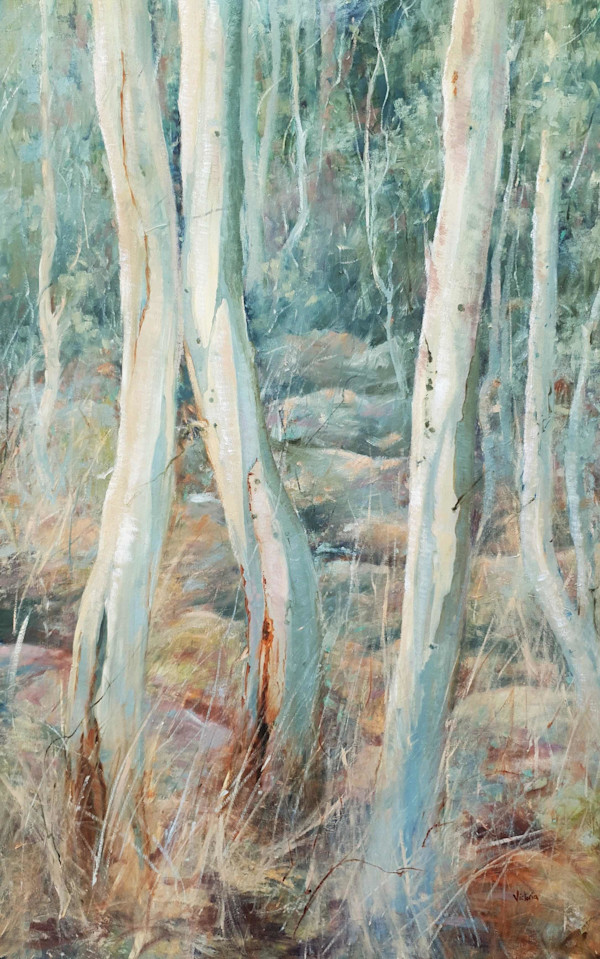
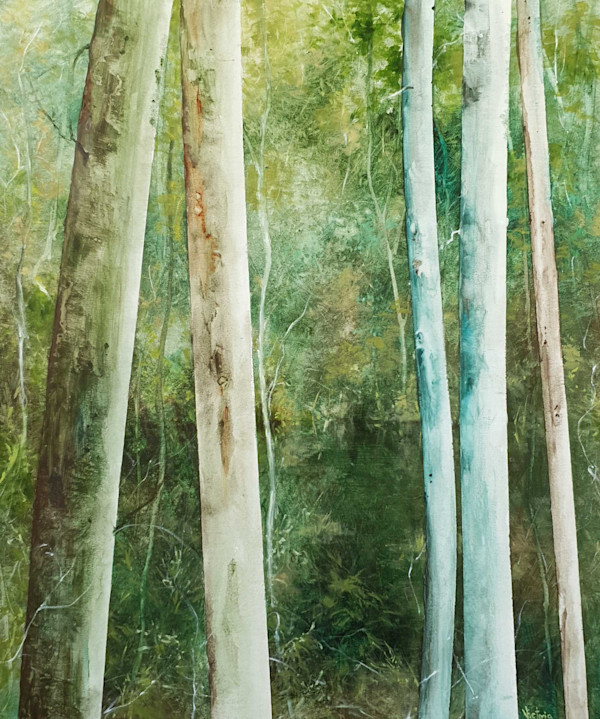
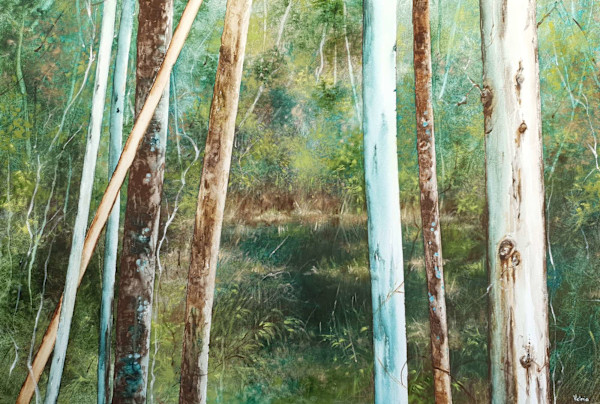
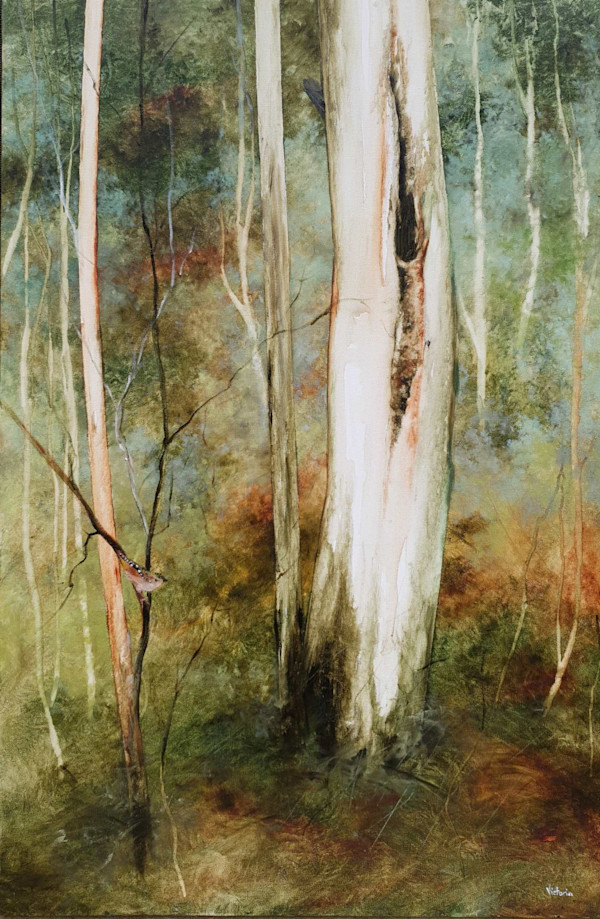
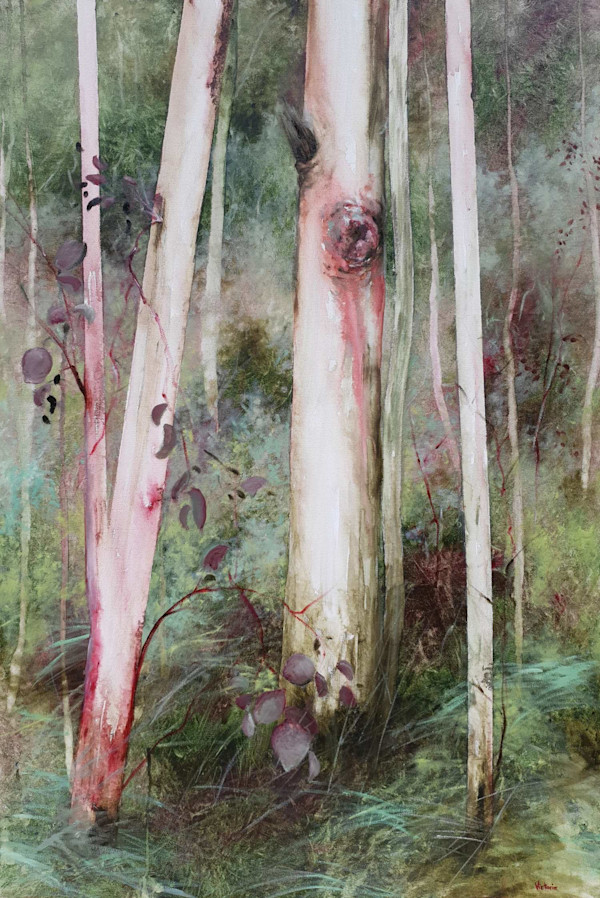
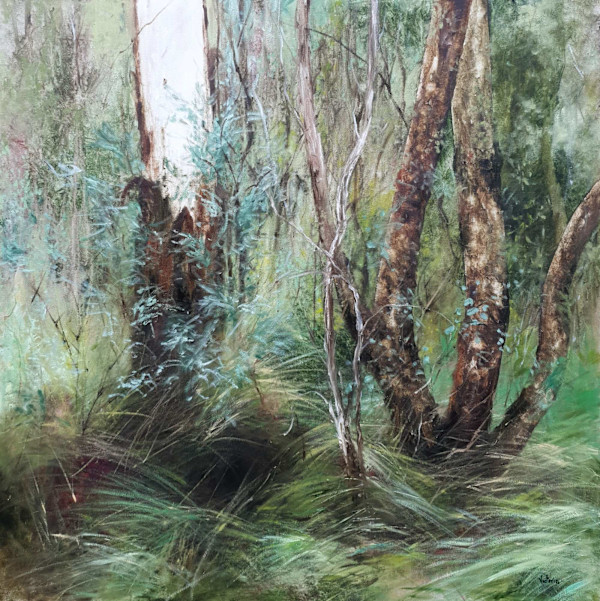
Gentle nature art ushering you into cosy pockets of forest. Think warm neutrals and muted tones contrasting rich colour & layers of subtle texture.
Message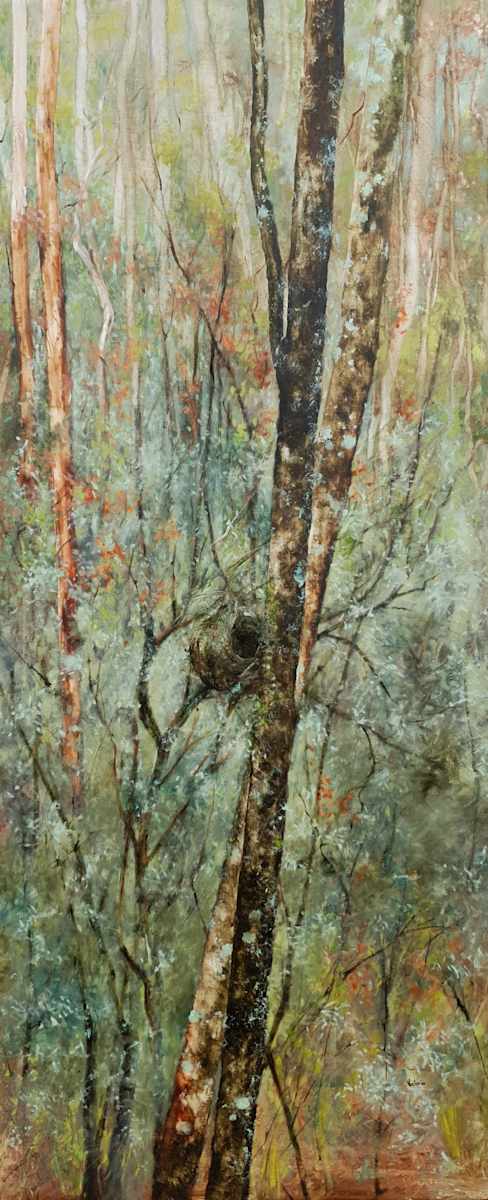
These snug sanctuaries tell of shared space; of creatures who are off about their business with no reference to we humans, who are left but to wonder, wide eyed and delighted, at who might return to rest - safe, warm and fat-bellied - once we've looked away.
These stylised paintings represent the ethereal serenity of these features of the forest. “Hollows 3” was all about long, calming lines, delicate marks and softly nuanced tones.
The Eastern Spinebill is the smallest honeyeater commonly seen darting from shrub to shrub in the suburbs. Often heard before seen, it has adapted well to gardens, particularly those with nectar-producing shrubs such as grevilleas, banksias and correas. It is an altitudinal migrant, common in the mountains over the summer and moving to the lowlands for winter.
An eastern spinebill nest is a small, cup-shaped structure made of twigs, grass, and bark, lined with soft materials like hair and spiderwebs. It is built in a tree fork, typically between 1 and 5 meters high, with the female responsible for building it and incubating the eggs.