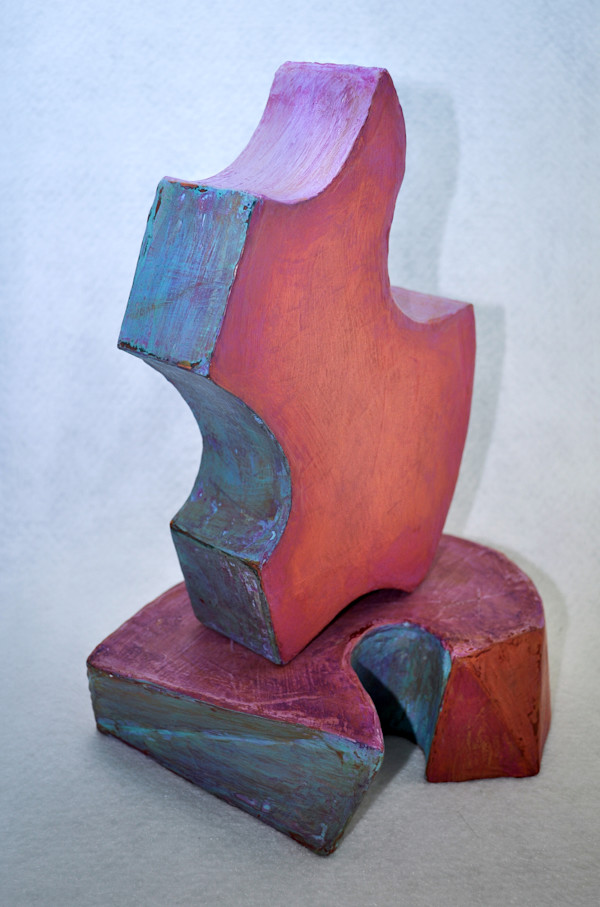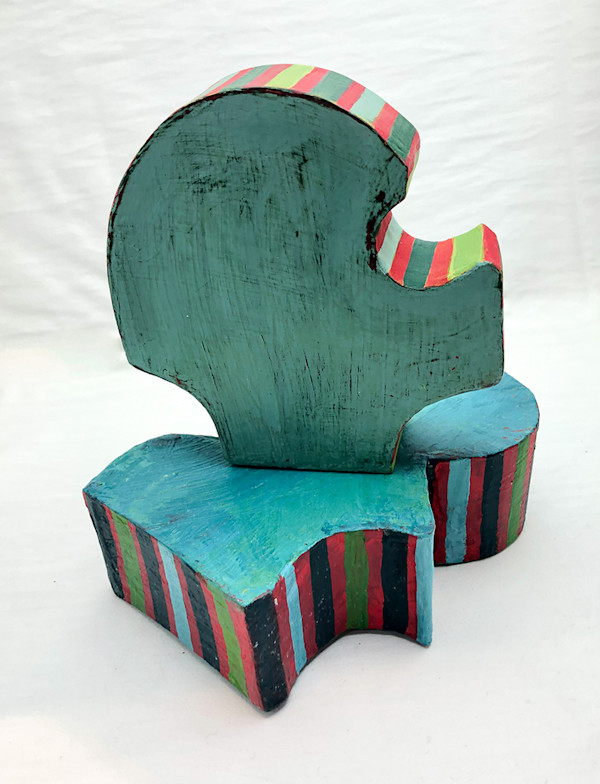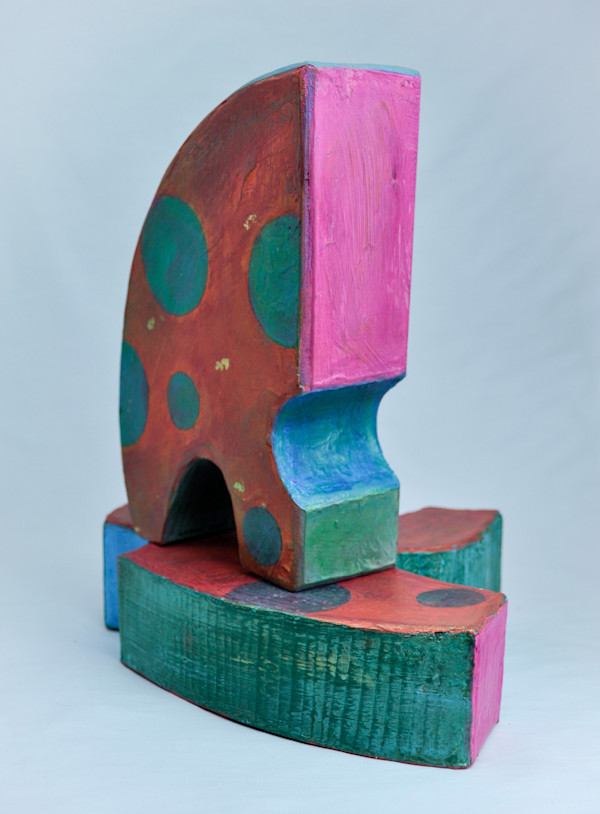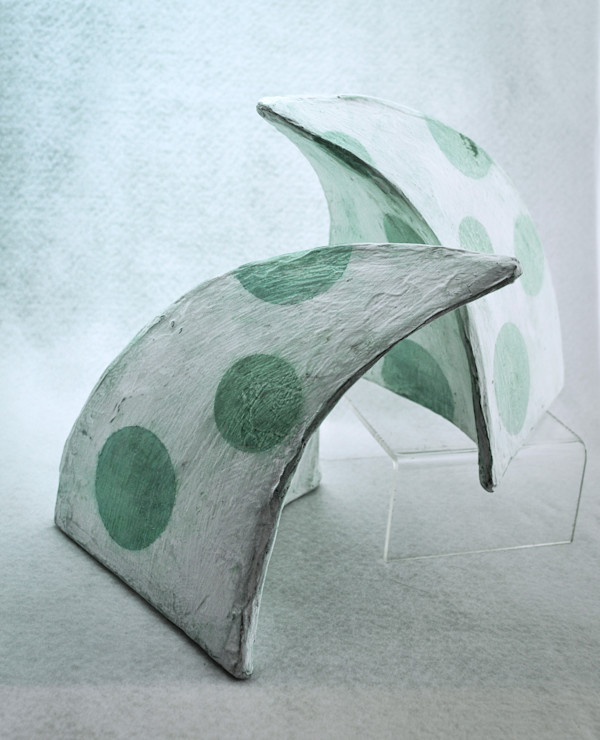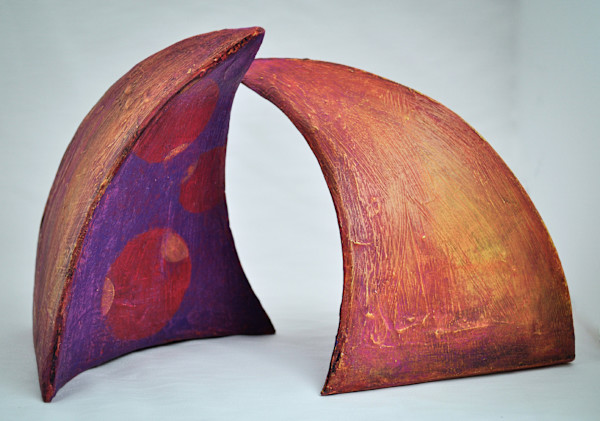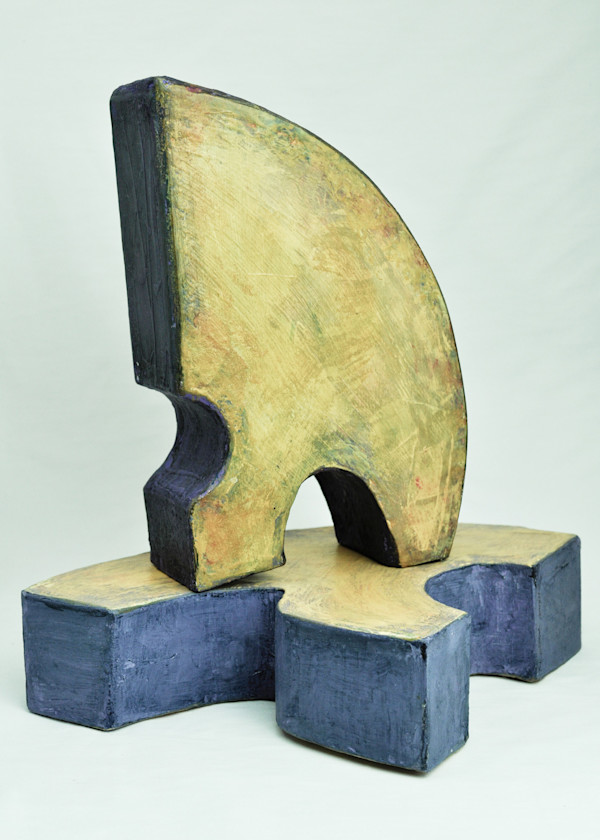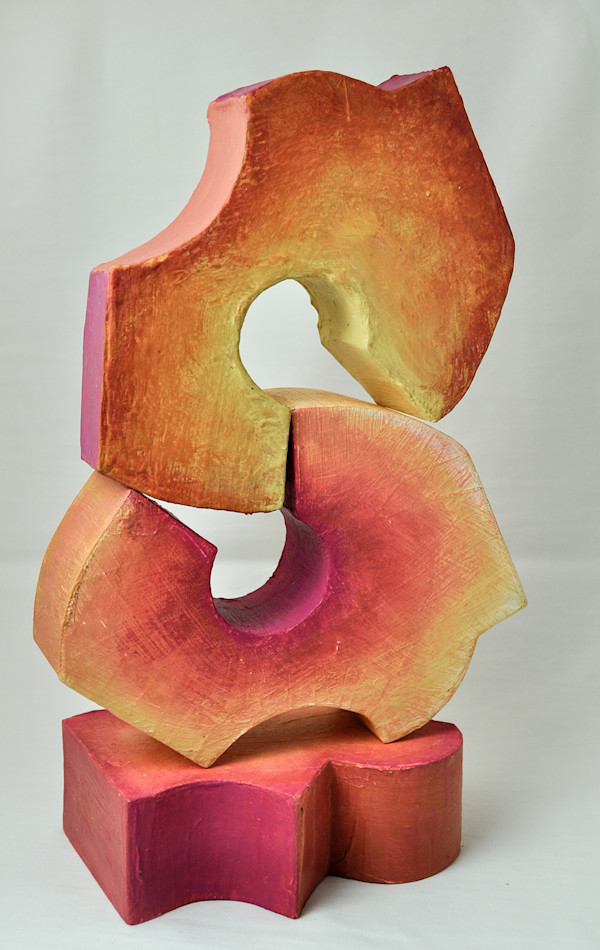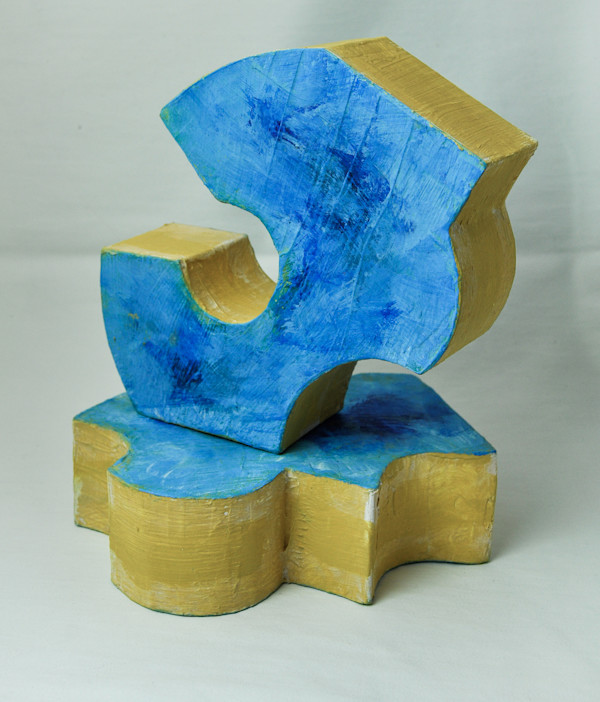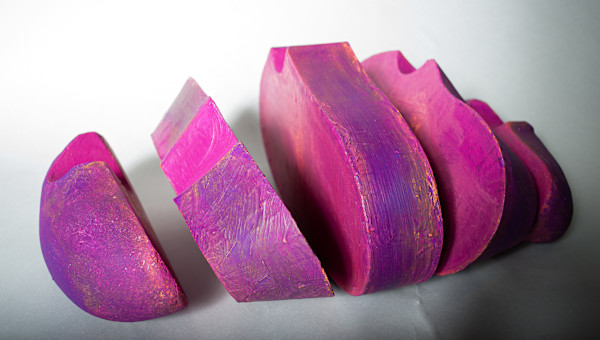


These small sculptures are designed for the hand—objects meant to be held, turned, and gently puzzled through. In most art spaces, that instinct is interrupted. Here, behind glass, the invitation remains—but the touch becomes imagined. The work asks you to feel with your eyes, to trace edges and curves in your mind, to rehearse the quiet choreography of play.
Let’s Play draws from both industrial design and fine art, merging careful fabrication with open-ended use. Like fidget objects, these forms are non-representational and purposefully unresolved. There is no correct arrangement, no final state—only a sequence of possibilities. Each piece exists in a kind of suspension, waiting for interaction, even if that interaction is now internal.
In a hospital setting, where time stretches, and contracts, and control can feel limited, these sculptures offer a different rhythm. They suggest small acts of agency: shifting, balancing, reconfiguring. Even at a distance, they invite curiosity and a gentle kind of problem-solving—play without pressure, attention without demand.
By placing tactile objects in an untouchable context, the work highlights what touch does for us. It soothes, focuses, and connects us to the present moment. If you find yourself mentally rotating a form, imagining its weight, or wondering how it might rest in your palm, the work is already complete.
– Susan Hensel
Let’s Play draws from both industrial design and fine art, merging careful fabrication with open-ended use. Like fidget objects, these forms are non-representational and purposefully unresolved. There is no correct arrangement, no final state—only a sequence of possibilities. Each piece exists in a kind of suspension, waiting for interaction, even if that interaction is now internal.
In a hospital setting, where time stretches, and contracts, and control can feel limited, these sculptures offer a different rhythm. They suggest small acts of agency: shifting, balancing, reconfiguring. Even at a distance, they invite curiosity and a gentle kind of problem-solving—play without pressure, attention without demand.
By placing tactile objects in an untouchable context, the work highlights what touch does for us. It soothes, focuses, and connects us to the present moment. If you find yourself mentally rotating a form, imagining its weight, or wondering how it might rest in your palm, the work is already complete.
– Susan Hensel