
Tribambuka
London, Greater London
London based multidisciplinary artist, illustrator and animation director engaging with notions of shifting identity, home, belonging and gender.
MessageCollection: Palimpsest
Palimpsest - /ˈpalɪm(p)sɛst/
noun
- a manuscript or piece of writing material on which later writing has been superimposed on effaced earlier writing.
- something reused or altered but still bearing visible traces of its earlier form.
We don’t think in straight lines. There’s layers of memory, impressions, dreams and echoes of some other times and places. There’s a place that reminds of another place, or a smell that transports you to another time. When this person’s voice has the same edge as someone long gone. When a stranger’s eyes briefly hold the soul of a childhood friend. A sunset in London that brings New Delhi alive, or a crack in the wall in Hastings that suddenly feels like a ruin near Vyborg…
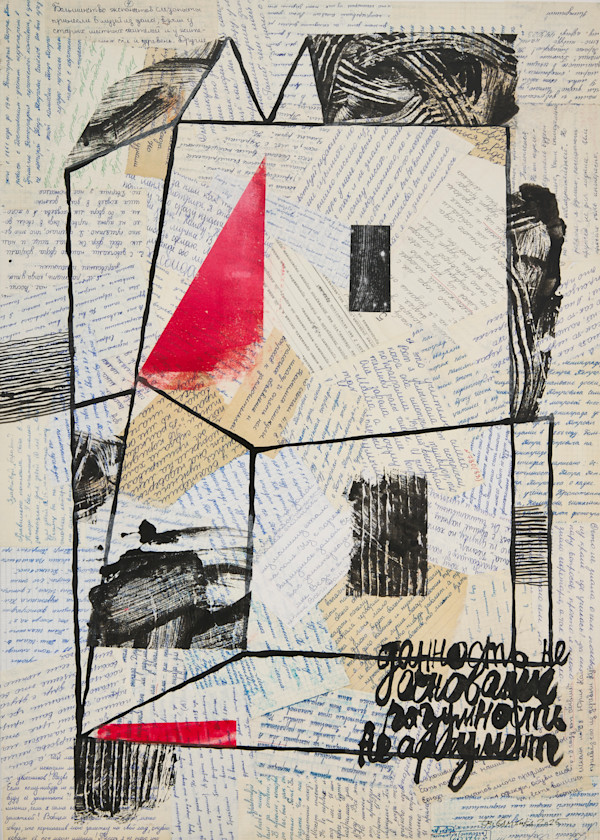
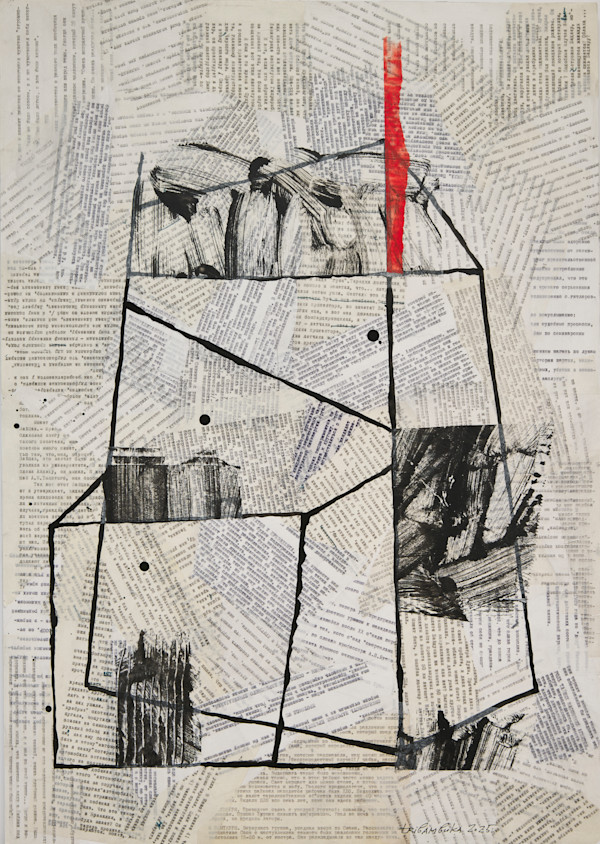
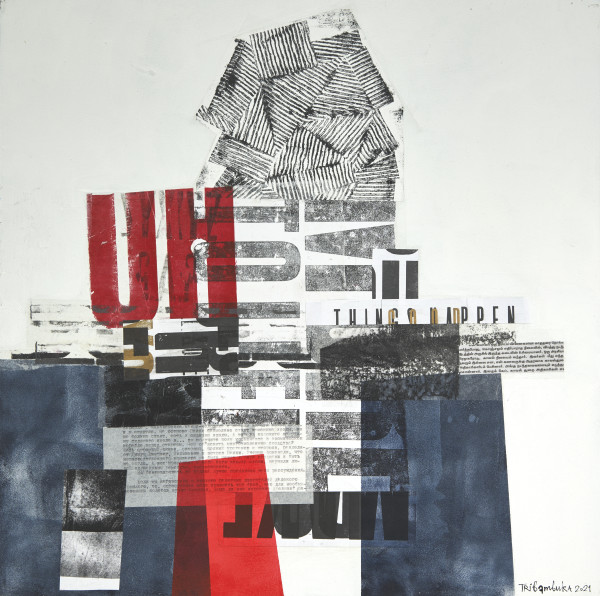
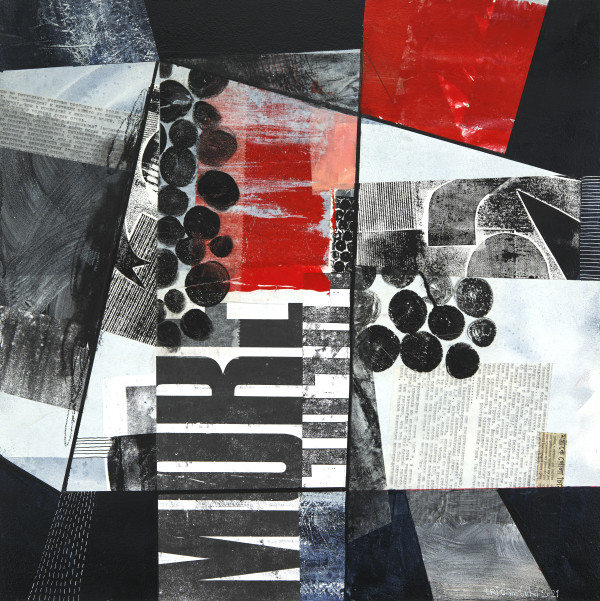
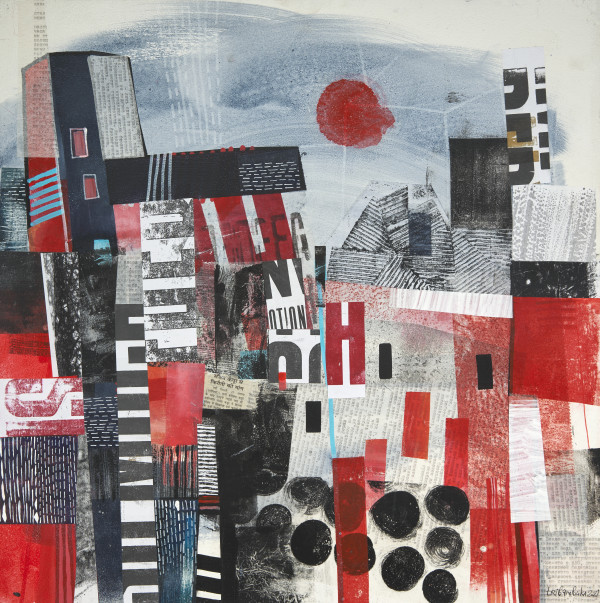
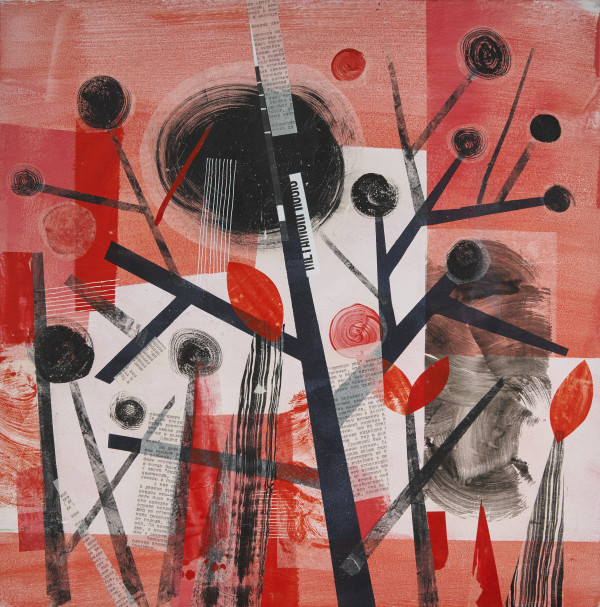
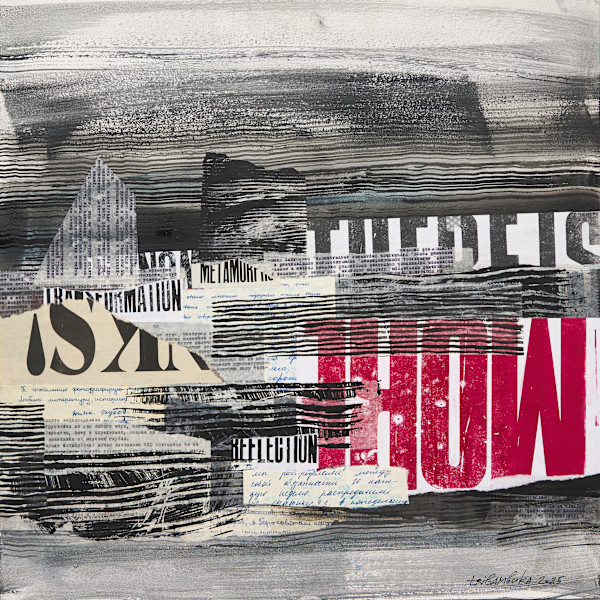
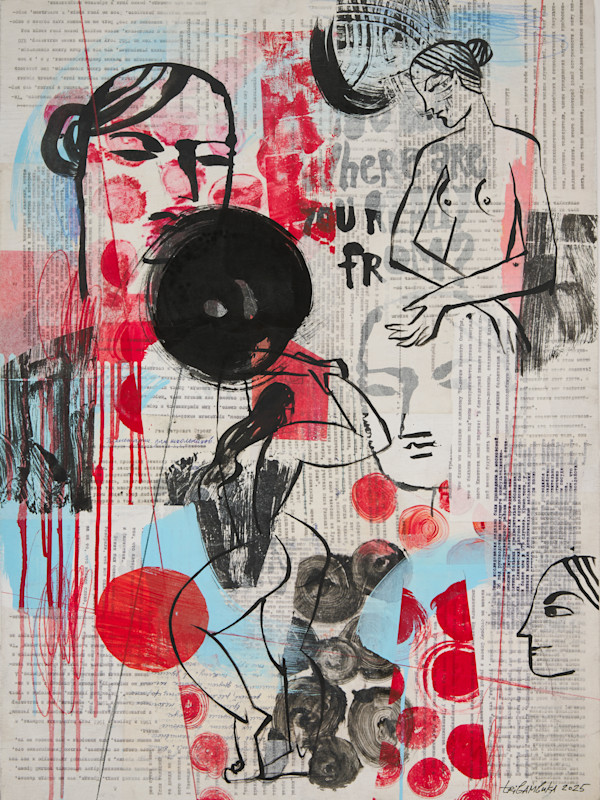
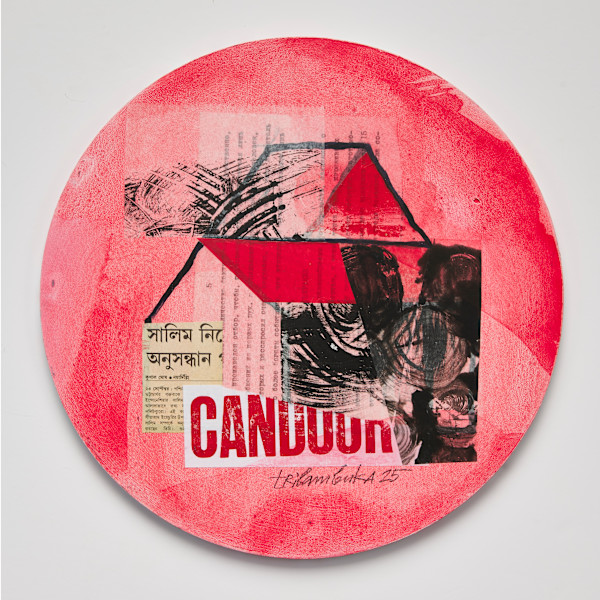
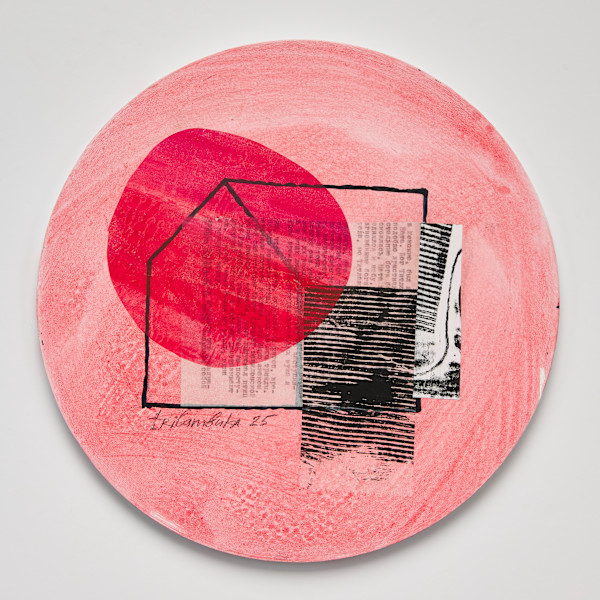
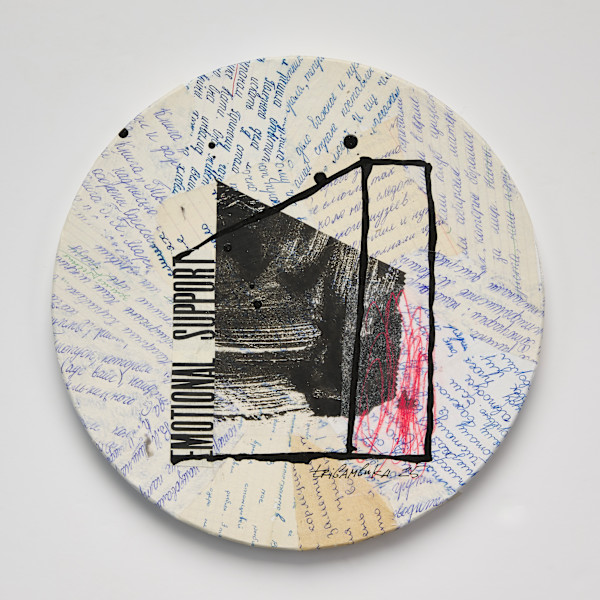
This is my palimpsest, a perceptual overlay, my map of subconscious, built on Samizdat papers that my grandmother was typing on her old typewriter in Soviet Union in the 80s, in an attempt of 'inner emigration' that most thinking people were escaping into; kids’ letters to a socialist magazine in Leningrad (my grandmother's job was to respond to them) - the letters were never really to anyone; they were feeding the socialist machine of encouragement and reporting, half confessional, half performance, scraps of faith and bureaucracy. These artefacts escaped. The “purpose” has inverted: from discipline and collective pride - to absurd relic - to my playground material. Glued to the board, mixed with Indian train tickets and bits of Tamil newspapers from my soul searching travels in my 20s, handprinted monotype textures, sketchbooks musings - now they’ve slipped into my palimpsest of broken houses and phantom histories.
This is my palimpsest, a perceptual overlay, my map of subconscious, built on Samizdat papers that my grandmother was typing on her old typewriter in Soviet Union in the 80s, in an attempt of 'inner emigration' that most thinking people were escaping into; kids’ letters to a socialist magazine in Leningrad (my grandmother's job was to respond to them) - the letters were never really to anyone; they were feeding the socialist machine of encouragement and reporting, half confessional, half performance, scraps of faith and bureaucracy. These artefacts escaped. The “purpose” has inverted: from discipline and collective pride - to absurd relic - to my playground material. Glued to the board, mixed with Indian train tickets and bits of Tamil newspapers from my soul searching travels in my 20s, handprinted monotype textures, sketchbooks musings - now they’ve slipped into my palimpsest of broken houses and phantom histories.
This show is about memory, presence and absence, trace we leave, and the way it unintentionally becomes part of some other pattern, of someone else’s story. My works represents an emotional translation system for these perceptual hauntings. A record of all the times one thing became another, even for a second.
Each material I use already speaks in a voice, but together they hum with interference, overlap, contradiction. Memory versus erasure. Movement versus trace. The self as sediment, as archive, as inherited glitch. Intuitive, messy, accidental archaeology. I’m letting the layers speak to (and over) each other.
Collage bypasses the part of the brain that thinks it’s in charge. It’s not about mastery, it’s about listening — and there’s something disarming, even anarchic, about tearing things up and gluing them back together. It breaks the hierarchy. Nothing is sacred, and everything is. Just fragments, echoes, accidents. Torn paper, gestures, ghosts of drawings past.