
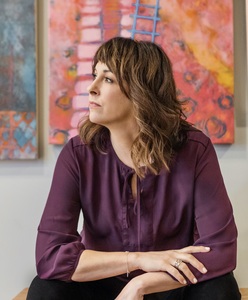
Terri Yacovelli
York, PA
Layered abstract works exploring navigation, transition, and reorientation.
Message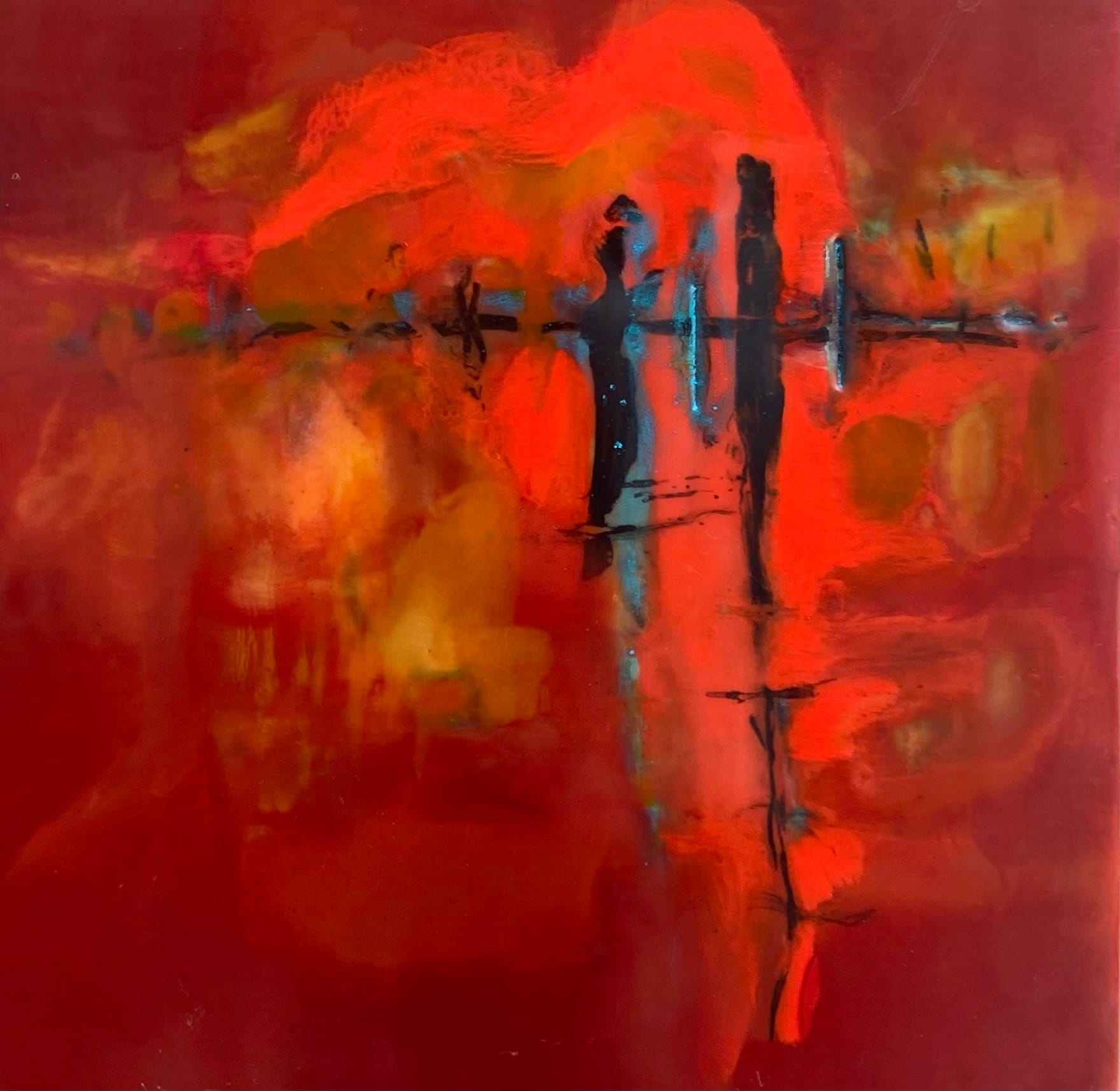
Terri Yacovelli is a contemporary visual artist whose work is characterized by a deliberate process of accumulation and excavation. Yacovelli’s exhibition history spans over two decades across the Mid-Atlantic region. Her work has been the subject of solo exhibitions at the Ferleman Gallery (MD), the Crary Art Museum (PA), the Rehoboth Art League (DE), and Penn State University (PA), with a forthcoming solo exhibition at the Delaplaine Art Center (MD) in 2027. She has been featured in curated group exhibitions at the Susquehanna Art Museum (PA), Pennsylvania College of Art & Design (PA), Anonymous Society Gallery (CT), and Gallery 40 (NY). A frequent participant in high-level juried exhibitions, Yacovelli’s work has received recognition in exhibitions organized by the Philadelphia Sketch Club, the Inter-Society Color Council, the International Encaustic Association, and American Women Artists. Her work and process have been featured in Clover & Bee Magazine, Voyage Baltimore, and Canvas Rebel. Beyond her studio practice, Yacovelli is a Certified R&F Encaustic Instructor with a long-standing history of leadership in arts education. Her professional background includes tenure as an Adjunct Professor at York College of Pennsylvania and frequent engagements as a guest speaker and workshop facilitator. She lives and works in Pennsylvania.
Statement
My work explores the process of finding direction amidst uncertainty.
Using mixed media, I create abstract compositions that examine how we navigate shifting physical and internal landscapes. Recurring elements—horizons, portals, passages, ladders, and thresholds—act as frameworks for orientation, suggesting movement and transition. Lines are obscured and reconnected, reflecting pathways shaped by both intention and chance. Surfaces are built through layering, removal, and transparency, allowing earlier marks to remain embedded and visible, functioning as both image and record of time.
These investigations extend into natural and energetic systems—branching forms, growth patterns, and fields of force—where structure emerges through accumulation, resistance, and flow. Color establishes both structure and signal within the work, while the viewer’s own history and associations activate its atmosphere.The work invites sustained attention, offering a space for pause, reflection, and perceptual recalibration.