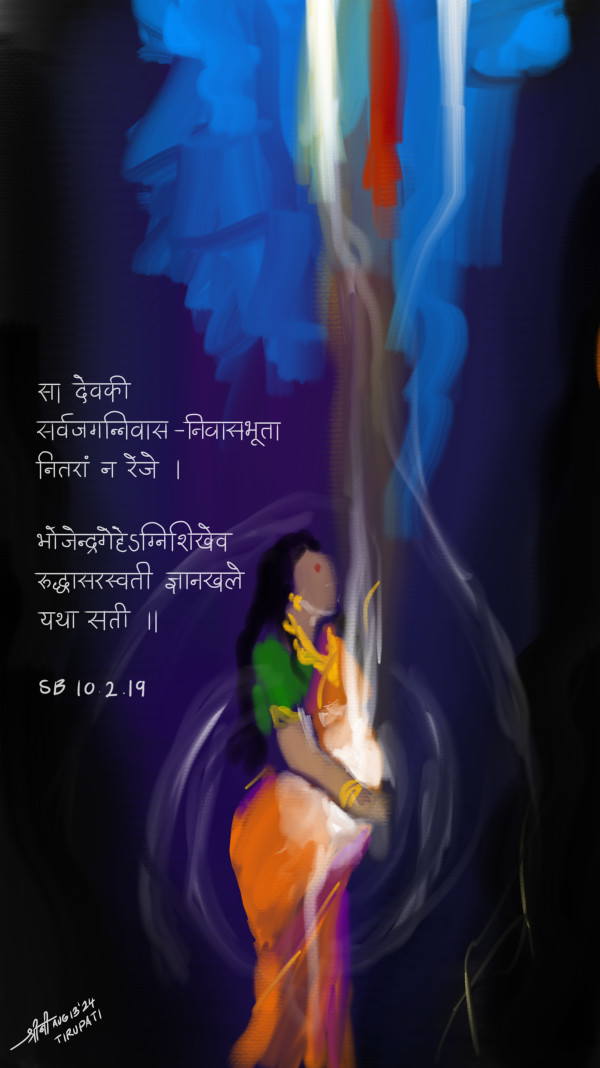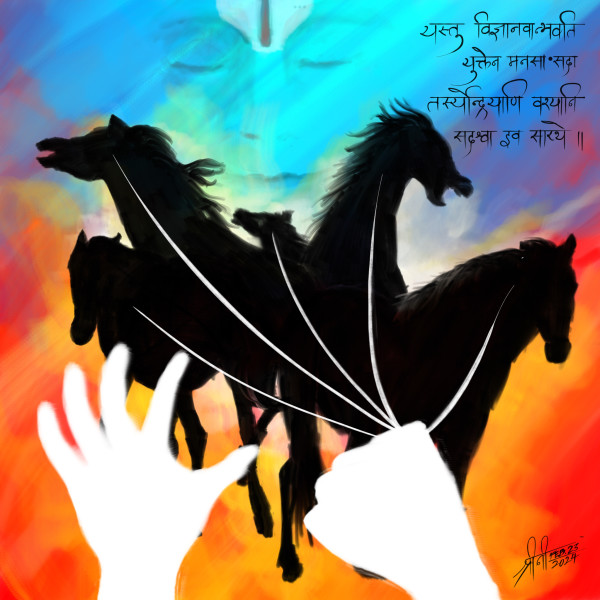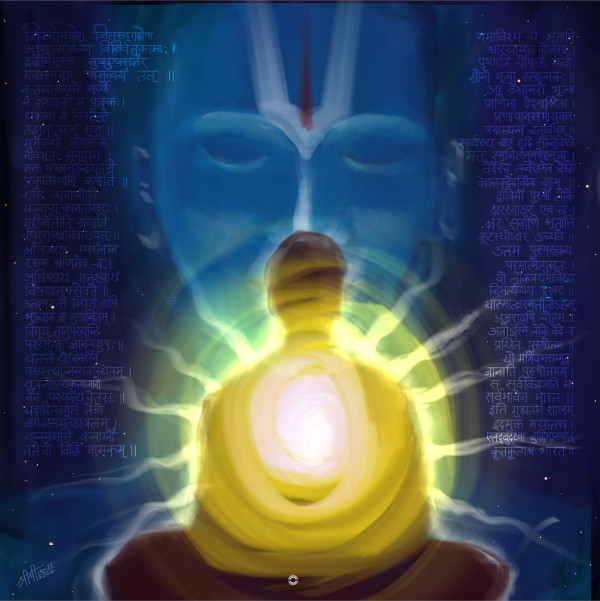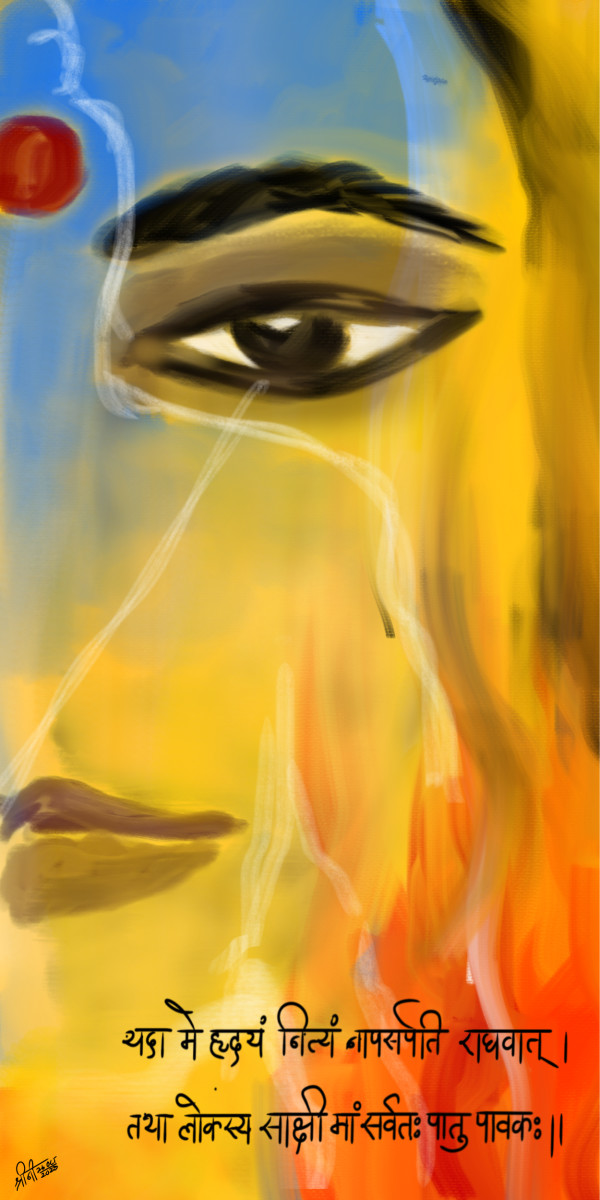

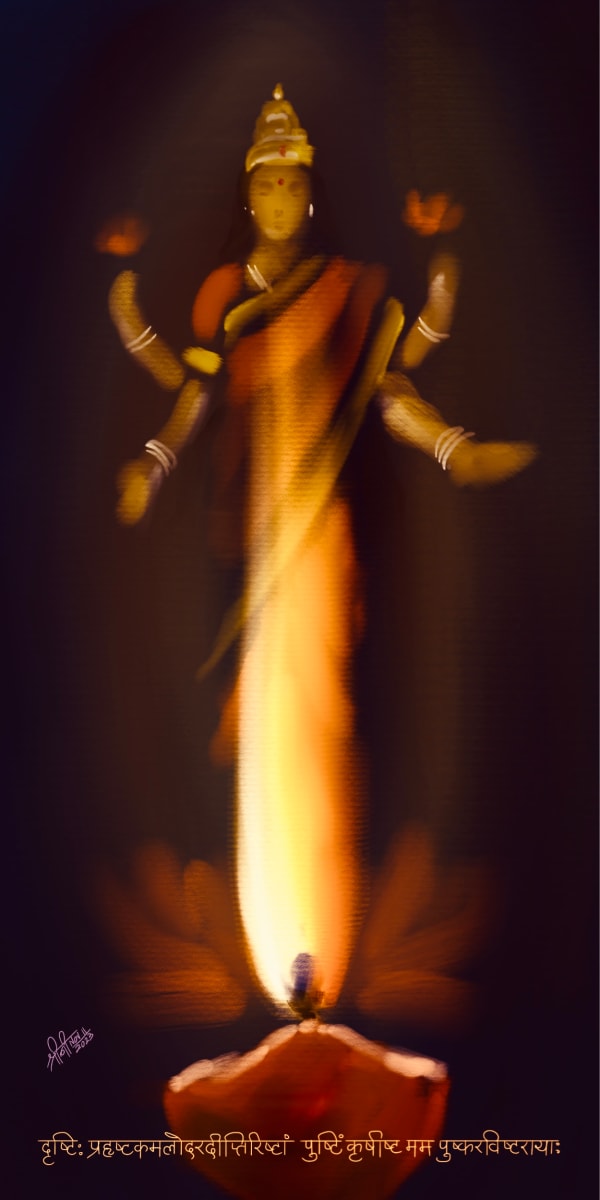
As a celebration of Deepavali (Diwali), this piece is inspired by the light of Laxmi and her grace. It shows that true prosperity arises when one remains unattached to material possessions, even while living amidst them.
“Padma-patram ivāmbhasā” — like a lotus leaf untouched by water although on it (Bhagavad Gītā 5.10).
The shloka on the piece is from the Kanakadhara Stotram and it says “That glance of grace, which is like the immanent splendor and beauty in the inner bud of a blossoming lotus, nourish me, O’ the one seated on the lotus”. Adi Shankara composed the stotram after being moved by the selfless act of a poor woman who gave him a single gooseberry (amalaka) when he went begging for alms. In response to her poverty, he composed the hymn, and Lakshmi Devi was so pleased that she showered her house with golden gooseberries.
The Lakshmi Devi’s form is itself inspired by Raja Ravi Verma’s Laxmi which lies eternally etched in the minds of most Indians.
- Subject Matter: Dharma Art