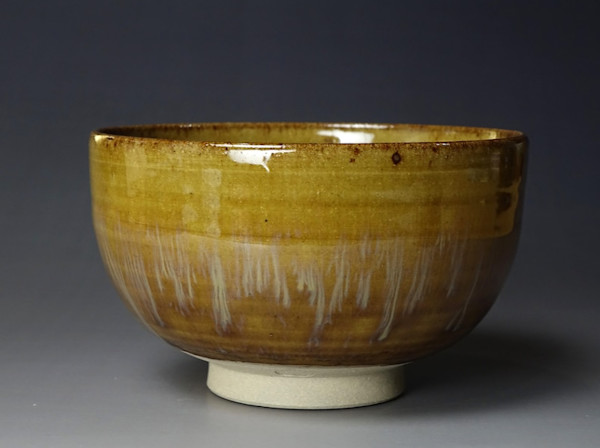
Collection: Takatori Yaki
Takatori ware is a tea pottery kiln that was developed in the Kyushu climate by tea masters such as Kuroda Josui and Kobori Enshu, and is known as one of the seven Enshu kilns, and as the official kiln of the Kuroda clan in Chikuzen. After Toyotomi Hideyoshi's invasion of Korea, the Bunroku and Keicho Wars, which were even called the War of Pottery, many potters came from Korea, and Hagi in Choshu, Karatsu in Hizen, and Takatori ware was born in Chikuzen. Since then, it has produced many famous items and wares, and has continued to live on in Japanese tea ceremony culture, and it has been said that "Takatori is in Chikuzen."
The kiln was opened after Kuroda Nagamasa became the lord of Chikuzen in 1600 and was founded by the famous potter Hachizan (Japanese name: Hachisei Shigesada), who came from Korea with Nagamasa. They first opened their kiln in the Eimanji residence, then moved to Uchigaiso, Tojindani in Kamiyamada, and Shirahatayama in Iizuka (1630), where they further refined the family's secret techniques, and left the kiln here in 1654.
During this time, the second lord of the Kuroda domain, Tadayuki, sent the eight-year-old father and son to Kobori Enshu to learn the new tea ceremony philosophy of kirei sabi and Enshu's preferred style of tea ceremony, and worked to cultivate more advanced tea ceremony ceramics.
These traditional techniques unique to Takatori were inherited by my grandfather, the 11th Takatori Hassen (Sashichi), who inherited the will of the 10th Takatori Yasunojo (Shigenobu), the last official potter of the Kuroda clan, and passed them on to my mother and me.
The period from Uchigaiso to Shirahatayama is called the Enshu Takatori period for this reason, and it was during this period that many masterpieces were created, including the tea caddies "Somegawa" and "Aki no Yoru," famous for their revival.
After that, in 1665, the Koishiwara Drum Kiln was opened, and four years later, in 1666, the grandson of the first Hachizo, who had been guarding Shirahatayama, moved his kiln to Koishiwara Nakano (now Koishiwara Sarayama), and the Koishiwara Takatori period began. The kiln in Nakano has never been turned off and has continued to protect the family tradition in the mountains of Sarayama, leading to the current Takatori ware 13th generation kiln owner, Hassen. During the Koishiwara Takatori period, the artistic style of Enshu Takatori's beautiful sabi was perfected and further developed, resulting in the creation of an extremely diverse range of works.