
River Arts Inc.
Prairie du Sac, WI
on-profit arts organization forging Sauk Prairie’s artistic identity & cultivating community that supports artists and patrons of the arts
MessageHomer Daehn (Woodworking)
Work on my parent’s farm started early, ended late, and happened seven days a week. This work ethic prepared me for an artist’s life. The hours are similar and both require multiple skills such as versatility, creativity, and the need for innovation.
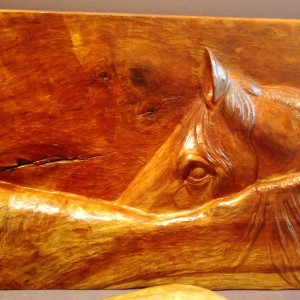
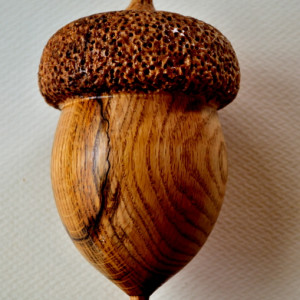
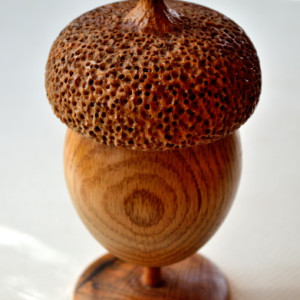
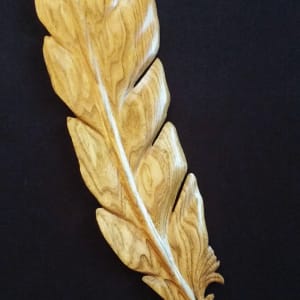
The lines of a square-rigger ship, whimsical colorful circus wagons, magical carousel horses, or the power of a bronze sculpture are what drive me to do art with a passion. The search for recycled woods such as driftwood, crotch wood, burled wood, or root wood is part of my daily quest. Using these unique woods to create art helps me to understand and respect the beauty in nature.
The clay and bronze images that I created of Aldo Leopold and John Muir have brought me full circle—back to the land, water, and woods where I grew up. Creating such art allows me to honor those who have given voice to the awareness that we are, and need to be caretakers of the Earth.
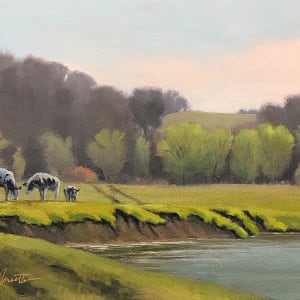
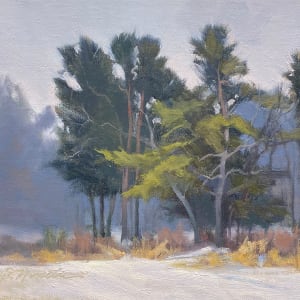
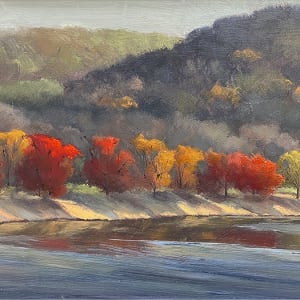
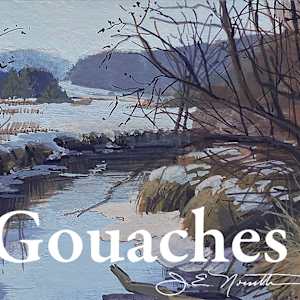
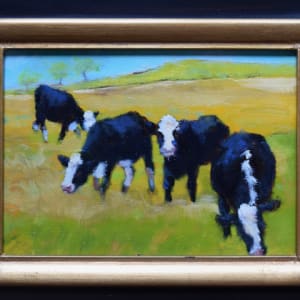
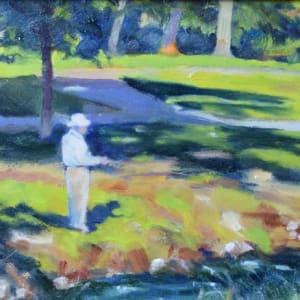
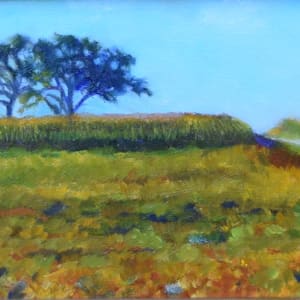
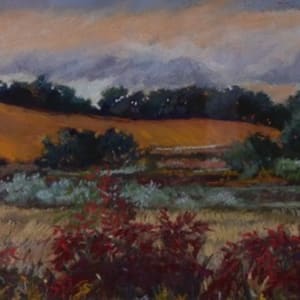
Jan Norsetter (Oil and gouache)
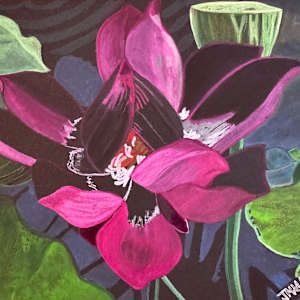
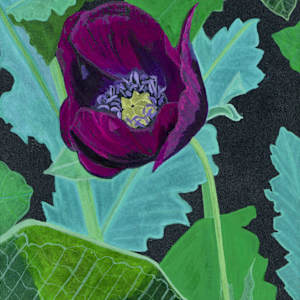
I paint in oils and gouache. My work consists of landscape, still life, and rosemaling. I have been painting and drawing most of my life. I paint outside in every season, surrounded by a world that imbues my work with a sense of place— painting close to home in Wisconsin and on travels in the US and overseas in France, Ireland, Italy, Norway, and Scotland. I am in awe of the ordinary beauty around me. I studied art in college, graduating with BS, MA, and MFA degrees from the University of Wisconsin-Madison in fine art and art education. In addition to painting, I teach landscape painting and rosemaling workshops.
I recently finished painting a series of 366 small gouaches, posting them on social media every day for a year and a day. It began innocently enough, took on a life of its own, and became a personal quest by the end of the year. I’m still gathering photo references during my daily walks, and painting most days, shifting between larger oil paintings and the smaller gouache paintings, in the studio or en plein air. Every day is different in large or subtle ways. Wisconsin has a beauty all its own.
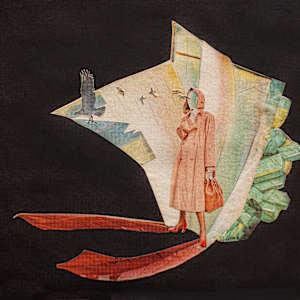
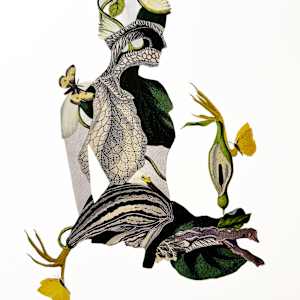
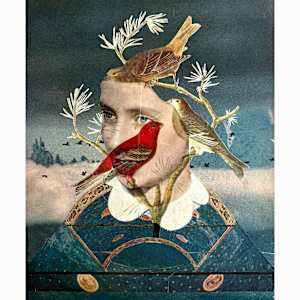
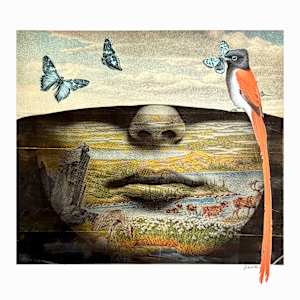




Joe Clark (Raku Pottery)
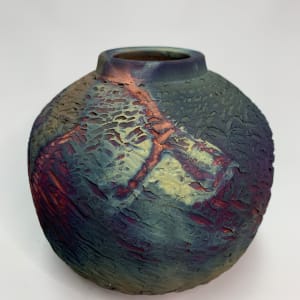
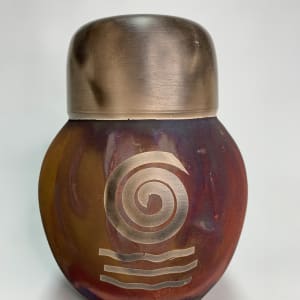
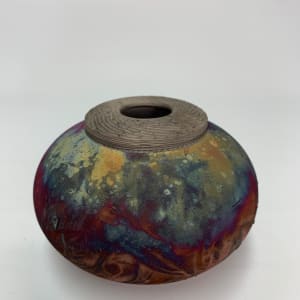
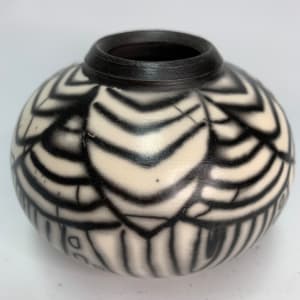
In Joe’s 45 years of creating wheel thrown pottery his focus has been in the American Raku process using a variety of techniques to create truly one-of-a-kind pieces. The spontaneous, serendipitous nature of Raku firing continues to be exhilarating. His passion for art runs deep! From teaching art for 30 years in the public schools, to working as the Art Director for the Alexander House in Port Edwards for over a decade, and with over 40 years of experience in various forms of ceramic arts.
In the American Raku process, a work is heated to a desired temperature, then removed from the kiln while hot. The piece is placed on a combustible material, usually newspaper, hay, pine needles or sawdust. More combustibles are placed on top of the piece. The piece is covered with a can and allowed to stay in this smoking chamber for a predetermined amount of time. The smoke and oxygen touching the surface of the piece brings the one-of-a-kind piece to life.
Double Iris Studios is a collaborative adventure in the arts created by Nancy B. Blake and Joe Clark. Their home studio space allows for a wide range of creative expression including Ceramics, Fiber Arts, Quilts, Wood, Hot and Cold Glass Work, and Jewelry. Art is meant to engage people emotionally, spiritually, and intellectually. To hold or to view a piece of art or fine craft of original design and execution, and to wonder at the skill and inspiration of it’s creator is indeed sublime.
Double Iris Studios have started to collaborate on many of their projects. Joe has started to design quilts and is beginning to quilt using a longarm. Nancy has started to embellish Joe’s pottery with beads and etched designs. They have done multiple silk-screened projects together and they are excited to think about what comes next.
Having joined lives and studios in their new home in the Baraboo bluffs, they love to share their creative spirit and endeavors with you.
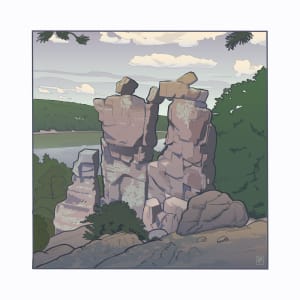
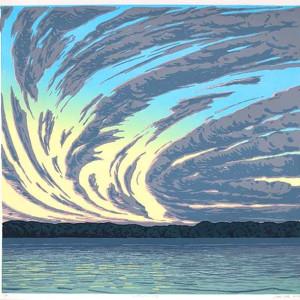
John Miller (Screen printing, digital prints)
When I was a child I was inspired by graphic newspaper comic strips and Japanese prints introduced to me by my mother. I clearly remember pouring my attention into these images as though I was experiencing space for the first time. My reaction was visceral and I was aware of a sense of elation much as I felt when physically visiting inspiring places. The power of this art experience hinged on my being aware that I was conscious of pictorial space, and that my mind was decoding information. I enjoyed the fact that the process wasn’t totally passive, that there was effort involved in interpreting what I was seeing. I learned to appreciate the visual tricks and possibilities that made pictorial space so intriguing to me.
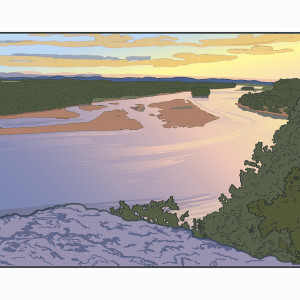
I remember being in awe of the simple graphics of the comics and prints. I loved the fact that so much information could be contained in such simple forms. I’ve tried to learn from this and to use what I’ve learned in advancing my own art. In my work, I focus on the undeveloped landscape because the visual stimuli are so vast, so complex, and organized according to natural parameters that defy an easy grasp of order. Wilderness is the original laboratory of human perception and I relish returning to this lab as a technologically advanced and cultured 21st century human being. I’m intrigued by the possibility of revealing subconscious knowledge by seeing and representing some yet undocumented organizing principal within nature that we are all subliminally responding to.
I believe that in order to clearly suggest complex pattern it is important to distill a great deal of information into a stylized form. I find that it is useful to think in terms of simple graphic models as I strive to capture qualities I sense in external reality. I observe, I think, I sketch, and I learn from my own creations as I strive for ideas that can inspire new ways of seeing and understanding nature’s patterns. My end goal is to capture qualities that reveal the nature of things rather than in simply describing surfaces. For example, I want to understand the complexities of the interaction between water and everything that shapes it. In the case of water with waves, the concept of movement displaying an inherent pattern within apparent chaos is very difficult to represent in an unedited stop-action rendering of an energized surface of water in motion. Order and chaos coexist and I’m fascinated by the visual possibilities inherent in my quest to better understand this as I observe water. I need to interpret, translate, and edit in order to demonstrate my understanding with clarity. I learn from art and through art and see things in nature in new and deeper ways because of art. My art-making is a continuous process of observation, thought, and creation as a way to better understand the teamwork of the eye and mind and the very personal nature of perception and perception of nature.

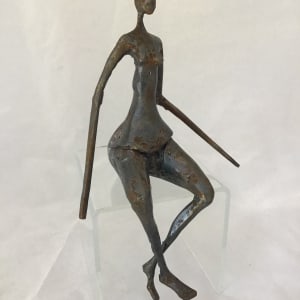
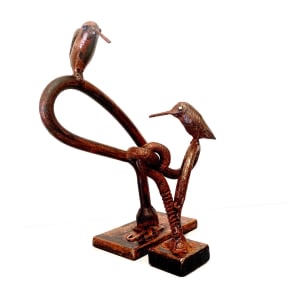
John Pahlas (Steel sculpture)
Art has had an influence on my life since birth. Having been brought up in a family whose artistic innovations go back 5 generations, I’ve learned that the creative act is far more than a hobby or a past time. It is a passionate awakening, a conduit through which identity and meaning of life can be obtained.
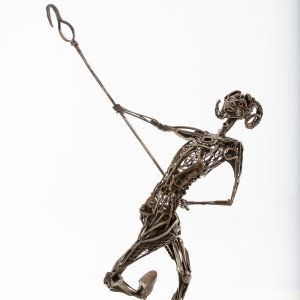
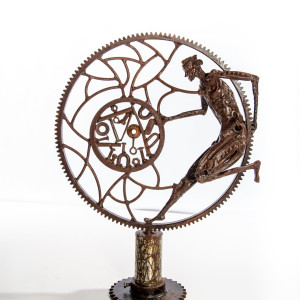
My sculptural process derives from years of learning a wide variety of fabrication skills and understanding the methodology behind working with steel. I was raised in a blacksmithing studio and from a very young age I began to work alongside my parents as they created amazing ornamental steel work for homes and gardens all over the country.
As I began to grow into my own creative skin, I developed a great deal of interest in using all of the discarded scraps created by the projects my parents were finishing. From their shop, I started raiding dumpsters of machine shops and scrap yards all throughout Wisconsin. I found a seemingly endless material base to work with, and within each scrap pile there lay before me worlds of possibilities.
I’ve always been inspired by the natural world and mankind’s place in it. We are an industrious, innovative species, but with our innovations and industrial lifestyles come a great deal of unforeseen consequences that are putting the entirety of the planet and all its inhabitants in danger. Through these salvaged steel creations, I hope to evoke a sense of awareness to these issues that are greater than ourselves, but can only begin to be remedied through self awareness and our willingness to change as a species.
Judi Werner (Jewelry)
Judi Werner focused her education on Computer Technology rather than the arts. It turns out that corralling all those bites and bytes over the years to make programs that people can use in their business was very creative work, with a lot of logical thinking and problem solving thrown in. It was a very useful foundation for this science-oriented artisan.
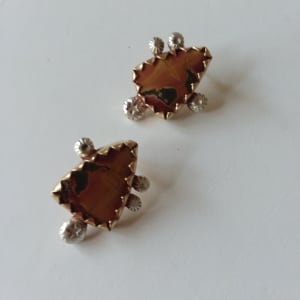
Many years ago Judi started collecting rocks on her vacations. As that box of rocks grew, it was only logical to Judi that she study lapidary, the art of cutting and polishing rocks. The box of rocks grew smaller as they were cut into cabochons. But then the cabochon collection grew larger. Fifteen years ago she decided to put her cabochons and creativity to use crafting jewelry.
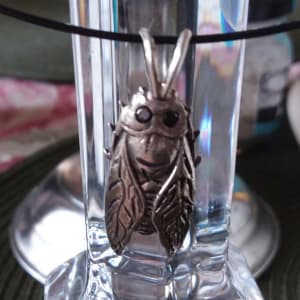
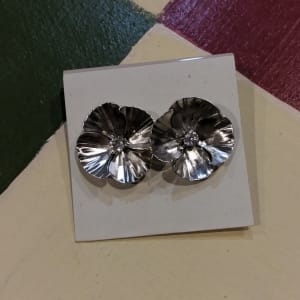
Judi began her next area of ‘research’ through a series of jewelry classes. With teacher encouragement and lab availability she has progressed from simple cabochon mountings to more elaborate creations. She now incorporates fabrication work and casting in her pendants, rings, and bracelets using gold, sterling silver, copper, and brass. Each year the pieces get more complex yet whimsical and simple. You must always look at the backs of her pieces where she puts a treat just for the wearer.

Karen Timm (Paper and Book Art)
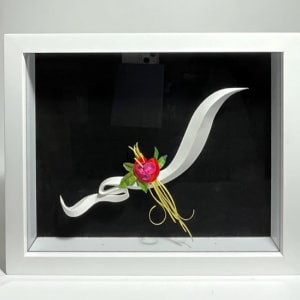
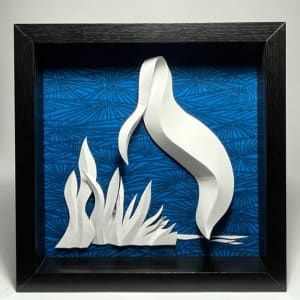
My artwork expresses a lifelong love of paper and using my hands to create in a 3-dimensional way. The subject matter I most often find myself illustrating is what surrounds me, nature. There is a beauty in shapes, patterns, colors, textures and details of what we see each day that is very enjoyable to showcase what we often overlook.
What I create almost always starts with an idea I wish to communicate. Sometimes that’s illustrating one simple word in paper and other times it’s a more contemplative thought for you to take away and reflect on. I very rarely create two dimensional art because I love the interplay of light and layers of paper in different shapes, especially in all white, which creates a beauty all it’s own.
Current Series:
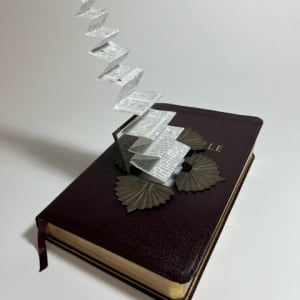
I enjoy creating in 3D with paper, original book designs, or altering existing books. In these new artworks, I’ve altered books, three bibles to be exact. As a person of faith, I like to illustrate truths from the bible, which is what I’ve done here, illustrating specific verses in a way that I hope enhances the meaning of each verse to the viewer. This small series is themed “Your Word…”.
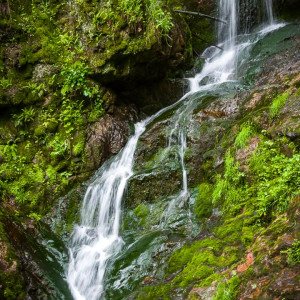
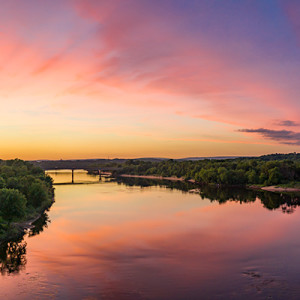
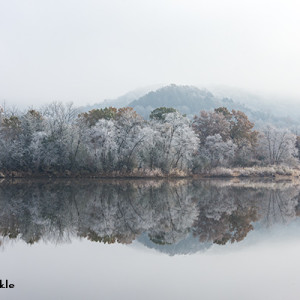
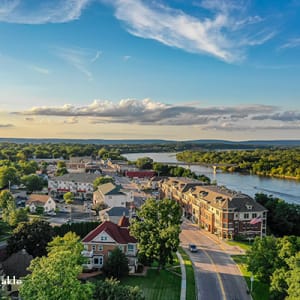
Kurt Eakle (Photography)
Ever since I was a kid, I’ve loved taking photographs. But I often find that what is in the viewfinder is not really the “picture” that I see. For years, this meant taping photos together–which generally ended up on the refrigerator. Looked nice, but kind of crude. In 2001, I decided to try digital photography and was excited about the ability of software to join single photographs into panoramas. However, the problem remained that if they were printed on my computer printer, they either ended up one to two inches tall on a single sheet of paper or I was back to cutting and tying prints together.
Having a digital camera became my exercise program, and I have enjoyed exploring the natural areas in the Baraboo hills. One time at Pewits Nest, I crawled out on a ledge and got a good series of pictures looking up the length of the slot canyon. These worked out to form a great vertical panorama–again which had to be printed out on three sheets of paper to get a good view. I was excited enough to find a giclee printing service that could print the picture at 10×20 inches I was stunned by the result and entered the print in the Sauk Prairie Wisconsin Regional Artists Program exhibit. The print was awarded a State Exhibit award, and later the James Schwalbach Award for creativity.
I provided prints for the Prairie Enthusiasts traveling photography show in 2006, and fundraisers for the Ferry Bluff Eagle Council, the Sauk Prairie River Projects Association Limited (River PAL), the Wisconsin River Alliance’s calendar, the Wisconsin People and Ideas magazine published by the Wisconsin Academy of Sciences, Arts and Letters, as well as newspapers and local non-profit newsletters. I am currently “re-careering” around my interest in photography. I have my own large format printer and make my own prints. I also do photography and printing for other artists.

Lesley Anne Numbers
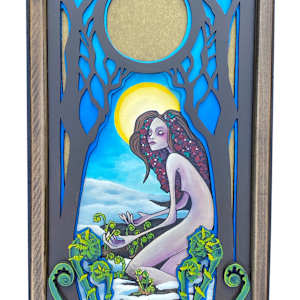
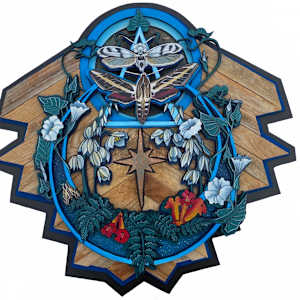
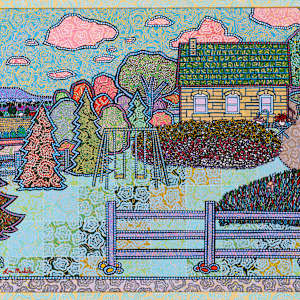
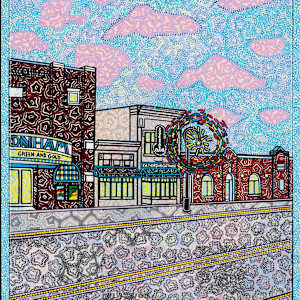
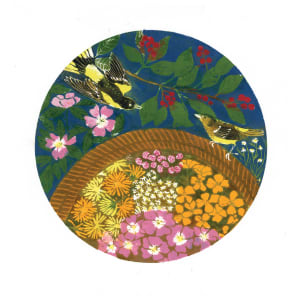
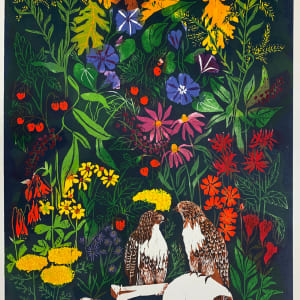
Lesley Numbers is an artist, mother and earth-tender born and raised in Madison, Wisconsin on ancestral Ho-Chunk land. She holds a B.S. in Art Education and an MFA in Printmaking, both from UW-Madison. Her art practice is rooted in a sense of spirit, curiosity and reverie and her imagery is inspired by daily walks with her dogs, our local biome, music, poetry, community and dreams. Her hand-drawn serigraphs and reductive woodblock prints explore the beauty, wonder, joy, and sorrow of our living and dying world.
Linda Koenig (Watercolor)
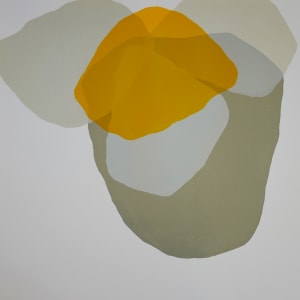
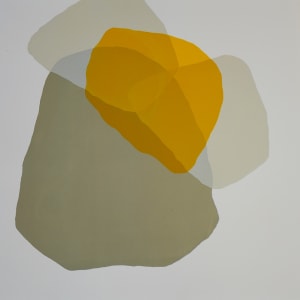
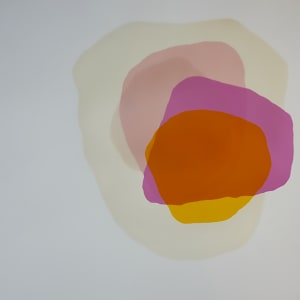
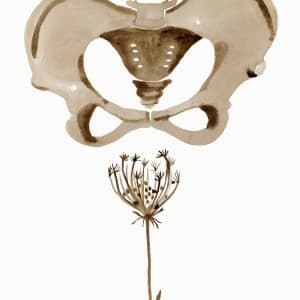
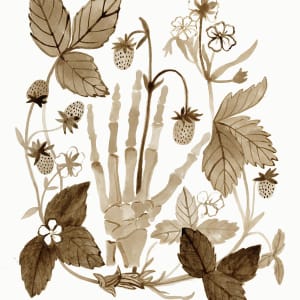
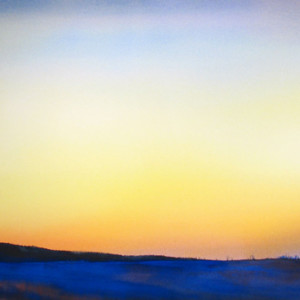
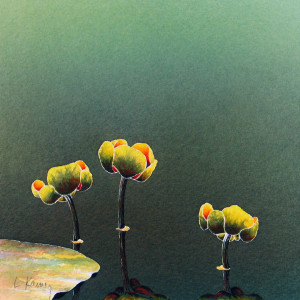
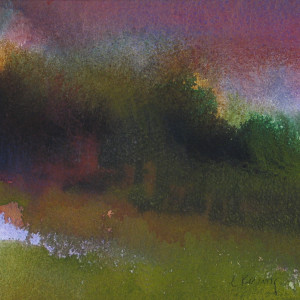
Be outside. Embrace solitude. See with fresh eyes. Write. These are tools of my studio practice, actions that come before and in conjunction with the application of paint, habits that inform the work. Alongside my sketchbooks are dictionaries, both old and new, and an assortment of journals for thoughts, lists, random words that intrigue me. Often the title of a painting comes first, then the concept, with brushes and paint last.
The core of the work? Beauty, order, harmony.
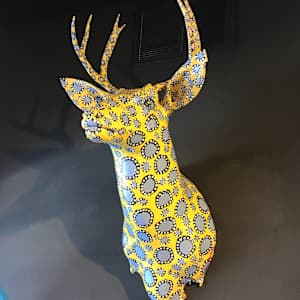
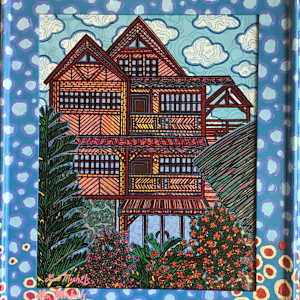
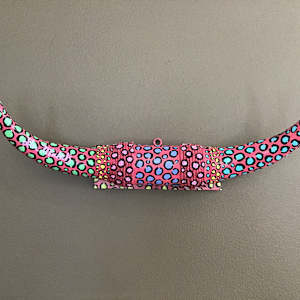
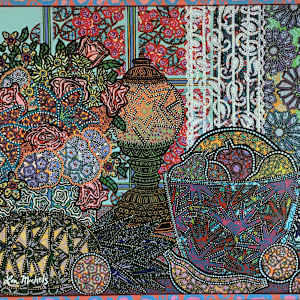
Lon Michels
The son of a fifth generation stone mason, Lon Michels learned perspective from his fathers work. Michels grew up in the small Midwestern town of Marquette, Wisconsin and followed his mother’s artistic lead early on. “I remember that she would throw flowers in a pattern across the floor and then make paintings of them”. After graduating from Ripon College he moved to New York City as a working artist. His breakthrough occurred when he was hired by the late sculptor Louise Nevelson, with whom he worked as a studio assistant for 5 years.
In my lifetime I have learned that the best way to grow and learn is to share your experiences with others. In order to obtain knowledge I believe one must be able to give freely, which is a simple essence that all true artists do.
I have had many great teachers in my life, including my professors at Ripon College and more recently the University of Wisconsin Madison. I was also greatly influenced by the working with Louise Nevelson and Mark Kostabi in New York City. These teachers and their methods to educate myself has made my life experiences not only as an artist but also as a human being.
As an artist I want to create timelessness, a presence…I approach each piece as if it were a true masterpiece that catches the twinkle in my eye as if it were going to be placed in a museum.