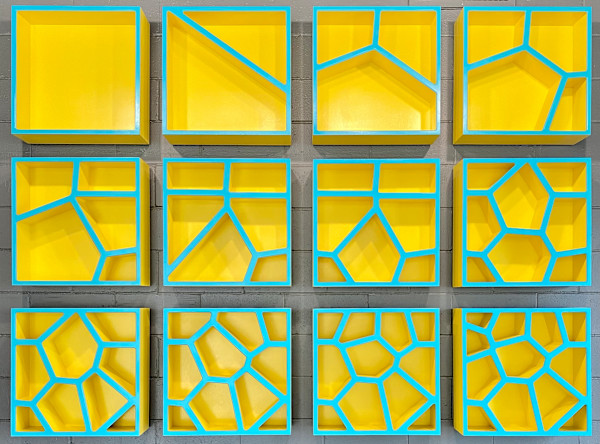


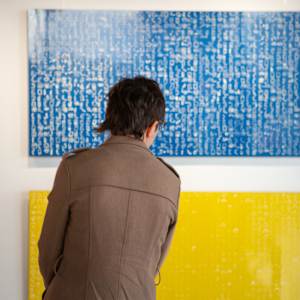
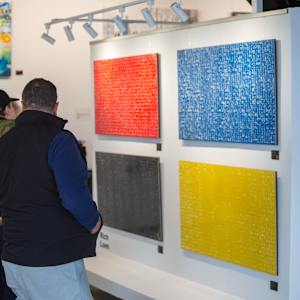
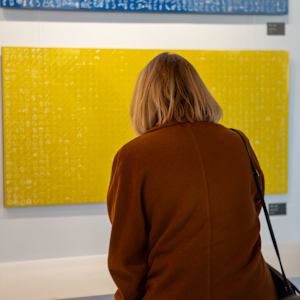
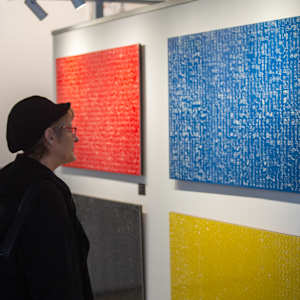
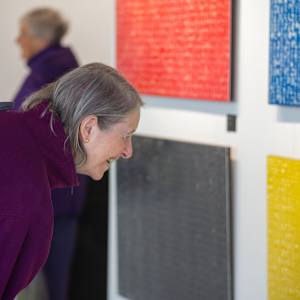
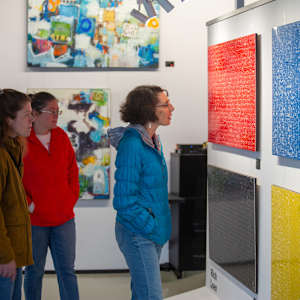
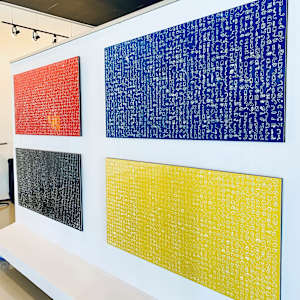
The Quick Draw series translates an archive of digital data into a visual, tactile, and material mode of collective human expression from all over the world. Sourced from Google’s Quick, Draw! database—an interface designed to train artificial intelligence through rapid sketch recognition—these works transform aggregated human gestures into machine-cut form.
Each panel begins with a single lexeme: a word that prompted countless participants to draw quickly and instinctively. Loen extracts that dataset and converts it into custom-coded instructions for a CNC cutter. The machine retraces the original human motions, line for line, preserving the original markings of each doodle. What was once ephemeral and screen-bound becomes tactile, and materially present. What was once using humans to inform the digital world, becomes using the digital world to reveal our humanity.
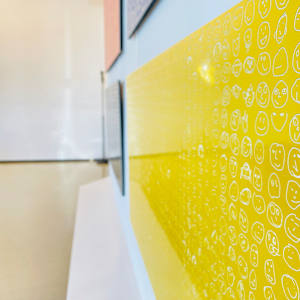
Arranged as grids of pictograms, the works function as both image and text. They are immediately semiotically legible, yet also visually dense, revealing patterns that emerge only through accumulation. Individual sketches dissolve into collective semiotic fields, exposing shared visual shorthand across anonymous human participants.
The Quick Draw series demonstrates this process as a form of digital archaeology. It mines a massive dataset of playful marks and reconstitutes them as narrative surfaces. In doing so, it foregrounds the convergence of play and computer-learning, creativity and data capture. Here, the human hand trains the machine, in turn, the machine memorializes the hand.
The process being highlighted here is human: millions of quick decisions rendered into structured, machinic inscription. The result is a tactile semiotic archive—an index of intersubjective mark-making at planetary scale.
- Subject Matter: Smiley Faces
- Collections: QUICK DRAWS