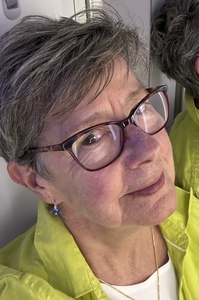
Patricia Buck
Columbia, MD
Patricia Buck is an American abstract painter based in Maryland, known for large-scale color field paintings and mixed-media works exploring phenomenal energy.
Message2025-26 Paintings
Artist Statement
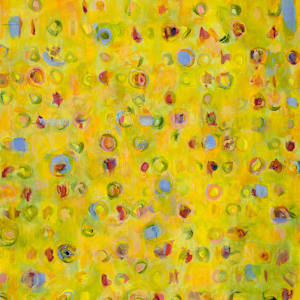
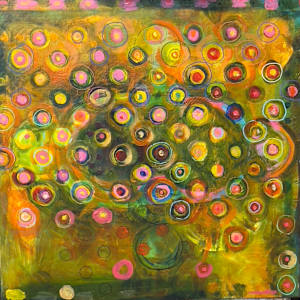
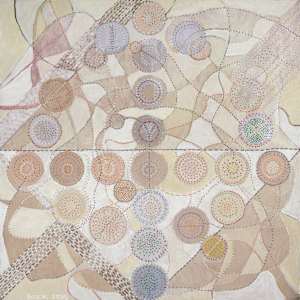
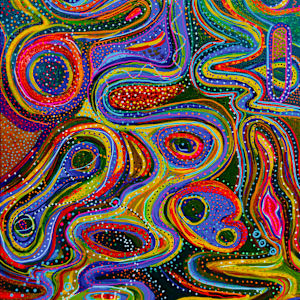
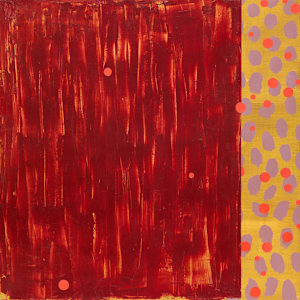
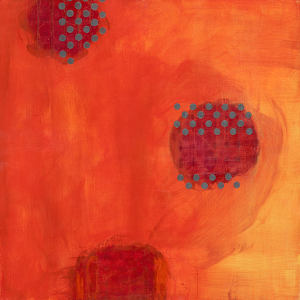
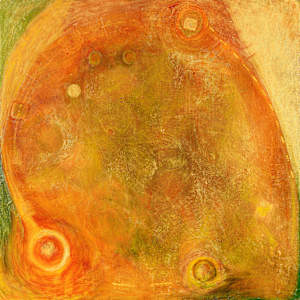
My work uses color, pattern, and form as a visual language to investigate systems that shape perception and embodied experience. Rather than depicting recognizable imagery, I construct fields of visual relationships in which chromatic vibration, repetition, and spatial tension activate responses that operate beyond language.
My work uses color, pattern, and form as a visual language to investigate systems that shape perception and embodied experience. Rather than depicting recognizable imagery, I construct fields of visual relationships in which chromatic vibration, repetition, and spatial tension activate responses that operate beyond language.
Earlier work engaged these concerns through more explicit imagery—drawing on the body, cultural symbols, and appropriated sources to examine how identity is constructed and internalized. In large-scale installations and figurative works, elements were combined, altered, and recontextualized to reveal underlying structures of meaning, particularly those shaping gendered experience.
Over time, this investigation has moved away from representation toward a more distilled visual language. I have been investigating systems of meaning for decades; the work now allows those systems to operate directly through perception, without reliance on imagery.
My process is intuitive and physically engaged. Through layering, gesture, and sustained attention, each work develops as a dynamic field in which elements interact and evolve. Across the work, visual form functions not as illustration, but as a means of transmitting experience—inviting the viewer into a direct, embodied encounter.

American Girl War, 1998
American Girl War — Series Statement
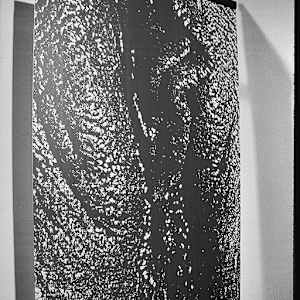
American Girl War is an autobiographical photographic installation developed at Anderson Ranch with support from the Colorado Council for the Arts. Using my own image across multiple scales and formats, the work examines the construction of female identity as a contested space—formed through memory, cultural projection, and internalized expectation.
The installation juxtaposes the figure as child and adult, intact and fragmented, visible and obscured. Images are enlarged, degraded, cropped, and re-presented as objects in space, destabilizing the authority of the photograph and suggesting that identity is continuously constructed rather than fixed.
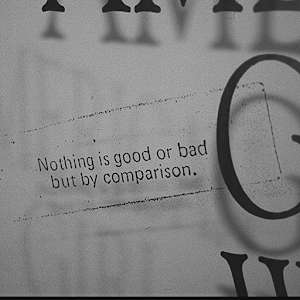
The “war” is internal—between lived experience and imposed ideals, between the body as it is felt and as it is seen. Text and appropriated imagery introduce external voices that interrupt and complicate the personal narrative.
This work aligns with Big Women in its direct engagement with the female body as a site of inscription. It also marks a transition. The fragmentation, repetition, and shifting scale in these images anticipate my later abstract paintings, where the figure disappears but the underlying investigation remains. In the paintings, identity is no longer carried by the body, but by fields of color, pattern, and form—where energy, tension, and perception are experienced directly rather than represented.
https://www.edgeart.org/
EDGE is an artist-run gallery dedicated to contemporary and experimental art outside the domain of commercial venues.
EDGE Gallery
6501 W. Colfax
Lakewood, CO 80214
Gallery Hours:
Friday 6-9 pm
Saturday and Sunday 12-5 pm
And by appointment
303.477.7173
Friday 6-9 pm
Saturday and Sunday 12-5 pm
And by appointment
303.477.7173

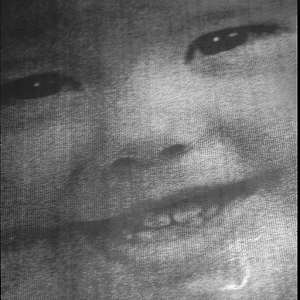
Big Women, 1997
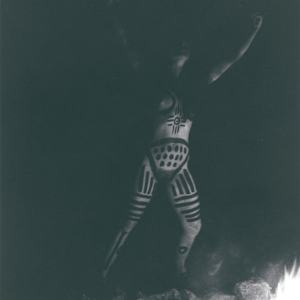
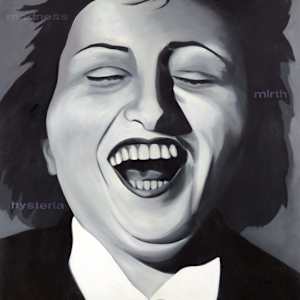
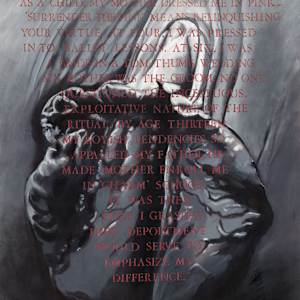
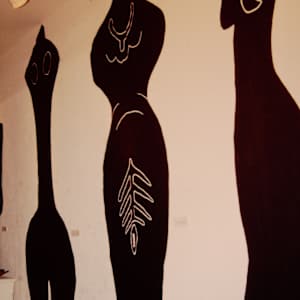
Big Women (1997) is part of an earlier body of work in which the figure operates as a direct site of cultural rhetoric. Monumental female forms—fragmented, exaggerated, and confrontational—are paired with stenciled text that names, disrupts, and reclaims the language historically imposed on women’s bodies.
Words such as hysteria, madness, and mirth are not illustrative but structural, functioning as both critique and material. They expose how meaning is constructed through repetition and history, while simultaneously destabilizing those constructions through scale, humor, and dissonance.
The work draws from feminist discourse, art history, and popular culture, collapsing distinctions between high and low imagery. References range from canonical sources to vernacular and cartoon forms, allowing multiple systems of representation to coexist and interfere with one another. The body becomes a field where these systems collide—biological, linguistic, and symbolic.
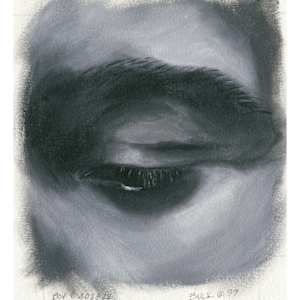
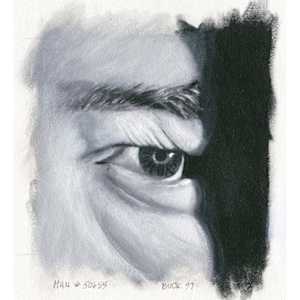
Installed alongside the large-scale paintings, a series of small male eye studies (unstretched canvas twelve inches square) that reverses the traditional gaze, isolating and fragmenting masculine presence. This juxtaposition shifts power dynamics, positioning the viewer within a reciprocal and unsettled field of looking.
While materially and visually distinct from later abstract work, Big Women establishes a foundational concern that continues throughout my practice: the investigation of how meaning is produced, transmitted, and experienced. In these works, the figure remains visible; in later work, it dissolves—but the underlying inquiry into energy, perception, and systems of meaning persists.
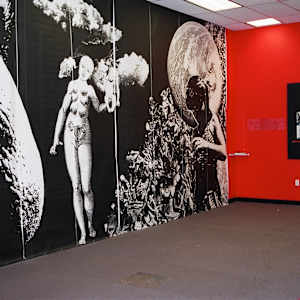
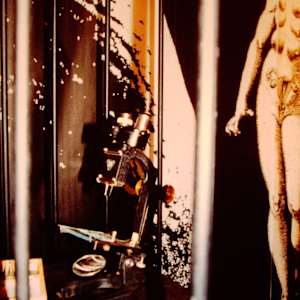
Genetics/Memetics: a room installation
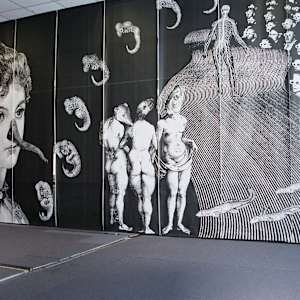
Original Installation: Genetics/Memetics, 1998. Pirate Contemporary Art, Denver, CO
Second partial installation: Genetics/Memetics, 2002. Artomatic, Washington, DC
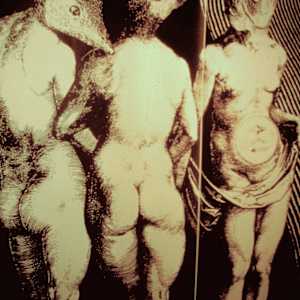
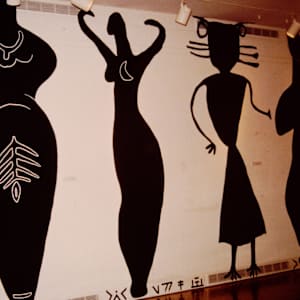
Genetics/Memetics is an installation that brings together the body, culture, and systems of transmission. Large-scale female figures—drawn from art history but altered—carry visible signs of biological and cultural inheritance. In one figure, cell division takes place in the belly; in others, identities shift through the use of appropriated and distorted imagery.
Second partial installation: Genetics/Memetics, 2002. Artomatic, Washington, DC
Genetics/Memetics is an installation that brings together the body, culture, and systems of transmission. Large-scale female figures—drawn from art history but altered—carry visible signs of biological and cultural inheritance. In one figure, cell division takes place in the belly; in others, identities shift through the use of appropriated and distorted imagery.
The work combines references that don’t comfortably belong together. Dürer’s witches are reduced and reconfigured. Cartoon heads drawn from 18th-century political satire replace individual identity. A sideways transformation of Jimmy Durante’s eye becomes a vulval form. These shifts are intentional—they interrupt recognition and redirect meaning.
I was thinking about how information moves—through the body, through images, and through culture. Genetics and memetics operate differently, but they overlap. One is biological transmission; the other is cultural repetition. In this work, they are inseparable.
The installation format allows these elements to exist in relation. Scale, proximity, and accumulation matter. The viewer moves through the space rather than looking at a single image, encountering the work as a set of interactions rather than a fixed statement.
This piece comes out of my earlier figurative work, but it shares a core concern with what continues in my practice: how meaning is carried, altered, and experienced. Whether through the body or through abstraction, the question remains how systems of energy and information are held and transmitted.


Paintings of the I Ching, 1989-1991
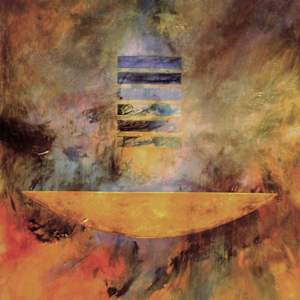
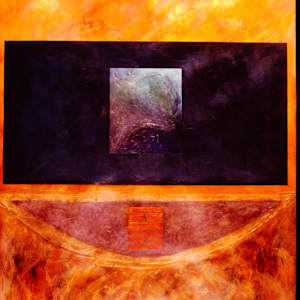
I Ching Series (1990–1991)
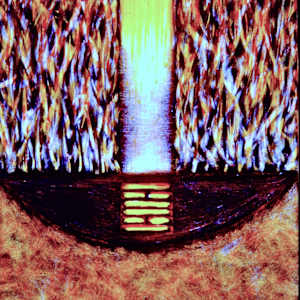
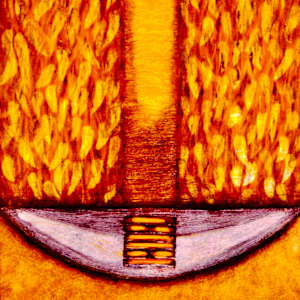
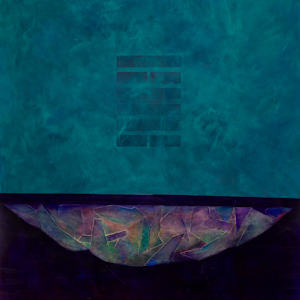
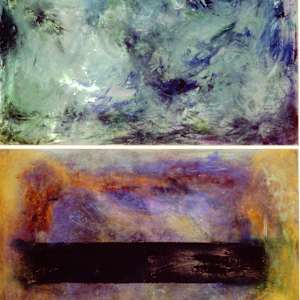
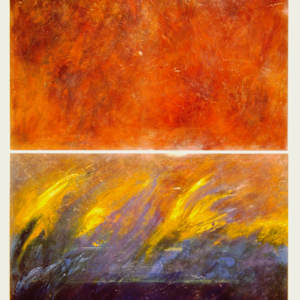
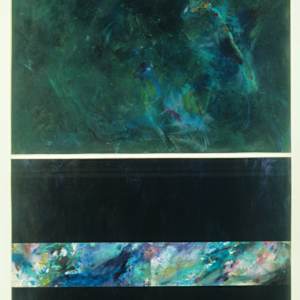
Created between 1990 and 1991, the I Ching Series consists of paintings and works on paper inspired by the ancient Chinese Book of Changes (I Ching), one of the world's oldest systems for understanding transformation and the dynamic relationships between opposing forces. Using the six-line structure of the hexagram as a formal framework, the works investigate cycles of change, emergence, dissolution, and renewal.
Rather than illustrating the text directly, the series employs color, gesture, layered imagery, and symbolic forms to explore invisible forces shaping both the natural world and human experience. Each composition balances structure and spontaneity, combining the fixed geometry of the hexagram with intuitive mark-making and luminous fields of color. The resulting works function as visual meditations on transformation, energy, and the interconnected nature of living systems.
The series reflects the artist's longstanding interest in metaphysics, symbolic language, archetypal imagery, and ancient wisdom traditions. Ideas explored throughout the body of work—including cyclical growth, the universal egg, the ouroboros, energetic movement, and unseen organizing principles—would continue to inform later paintings and installations.
The I Ching Series was presented in a solo exhibition at Arnold & Porter in Washington, D.C., curated by Georgia Deal and Tom Ashcraft. The exhibition was highly successful, with the majority of the works acquired during the exhibition.
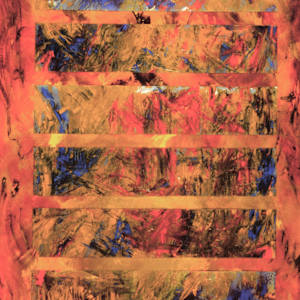
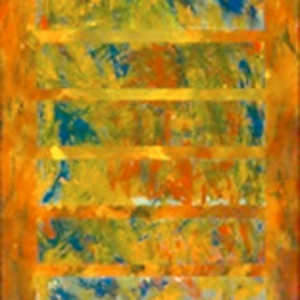


Figure As Image, Figure As Symbol, 1987
Figure As Image, Figure As Symbol (1987)
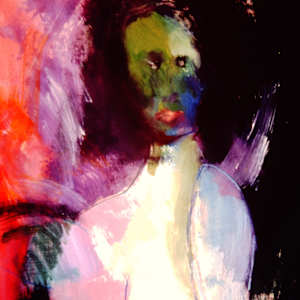
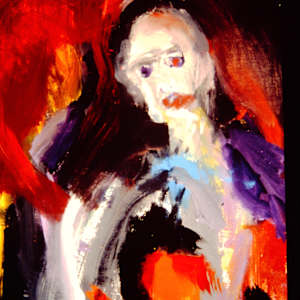
These paintings were made during a period of personal rupture, at the end of a long-term relationship. They are not illustrations of that experience, but direct responses to it—formed through the body, through gesture, and through the act of painting itself.
Working in acrylic on paper, I moved quickly and without premeditation. The figure emerged and dissolved at the same time—never fixed, never stable. Faces are partially formed, bodies open, fragmented, or exposed. Paint is pushed, smeared, and scraped, carrying the immediacy of emotional release. Red enters insistently, not as symbol, but as force—an eruption within the field.
The class with Leon Berkowitz provided a critical context. His commitment to painting as a vehicle for felt experience, rather than depiction, affirmed the direction I was moving toward. His remark that the work recalled Goya recognized something essential—the presence of psychological intensity, and the capacity of the figure to hold states of vulnerability, disturbance, and transformation.
This body of work was exhibited at Touchstone Gallery in Figure As Image, Figure As Symbol and was noted in a review by Kim Grant (New Art Examiner, February 1988), situating the work within the critical discourse of the time.
These works mark a threshold. While they retain the human figure, they begin to move beyond it. The image is no longer about representation, but about energy—how sensation, memory, and emotion can be carried through color, gesture, and form. In that sense, they anticipate my later abstract work, where the figure disappears, but the charge remains.
Early Paintings
Early Paintings and Works on Paper
1970–1983
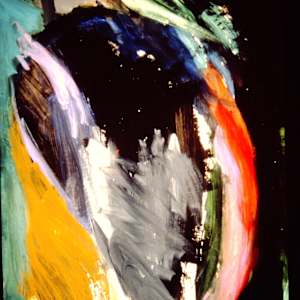
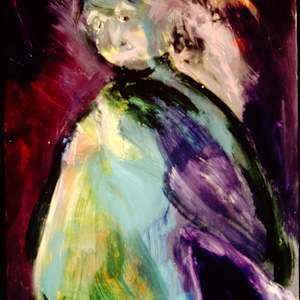
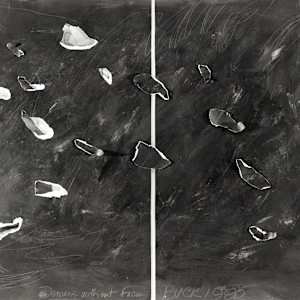
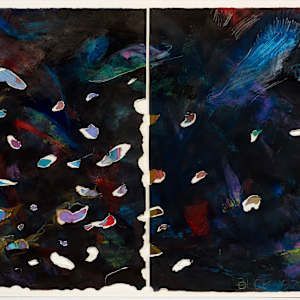
This group of paintings and works on paper reveal a formative period in my development as an artist. Created between 1970 and 1983, the works reflect an ongoing investigation of color, gesture, structure, and psychological tension through abstraction and periodically figuration.
The earliest works explore formal relationships of color and composition, while later pieces introduce fragmentation, movement, and layered accumulations of form. Torn-paper constructions, gestural drawings, and expressive figurative imagery reveal an emerging interest in transformation, perception, and emotional experience. Throughout the work, abstract and representational elements coexist, often dissolving into one another.
Although stylistically diverse, these pieces establish concerns that continue throughout my practice: the use of color as an experiential force, the tension between order and disruption, and the search for visual forms capable of carrying psychological and symbolic meaning.
Included in this period is Demons Without Faces, acquired by Joseph H. Hirshhorn through a Washington Project for the Arts benefit auction, an early recognition of the work within the Washington art community.
Small works
Small works
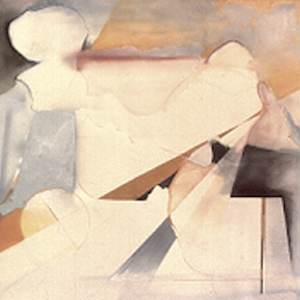
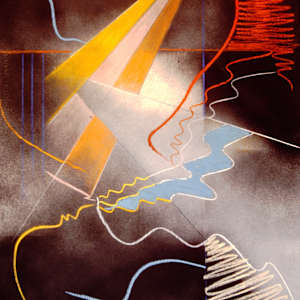
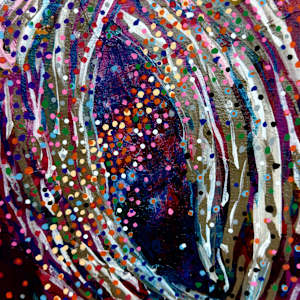
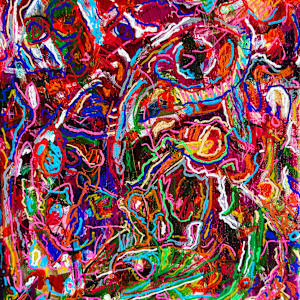
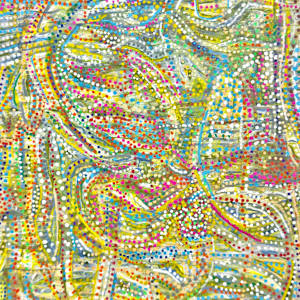
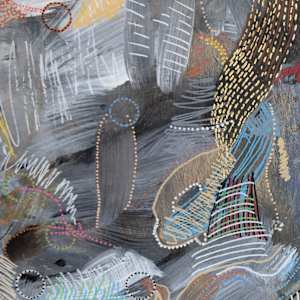
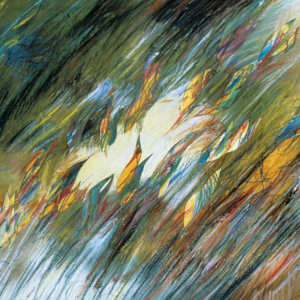
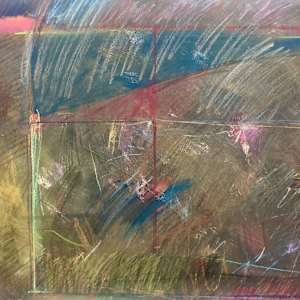
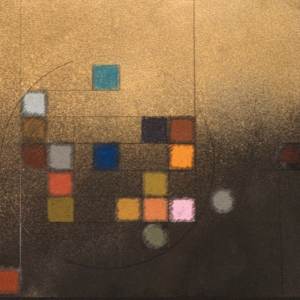
Each piece is developed intuitively, without predetermined composition. Through layering, repetition, and gesture, the surface becomes an active field in which relationships emerge and shift. Circular forms, grids, and organic structures often appear, not as fixed symbols, but as frameworks through which movement and vibration are organized and felt.
Each piece is developed intuitively, without predetermined composition. Through layering, repetition, and gesture, the surface becomes an active field in which relationships emerge and shift. Circular forms, grids, and organic structures often appear, not as fixed symbols, but as frameworks through which movement and vibration are organized and felt.
Because of their scale, these works invite close looking. They hold a density of mark and color that unfolds gradually, drawing the viewer into a more intimate perceptual experience. At the same time, they remain connected to the larger paintings—testing ideas, extending visual language, and exploring how energy can be carried through even the most contained space.
Accessible in size and scale, these works offer an entry point into the same investigation that defines my practice: how visual elements can evoke sensation, rhythm, and meaning beyond representation.

Installation: Hers
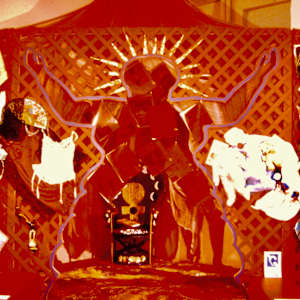
HERS: Inside/Outside is a collaborative, interactive installation developed with Menucha across three iterations between 1981 and 1994. The work began as part of Women’s Tools, a juried exhibition selected by May Stevens at the Washington Women’s Art Center, and evolved into a more structurally defined, participatory environment addressing women’s lived experience.
By 1991, in its presentation at Arlington Arts Center in a photography and new media exhibition curated by Philip Brookman, the installation incorporated a 50-minute audio component composed of voices of women of varying ages reflecting on the conditions of being female. The work established a spatial and psychological distinction between exterior and interior: an enclosing, womb-like structure that viewers physically entered. Inside, a single chair and a journal invited participants to sit, listen, and write—shifting the work from observation to introspection and contribution.
The final iteration, presented at the University of Maryland under the sponsorship of PANDORA, expanded this framework while maintaining its core structure of participation and reflection. Audience response was notably strong; the work elicited sustained engagement and personal testimony, even as critical reception remained ambivalent.
Across its iterations, HERS: Inside/Outside investigates the formation of identity at the intersection of internal experience and external social construction. The work positions the body as both site and subject—psychological, cultural, and political—while anticipating concerns with participation, voice, and embodied perception that continue to inform my current practice.
Add audio file from Hers, 1991, 1993.
Photography
Photographs: Observations and Encounters
1991–Present
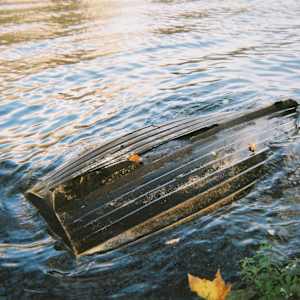
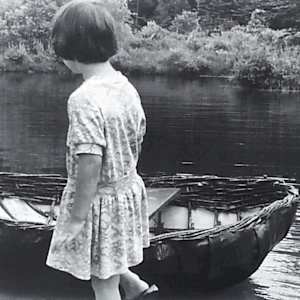
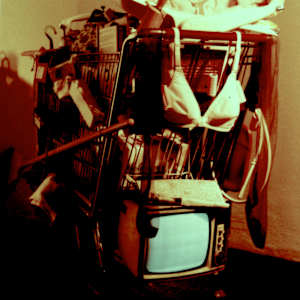
This ongoing body of photographic work spans more than three decades and records moments of visual recognition encountered in everyday life. Rather than documenting events or places, the photographs focus on instances in which ordinary subjects acquire an unexpected psychological, formal, or symbolic presence.
The images range from landscapes, architecture, and found objects to portraits, shadows, public gatherings, and fleeting social interactions. Some are drawn to pattern, color, and spatial relationships; others explore ambiguity, memory, humor, vulnerability, or the quiet drama embedded within commonplace situations.
Photography has functioned as a parallel practice throughout my career. Like my paintings, these works arise from attentive looking and an interest in the relationship between perception and meaning. The camera becomes a tool for recognizing moments in which the familiar briefly shifts, revealing layers of narrative, metaphor, or visual poetry.
Taken together, the photographs form an informal archive of observations, encounters, and discoveries accumulated over time.