
Y. Hope Osborn
Little Rock, Arkansas
Expressing imagination and reality that captivates, inspires, and/or informs while enriching lives
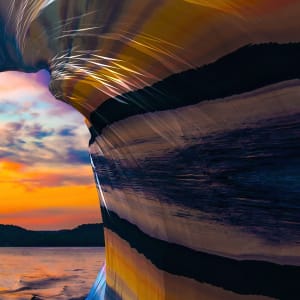
MessageBayou Bartholomew
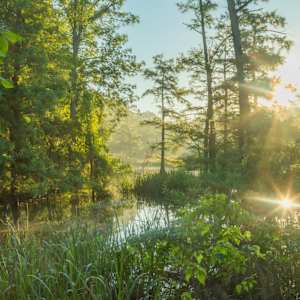
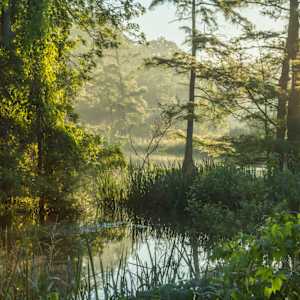
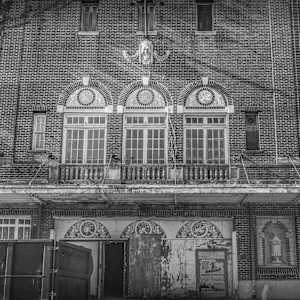
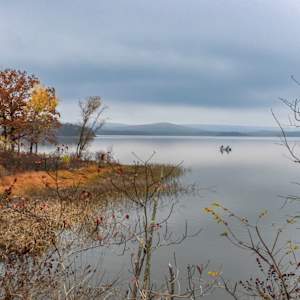
Bayou Bartholomew is the world's longest bayou, trailing from Pine Bluff, Arkansas, US down through Louisiana for over 350 miles. According to Encyclopedia of Arkansas, during its 400-known-years history, it was a major trade route for the Delta. I only found out about it through a tip-off from a local who knew I was in Pine Bluff to photograph old buildings such as the Saenger Theatre that is a tale for another time.
For a town that needs all the rejuvenating support it can get, Bayou Bartholomew, must be the one of their most amazing best kept secrets, though here you trekked through brush, bog, and branch.
The next morning well before dawn's light, I was behind the building, going through a gate in a chain link fence, and making my way by sense of direction while trying to use my small flashlight aimed only at my feet for fall risks and truly boggy water (shoes were still soaked before I got there) based on seeing a tiny curve on the minutia on a rough map. Seeing a curve in the water, I knew I traced my steps away from the day before with nothing other than my sense of direction, I would get to the bayou at a spot where the golden hour might shine over Bartholomew. I didn't really know if there was anything to see, but I did find myself in the exact curve of waterway I expected, taking photographs with unusual and unconventional results.
No sign of the seven heavy bodies that splashed in the water while it was still dark. I kept my flashlight on a swivel and stuck a sturdy stick in the ground, not that either mattered considering I sat two feet from the water's edge. I did have the passing thought, Yeah, this would be a good place to murder me and no one ever find me.
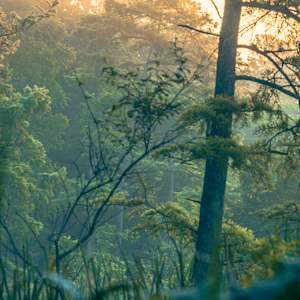
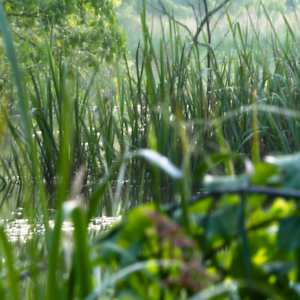
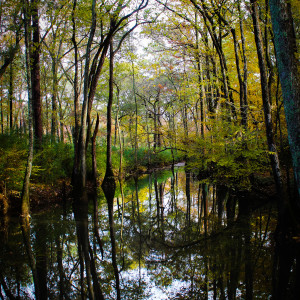
This must be close to what an Amazonian jungle is like! with lush grass and trees and a symphony of birdsong. I found my green on green summer landscape to practice summer photos practiced topography, astronomy, and simple old American exploration. It was truly as someone said, "Magical."
For a town that needs all the rejuvenating support it can get, Bayou Bartholomew, must be the one of their most amazing best kept secrets, though here you trekked through brush, bog, and branch.
The next morning well before dawn's light, I was behind the building, going through a gate in a chain link fence, and making my way by sense of direction while trying to use my small flashlight aimed only at my feet for fall risks and truly boggy water (shoes were still soaked before I got there) based on seeing a tiny curve on the minutia on a rough map. Seeing a curve in the water, I knew I traced my steps away from the day before with nothing other than my sense of direction, I would get to the bayou at a spot where the golden hour might shine over Bartholomew. I didn't really know if there was anything to see, but I did find myself in the exact curve of waterway I expected, taking photographs with unusual and unconventional results.
No sign of the seven heavy bodies that splashed in the water while it was still dark. I kept my flashlight on a swivel and stuck a sturdy stick in the ground, not that either mattered considering I sat two feet from the water's edge. I did have the passing thought, Yeah, this would be a good place to murder me and no one ever find me.
This must be close to what an Amazonian jungle is like! with lush grass and trees and a symphony of birdsong. I found my green on green summer landscape to practice summer photos practiced topography, astronomy, and simple old American exploration. It was truly as someone said, "Magical."
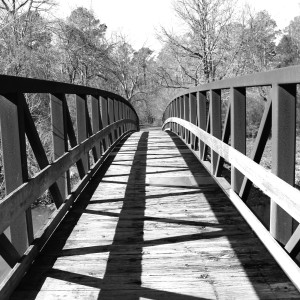
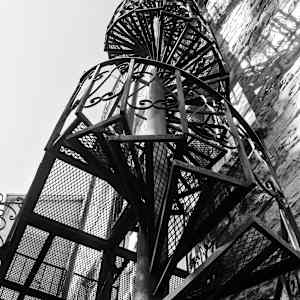
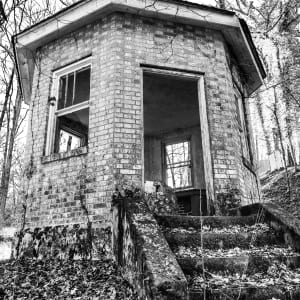
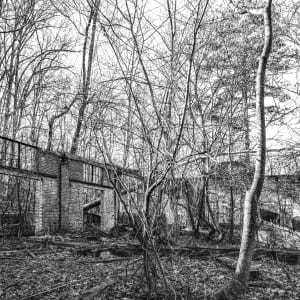
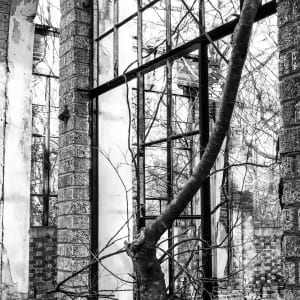
Black and White Architecture singlets
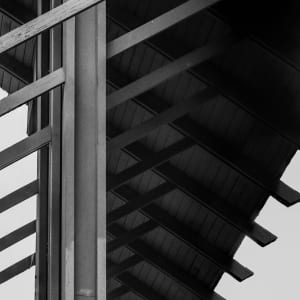
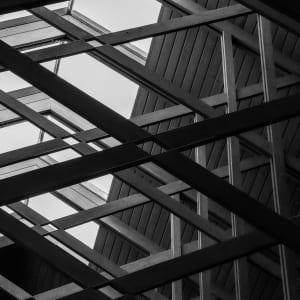
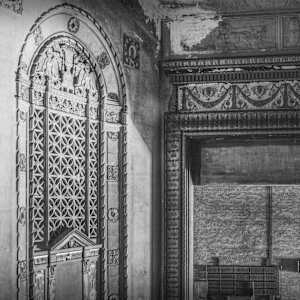
My art is inspired by a freedom to play that I didn’t know as a child stifled by abuse. Architectural lines may seem as unforgiving as the bars of a prison on mind, body, and soul. However, in finding a different vantage from which to view or a different light to shed on the architecture, my works demonstrate that whatever the circumstance the human spirit, by God’s grace, may ever arise in inspiration, creativity, and life. My adulthood play is enlivened by Julia Margaret Cameron’s pioneering, Danica O. Kus’ perspective, and Julia Anna Gospodarou’s impactful monochromes. There are so few female black and white architectural photographers that a Google search begs the question, do you mean men. However, through play and example, I find my own way through monochrome documentary and abstract architectural photographs with distinctive textures, tones, and perspectives. Recently, I realized my attention to fine detail and the varying tones in black and white images began in my teenage hobby of sketching. Using #2 pencil and varying degrees of erasure and finger brushes and rubs and intensities of graphite edge, I sharpened my monochromatic ability “seeing” color in shades of grey. Drawing from the color image of a full-sailed schooner ship at sea calls for special focus to the nuances of depth, texture, contrast, shadow, and light and how to bring it into another life using only a pencil. I bring that same focus to bear on every pixel of monochromatic photography, minutely going over both my documentary and architectural fine art pieces to develop my tenants of rich tonality, vivid texture, and creative perspective. Sometimes, imagining depicting the image from the point of a pencil aids my endeavor so even white has hues.
Colorful Geometric Abstractions
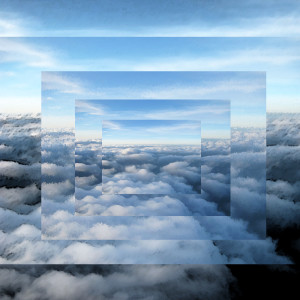
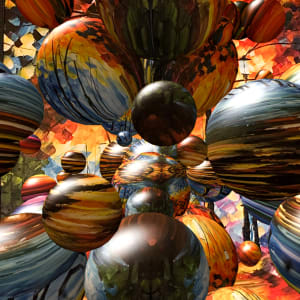
Photos digitally manipulated into geometric forms, using rich color photos. My analytical abstracts and jumping off point for the rest of my abstracts.


Garden Expressions
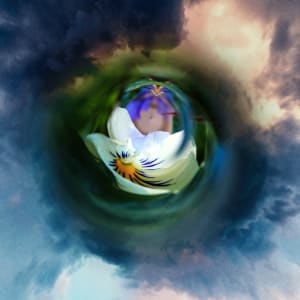
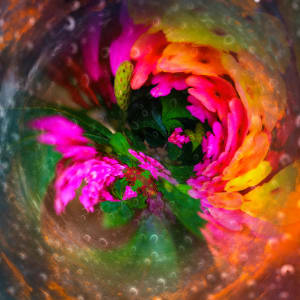
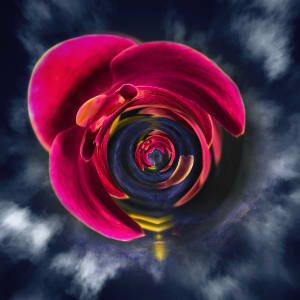
Living with disability means being at home a lot, but that doesn't mean there isn't still a whole world at my feet if I choose it. So when I go out I photograph as I can on better health days and I have a garden of greenery and flowers year around to capture when I am confined to home. All of these flowers except Inner Space with flowers a little further afield in a city park, grew from my garden.
Each work of abstract expressionism is a facet of my and I suspect your life. Contemplation out of depth, Hope out of belief, Inner Space out of isolation, Dawn out of sunrises and sunsets, Artistry out of creativity, Remembrance out of mindfulness for the good of my life whenever wherever however I am in this moment.
Each work of abstract expressionism is a facet of my and I suspect your life. Contemplation out of depth, Hope out of belief, Inner Space out of isolation, Dawn out of sunrises and sunsets, Artistry out of creativity, Remembrance out of mindfulness for the good of my life whenever wherever however I am in this moment.
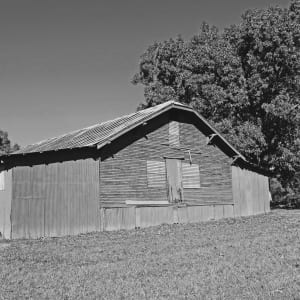
Honor Guard
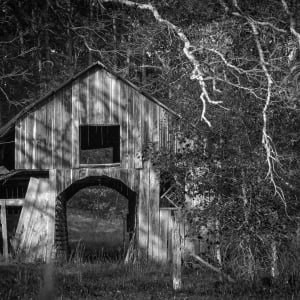
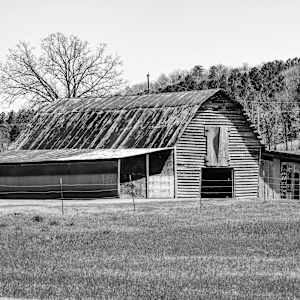
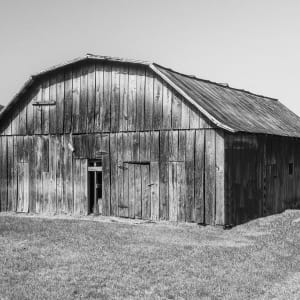
Once, I passed barns without a glance. Now, I notice these ordinary structures for the extraordinary variety of architecture from unnamed architects and as stalwarts of the rural. When all else falls, these buildings stand. The Honor Guard is just that--strength, endurance, steadiness against time and nature, holding the fort down for countless farms and ranches across Arkansas, United States, and beyond. They have always been assurance of safety, enduring long past use. It is a building plan passed down in history from one person to another. They are buildings that lack the esteem of an architect's name. Perhaps by noticing them, we become part of their history and heritage.
Kaleidoscope Captures
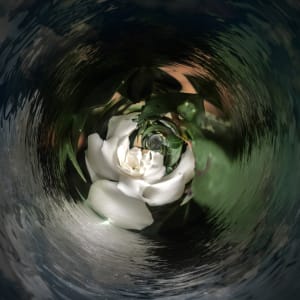
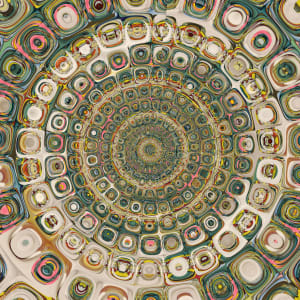
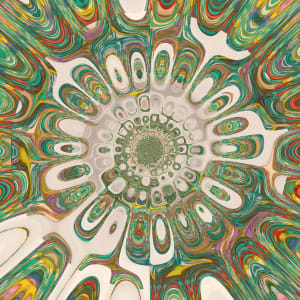
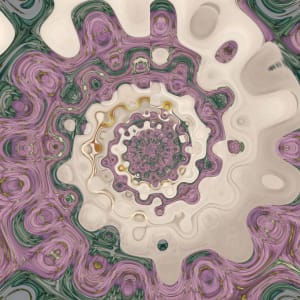
Kaleidoscopes are a life-long fascination. Only I see each rainbow of stained glass in the view through a small opening into a large world. These 16 Kaleidoscope Captures are a blend of the basic (like a table display) and a bloom. Every Kaleidoscope’s creamy contrast is from one or two of the same white orchid flower from my garden. Amid the many-splendored stained glass turns I stopped 16 times to share a view through my kaleidoscope.
Old Grip of the Familiar
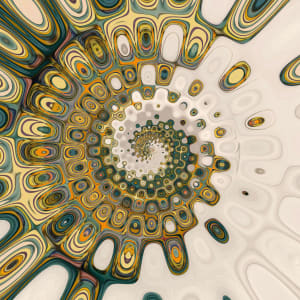
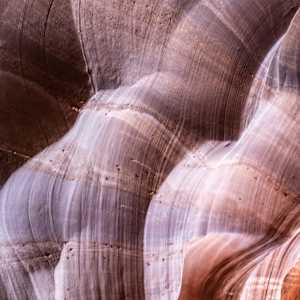
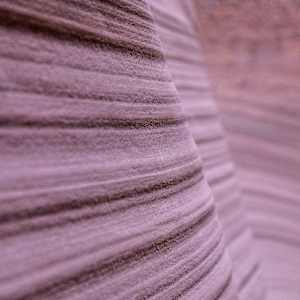
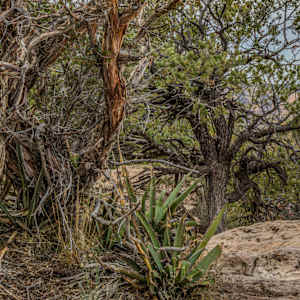
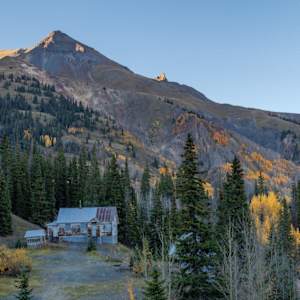
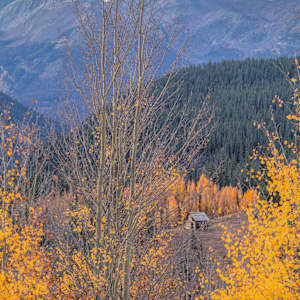
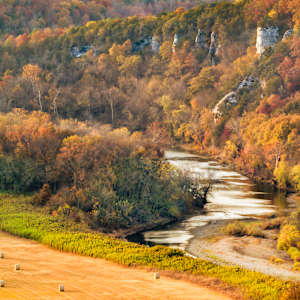
Settlers gather large hay bales next to drought-diminished Buffalo National River (Nordic Lord) and gather property, laying connecting roads on hillsides (Jacob’s Coat). Yet land and river overwhelm. Miners (Time Share) leave “piles”, 25 miles shaft, and abandoned buildings through 1890s Yankee Girl (Lost My Frickin Mine). Yet green and gold grow through. Ranchers tame the environment with corrals, fences, and tractors along the Colorado//New Mexico border (Grange) and in the shadow of Colorado’s Wilsons Peak (Going My Way). Yet nature’s textures take over. Trauma, disability, pocketbook, and people bruise and pain me. God gives me strength through documenting space and time and deeply breathing fresh air. I echo the environment’s resilience and thrive from sharing these perspectives with others

Roundup
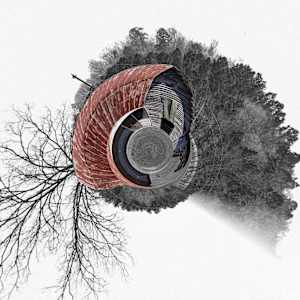
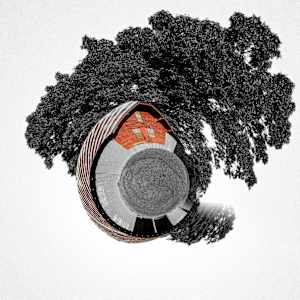
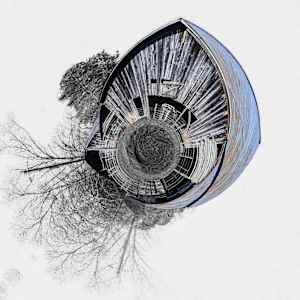
The Roundup barns encircle to represent sheltering protection and endurance against the torrent of time and enclose and embrace in itself the landscape. They, like people, are both individual and part of a larger landscape.
These are all Arkansas barns captured in my haunts about the state as I scan ever back and forth, looking for gems to photograph. Some were easily found and accessible. Others I captured from outside barbed wire and no trespassing signs.


The Lodge
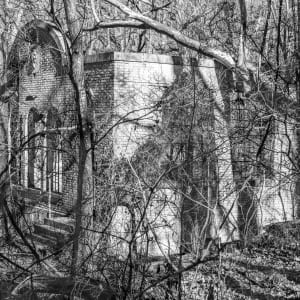
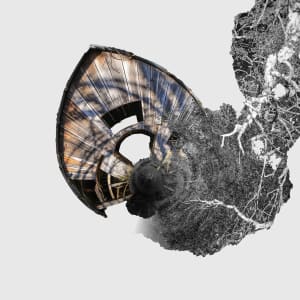
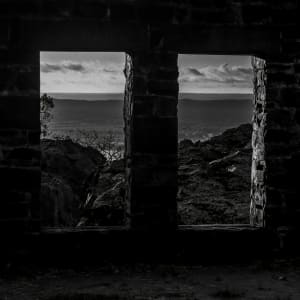
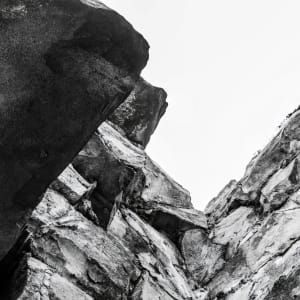
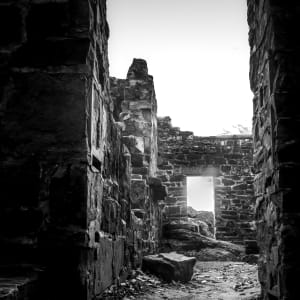
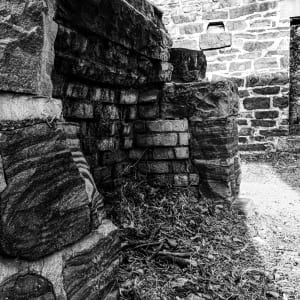
My art is inspired by a freedom to play that I didn’t know as a child stifled by abuse. Architectural lines may seem as unforgiving as the bars of a prison on mind, body, and soul. However, in finding a different vantage from which to view or a different light to shed on the architecture, my works demonstrate that whatever the circumstance the human spirit, by God’s grace, may ever arise in inspiration, creativity, and life. The Lodge series exemplifies my rough history, rich heritage, and vivid design. College Lodge rests on Petit Jean Mountain in the Arkansas Ozarks, USA. It was built in the 1920s through the efforts of YMCA chapters of Arkansas colleges they built this meeting building.
One rare morning, I was at Petit Jean Mountain’s Sunrise/Stout’s Point photographing a rosy sunrise. As I began to leave, I stopped to challenge myself to take this studio-apartment-sized ruin as far as I dare be inspired and to find meaning in architecture separated from me by a century of use and disuse. The Lodge became my playground and practice of vivid texture, rich tonality, and creative perspective.
One rare morning, I was at Petit Jean Mountain’s Sunrise/Stout’s Point photographing a rosy sunrise. As I began to leave, I stopped to challenge myself to take this studio-apartment-sized ruin as far as I dare be inspired and to find meaning in architecture separated from me by a century of use and disuse. The Lodge became my playground and practice of vivid texture, rich tonality, and creative perspective.
The Old Mill
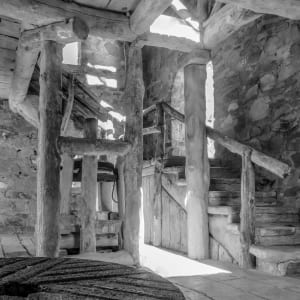
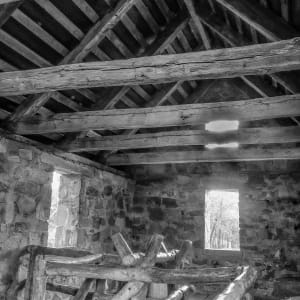
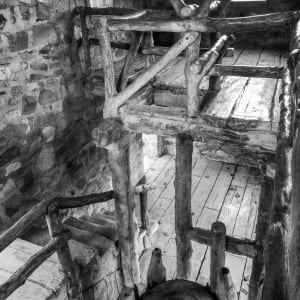
The Old Mill ever engages present, ever remembers the past, and ever stands for those who will come. Most people come, especially in the spring and summer when blooms are happiest, to photograph the sculpture amidst its garden setting.
I though was intrigued by what was within. The famous Rodriquez faux bois technique of shaping concrete posts and beams as aged wood, the windows that continually look toward a dawn that dances light in bright shapes from open windows and doors, the authentic 1800s grist mill handed down through the Cagle family at rest in the center, and a rainbow of shapes, textures, and colors of rocks in the walls.
I came for a canvas against which to paint black and white in vivid textures, rich tonalities, and creative perspectives and unearthed the history of a sculpture and the men whose vision fashioned it.
To this day photographers come from far and wide to capture this sculpture among ever-green gardens in North Little Rock, Arkansas, USA. The Old Mill is best known for gracing the opening credits of the 1939 Gone with the Wind movie, several years after the The Old Mill’s completion.
Nine decades later it remains a monument to Justin Matthew’s vision for the 1800s mill replica, “quietly [weathering] the years in the depths of its secluded valley,” Matthew’s friend, Thomas R. Pugh, whose “tireless energy” embodies the water wheel, and famed Mexican sculpture Dionicio Rodgriquez, whose handiwork stands the test of time and art.
I though was intrigued by what was within. The famous Rodriquez faux bois technique of shaping concrete posts and beams as aged wood, the windows that continually look toward a dawn that dances light in bright shapes from open windows and doors, the authentic 1800s grist mill handed down through the Cagle family at rest in the center, and a rainbow of shapes, textures, and colors of rocks in the walls.
I came for a canvas against which to paint black and white in vivid textures, rich tonalities, and creative perspectives and unearthed the history of a sculpture and the men whose vision fashioned it.
To this day photographers come from far and wide to capture this sculpture among ever-green gardens in North Little Rock, Arkansas, USA. The Old Mill is best known for gracing the opening credits of the 1939 Gone with the Wind movie, several years after the The Old Mill’s completion.
Nine decades later it remains a monument to Justin Matthew’s vision for the 1800s mill replica, “quietly [weathering] the years in the depths of its secluded valley,” Matthew’s friend, Thomas R. Pugh, whose “tireless energy” embodies the water wheel, and famed Mexican sculpture Dionicio Rodgriquez, whose handiwork stands the test of time and art.

Thorncrown Chapel
Thorncrown Chapel in Eureka Springs, Arkansas, US is one of three glass chapels in Arkansas.
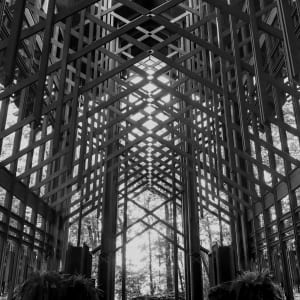
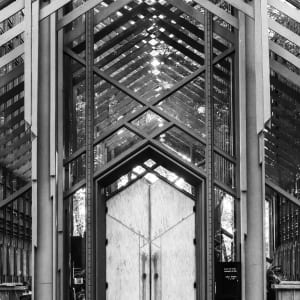
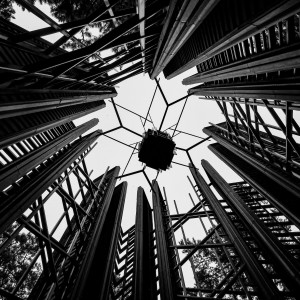
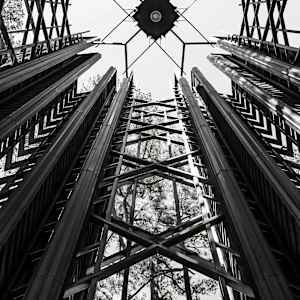
This chapel rises 48 feet into the sky with over 6,000 square feet of glass and 425 windows. The chapel is made with all organic materials to fit its natural setting. The only steel in the structure forms a diamond shaped pattern in its wooden trusses. The building has a native flagstone floor surrounded by a rock wall. To preserve the natural setting, no structural element could be larger than what two men could carry through the woods.
The surrounding woods offered a quiet calm beauty and breeze-stirred trees are rest for my weary soul. However, Thorncrown Chapel was a beautiful gem amid it.
Its architect, E. Fay Jones, who was mentored by Frank Lloyd Wright, was recognized as one of the top ten living architects of the 20th century. Thorncrown was listed fourth on the American Institute of Architects top ten buildings of the 20th century.
The light play on these rafters among trees and amid seasons offers an exceptional opportunity to revel in rich tonality and creative perspective. By stacking the images, I achieved great clarity throughout that turns this marvel of architecture into a study of fine art and architecture alike.
While photographing Thorncrown, I had the pleasure of becoming an informal pop-up photographer of people's families and friends, infusing the building, images, and day with the diversity and inclusivity of the chapel’s walls that became a part of my memory.