Madge Evers
Haydenville, MA
Inspired by the regenerative cycles of growth and decomposition, I create abstract works on paper in collaboration with plants and fungi.
Message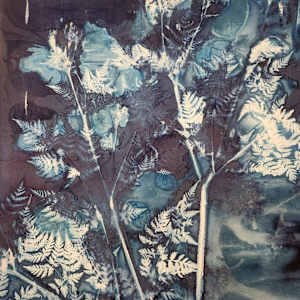
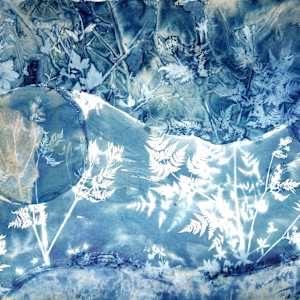
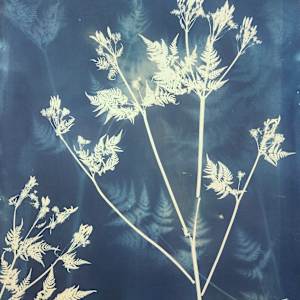
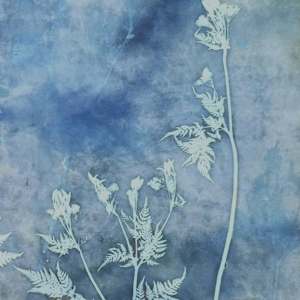
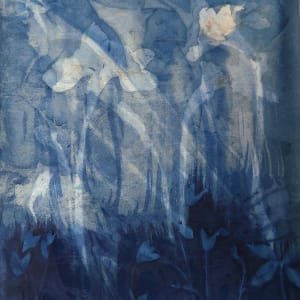
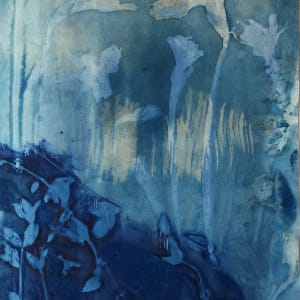
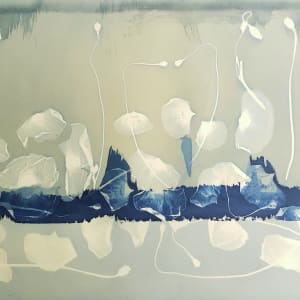
cyanotype + spore print = cyanospores
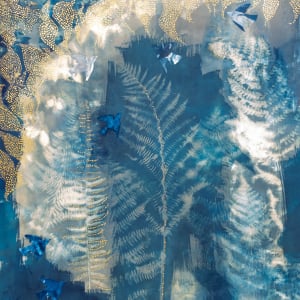
My work with foraged plants led me to the cyanotype process where I learned about and marvelled at botanist Anna Atkins’ beautiful work in British Algae: Cyanotype Impressions, one of the first photographic books ever made. I then began using botanical cyanotypes as the background for mushroom spore prints; these images represent this work, a continuation of The New Herbarium series, in blue. In the spring of 2020, I created abstract backgrounds in cyanotype chemistry that evoked a chaotic universe, inspired by the world of the pandemic. When mushrooms popped up later in the spring and summer, I added their spores to connect elements of my actual world with the alternate universe born of the cold Covid spring. This series is tentatively called Blue Planet.

Cyanotypes | altered / painted
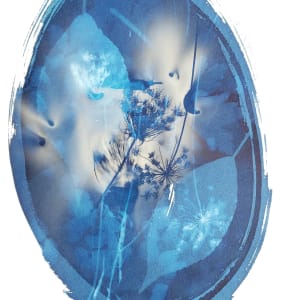
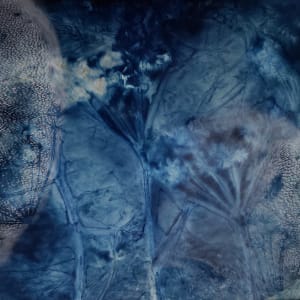
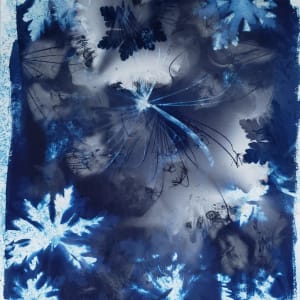
Plants create, again and again and again. Each piece in this group of medium-sized works on paper begins as a cyanotype photogram and is then altered with different techniques, including bleaching, toning, or painting. Plants are present almost everywhere, in scarcity and in abundance. Yes, I love their exuberant spring and summer stories but am also curious about their slower, less visible processes.
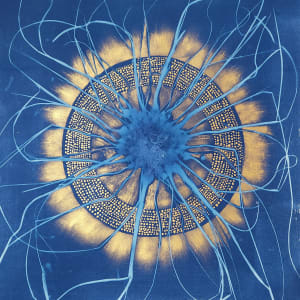
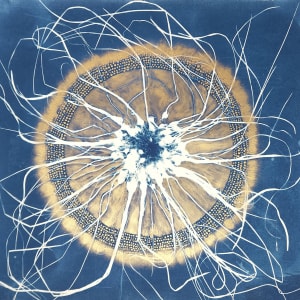

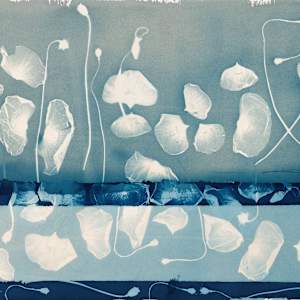
cyanotypes | botanical
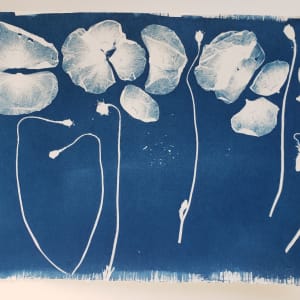
A photogram is a camera-less photographic technique: objects are placed on light sensitive paper which is then exposed to ultraviolet light. These photograms are made with paper coated with cyanotype chemicals over which I place pressed botanicals like Poppies, Chickweed, Chervil, Hostas, Dill/Anethum, and various grasses. Each work on paper begins in a plant's history, long before collection and pressing. Location and process inform the final piece; some are made with experimental techniques and multiple exposures.

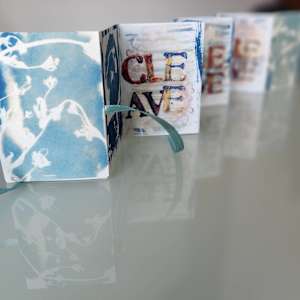
Hollow Bones
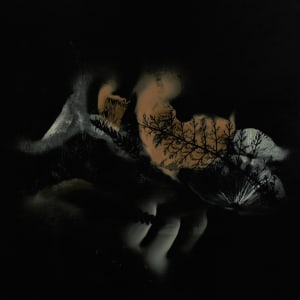
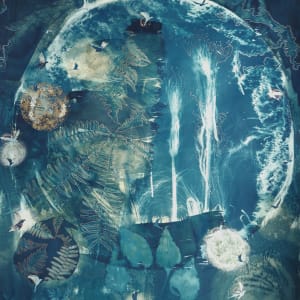
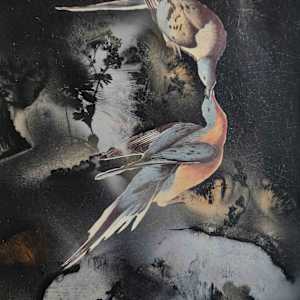
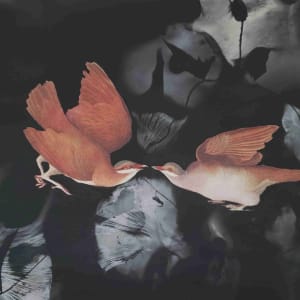
The desire to shape the natural world has brought increasingly chaotic results. Plants and fungi offer an ancient perspective about collaboration and flexibility. In the Hollow Bones series, I combine flora and mushroom spores with imagery from John Audubon’s Birds of America: Fifty selections with commentaries by Roger Tory Peterson. At first, it felt strange to alter, to disturb, Audubon’s iconic birds. The Passenger Pigeon was my first. Extinct since 1914, it was once the most abundant bird in North America, believed to be numbering around 3 billion. It was a harbinger of the current disturbing reduction of birds, called a “loss of nature” by biologist Kevin Gaston.
Here’s what I did: I covered Audubon’s Passenger Pigeon in black gesso, painting everything but the two joined birds. Once dry, I used pressed plants and mushrooms to make a mushroom spore print on the painted paper. With the marks of mushrooms and plant silhouettes, and separate from their original habitat, the birds emerge transformed. The imagery of each piece is changed, while Roger Tory Peterson’s commentary on the other side remains intact.
Here’s what I did: I covered Audubon’s Passenger Pigeon in black gesso, painting everything but the two joined birds. Once dry, I used pressed plants and mushrooms to make a mushroom spore print on the painted paper. With the marks of mushrooms and plant silhouettes, and separate from their original habitat, the birds emerge transformed. The imagery of each piece is changed, while Roger Tory Peterson’s commentary on the other side remains intact.


In Selene's Orbit
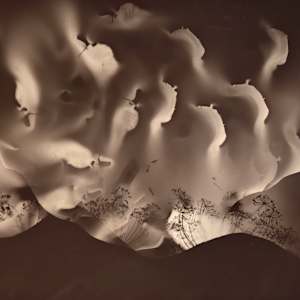
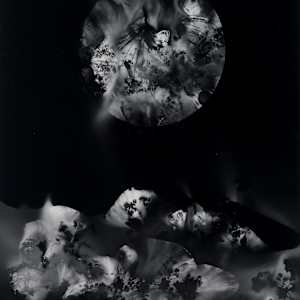
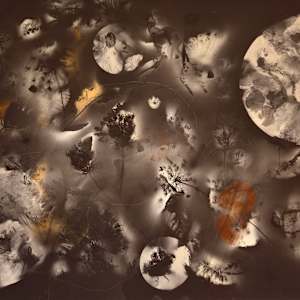
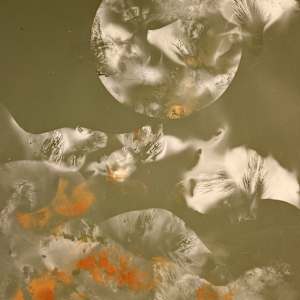
This series depicts planetary bodies and is named for Selene was the Greek goddess of the moon. Each image is made with spores, the tiny reproductive particles made within a mushroom's gills or pores. When ready, and at astonishing speeds, mushrooms use the ballistospore discharge mechanism to release millions (of tons) of powdery spores into the air. The spores fly and float; they sometimes travel the world in rain clouds to every level of earth’s atmosphere where they may ride currents and become part of an ecosystem, including a forest's rain feedback loop. Sometimes they simply land close to home and sometimes they form imaginary planets.
Iteration
Made with the species Stropharia rugosa-annulata, each image shows the many iterations of a single mushroom.
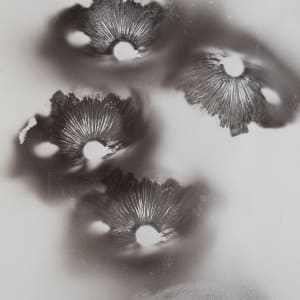

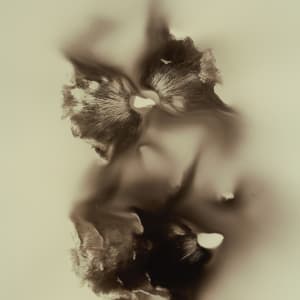
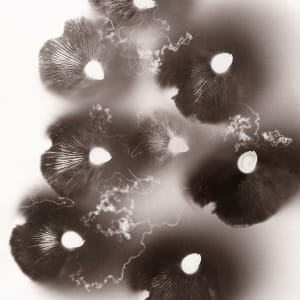
Singles
Made with the lush deep violet spores of Stropharia rugosa-annulata, a mushroom I grew in my shady yard. Each image is made with the millions of spores in one mushroom.
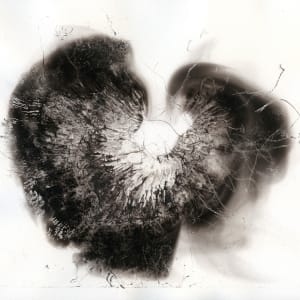
The New Herbarium
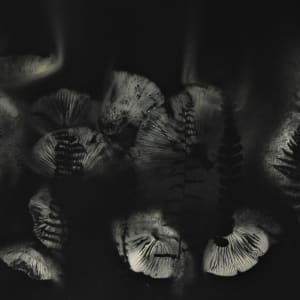
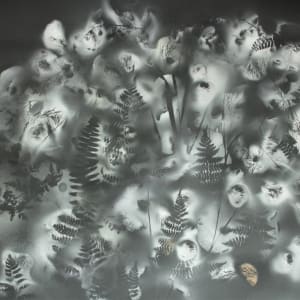
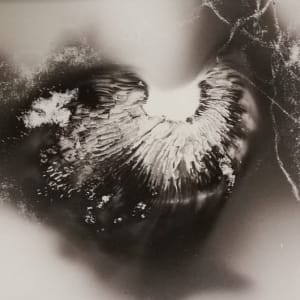
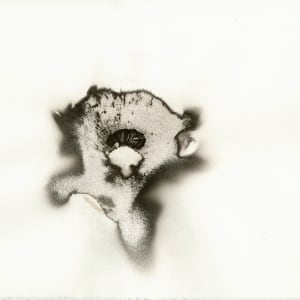
Informed by mycology and influenced by the inherent transformation of growing cycles, The New Herbarium, interprets the process of herbaria creation. The mushroom spore print, used to identify species based on spore color, is adopted in form and medium to create works on paper that explore mycorrhiza and photosynthesis. Mushrooms are used as food, medicine, and in the fabrication of consumer products, and in the New Herbarium, as a compostable art medium. I photograph the fragile works; archival inkjet prints available.

Trees at the Top of the World
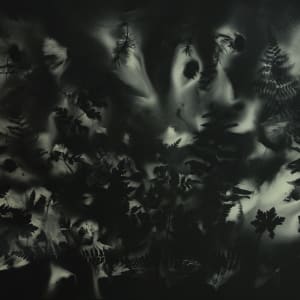
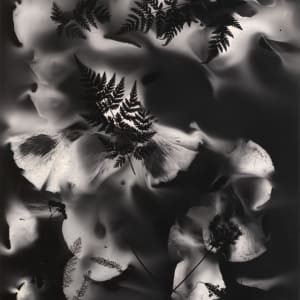
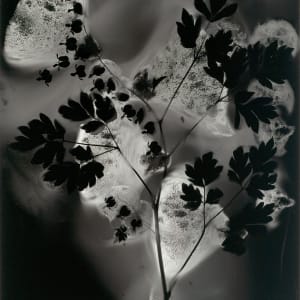
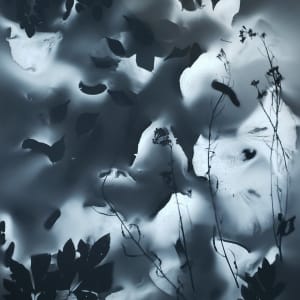
Trees at the Top of the World emerged as the summer of 2018 turned to autumn and the undeniably warming planet sought equilibrium in the forms of flood, drought, and fire. From the hills of western Massachusetts, where a daily onslaught of weather disasters is not yet the norm, I gathered materials in the woods and assembled spore prints. The images that emerged depict an aftermath - a delicate climate-changed landscape, reduced to shadow and light. Dominating the series is the leaf, optimistic consumer of carbon dioxide and producer of oxygen. Photosynthesis powers 99% of the world’s ecosystems and, 200 million years ago, captured the sun’s energy to create the coal and petroleum we now burn. The images contain silhouettes of today's foliage, outlined by the light-colored spores of mushrooms. A symbiosis between fungi and plants, able to communicate through underground networks, transport and transform nutrients, and help one another, is suggested throughout the series.