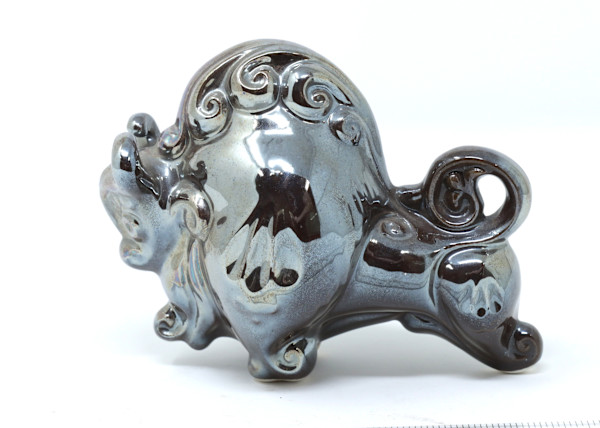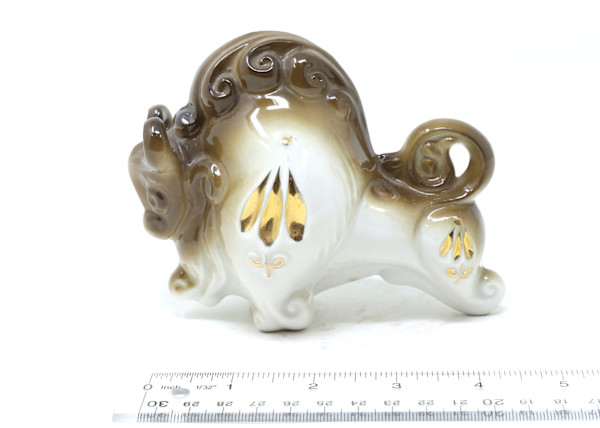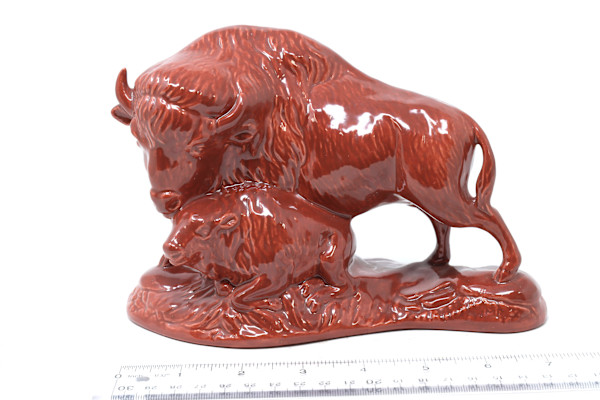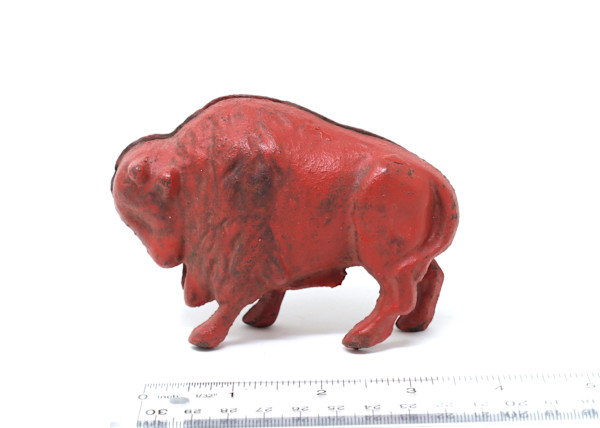

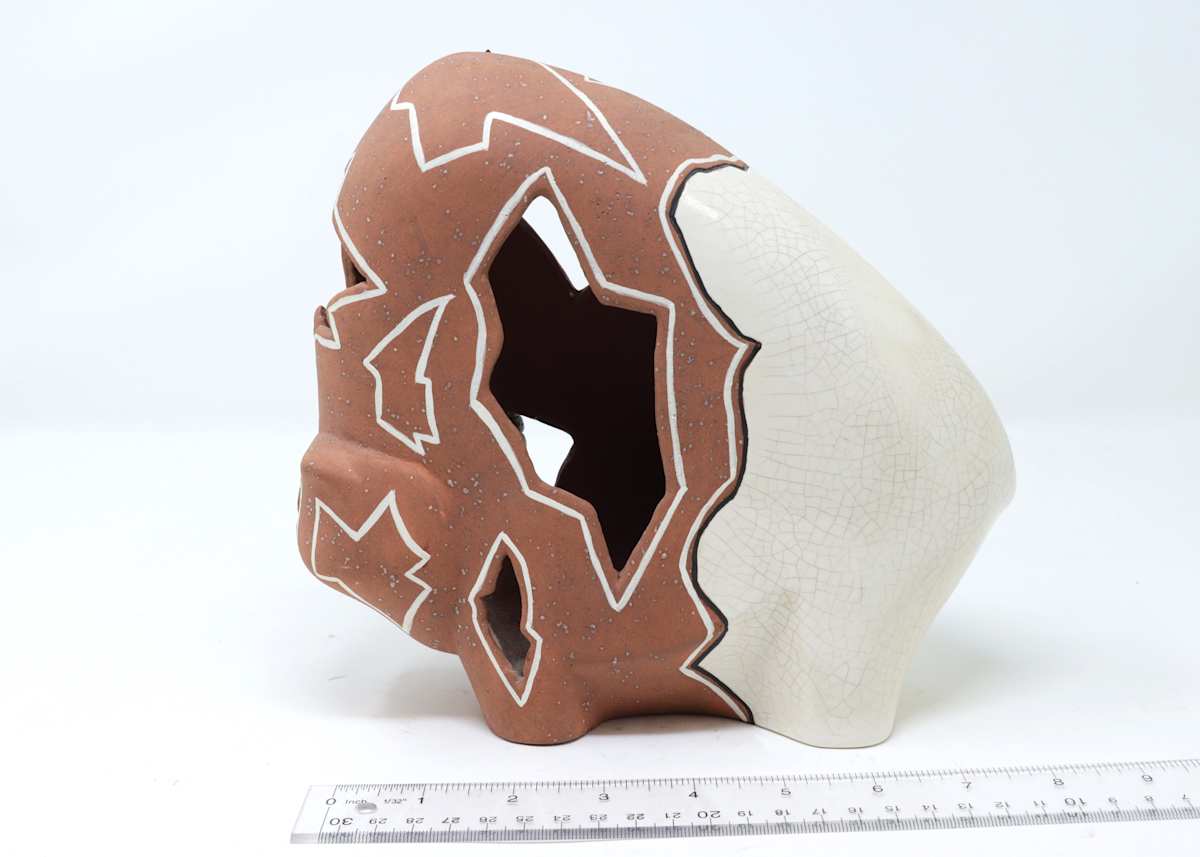
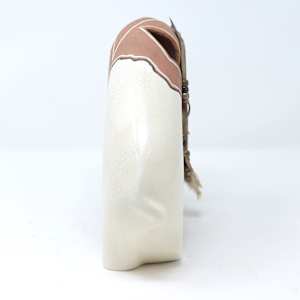
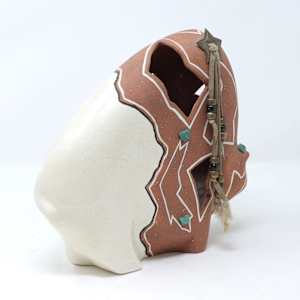
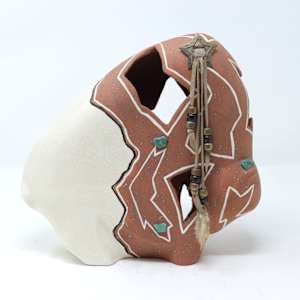

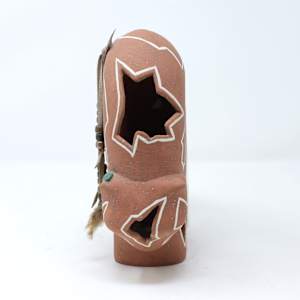
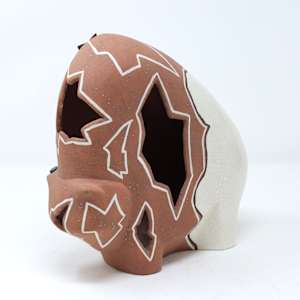
This handcrafted bison figurine exemplifies mid-to-late 20th century Southwestern pueblo pottery traditions, likely New Mexico Pueblo (possibly Jemez, Cochiti, or Santo Domingo). The piece is constructed from traditional red terracotta clay with cream-colored slip applied to one side, creating the distinctive two-tone aesthetic characteristic of pueblo ceramic art. The terracotta portion features hand-painted white geometric designs in traditional patterns, accented with turquoise stone inlays—a signature element of Southwestern Native American decorative arts.
The bison is rendered in a stylized, flat cutout form typical of pueblo pottery animal figurines. The geometric patterning and angular design elements reflect traditional pueblo artistic conventions while the turquoise inlays demonstrate the integration of stone-working traditions into ceramic art. The piece shows evidence of hand construction techniques, with attention to both decorative appeal and cultural authenticity.
The American bison holds profound spiritual and cultural significance for many Native American tribes, representing abundance, strength, resilience, and the interconnected relationships between people and the natural world. This figurine reflects that reverence while serving as both a decorative object and a cultural artifact.
The absence of an artist's signature is common for pueblo pottery from this period, particularly pieces created for the collectible and tourist markets before individual artist recognition became more prevalent in Native American art commerce. The quality of craftsmanship, authentic materials, and traditional techniques evident in the piece suggest genuine pueblo origin rather than commercial imitation.
- Subject Matter: Bison
- Collections: Thomas Hill Bison Figurine Collection