
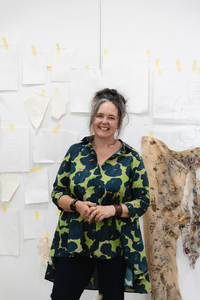
Juliet D Collins
Mordialloc, VIC
Melbourne-based textile artist exploring memory, identity and power through feminist, queer, process-led work in embroidery, collage and installation.
Message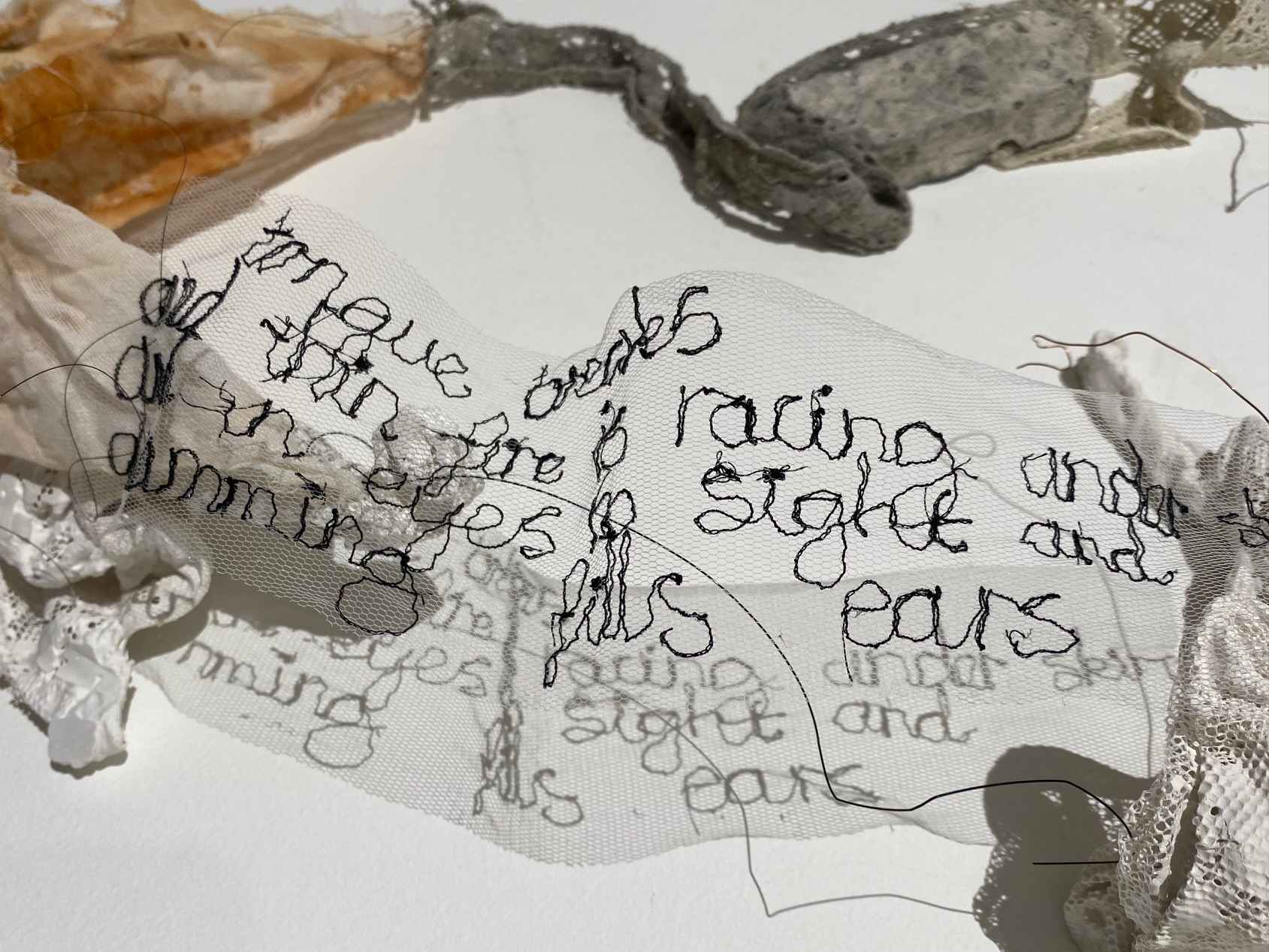
Juliet D Collins is a Melbourne based textile and mixed media artist whose practice explores memory, identity, and how social power structures shape lived experience. Working across freehand machine embroidery, collage, found materials and installation, her work brings together feminist and queer perspectives through tactile, process-led work and material exploration.
Originally from Scotland, Juliet holds an MA (Hons) Fine Art (Sculpture) from the University of Edinburgh and has lived and worked in Melbourne since 2004. Following recent graduate study at the Victorian College of the Arts, University of Melbourne, her practice has expanded into a dynamic phase of material and conceptual experimentation.
Alongside a sustained studio practice, Juliet facilitates regular creative workshops and mentoring programs. She also maintains an ongoing professional role in the community sector, where she designs and delivers inclusive arts and wellbeing programs. She holds a Masters in Occupational Therapy and has extensive experience facilitating strengths-based programs across diverse community contexts.This dual practice connects her independent studio work with collaborative making and facilitated projects that have a focus on accessibility, participation, and diverse forms of expression.
Her art practice increasingly explores collective and process-led models of making, creating spaces where multiple voices, experiences, and ways of working can shape the outcome of the artwork.
Statement
My current practice combines textiles with other media to create site-specific installations and stand-alone artworks. Grounded in feminist and queer theory, my work examines identity, memory, knowledge, and the forces that shape and constrain us. I consider my artmaking a thinking practice — a means of exploring research and lived experience through material enquiry. With a Fine Art background in sculpture, I initially found my voice in textile art through using freehand machine embroidery as a drawing and construction tool to explore themes relating to female identity and experience. Recent works combine textile techniques with found objects, construction materials, and discarded domestic remnants.
I explore the body as a layered text, where personal and collective memory are interwoven. The built environment, or substrate, becomes a metaphor for the structures that contain and control us. I am particularly interested in moments of transformation and change — personal and historical — as well as the spaces in between. Much of my practice centres on the narrative potential of my materials. Textiles — stitched, dyed, disassembled or otherwise manipulated — offer a powerful metaphor for what is remembered and what is lost or unseen.
My core techniques include freehand machine embroidery and assemblage. I also use collage, eco-dyeing, hand stitching, casting, and metalwork, often exploring new and unconventional ways of combining processes and materials. My process is grounded in research, while my approach is intuitive and iterative. I allow space for research to guide ideas and material use, and for material experimentation to influence conceptual development.
My work crosses and sometimes blends figurative, narrative and abstract forms, with the aim of inviting the viewer into the work in multiple ways. While grounded in feminist and queer theory, I am not interested in didactic outcomes, but in opening space for dialogue.
Some key works that demonstrate my current practice:
Stitch with Sappho is a large-scale collaborative textile installation created community members during a series of workshops. Through stitched text, layered fabrics, thread, and mixed media elements, the work responds to surviving fragments of Sappho’s poetry. Inspired by the poet’s fragmented legacy the work explores queer and feminist themes reflecting on what survives and what is lost. Combining personal reflection with collective making, the installation becomes a living portrait of Sappho not as a fixed historical figure, but as a presence that remains relevant today.
Sappho’s Hipbone is a site-specific, transient installation composed of textile techniques and construction materials. It brings together fragments — including poetry by the 6th-century BCE poet Sappho; embroidered anatomical drawings of hip bones; recycled and eco-dyed fabrics; table linens; floor sweepings; stucco; and wall stitching — into conversation with each other and the built environment. The work examines the interwoven contexts and forces at play in the production of knowledge, with a focus on how this relates to the body.
Pockets is a series of plaster forms cast from discarded clothing pockets embedded with textile remnants — threads and fabric scraps from past works. These intimate, calcified artefacts evoke memory and absence, exploring what is kept and what is lost. They hold space for the unspoken, the remembered, and the not-yet-known.
In Gathering the Wings of our Grandmothers, a female figure in embroidered thread emerges from a disintegrating tablecloth, slinging a net over her shoulder as crocheted scapulae and tartan feathers swirl around her. Made from eco-dyed vintage linens, preloved crochet, tartan scraps and wire, this work reimagines “standing on the shoulders of giants” through a feminist lens — not as striving upward, but as a gentle, embodied gesture of gathering. The materials evoke care, domesticity, intergenerational knowledge, and the cyclical — and sometimes ambiguous — nature of freedom and control.
Across all my work, I am committed to a materially conscious, emotionally resonant, and critically engaged practice. By working across site-responsive, assemblage and interdisciplinary processes, I treat textiles as carriers of cultural, political and historical meaning — challenging hierarchies of value and foregrounding practices of care, memory and labour. Increasingly, my practice extends into collaborative and participatory contexts, exploring how shared processes of making can generate new forms of knowledge, connection, and collective voice.