
Jim Phillips
Opelousas, LA
Storyteller, performer & folk artist—listening to, shaping, and sharing culture with humor, heart, and a love of sustainable fun.
MessageMandalas - early pre-digital from 35mm photographs
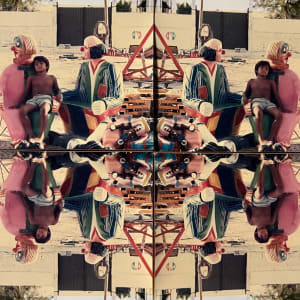
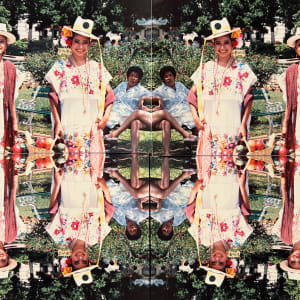
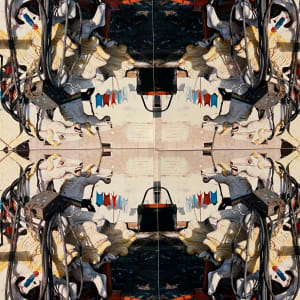
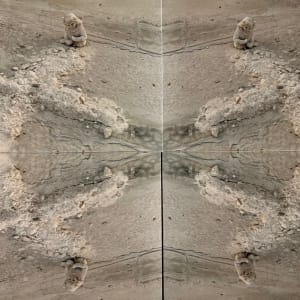
Jim’s Mandala Photography transforms everyday, often overlooked 35 mm photographs into intricate symmetrical forms that invite contemplation and delight. By mirroring and amplifying shapes, textures, and colors, commonplace images are reimagined as visually rich mandalas—objects that are both meditative and playful.
Rooted in the long history of mandalas as tools for focus, balance, and the creation of sacred space, this work carries that tradition forward through contemporary photographic practice. Symmetry becomes a guiding principle, drawing the eye inward and encouraging stillness, while repetition creates a rhythm that supports reflection and calm.
What distinguishes Jim’s approach is a quiet sense of humor. Unexpected or incongruous elements often remain visible within the mirrored forms, allowing moments of surprise and laughter to surface alongside contemplation. In this way, the work embraces the healing potential of joy as much as the centering power of meditation.
Through this process, ordinary photographs evolve into what Jim thinks of as navigational maps—visual passages that many cultures have long used to orient the mind toward harmony and well-being. Each mandala offers a dual experience: a striking visual composition and an invitation to slow down, look more closely, and rediscover balance through both wonder and play.
Rooted in the long history of mandalas as tools for focus, balance, and the creation of sacred space, this work carries that tradition forward through contemporary photographic practice. Symmetry becomes a guiding principle, drawing the eye inward and encouraging stillness, while repetition creates a rhythm that supports reflection and calm.
What distinguishes Jim’s approach is a quiet sense of humor. Unexpected or incongruous elements often remain visible within the mirrored forms, allowing moments of surprise and laughter to surface alongside contemplation. In this way, the work embraces the healing potential of joy as much as the centering power of meditation.
Through this process, ordinary photographs evolve into what Jim thinks of as navigational maps—visual passages that many cultures have long used to orient the mind toward harmony and well-being. Each mandala offers a dual experience: a striking visual composition and an invitation to slow down, look more closely, and rediscover balance through both wonder and play.
Folk Art Swamp Birds
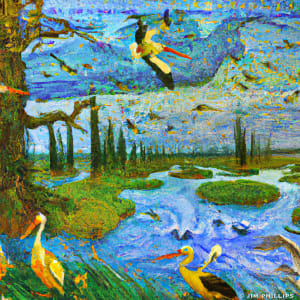
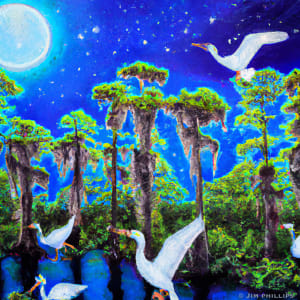
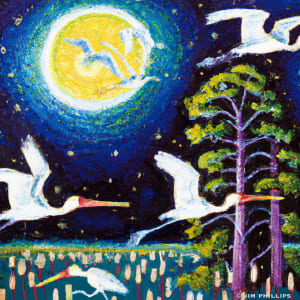
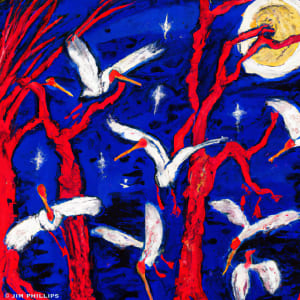
Jim’s digital folk art series on South Louisiana swamp birds blends whimsy with careful observation and artistic depth. Using digital methods informed by classical painting techniques, he creates vivid, expressive portraits that merge the directness of folk art with the visual richness of traditional practice.
The birds and their environments are rendered with attention to texture, light, and depth, bringing forward the lively presence of each subject. While playful in spirit, the compositions are thoughtfully constructed, allowing color, pattern, and atmosphere to convey both movement and character. Jim’s approach highlights the individuality of each bird while honoring the rhythms of the swamp ecosystem they inhabit.
Beyond their visual appeal, these works serve as a quiet tribute to the natural world. The series invites viewers to slow down and notice the often-overlooked beauty of South Louisiana’s wetlands, celebrating the charm, diversity, and resilience of swamp birds through a balance of humor and reverence.
Together, the pieces reflect Jim’s ongoing interest in folk traditions, environmental awareness, and the joyful intersection of observation and imagination.
Beyond their visual appeal, these works serve as a quiet tribute to the natural world. The series invites viewers to slow down and notice the often-overlooked beauty of South Louisiana’s wetlands, celebrating the charm, diversity, and resilience of swamp birds through a balance of humor and reverence.
Together, the pieces reflect Jim’s ongoing interest in folk traditions, environmental awareness, and the joyful intersection of observation and imagination.
Folk Art PIGS
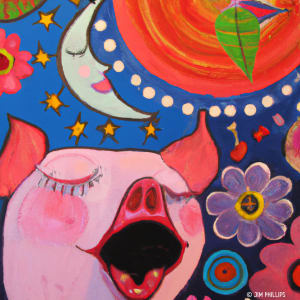
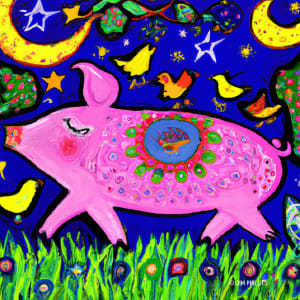
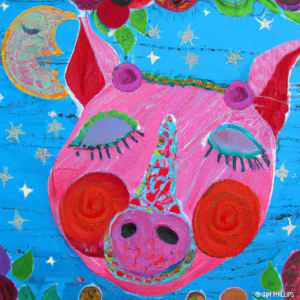
In Jim’s vibrant Folk Art Pigs collection, his long-standing affection for pigs comes through with warmth and playfulness. Rendered through digital painting, the series approaches rural life from a child’s point of view, where animals carry personality, humor, and a touch of the mythical. Each pig is imagined not just as livestock, but as a spirited character—rooted in the everyday and nudging gently toward the magical.
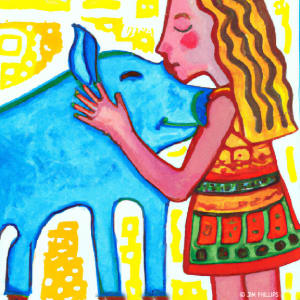
Several works feature whimsical blue-spotted pigs, inspired by a story Jim holds dear. A pig-farming family from Texas—who participated in La Chasse Pas Boucherie 2023 and later stayed with Jim and Christy—shared how one of their young daughters, during a difficult moment, found comfort in a simple blue-spotted toy pig from Walmart. Their love for Jim’s folk art and the tenderness of that story left a lasting impression, sparking the recurring blue-spotted motif throughout the series.
Drawing from that moment of connection, Jim transforms ordinary farm pigs and familiar rural settings into figures that feel both playful and quietly spiritual. The pigs inhabit a world where joy, imagination, and emotional resilience are taken seriously—where humor becomes a form of care, and folk art becomes a way of honoring lived experience.
The collection celebrates simplicity without sentimentality, inviting viewers to reconnect with the delight, comfort, and gentle wisdom found in animals, stories, and shared human moments.
Several works feature whimsical blue-spotted pigs, inspired by a story Jim holds dear. A pig-farming family from Texas—who participated in La Chasse Pas Boucherie 2023 and later stayed with Jim and Christy—shared how one of their young daughters, during a difficult moment, found comfort in a simple blue-spotted toy pig from Walmart. Their love for Jim’s folk art and the tenderness of that story left a lasting impression, sparking the recurring blue-spotted motif throughout the series.
Drawing from that moment of connection, Jim transforms ordinary farm pigs and familiar rural settings into figures that feel both playful and quietly spiritual. The pigs inhabit a world where joy, imagination, and emotional resilience are taken seriously—where humor becomes a form of care, and folk art becomes a way of honoring lived experience.
The collection celebrates simplicity without sentimentality, inviting viewers to reconnect with the delight, comfort, and gentle wisdom found in animals, stories, and shared human moments.
Folk Art Devils and Angels
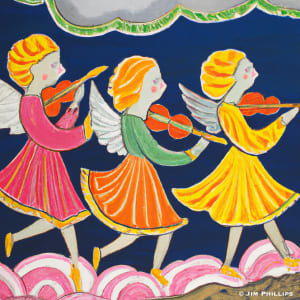
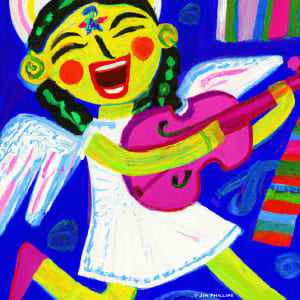
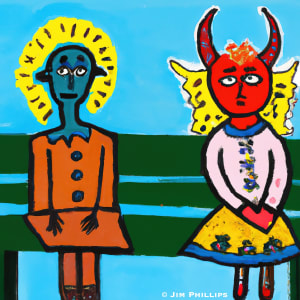
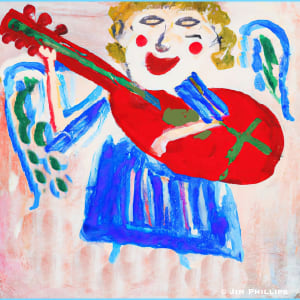
In his Folk Art Angels and Devils series, Jim playfully reimagines these familiar figures with humor, warmth, and a touch of mischief. Stepping away from traditional solemn or moralizing portrayals, he presents angels and devils as lively, approachable characters—each infused with personality and joy.
Rendered in a folk art style that favors color, movement, and expressive simplicity, these figures inhabit a vibrant world where the sacred and the mischievous comfortably coexist. Angels radiate lightness without stiffness, while devils charm without menace, allowing both to feel less like symbols and more like spirited companions within Jim’s broader artistic landscape.
By softening mythic boundaries, the series invites viewers to engage with these archetypes through play rather than judgment. Angels and devils become part of a shared human story—one where humor, imagination, and curiosity take precedence over doctrine or fear.
Together, the works celebrate the freedom of folk art to reinterpret tradition, reminding us that even timeless figures can still surprise, delight, and dance a little.
Rendered in a folk art style that favors color, movement, and expressive simplicity, these figures inhabit a vibrant world where the sacred and the mischievous comfortably coexist. Angels radiate lightness without stiffness, while devils charm without menace, allowing both to feel less like symbols and more like spirited companions within Jim’s broader artistic landscape.
By softening mythic boundaries, the series invites viewers to engage with these archetypes through play rather than judgment. Angels and devils become part of a shared human story—one where humor, imagination, and curiosity take precedence over doctrine or fear.
Together, the works celebrate the freedom of folk art to reinterpret tradition, reminding us that even timeless figures can still surprise, delight, and dance a little.
Jim's Watercolor Portraits
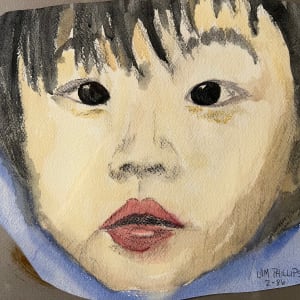
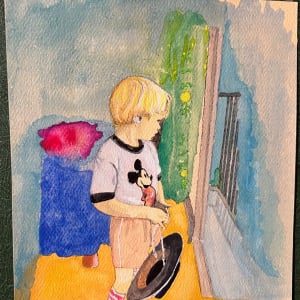
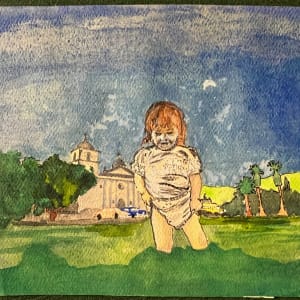
Jim’s watercolor portrait collection reflects a deep respect for traditional portraiture and materials. Several works are executed on exquisite handmade French paper, chosen for its rich texture and responsiveness to watercolor. This surface plays an active role in the finished pieces, enhancing depth, luminosity, and subtle variation while allowing the pigments to breathe.
The collection includes two finely detailed miniature portraits of children, rendered with precise, delicate brushwork that captures both innocence and curiosity. These intimate works rely on restraint and sensitivity, allowing small gestures and expressions to carry emotional weight. In contrast, an oil chalk pastel portrait introduces bold color and energetic mark-making, exploring the dynamic interplay of light and shadow and providing a striking counterpoint to the quieter watercolors.
The French handmade paper is central to the success of the watercolor portraits. Its texture interacts seamlessly with the washes, supporting soft transitions, luminous highlights, and nuanced tonal shifts. The result is work that feels both gentle and expressive, grounded in material integrity as much as observation.
Across the collection—from the intricate miniatures to the more assertive oil chalk pastel—Jim demonstrates a strong understanding of his mediums and their expressive possibilities. Each piece reflects a commitment to classical technique while allowing room for a distinctive, contemporary voice. Together, these portraits convey emotional presence and craft, underscoring Jim’s ongoing engagement with the living tradition of portraiture in today’s artistic landscape.
The collection includes two finely detailed miniature portraits of children, rendered with precise, delicate brushwork that captures both innocence and curiosity. These intimate works rely on restraint and sensitivity, allowing small gestures and expressions to carry emotional weight. In contrast, an oil chalk pastel portrait introduces bold color and energetic mark-making, exploring the dynamic interplay of light and shadow and providing a striking counterpoint to the quieter watercolors.
The French handmade paper is central to the success of the watercolor portraits. Its texture interacts seamlessly with the washes, supporting soft transitions, luminous highlights, and nuanced tonal shifts. The result is work that feels both gentle and expressive, grounded in material integrity as much as observation.
Across the collection—from the intricate miniatures to the more assertive oil chalk pastel—Jim demonstrates a strong understanding of his mediums and their expressive possibilities. Each piece reflects a commitment to classical technique while allowing room for a distinctive, contemporary voice. Together, these portraits convey emotional presence and craft, underscoring Jim’s ongoing engagement with the living tradition of portraiture in today’s artistic landscape.

Jim's early Charcoal Portraits
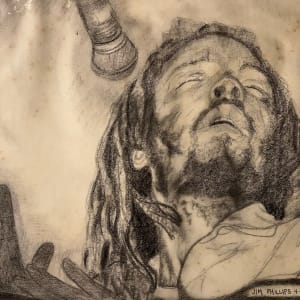
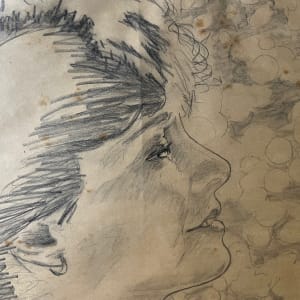
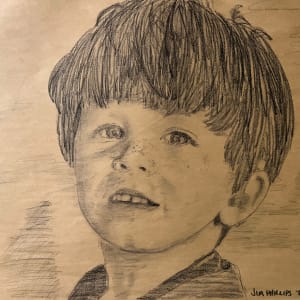
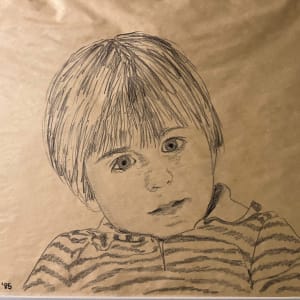
Jim’s initial foray into charcoal portraiture captures the raw energy of his artistic beginnings. Drawn on modest, imperfect paper, these early works carry the deep, smoky tonal range characteristic of charcoal and possess an unpolished yet compelling presence. The limitations of the paper—its texture, wear, and irregularity—contribute a sense of immediacy and lend each portrait an almost historical character.
These drawings reveal Jim’s early ability to observe and convey personality, emotion, and presence using minimal means. Through confident mark-making and tonal sensitivity, the portraits foreshadow the technical and expressive mastery that would later define his work. Their roughness is not incidental but integral, reflecting a period of exploration driven by commitment rather than resources.
Jim plans to make these early works available in two forms: in their original state, preserving the authenticity of the materials and the moment in which they were created, and as prints on fine paper, offering a more refined presentation of the same images. This dual approach allows viewers to experience the portraits either as raw documents of artistic emergence or as carefully translated works that bridge Jim’s early practice with his mature artistic voice.
Together, these portraits stand as a testament to the value of beginnings—where constraint, curiosity, and dedication combine to shape a lifelong artistic journey.
These drawings reveal Jim’s early ability to observe and convey personality, emotion, and presence using minimal means. Through confident mark-making and tonal sensitivity, the portraits foreshadow the technical and expressive mastery that would later define his work. Their roughness is not incidental but integral, reflecting a period of exploration driven by commitment rather than resources.
Jim plans to make these early works available in two forms: in their original state, preserving the authenticity of the materials and the moment in which they were created, and as prints on fine paper, offering a more refined presentation of the same images. This dual approach allows viewers to experience the portraits either as raw documents of artistic emergence or as carefully translated works that bridge Jim’s early practice with his mature artistic voice.
Together, these portraits stand as a testament to the value of beginnings—where constraint, curiosity, and dedication combine to shape a lifelong artistic journey.
Folk Art Impressionistic Alligators
In his Folk Art Impressionistic Alligators series, Jim presents a digitally reimagined vision of South Louisiana’s wetlands, focusing on the alligator as both subject and symbol. Working from photographic sources, he blends folk art directness with an impressionistic sensibility, using digital techniques to create images that feel at once playful, atmospheric, and quietly dangerous.
The alligators emerge within their bayou habitat through layered textures, shifting forms, and dappled light. Bold, often wildly unnatural colors animate the compositions, infusing them with energy while subtly hinting at the animal’s power and unpredictability. Though the palette departs from realism, the presence of the alligators remains convincing—mirroring their real-life ability to blend into the swamp while retaining an unmistakable sense of wildness.
Jim’s approach allows traditional artistic concerns—composition, rhythm, light, and mood—to coexist with contemporary digital methods. The result is a series that honors the spirit of South Louisiana’s wetlands, capturing both the beauty and the edge of a landscape shaped by water, shadow, and resilience.
These works invite viewers to encounter the alligator not as spectacle, but as an essential, enduring presence within the swamp—ancient, alert, and very much alive.
The alligators emerge within their bayou habitat through layered textures, shifting forms, and dappled light. Bold, often wildly unnatural colors animate the compositions, infusing them with energy while subtly hinting at the animal’s power and unpredictability. Though the palette departs from realism, the presence of the alligators remains convincing—mirroring their real-life ability to blend into the swamp while retaining an unmistakable sense of wildness.
Jim’s approach allows traditional artistic concerns—composition, rhythm, light, and mood—to coexist with contemporary digital methods. The result is a series that honors the spirit of South Louisiana’s wetlands, capturing both the beauty and the edge of a landscape shaped by water, shadow, and resilience.
These works invite viewers to encounter the alligator not as spectacle, but as an essential, enduring presence within the swamp—ancient, alert, and very much alive.
Folk Art Abstract Alligators
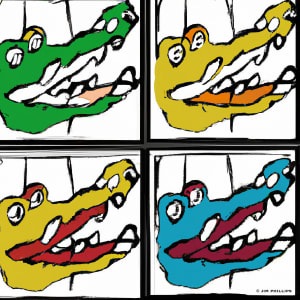
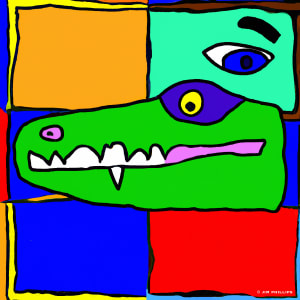
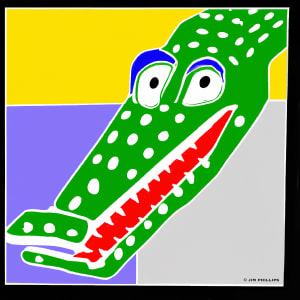
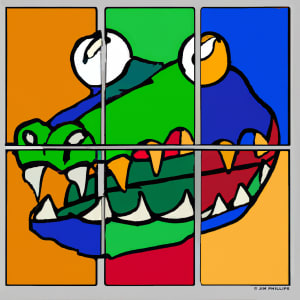
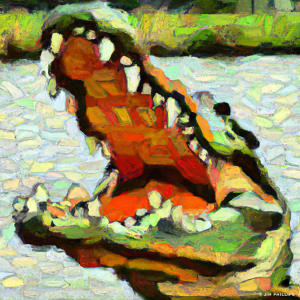
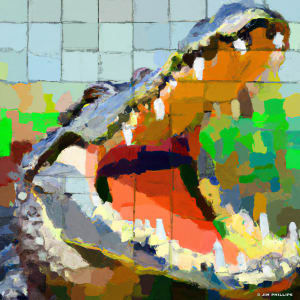
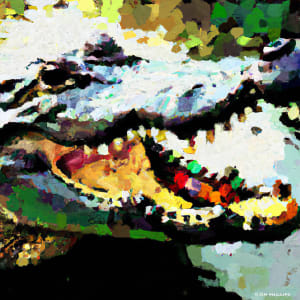
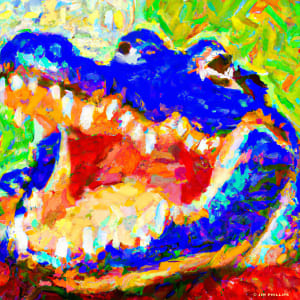
Jim’s Folk Art Abstract Alligators series is an experimental and playful exploration of artistic genre. The work merges the rustic charm and immediacy of folk art with the bold, fluid language of abstraction, reimagining familiar imagery through color, movement, and surprise.
In this series, alligators—and at times fragments or suggestive forms—are transformed through a vibrant, whimsical lens. Traditionally associated with power, mystery, and the deep rhythms of the swamp, these creatures are rendered as playful, almost mythical beings. Each composition bursts with color, turning recognizable forms into lively visual rhythms rather than literal representations.
Folk elements ground the work in tradition and earthiness, while abstract shapes and gestures introduce a contemporary edge. This juxtaposition creates a dynamic tension between past and present, familiarity and invention. The alligator becomes both symbol and playground—an image rooted in regional heritage yet free to evolve.
Through this fusion, Jim breathes new life into a familiar Southern icon, celebrating alligators not only as emblems of place but as flexible, imaginative forms capable of carrying humor, history, and modern creative energy all at once.
In this series, alligators—and at times fragments or suggestive forms—are transformed through a vibrant, whimsical lens. Traditionally associated with power, mystery, and the deep rhythms of the swamp, these creatures are rendered as playful, almost mythical beings. Each composition bursts with color, turning recognizable forms into lively visual rhythms rather than literal representations.
Folk elements ground the work in tradition and earthiness, while abstract shapes and gestures introduce a contemporary edge. This juxtaposition creates a dynamic tension between past and present, familiarity and invention. The alligator becomes both symbol and playground—an image rooted in regional heritage yet free to evolve.
Through this fusion, Jim breathes new life into a familiar Southern icon, celebrating alligators not only as emblems of place but as flexible, imaginative forms capable of carrying humor, history, and modern creative energy all at once.