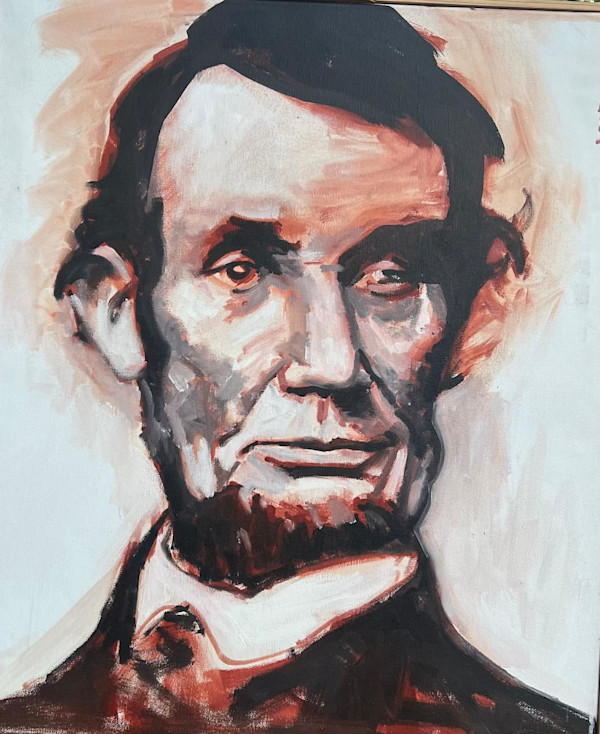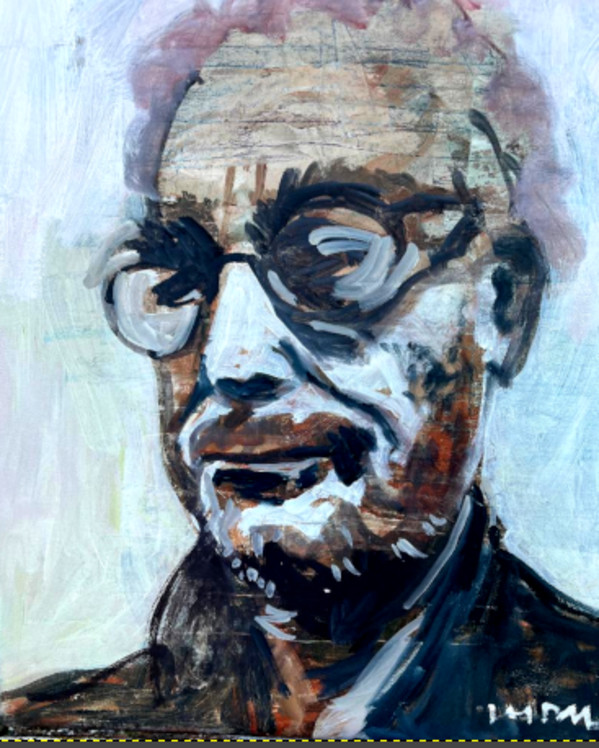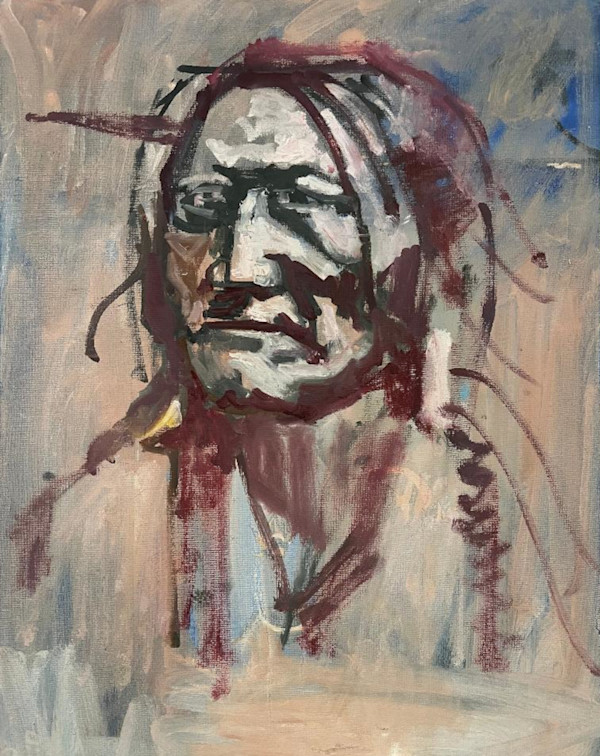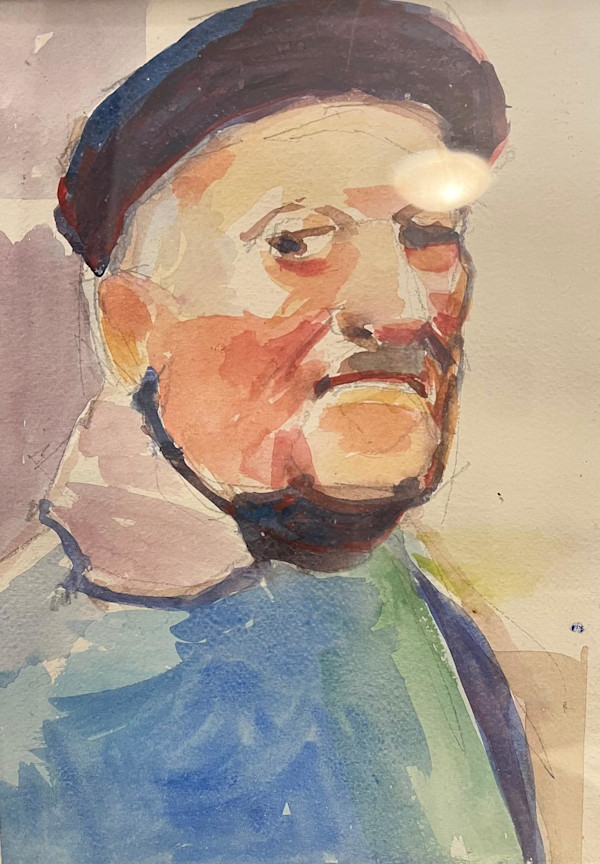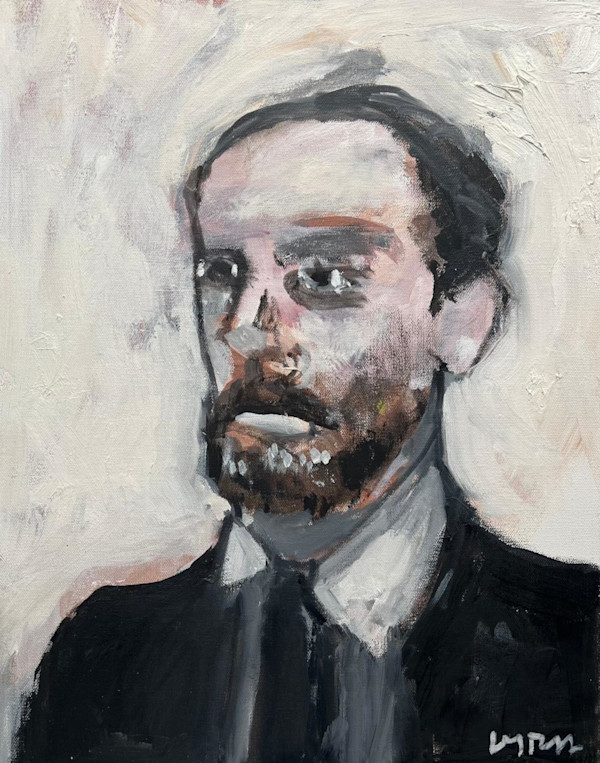
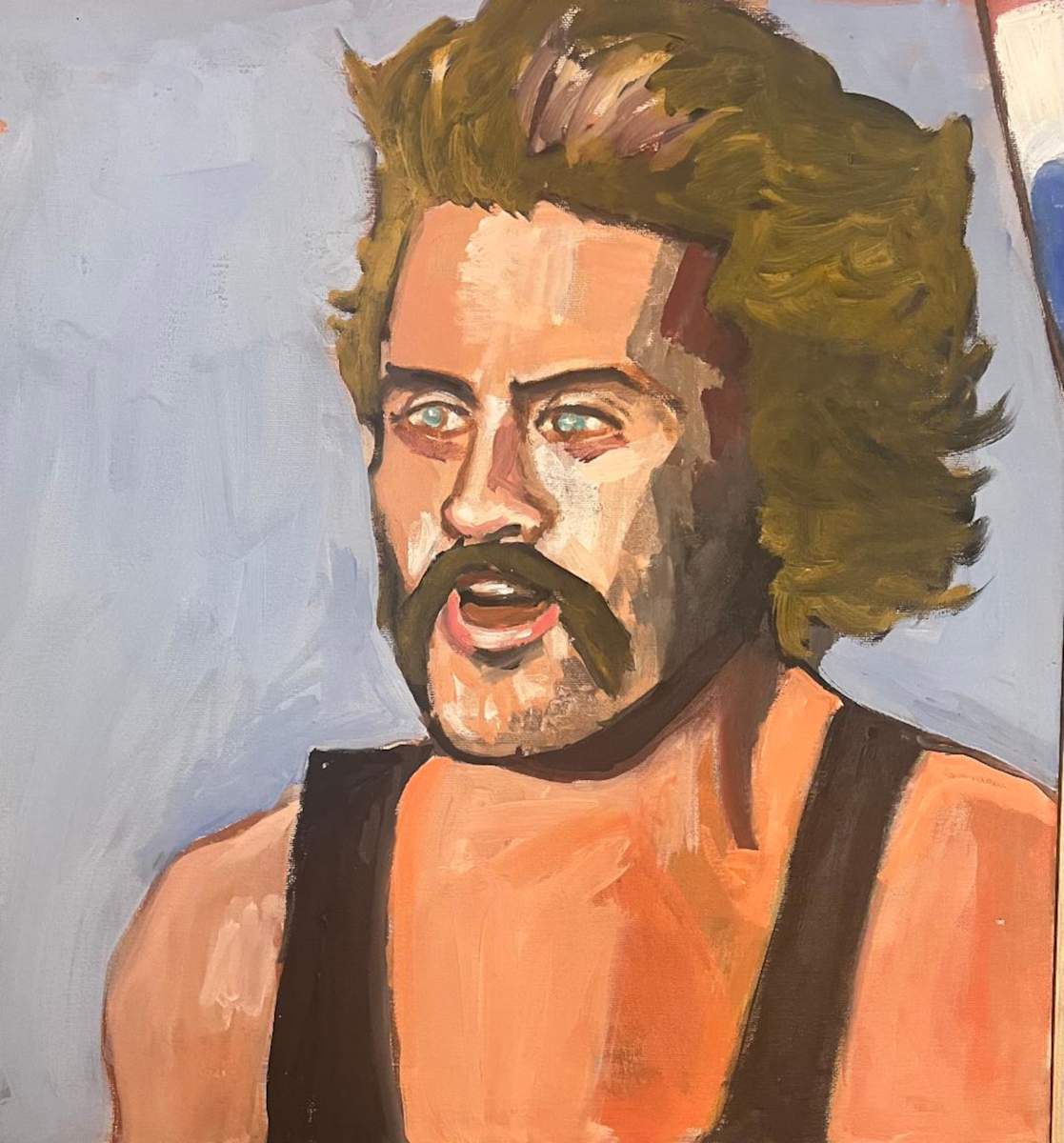
This portrait of Steve Prefontaine captures not merely an athlete, but a distinctly Oregon form of rebellion — raw, uncompromising, beautiful in its refusal to hold anything back. Painted in the language of American Verismo, the work strips away the polished mythology of sports celebrity and instead presents Pre as force, temperament, and lived intensity. The broad planes of flesh tones, the almost windswept explosion of hair, the open mouth caught mid-breath or mid-defiance, all suggest a man perpetually in motion, perpetually resisting containment.
For those who lived in Eugene during the 1970s and after, Prefontaine was more than a runner. He became part of the civic atmosphere itself — a folk hero of Hayward Field, of rainy roads, of the emerging running culture that transformed the city into an international shrine for distance racing. Yet what made Pre unforgettable was not simply victory. It was the manner in which he raced: reckless, courageous, emotionally exposed. He ran as though conserving energy were a form of dishonesty. Every race became an existential act.
That spirit emerges powerfully here. The face appears older than its years, marked not by age but by exertion, obsession, and relentless will. The eyes burn with concentration while the angular shadows carve the features into almost sculptural masses. One senses the toll of constant effort — the strange phenomenon whereby young athletes who push themselves beyond ordinary limits begin to carry the psychological gravity of much older men. The painting intuitively grasps this transformation.
The loose handling and unfinished passages are essential to the portrait’s verismo character. Rather than embalming Prefontaine into heroic perfection, the brush remains alive, searching, unresolved. The painting breathes like a fast sketch made in the heat of admiration and recognition. His long hair and mustache become visual emblems of the anti-authoritarian spirit associated with him during that era: part athlete, part working-class outlaw, part countercultural icon.
His tragic death at twenty-four froze him permanently in the American imagination, but this portrait refuses nostalgia. Instead, it presents Pre as a living contradiction — vulnerable yet fearless, disciplined yet rebellious, exhausted yet incandescent. In this sense he belongs naturally within the world of American Verismo. Like the laborers, pensioners, radicals, and ordinary citizens populating the movement’s imagery, Prefontaine embodied authenticity through struggle. He did not perform effort; he inhabited it completely.
Displayed now at Jack Sprats Restaurant in Cottage Grove and potentially later within the Eugene retrospective, the work also functions as a portrait of place itself — of Eugene’s long memory, its running culture, and its enduring admiration for individuals who refuse to run cautiously through life.
- Collections: Jack Sprat