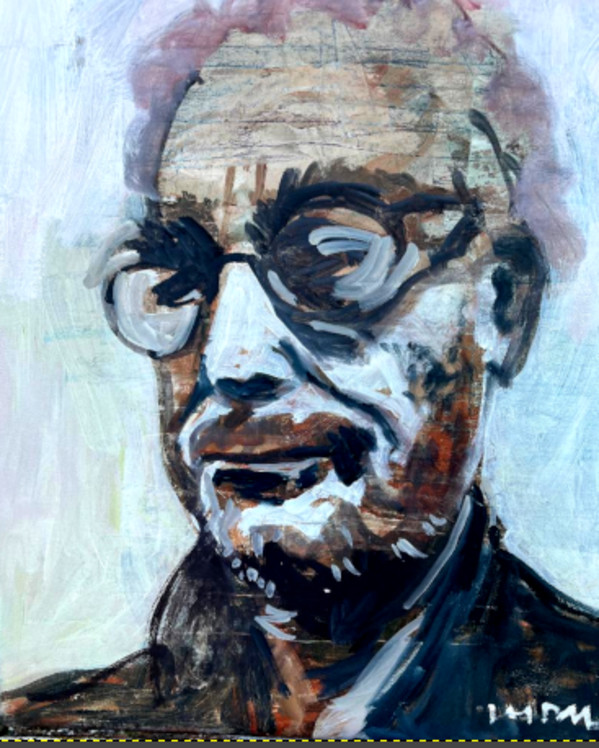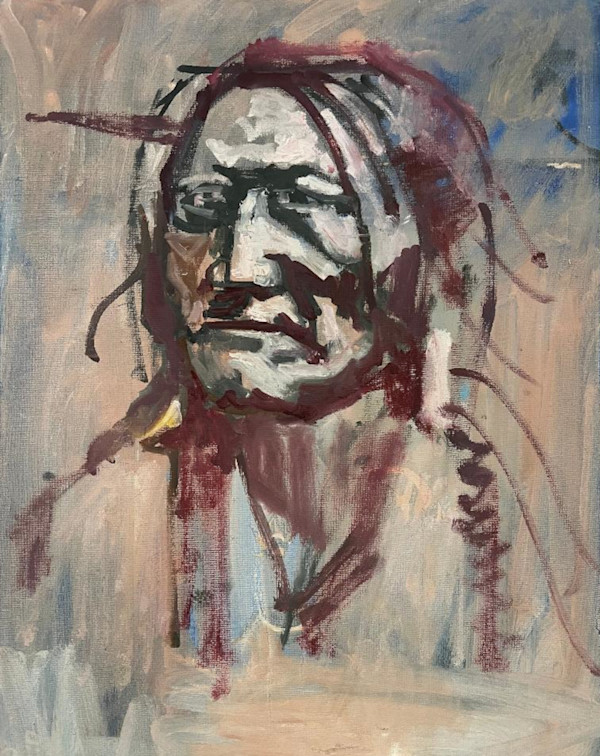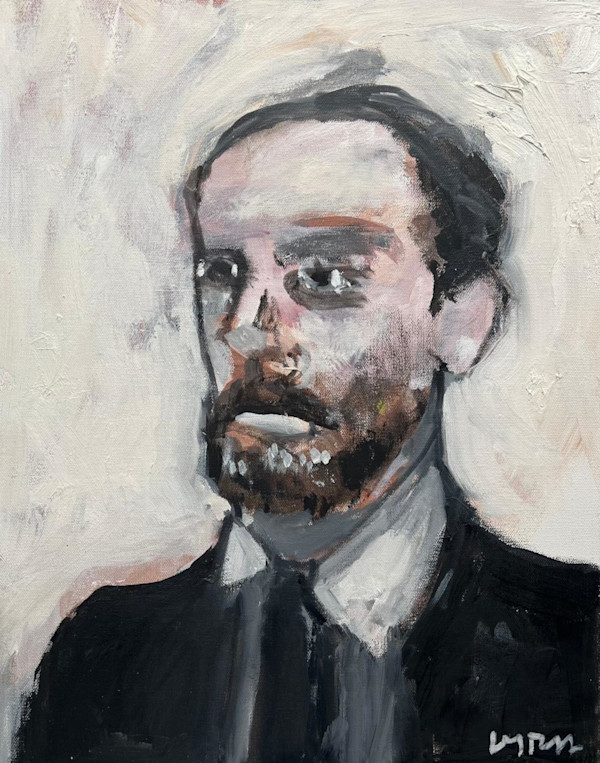
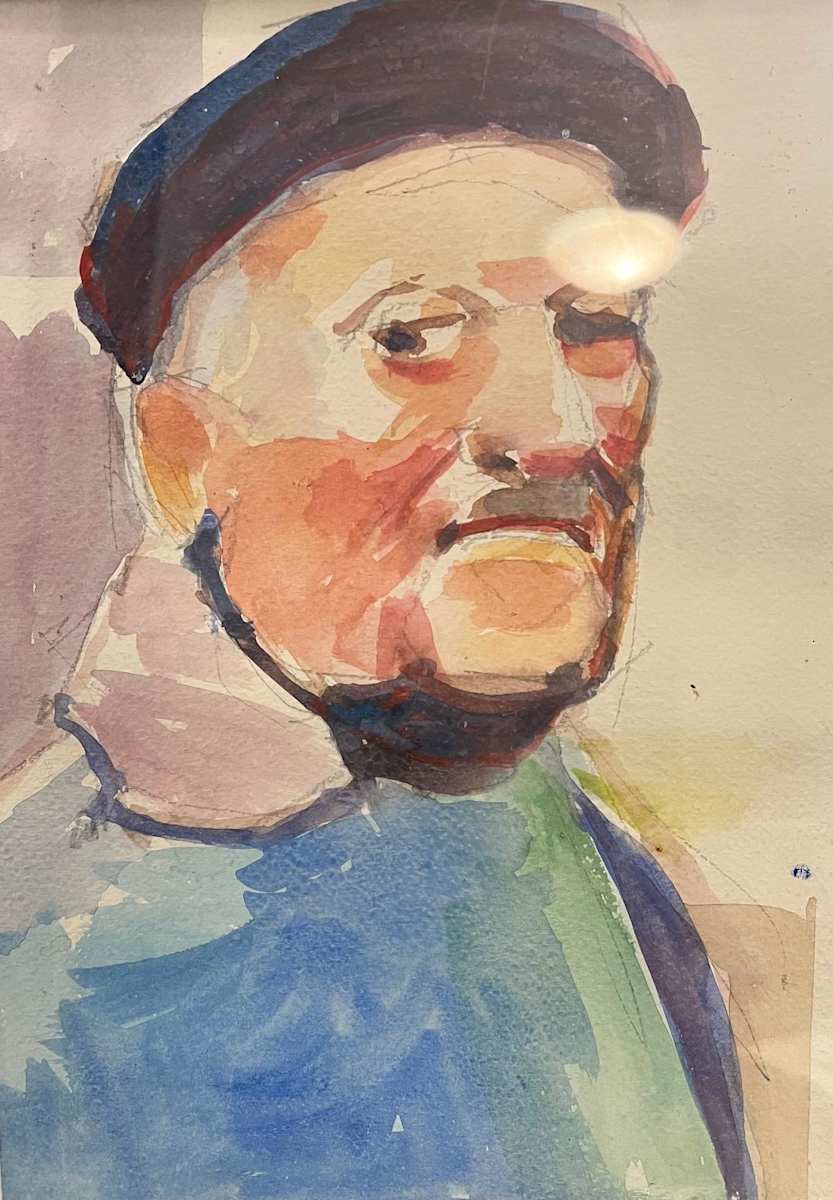
The portrait refuses sentimentality. The man is not romanticized into folklore nor reduced to caricature. Instead, the watercolor structure breaks him into translucent planes of ochres, reds, and cool blues, allowing the face to emerge like a fragment of lived history suspended in light. The unfinished edges and visible drawing lines preserve the immediacy of first encounter — the sensation of glimpsing a life rather than cataloging it.
What gives the work its verismo power is the tension between dignity and erosion. The heavy brow, compressed mouth, and downward pull of the features suggest years of physical labor, economic uncertainty, and quiet endurance. One senses a man surviving on a modest pension in a society where the old are often left to improvise meaning from shrinking circumstances. Yet there remains something defiant in the posture and gaze: an intelligence sharpened by experience, perhaps skepticism, perhaps irony. Italians of this generation often carry within them the aftershocks of war, labor struggles, communist politics, failed governments, and family sacrifice — histories worn not as declarations but as atmosphere.
The broad blue passages of the jacket anchor the figure with working-class solidity while the cap functions almost as a symbolic crown of labor itself. Around him the paper breathes openly, unfinished and exposed, allowing the portrait to hover between apparition and observation. This incompleteness becomes essential. Like the pensioners in the piazza, the painting exists in a state of waiting — suspended between memory and disappearance.
In the tradition of American Verismo and the I Macchiaioli alike, “Il Pensionato” finds grandeur not in wealth or heroics but in ordinary human persistence. The old man outside the Arezzo station becomes, through brush and watercolor stain, a monument to the invisible working class lives that quietly hold history together.
- Subject Matter: portrait
- Collections: Jack Sprat