
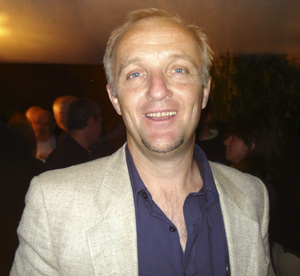
Ignacio Klindworth
Jávea-Alicante, Spain
My art travels through territories located somewhere between figuration and abstraction. I consider myself a cartographer. The line is my vehicle.
MessageCollection: Series Ciudades/Cities
Ciudades/Cities Research and creative processes on memory and creativity.
Painting without direct observation. Memory as a creative process that allows the visual recreation of the constructed.
The series Ciudades could well be a set of postcards. There are cities in which I have lived for a long time. Others I have only been there for a season. It is inevitable that when I live in them, when I pass through them or when I return, my senses accumulate data. This data may be cartographic data.
However, they are also data related to orientation and emotion. All of this data is eventually converted into images.
The retrieval of this data requires the use of memory. Memory is not simply an accumulation of data that is labelled and organised according to acquired or inherited patterns. I believe that memory, like any other aspect of the human being, is extremely complex. At the same time, it has a clear utilitarian aspect and therefore possesses a complete beauty. The process of creating a memory is a creative, organic and composite one that requires several simultaneous systems of thought. In order to compose a memory, it is necessary to properly dose these three ways of thinking or processing in order to create something tangible, useful and coherent, or what is the same, beautiful.
My cities are the result of these creative processes that make up the memory.
The Ciudades series comprises two-dimensional compositions that aspire to be spherical. The compositions are two-dimensional and flat, and they are generated by forms, models, patterns, and human and technological processes. These processes result in an architectural warp.
A number of my pictorial approaches can be attributed to two key influences:
• firstly, a visit to the Prado museum, where I encountered the remarkable work of the Flemish master, Joachim Patinir. His exceptional atmospheric perspectives left a profound impact on me. Patinir's compositions bring the viewer close to a foreground, which is in turn connected to a relationship of secondary planes. This relationship ultimately leads back to the foreground, creating a circular path that returns the viewer to the beginning of the work.
• During a stay in Australia, I was intrigued by the hallucinatory works of pure aerial abstraction created by the painter Daniel Walbidi and by the similarly aerial works of the painter Dorothy Napangardi, which resemble the seams that form a Zen kesa.
The Ciudades/Cities series is open in time and depends on the new environments it maps.
Painting without direct observation. Memory as a creative process that allows the visual recreation of the constructed.
The series Ciudades could well be a set of postcards. There are cities in which I have lived for a long time. Others I have only been there for a season. It is inevitable that when I live in them, when I pass through them or when I return, my senses accumulate data. This data may be cartographic data.
However, they are also data related to orientation and emotion. All of this data is eventually converted into images.
The retrieval of this data requires the use of memory. Memory is not simply an accumulation of data that is labelled and organised according to acquired or inherited patterns. I believe that memory, like any other aspect of the human being, is extremely complex. At the same time, it has a clear utilitarian aspect and therefore possesses a complete beauty. The process of creating a memory is a creative, organic and composite one that requires several simultaneous systems of thought. In order to compose a memory, it is necessary to properly dose these three ways of thinking or processing in order to create something tangible, useful and coherent, or what is the same, beautiful.
My cities are the result of these creative processes that make up the memory.
The Ciudades series comprises two-dimensional compositions that aspire to be spherical. The compositions are two-dimensional and flat, and they are generated by forms, models, patterns, and human and technological processes. These processes result in an architectural warp.
A number of my pictorial approaches can be attributed to two key influences:
• firstly, a visit to the Prado museum, where I encountered the remarkable work of the Flemish master, Joachim Patinir. His exceptional atmospheric perspectives left a profound impact on me. Patinir's compositions bring the viewer close to a foreground, which is in turn connected to a relationship of secondary planes. This relationship ultimately leads back to the foreground, creating a circular path that returns the viewer to the beginning of the work.
• During a stay in Australia, I was intrigued by the hallucinatory works of pure aerial abstraction created by the painter Daniel Walbidi and by the similarly aerial works of the painter Dorothy Napangardi, which resemble the seams that form a Zen kesa.
The Ciudades/Cities series is open in time and depends on the new environments it maps.
Powered by Artwork Archive