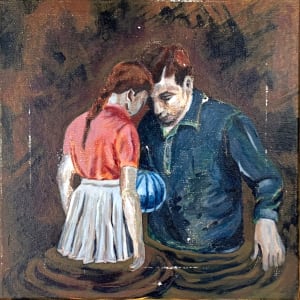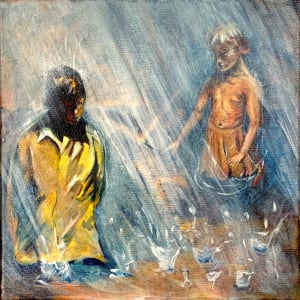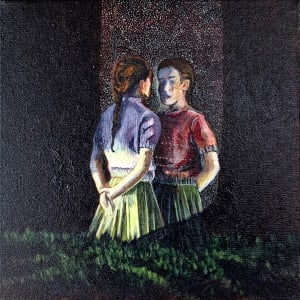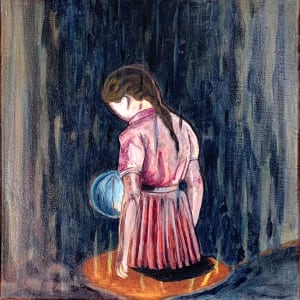
Swimmers (2024)
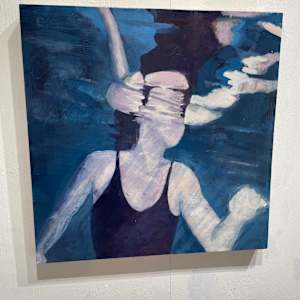
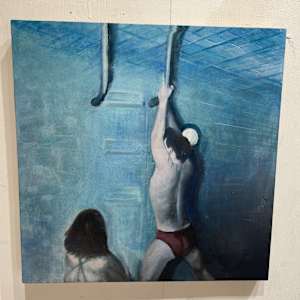
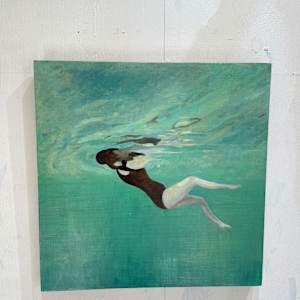
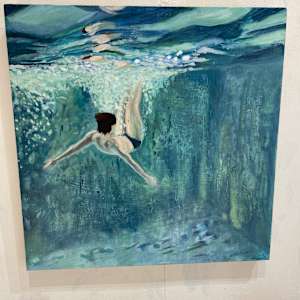
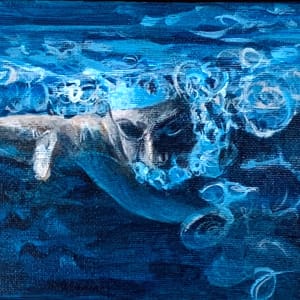
This collection captures the quiet strangeness of being submerged—physically, emotionally, and psychologically. Each painting lingers in a suspended moment beneath the surface, where light bends, sound dulls, and bodies float somewhere between control and surrender. Stylistically, the works shift between realism and abstraction, clarity and blur—mirroring the way perception changes underwater. Whether it’s the fragmented face in Waver or the upward reach in Surface Tension, each piece captures a threshold: a moment where something is about to change, but hasn’t yet.
Sanctuary Cities
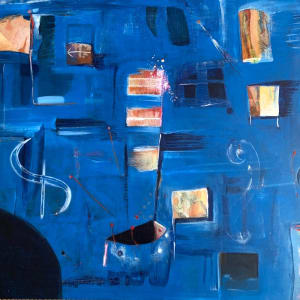
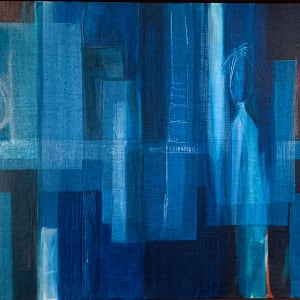
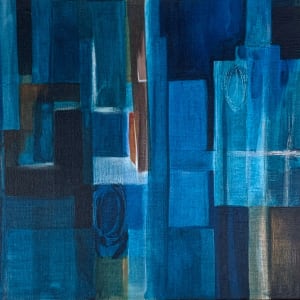
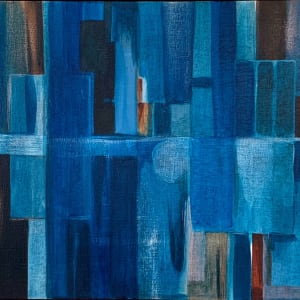
"Sanctuary Cities” explores the psychological weight of urban life, using layered blues and fractured forms to reflect both refuge and dislocation. Set against visions of New York City, the works oscillate between structure and collapse—moments of calm pressed up against looming unease. This is the city as memory, as maze, as myth
Not Waving but Drowning
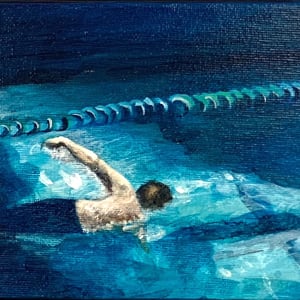
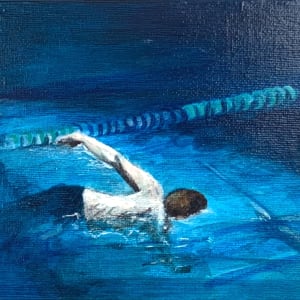
“Not Waving but Drowning” is a slow-motion unraveling—each stroke a moment of struggle disguised as movement. Set in a pool but charged with emotional weight, the series blurs the line between performance and distress, breath and control. Beneath the surface, the swimmer’s effort reads as both choreography and quiet collapse

Land Scaped
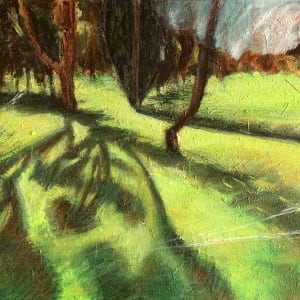
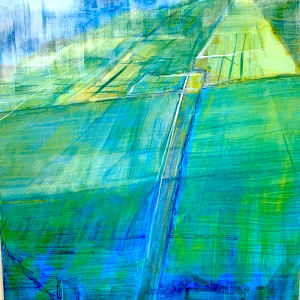
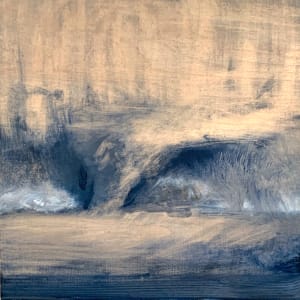
“Land Scaped” considers the landscape not just as a scene, but as something shaped—by humans, by weather, by surveillance. From aerial grids to lengthening shadows, these works question what lies beneath the surface of what we call ‘natural.’ They sit quietly, but hold a warning
Fugue State
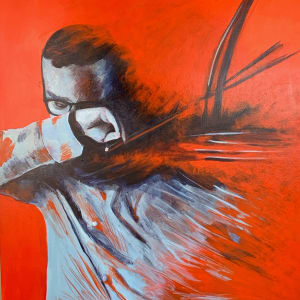
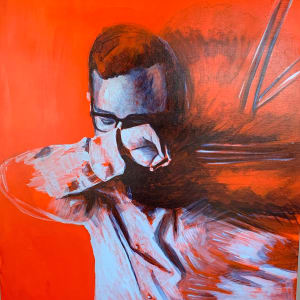
In this series, a solitary figure plays the violin, their movement echoed and fractured across burning fields of red. The repetition suggests both ritual and rupture—music as a form of containment, expression, or even defiance during a time of isolation. Against the intensity of the red background, the act of playing becomes a visceral gesture—part performance, part survival.
Fire, before the Pandemic
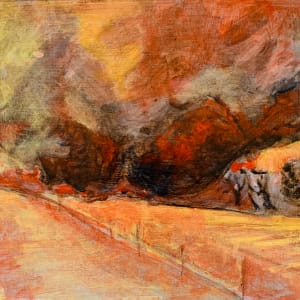
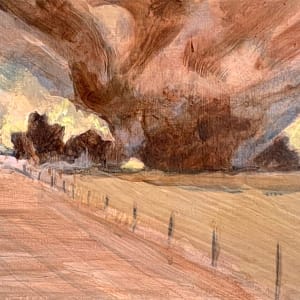
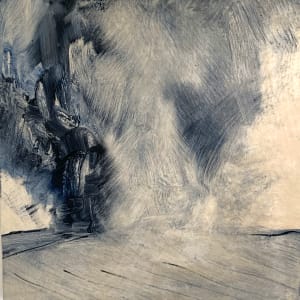
"Fire, before the Pandemic" captures a looming sense of chaos in the natural world just before global stillness set in. Each work wrestles with the volatility of fire, smoke, and wind—forces that blur boundaries between landscape, threat, and emotional charge. The collection stands as both a warning and a timestamp, suspended on the edge of two global crises.
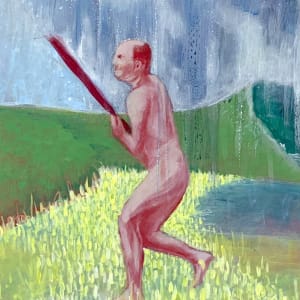
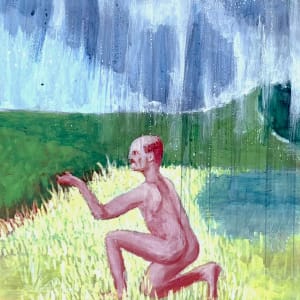
Colonial Man
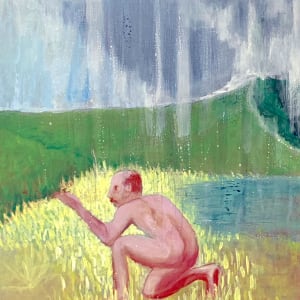
“Colonial Man” is a satirical, unsettling meditation on masculinity, mythology, and inherited violence. Set in dreamlike, exaggerated landscapes, the series traces the movements of a figure both absurd and menacing—armed, exposed, and out of time. Through repetition and ritual, the work confronts colonial legacies and their strange persistence in the present.
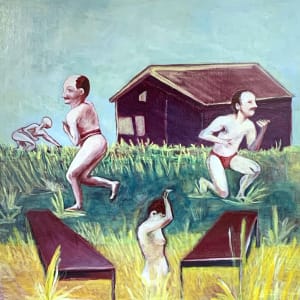
Aesops Fables
“Aesop’s Fables” draws on the quiet drama of childhood and family dynamics, where gestures speak louder than words. These intimate, often ambiguous scenes explore listening, watching, withholding—capturing moments of tension, tenderness, and unsaid truths. Like fables, each piece offers a moral murmur rather than a message, leaving space for reflection and reinterpretation.