
Doug Winter
Elk Grove, CA
Photographic artist and filmmaker with impaired vision. My work explores altered vision, memory, light, time, and how images fail, shift, and rebuild.
Message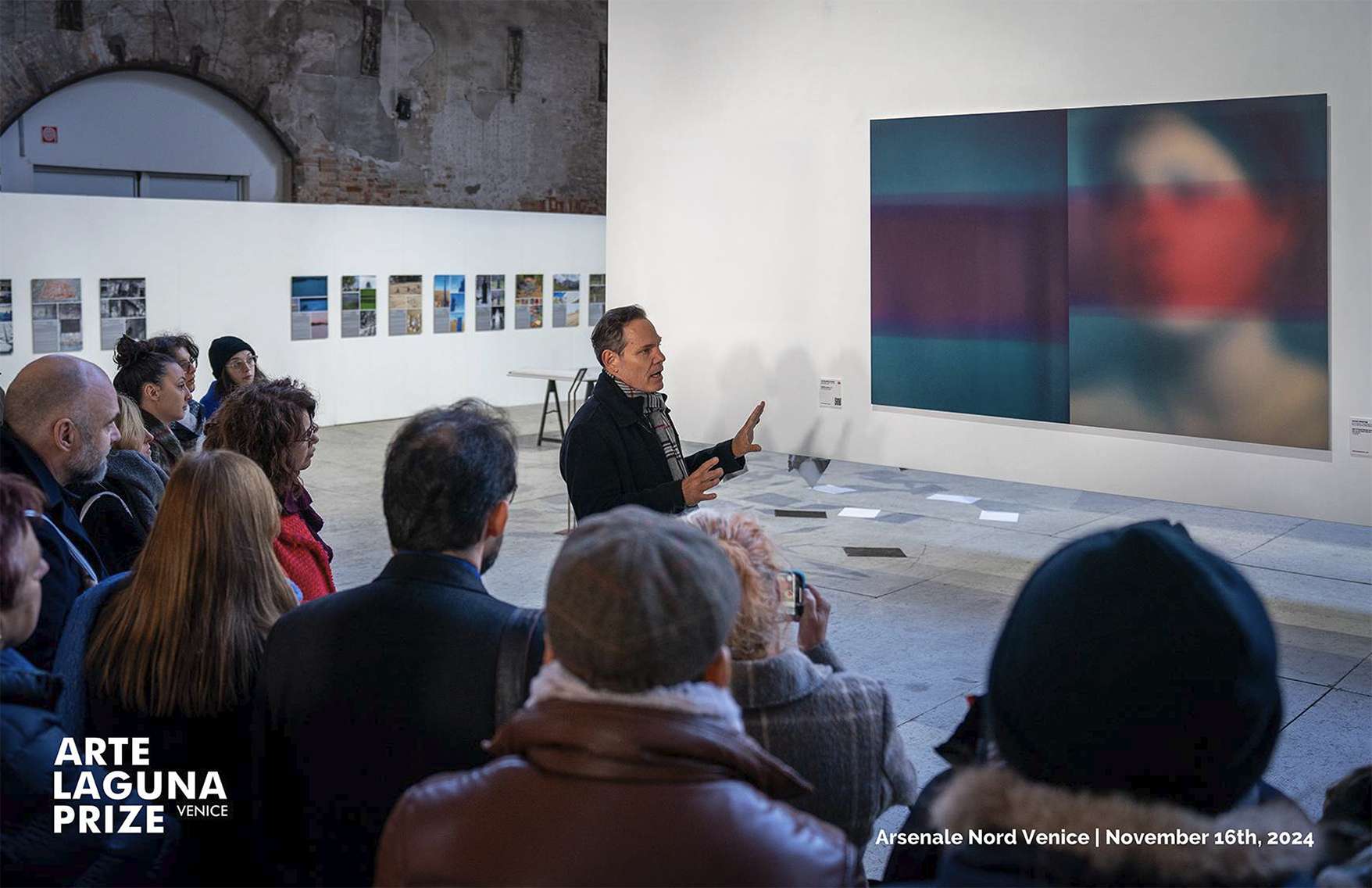
Doug Winter (b. 1966, Denver, Colorado) is a photographic artist and filmmaker living with impaired vision, including visual snow syndrome. Shaped by witnessing his father’s sudden loss of sight and adapting to his own partial vision loss following a stroke-related change in vision, he treats the camera as a conceptual mechanism, not a tool of documentation. Working without digital correction, he physically modifies lenses and sensors and uses degraded film materials to investigate how vision and memory shift, fracture, and rebuild with each act of remembering, and how the photograph can fail as evidence and truth.
In 2023, Winter received a $10,000 Seeding Creativity grant funded by the National Endowment for the Arts through the American Rescue Plan. In 2024, he was a semifinalist for the Outwin Boochever Portrait Competition 2025 (Smithsonian National Portrait Gallery). A finalist for the Arte Laguna Prize, he exhibited at Arsenale Nord, Venice, and has been selected on three occasions by separate Arte Laguna juries for exhibition, including Arte Laguna’s 20th Anniversary exhibition at EKA·Tianwu Creative Park (Jinqiao, Pudong), Shanghai. Through Arte Laguna, he received a fully funded one-month residency at the Hong Museum (Shanghai branch), China. His works are held in the collections of MoCA Cultural Association, Venice (2 works), Hong Museum (Shanghai branch), China (4 works), and the National Steinbeck Center, Salinas, California (1 work). He is an artist-in-residence at KALA Art Institute in Berkeley, California, and is a graduate of the Colorado Institute of Art (1987).
Statement
My work begins with the uncertainty of looking. I live with impaired vision, and what I see is never fully fixed or reliable. I do not use the camera to capture clarity or guarantee certainty. I use it as a conceptual tool shaped by altered optics, damaged surfaces, obstruction, and touch.
Working without digital correction, I build instability into the photograph from the start. Focus does not fail by accident. It is part of the work’s structure, formed through handmade lenses, aged glass, altered sensors, translucent gelatin, and materials that bend, soften, or partially block what is seen. These obstructions give shape to uncertainty, protection, and the limits of memory. Light and time become unstable materials, altered by the body, the camera, and the surface.
Across photography, film, monoprint, and installation, I treat light and time as my primary medium. The work shows how perception breaks down, how experience is rebuilt from fragments, and how the photograph can become something other than evidence. Sharpness does not equal truth; it only gives the illusion of certainty. I want the work to behave less like a record and more like memory itself: unstable, protective, partial, and momentarily alive.