
Demarcus McGaughey
Brooklyn, NY
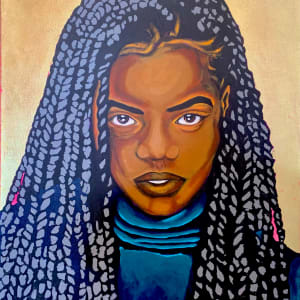
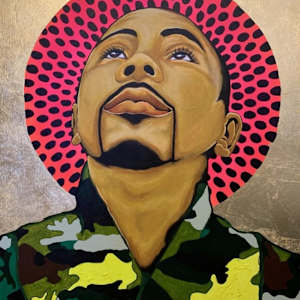
I paint victorious overcomers, highlighting a thematic narrative of Black triumph over tribulation.
MessageDe Lo Mio
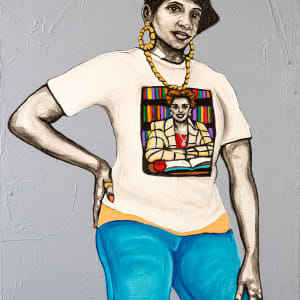
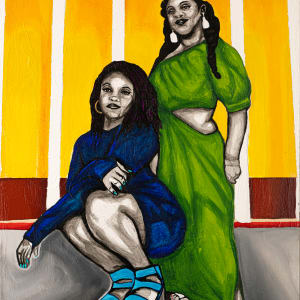
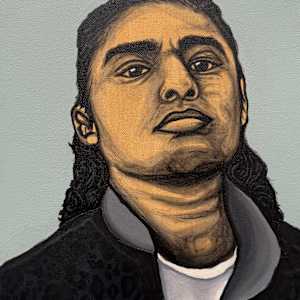
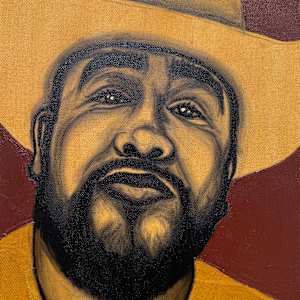
In De Lo Mío, artist Demarcus McGaughey presents a visual narrative that celebrates kinship, identity, and the connective tissue of shared humanity. Comprising over thirty mixed media portraits and figurative works, this exhibition draws from McGaughey’s extensive travels across cities, countries, and communities, where he encountered faces that mirrored the spirit of belonging—those who, in his words, are “de lo mío”, one of his own.
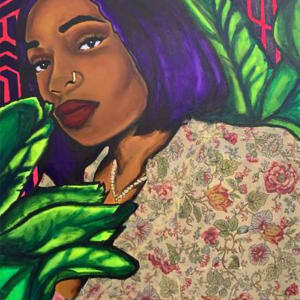
The phrase “De lo mío” originates from Dominican and Caribbean vernacular, a colloquial expression that transcends mere friendship to signify deep-rooted loyalty and familial love. It represents a sense of unity and kinship born not of blood, but of understanding and an acknowledgment of those who see and affirm us. McGaughey channels this sentiment through his portraits, which weave together acrylic paint and fabric collage to honor the individuality of each subject while simultaneously binding them into a larger collective story.
Across the gallery walls, faces emerge from layers of texture, color, and pattern. Some are joyful and defiant; others introspective or weathered by time. Each portrait embodies a unique rhythm of life, yet together they pulse with a shared heartbeat—a chorus of resilience, pride, and humanity. Through these works, McGaughey captures not just physical likenesses but the energy and vibration of lived experience. His brushstrokes and collaged materials act as fragments of memory, stitching together moments of encounter, reflection, and recognition.
De Lo Mío is as much about travel as it is about connection. While the works originate from McGaughey’s experiences living in New York, Spain, Dominican Republic and the South, they ultimately converge on the universality of the human face as a vessel of story.
McGaughey’s process of mixed media invites layers of meaning, suggesting how identity itself is constructed. This series, expands on his ongoing artistic mission: to celebrate the beauty, strength, and complexity of Black life. Yet, De Lo Mío also extends an invitation to everyone who encounters it—to recognize themselves and people they know within this mosaic of humanity. The exhibition asserts that belonging is not confined by borders or names; it is found in the gaze of another, in the warmth of recognition, in the invisible thread that connects us all.
De Lo Mío is a chapter in the life other the artist. The people, the culture, the memories, are an enduring spirit of connection. It is a visual testament to McGaughey’s belief that art can heal and unite, reminding us that even as we travel across the world, we are never truly alone. We are, always, de lo mío.
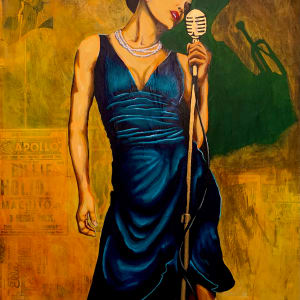


Hueman
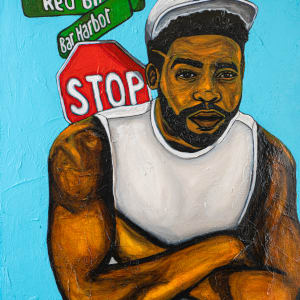
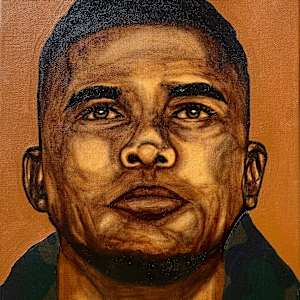
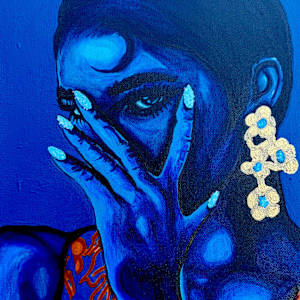
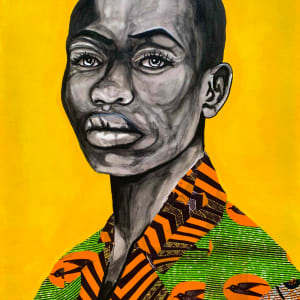
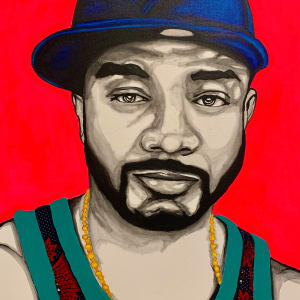
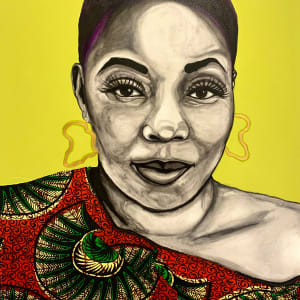
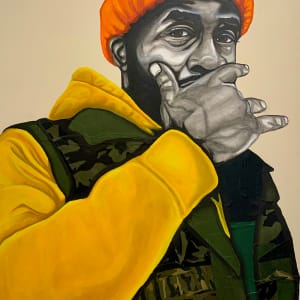
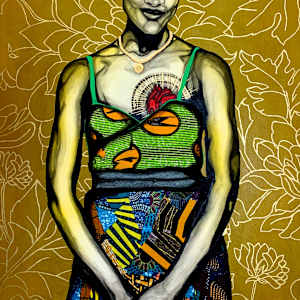
The series was birthed during McGaughey’s 2022 Artist Residency at Chateau Orqueveaux in France, where he reconsidered his usual process of underpainting before applying skin color to his subjects. Instead, he pursued a barebones aesthetic, limiting his paint palette to shades of gray, white and muted blacks. The result was glowing alabaster hues in lieu of black and brown skin tones. This new technique revealed to him that his artistic language doesn’t need to state the obvious but evoke the spiritual and powerful nature of people. Following his time in France, he returned to his parent’s home in Texas, where his mother, his first art teacher, noticed the unique direction in his work and encouraged him to explore and pursue his newfound stylization.
The absence of melanated hues commonly associated with being “black” brings into focus the beauty of his subjects’ hopeful eyes, broad noses and full lips brilliantly cloaked in inherited African fabrics. McGaughey stripes his subjects in vibrant shades of color to celebrate identity and question society's notions of race. The works are a juxtaposition of colorism and the evolutionary terms: negros, colored, Black, indigenous, people of color and BIPOC as they correspond to socio-political and economic equality.
In defining his work, McGaughey, a full-time artist and certified life coach, shares, “I realized that culture is not only encapsulated in our hue but also in our struggle, resiliency, survivorship and mental health. The paintings, quite simply, are my declarations of love to Huemans (Black people) of the world. With this work, I’m declaring: I see you. I honor you. I love you. I’m celebrating my individuals that I admire who, like me, understand that their artistry comes with responsibility; to speak and reveal the truths of the society in which we live.” Each portrait requests the viewers to look deeper into the subjects and ask that you connect to them. He challenges the viewer's concept of beauty, leaving the viewer with the option to color inside and outside the lines of their own humanity when seeing people who have been othered.
Says McGaughey: “I delve into conversations with my subjects, who are creatives as well. We discussed their inspirations, fears, dreams and acceptance. These are intimate conversations and visual life coaching sessions into the minds of People of Color.”
Kindred
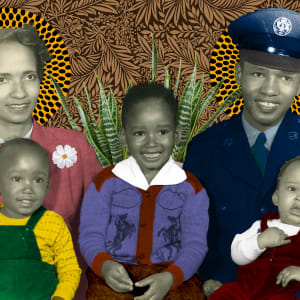
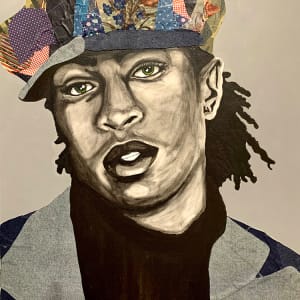
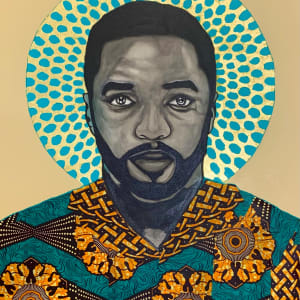
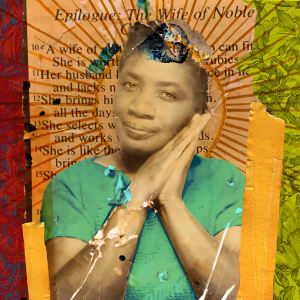
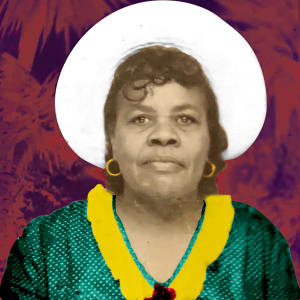
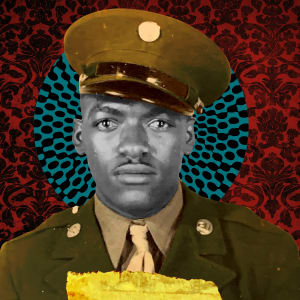
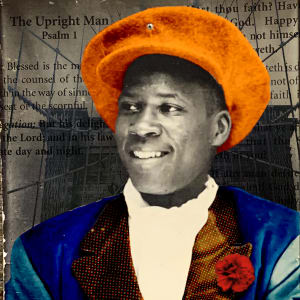
“Kindred” is mixed media artist Demarcus McGaughey’s most intimate and revealing series of work yet. One might describe it as his “long walk home.” Reflective and poignant, it comprises a multitude of timeless reminders of family moments. “Kindred” honors the sometimes-forgotten ancestry of Black Americans while acknowledging the cultural contribution of his family beyond enslavement. The series comprises over 40 mixed media pieces exploring memory, identity, and spirituality and are inspired by his rediscovery of family photographs and cherished stories. These images reacquainted Demarcus with his history and reaffirmed for him the importance of understanding the impact of his family’s existence in the American south for more than five generations. “While creating the work for 'Kindred,' I transported myself to a time where the appreciation of tangible items held a weight much heavier than present day," he says. In a world where digital content is king, Demarcus honors his family's legacy by way of family photo albums, boxes of snapshots, and generations of memorable stories. The work informs his ability to take his artistry and aesthetic to new heights. "This is what I'm made of," he says. "A tribe of ancestral family, friends, entrepreneurs, believers, and givers who transformed their lives through faith, familial bonds, love, hard work, fearlessness, and song. My goal was to reclaim their personhood in a society that challenged their very rite to fully exist.” The works are a canonization of his ancestors as symbols of divinity and triumph; spiritual icons ever watching over those who acknowledge that they were here. With paper collage, inherited fabrics that belonged to his grandmother, acrylic, and resin on canvas, you are invited to view a collection of memories and documentation of culture through Demarcus’ eyes. The choice of dimensions for these generational treasures and keepsakes are small with the artist's desire to share with you weathered yet impressive family tales. His hope is that you will see you and your family in his.
Oak Cliff
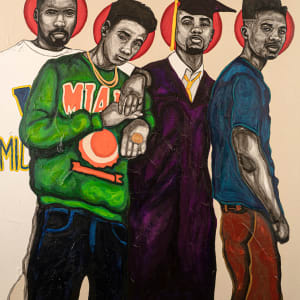
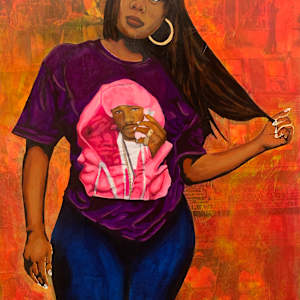
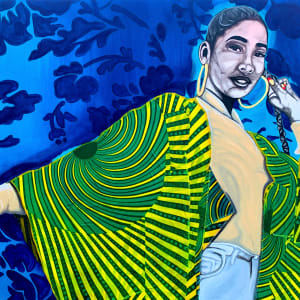
“Oak Cliff,” the latest solo exhibition by African-American mixed media artist Demarcus McGaughey, brings to life portraits and figures from the vibrant community of Black middle class families in Oak Cliff, Texas. McGaughey’s tribute to his hometown is an origin story with a captivating exploration of 20 vibrant contemporary artworks on canvas.
Skillfully created with acrylic paint, heavy texture, shades of gray and saturated colors, McGaughey says, “this is where my artistic journey started. This exhibition delves into a dynamic world filled with themes of a renaissance of Black culture, childhood memories, the privilege of life long friendships, and the legacy of a community. He explains that his inspiration for this collection comes from the strong bonds he has maintained since childhood, highlighting the sense of pride that Oak Cliff embodies. Oak Cliff, once known as Hord's Ridge, has a history dating back to the 1800s. Through various challenges such as floods and tornadoes, the community persevered and evolved into a stronghold for prominent African-American citizens in the 1980s and 1990s.
The revitalization of Oak Cliff was fueled by economic mobility, peaceful communities, and a reaffirmation of Black culture, leading to a strong sense of togetherness and identity among residents. The paintings in this exhibition reflect the hopes and sacrifices of the first-generation Oak Cliff parents who moved to the area to provide a better life for their children.
McGaughey's work captures the essence of Black figures through childhood experiences, nostalgia, and the profound impact of departed community members, honoring the foundation they laid for future generations. Using deliberate brushstrokes, McGaughey aims to inspire viewers to reflect on Black figures and encourage individuals to pay tribute to those who have shaped their communities. “Oak Cliff” is a rich celebration of Black identity, as well as a tribute to the resilience and beauty of Black communities and Blackness as a whole.