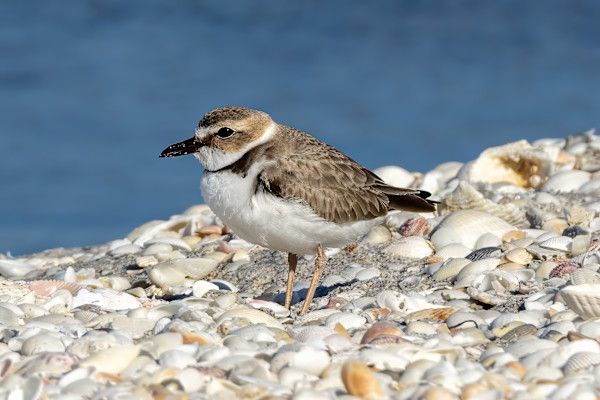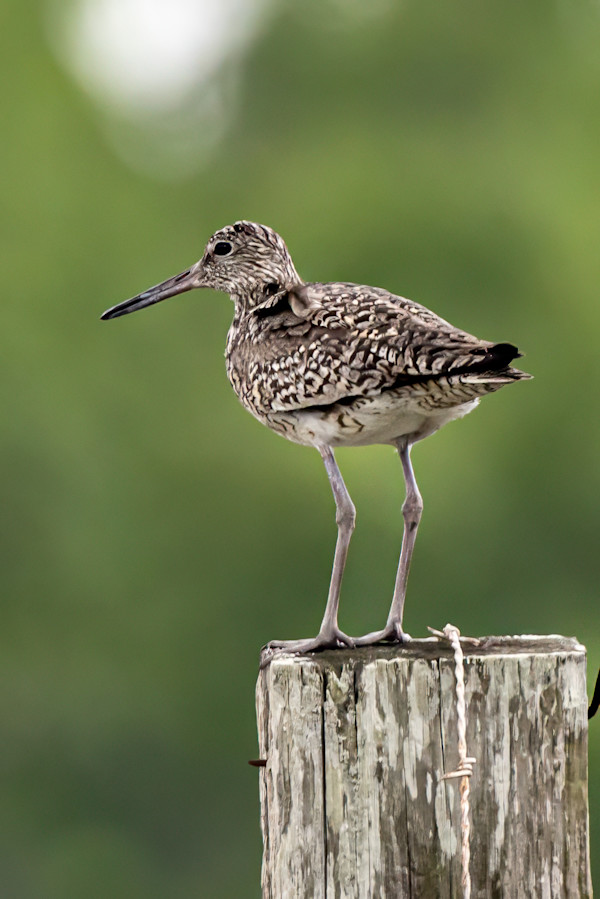
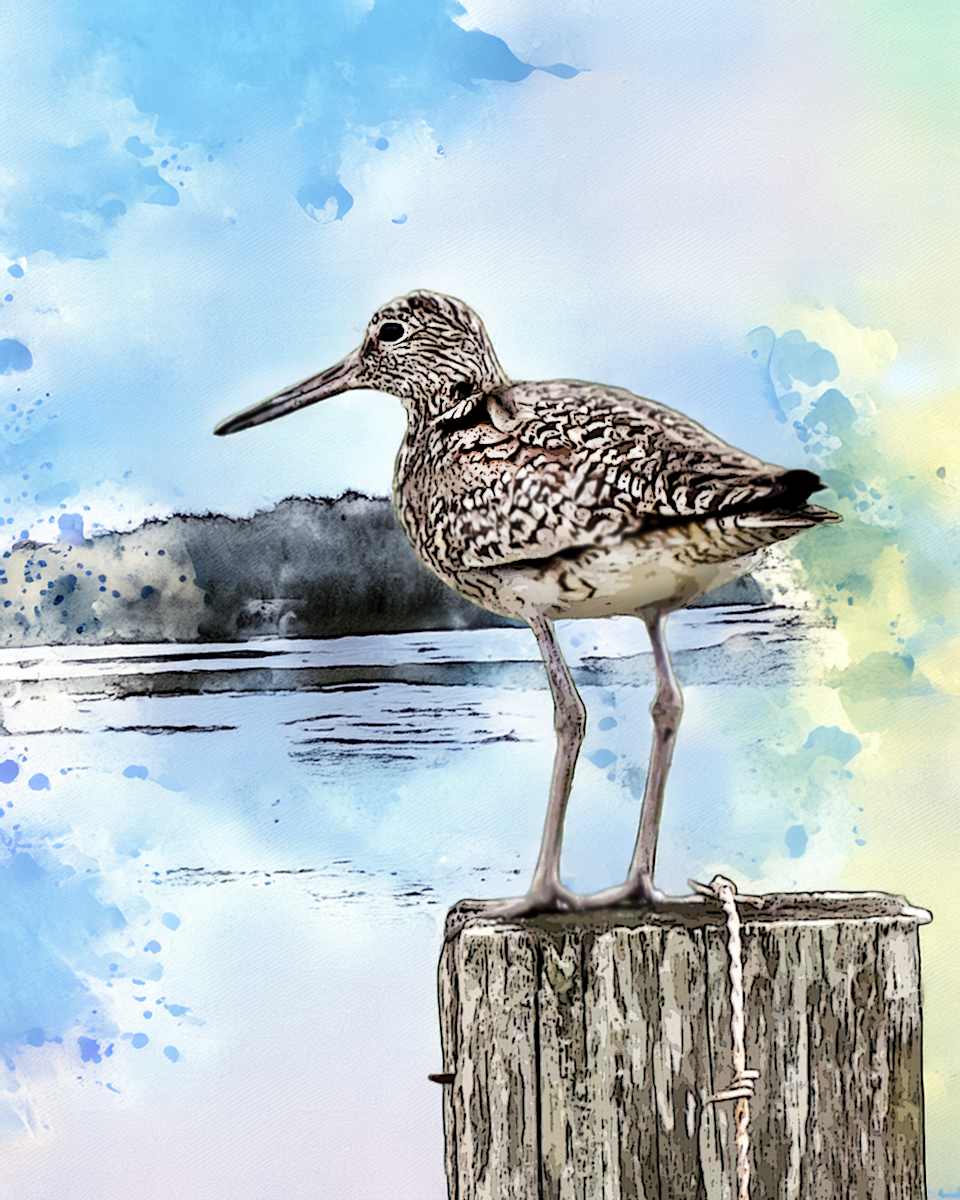
The Willet (*Tringa semipalmata*) is a large, robustly built shorebird found across North America, breeding in two distinct populations — an eastern subspecies that nests in salt marshes along the Atlantic and Gulf coasts, and a western subspecies that breeds in freshwater prairie wetlands and grasslands of the interior Great Plains and Great Basin — before both populations converge on coastal wintering grounds stretching from the southern United States through Central America, the Caribbean, and into South America. In its resting plumage, the Willet is a rather plain and unremarkable bird, presenting a uniform grayish-brown above and pale below, with a stout, straight, bluish-gray bill and long, bluish-gray legs that give it a solid, dependable appearance somewhat lacking in the ornate beauty of some of its shorebird relatives — leading many birdwatchers to overlook it at first glance. However, the moment it takes flight, the Willet transforms into one of the most striking and unmistakable shorebirds on the continent, suddenly revealing a bold and dramatic black-and-white wing pattern of broad white wing stripes flashing against black flight feathers, a visual surprise so startling and beautiful that it invariably draws the eye even in a crowded flock of mixed shorebirds. Its voice is equally attention-grabbing — a loud, ringing, and persistently repeated "pill-will-willet" call, from which its name is derived, that carries far across beaches, mudflats, and marshes and announces its presence with unmistakable authority. The Willet forages along shorelines, mudflats, and shallow water, using its sensitive bill to probe for crabs, marine worms, mollusks, insects, small fish, and other invertebrates, and it is a bold and aggressive defender of its nesting territory, readily mobbing much larger intruders including herons, raptors, and humans. Deceptively plain at rest but spectacular in flight, the Willet is a beloved and familiar fixture of North American coastlines and one of those deeply satisfying birds that reveals its true beauty only when it chooses to take wing.
- Subject Matter: Wildlife, birds
- Collections: Birds, Digital photography , Mixed Media , Wildlife