
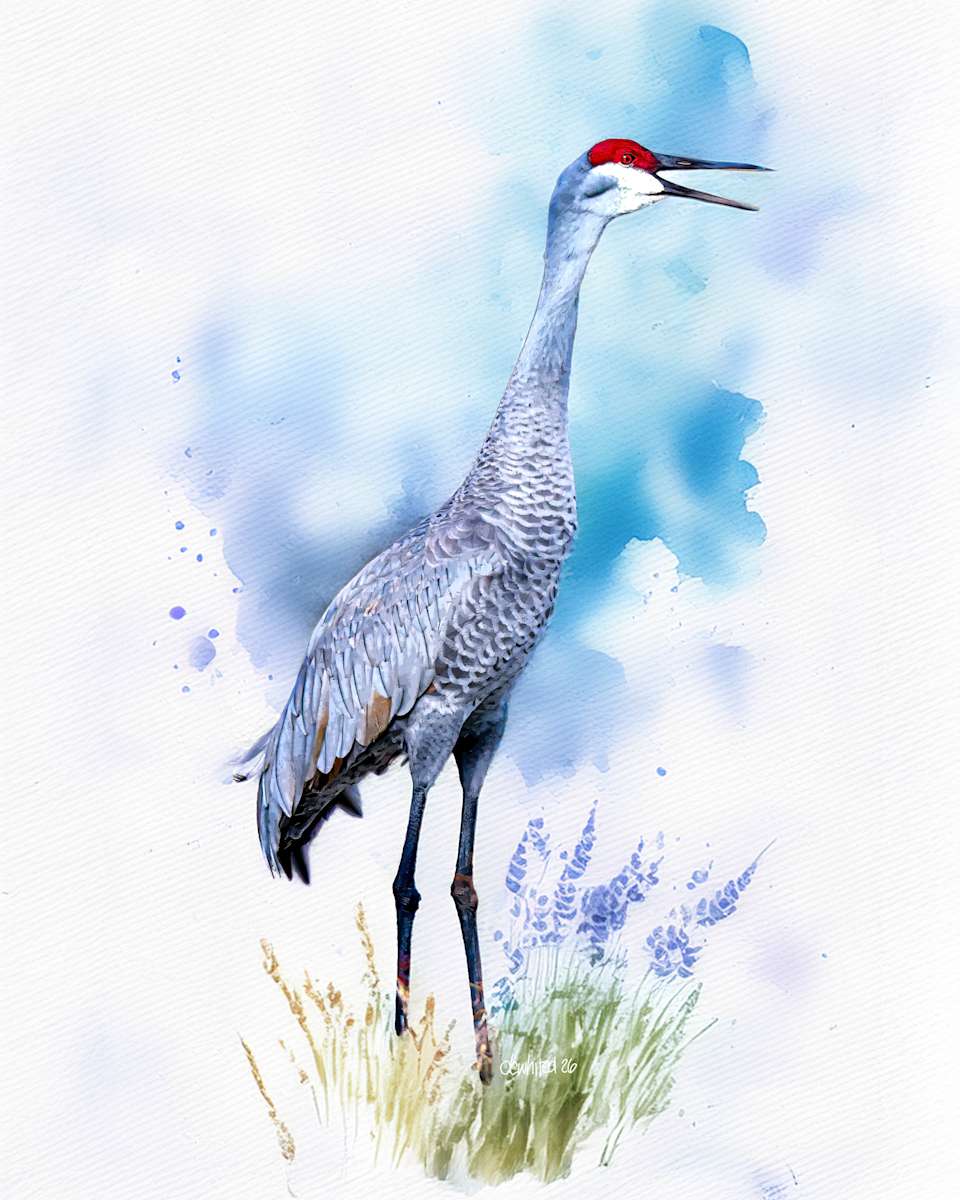
The sandhill crane (*Antigone canadensis*) is a large, long-legged wading bird native to North America and northeastern Siberia, standing up to 4 feet tall with a wingspan that can reach 7 feet. Its plumage is predominantly slate gray, often stained rusty-brown from iron-rich mud the birds preen into their feathers, and adults sport a distinctive bare red patch of skin on the forehead. They have long, dark bills, black legs, and a bushy, drooping "tail" that is actually a tuft of tertial feathers. Sandhill cranes are highly gregarious and famous for their spectacular migrations, gathering in massive flocks — sometimes numbering in the hundreds of thousands — along staging areas like the Platte River in Nebraska. They are also known for their loud, rattling, bugling calls that carry for miles, and for their elaborate courtship dances, in which pairs leap, bow, and spread their wings in a graceful, synchronized display. They inhabit open grasslands, wetlands, and meadows, feeding on an omnivorous diet of grains, insects, small vertebrates, and berries. Sandhill cranes are among the oldest living bird species, with fossil records dating back nearly 10 million years.
- Subject Matter: Wildlife, birds
- Collections: Birds, Digital photography , Mixed Media , Wildlife