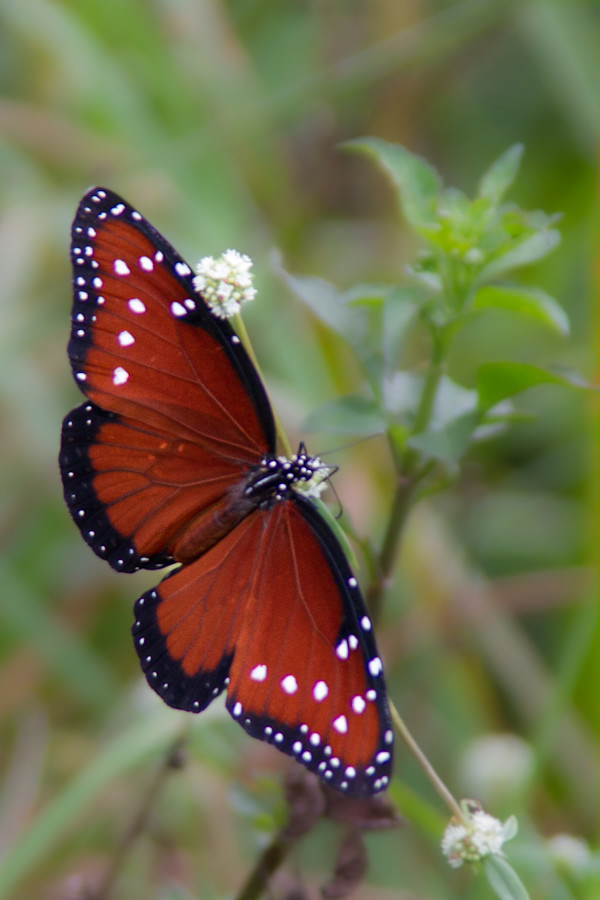

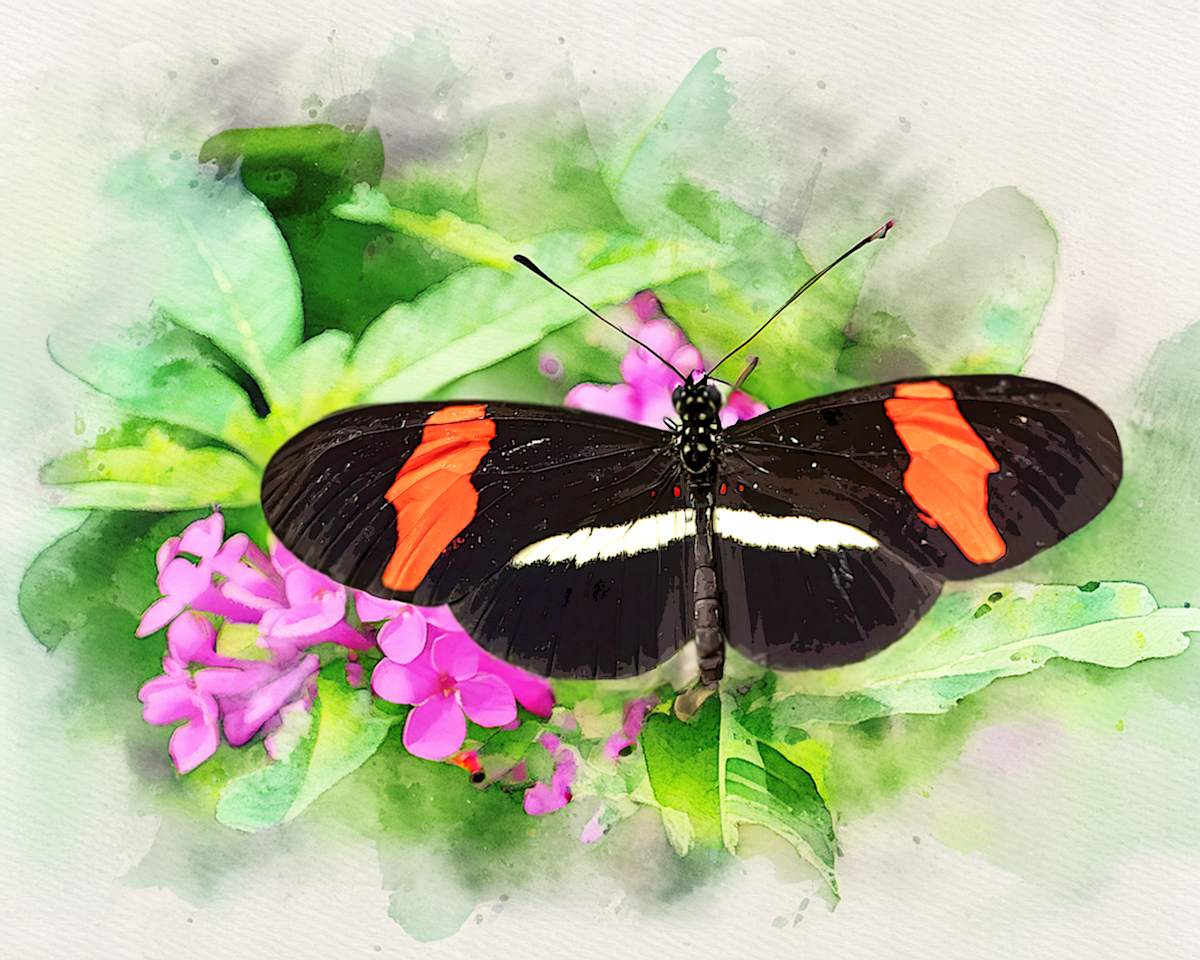
The Red Postman (Heliconius erato) is a vividly patterned longwing butterfly found throughout Central and South America, renowned for its striking black wings marked with bold red-orange bands and, depending on the subspecies, additional white or yellow spots, with dozens of geographically distinct color forms existing across its range as part of a textbook example of Müllerian mimicry alongside the closely related but unrelated genus Heliconius melpomene. This mimicry is so precise that the two species' color patterns converge almost perfectly in overlapping regions, jointly warning predators of their unpalatability, since both species sequester toxic cyanogenic compounds from their larval host plants, passionflower vines (Passiflora). Unlike most butterflies, Red Postmen are remarkably long-lived, surviving several months as adults, a trait linked to their unique ability to feed on pollen in addition to nectar, which provides amino acids that support extended lifespan and continuous reproduction. They also exhibit distinctive behaviors such as roosting communally in groups on the same twigs night after night and displaying strong site fidelity, often returning to the same pollen and flower sources daily along consistent foraging routes ("trap-lining"). Widespread and adaptable to disturbed habitats as well as pristine forest, the Red Postman remains common and is not considered threatened.
- Subject Matter: Flowers and plants
- Collections: Costa Rica, Digital photography , Flowers, Butterflies & Bugs, Mixed Media , Wildlife