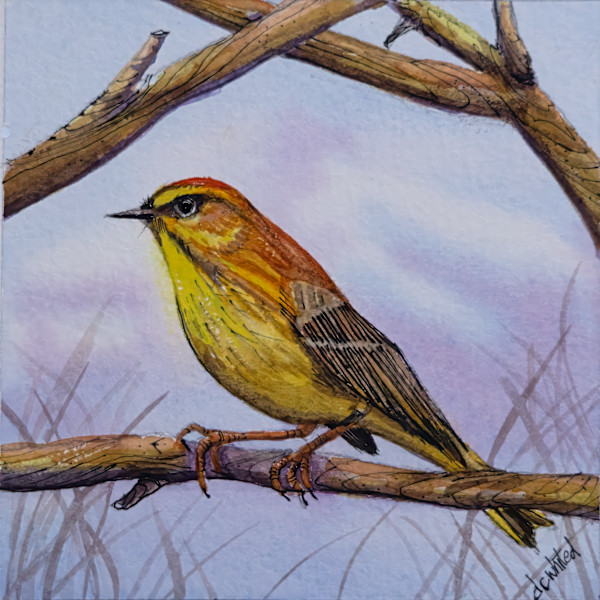
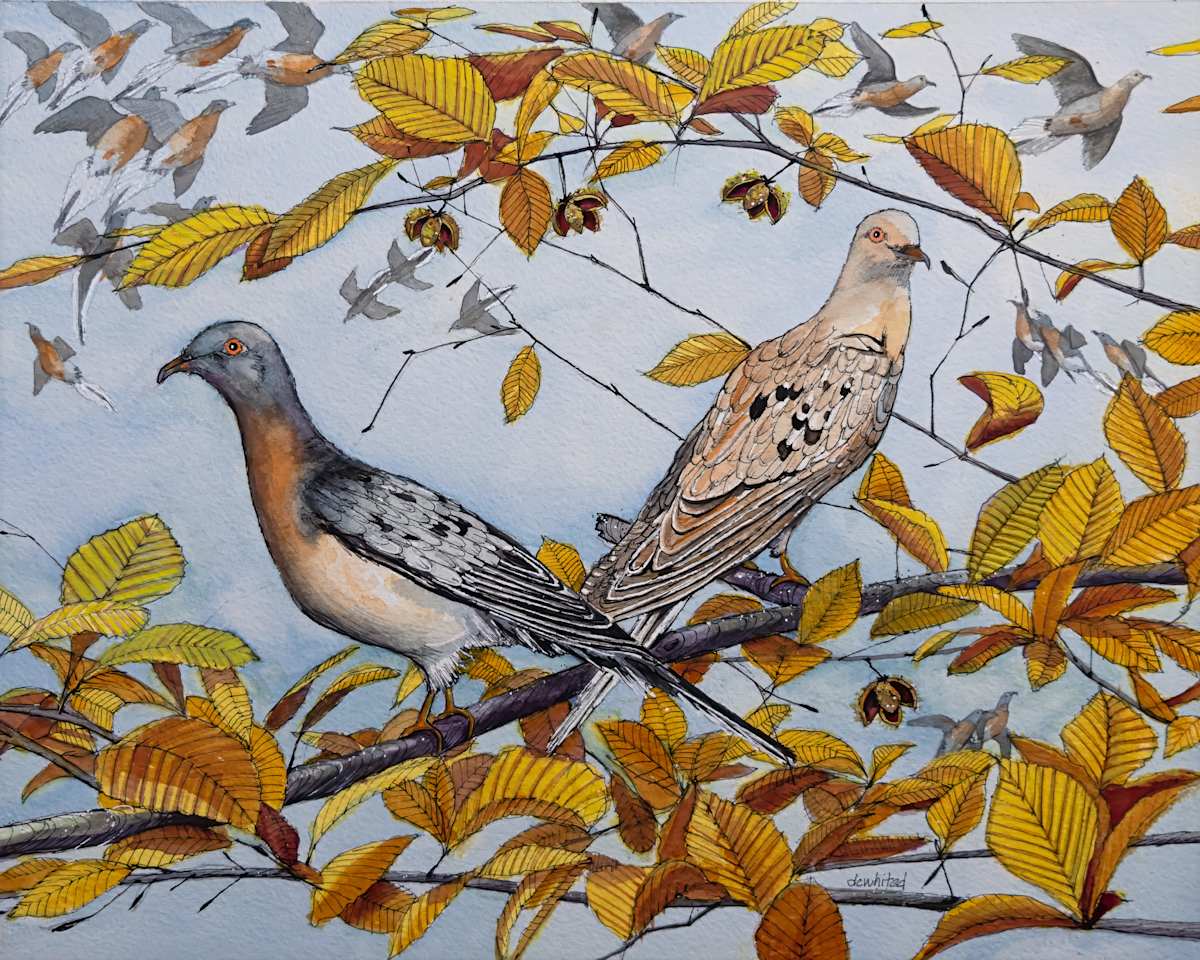
Passenger Pigeons, one male and one female, on 140lb watercolor paper. I did this as part of a competition commemorating the 100th anniversary of the extinction of the Passenger Pigeon for the State of Missouri Division of Wildlife. The Passenger Pigeon (*Ectopistes migratorius*) was once the most abundant bird in North America — possibly in the entire world — with flocks estimated in the billions that could darken the sky for days as they passed overhead. Slightly larger than a mourning dove, the bird had a sleek, streamlined body with a blue-gray back, a rusty-orange breast, and a long, tapered tail. They were extraordinarily social, nesting and migrating in massive colonies that stretched across the eastern and midwestern forests, where they fed on acorns, beechnuts, and other mast. Their sheer numbers were once considered an inexhaustible resource, but relentless commercial hunting — combined with the large-scale destruction of their forest habitat — drove them to extinction with shocking speed. The last known individual, a female named Martha, died at the Cincinnati Zoo on September 1, 1914, making the Passenger Pigeon one of history's most striking cautionary tales about the fragility of even seemingly limitless wildlife populations.
- Subject Matter: Birds
- Collections: Birds, Watercolor painting