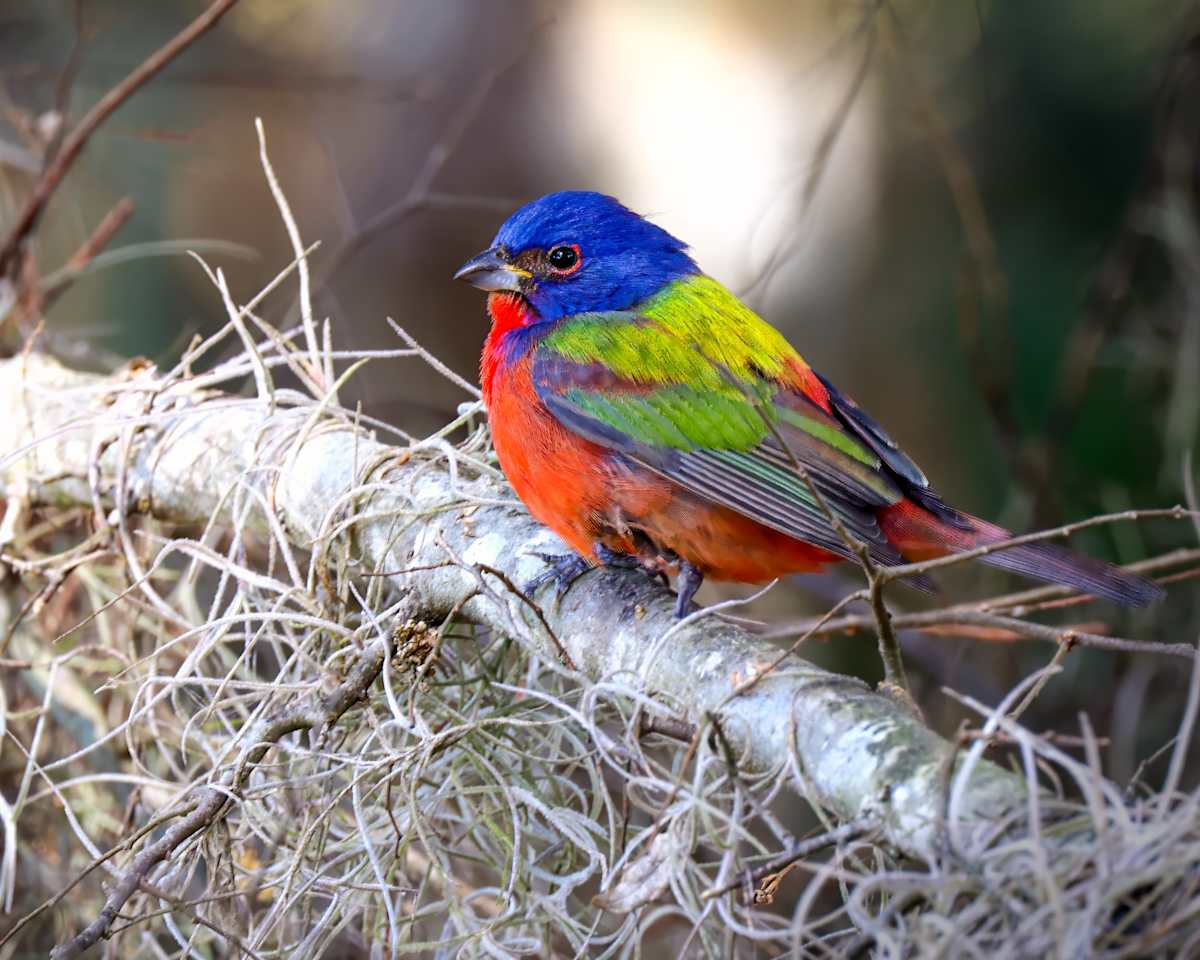
The male painted bunting is often described as the most beautiful bird in North America and as such has been nicknamed nonpareil, or "without equal". Its colors, dark blue head, green back, red rump, and underparts, make it extremely easy to identify, but it can still be difficult to spot since it often skulks in foliage even when it is singing. The plumage of female and juvenile painted buntings is green and yellow-green, serving as camouflage. buntings are shy, secretive and often difficult to observe with the human eye, though can be fairly approachable where habituated to bird feeders. Males sing in spring from exposed perches to advertise their territories. They also engage in visual displays including flying bouncingly like a butterfly or in an upright display, body-fluff display, bow display and wing-quiver display. These displays are used in antagonistic conflicts with other males or in breeding displays for females, with females rarely engaging in displays. Occasionally, males may physically clash with each other and may even kill each other in such conflicts. When their breeding season has concluded, buntings migrate by night over short to medium distances. Western birds (Arizona and northern Mexico) molt in mid-migration, while eastern birds tend to molt before they migrate. (Wikipedia)
Other Work From David Whited