
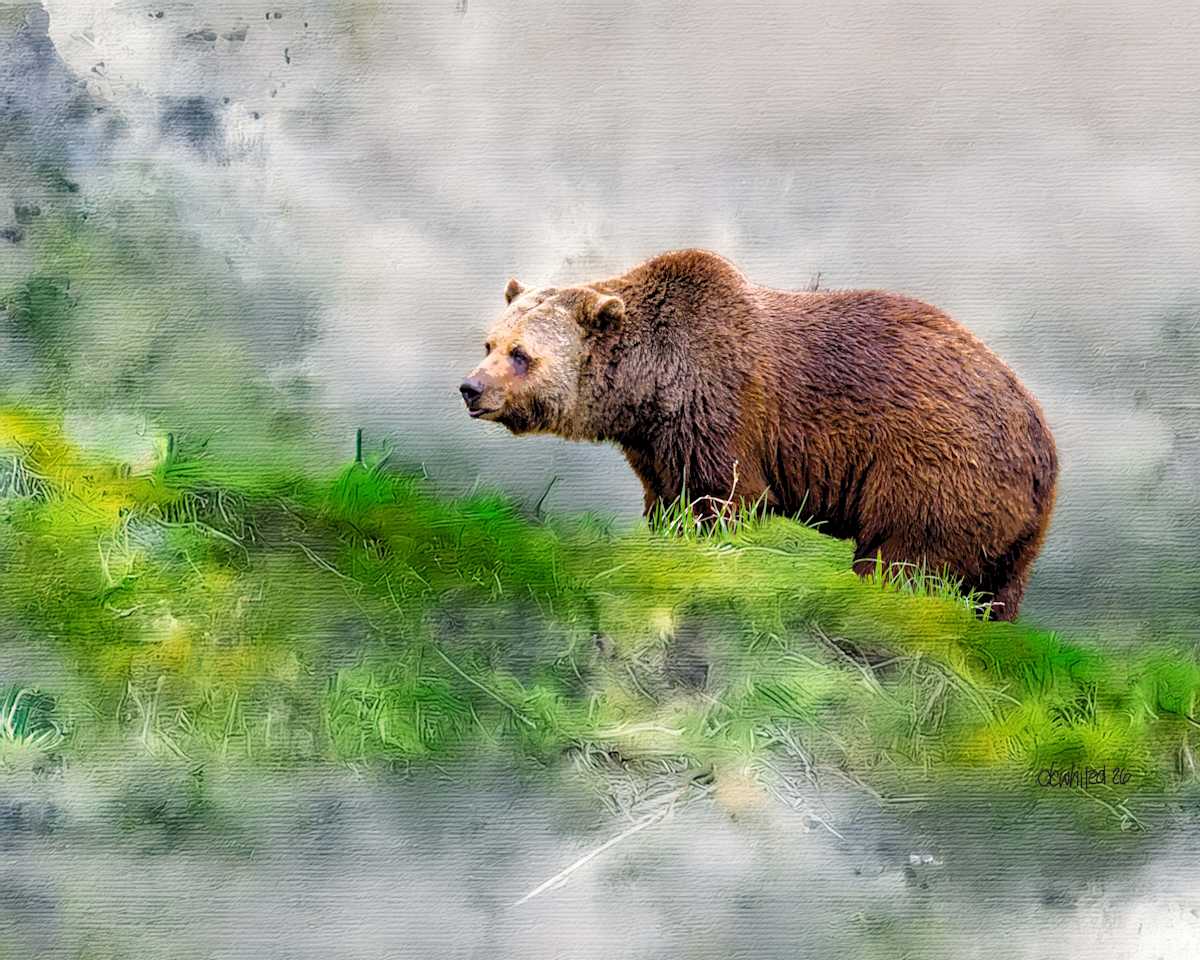
The Grizzly Bear (*Ursus arctos horribilis*) is one of North America's most iconic and formidable mammals, a subspecies of the brown bear that once roamed across much of the continent but is now primarily found in the wilderness areas of Alaska, western Canada, and small pockets of the northwestern United States, including the Greater Yellowstone Ecosystem and the northern Rockies. Grizzlies are massive animals, with adult males typically weighing between 400 and 800 pounds — though some Alaskan individuals feasting on salmon can exceed 1,000 pounds — and are distinguished by their characteristic muscular shoulder hump, which powers their formidable digging ability, along with their dished facial profile, long curved front claws, and a coat that ranges from dark brown to a lighter, frosted "grizzled" appearance that gives them their name. Despite their reputation as fearsome predators, grizzlies are remarkably omnivorous and opportunistic, with a diet that consists largely of plants, berries, roots, and insects, supplemented by fish — most famously salmon during the annual spawning runs — small mammals, carrion, and occasionally larger ungulates like elk or bison. They are highly intelligent and possess an extraordinary sense of smell, estimated to be seven times more powerful than a bloodhound's, which they use to locate food across vast distances. Grizzlies are solitary animals for much of the year, coming together briefly during the summer mating season, and females are devoted mothers who raise their cubs — usually born in litters of two — for two to three years, fiercely defending them against all threats, including other bears. Each autumn, they enter a state of hyperphagia, gorging themselves to accumulate fat reserves before retreating into dens for a winter torpor that can last five to seven months, emerging in spring leaner and hungry, ready to begin the cycle again.
- Subject Matter: Wildlife
- Collections: Digital photography , Mixed Media , Wildlife