
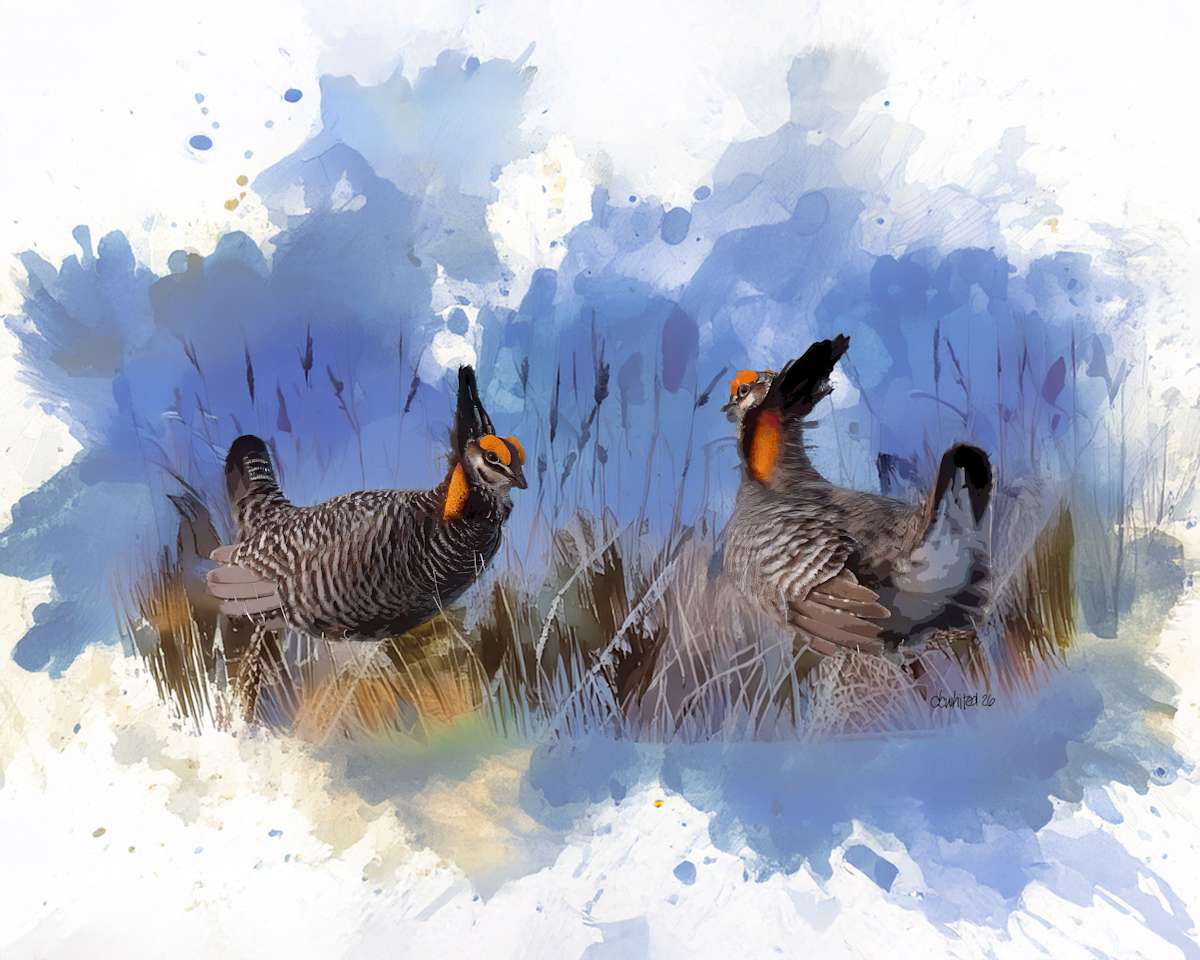
Greater prairie-chickens. The Greater Prairie Chicken (*Tympanuchus cupido*) is a large, stocky grouse native to the tallgrass prairies of North America, once abundant across the central United States but now significantly reduced in range and population due to habitat loss. It measures about 17 inches in length and is characterized by its heavily barred brown, buff, and white plumage, which provides excellent camouflage among the grasses. Males are especially distinctive for their elaborate courtship displays, performed on communal leks (booming grounds) each spring, during which they inflate large orange-yellow air sacs on the sides of their necks to produce a deep, resonant "booming" call, erect feathery pinnae (elongated neck feathers) that resemble horns, and stamp their feet in a rapid dance. Females are slightly smaller and lack the prominent air sacs and pinnae. The species feeds on a varied diet of plant matter — including seeds, leaves, and agricultural grains — as well as insects, especially during the breeding season. Today, the Greater Prairie Chicken is considered a species of conservation concern, with stronghold populations remaining in Kansas, Nebraska, and a few other central states, where ongoing habitat management efforts aim to preserve the remaining tallgrass prairie ecosystems it depends on.
- Subject Matter: Wildlife, birds
- Collections: Birds, Digital photography , Mixed Media , Wildlife