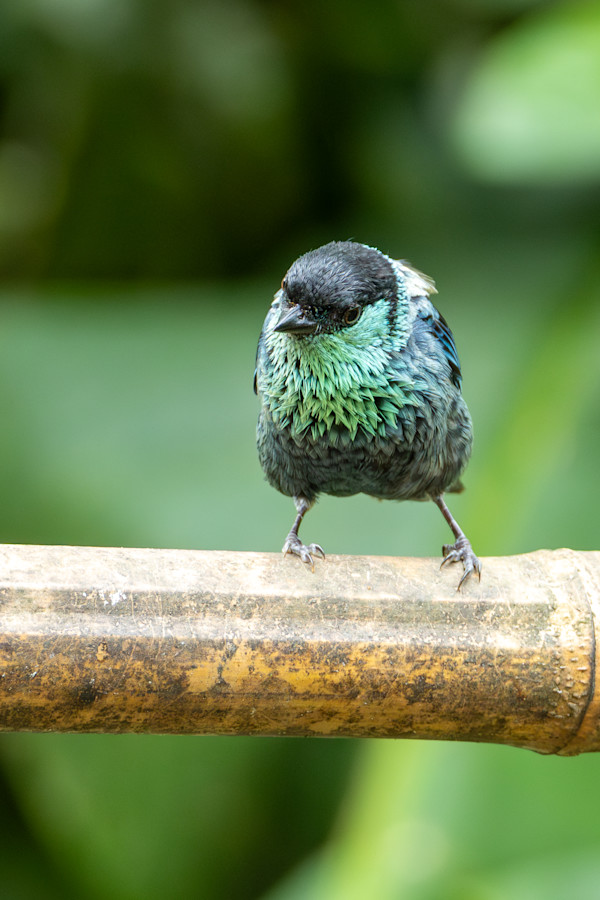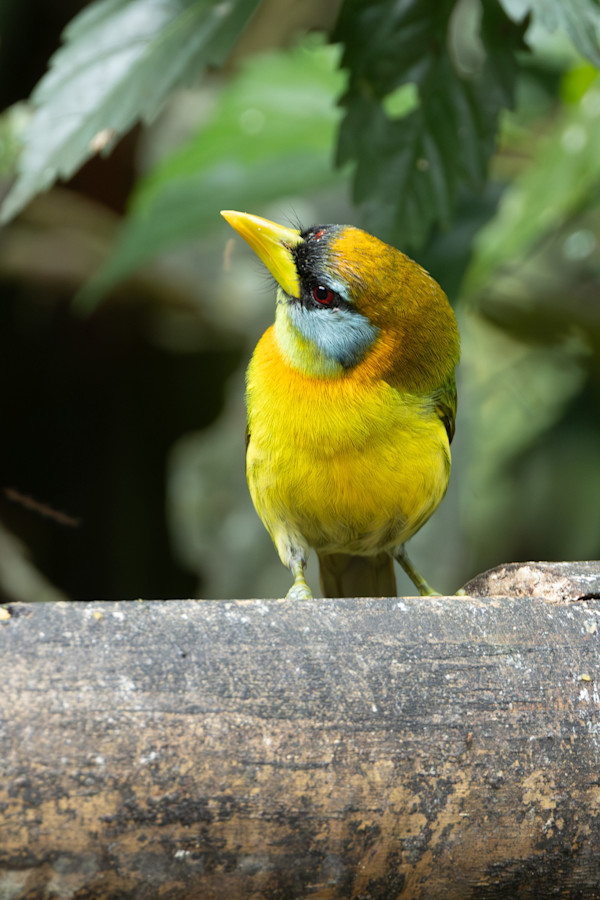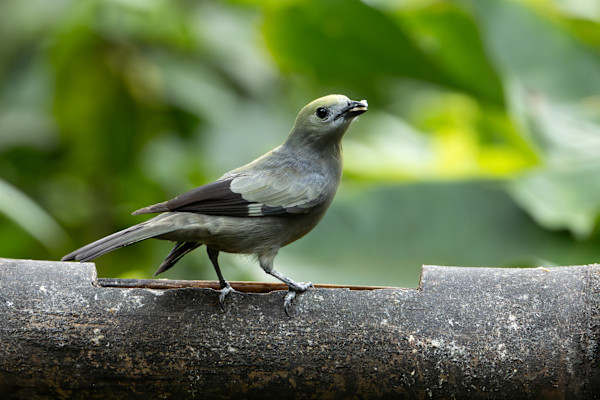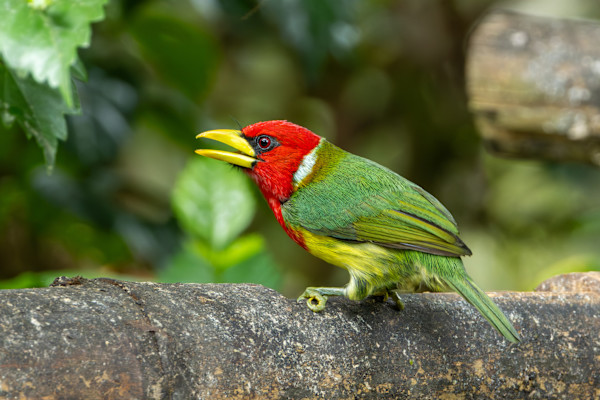
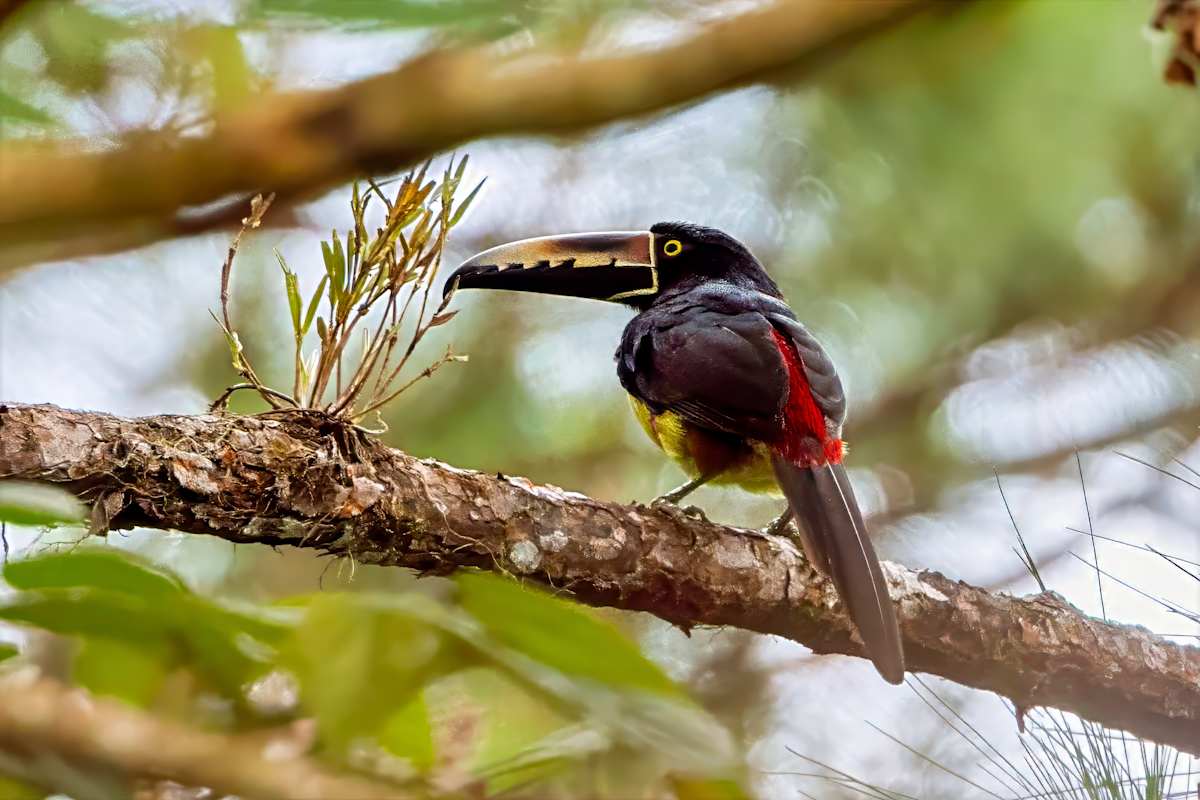
The Collared Aracari (*Pteroglossus torquatus*) is a medium-sized, vividly colored member of the toucan family found in the tropical forests and forest edges of Central America and northwestern South America, ranging from southern Mexico down through Colombia and Venezuela. Like its larger toucan relatives, it is immediately recognizable by its oversized, multicolored bill — creamy yellow and black with a serrated edge — which, despite its impressive size, is lightweight and hollow, made of a spongy keratin structure. The bird's plumage is a bold combination of glossy black on the head and upper parts, bright yellow on the underparts, and a distinctive double band of dark maroon and red across the belly that gives it the "collared" appearance for which it is named; a patch of red on the rump adds further flair. Its facial skin is bare and brightly colored, typically red around the eye, contrasting with the black head. Collared Aracaris are social and gregarious birds, often traveling in noisy, active groups of six to fifteen individuals through the forest canopy in search of their favorite food — ripe fruit — though they will also eat insects, eggs, and small lizards opportunistically. They are cavity nesters, famously known to roost communally in old woodpecker holes, with multiple adults crowding together at night with their long tails folded up over their backs to save space. Their lively chatter, acrobatic movements, and spectacular coloring make them one of the most charismatic and delightful birds of the neotropical rainforest.
- Subject Matter: Wildlife
- Collections: Birds, Costa Rica, Digital photography , Wildlife