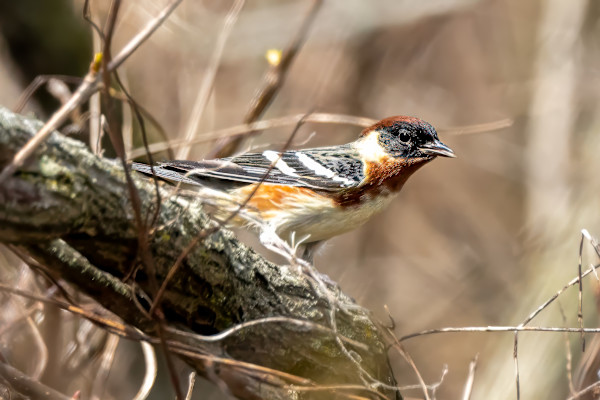

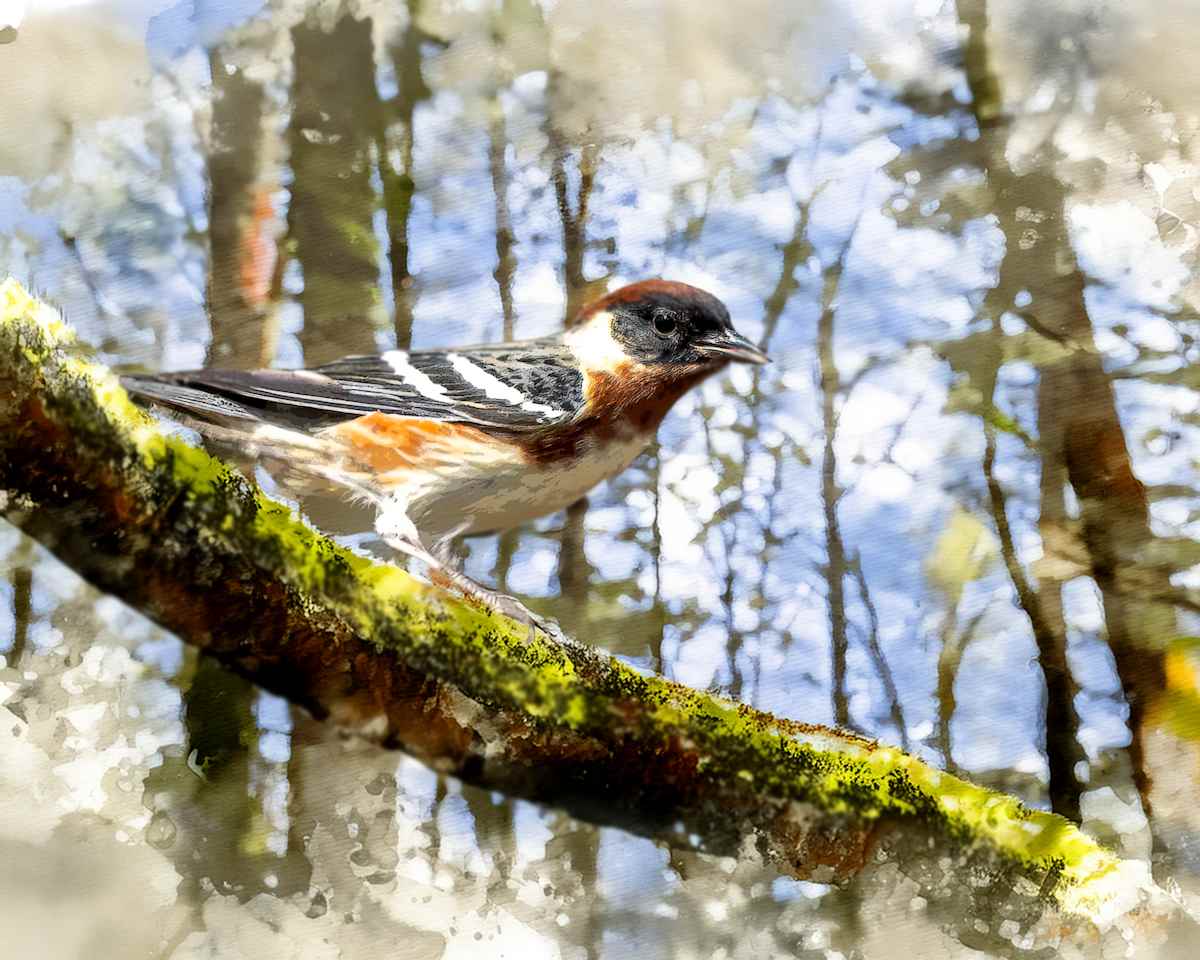
The Bay-breasted Warbler (Setophaga castanea) is a small, striking songbird of North America's northern forests, best known for the male's breeding plumage: a chestnut ("bay") crown, throat, and flanks set against a black face mask and creamy buff patches on the neck, contrasting with blue-gray wings marked by white wing bars. Females and non-breeding or fall-plumaged birds are much duller, showing washed-out olive-green tones that make them notoriously difficult to distinguish from similar species like the Blackpoll Warbler. Bay-breasted Warblers breed primarily in the boreal spruce-fir forests of Canada and the northeastern United States, where their population famously fluctuates with outbreaks of spruce budworm, a favored food source that can cause numbers to boom during infestations and decline when the pest is scarce. They are also insectivorous foragers that glean caterpillars and other insects from foliage, typically in the mid-to-upper canopy. After breeding, they undertake a long migration to spend the winter in Central America and northern South America, making them a true long-distance neotropical migrant.
- Subject Matter: Wildlife, birds
- Collections: Birds, Digital photography , Mixed Media , Wildlife